Tantalus’s Thirst: Why does BPD make me feel so empty?
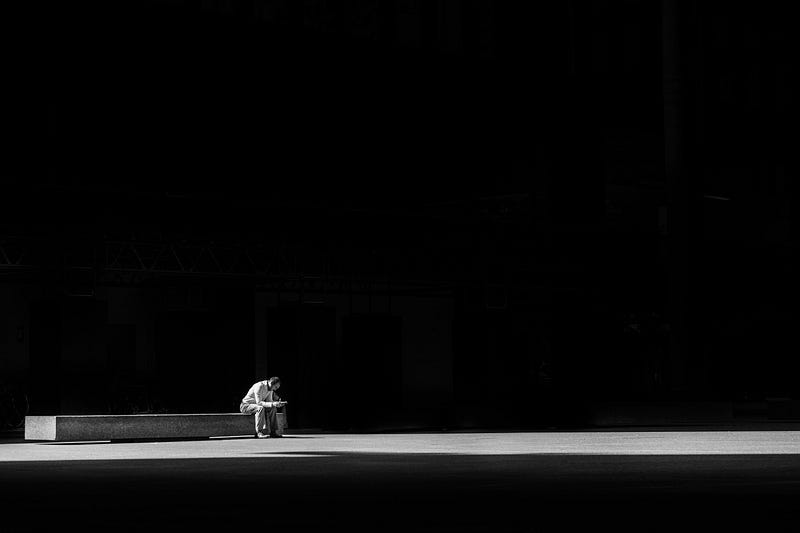
When you have Borderline Personality Disorder, life can be lonely. There’s a space within which can’t be filled.
Individuals with personality disorder often suffer chronic feelings of emptiness: The abyss, the void, the black hole, the line “I feel so empty” must have been spoken a thousand times from the lips of those diagnosed, however, the seventh symptom listed in DSM IV is actually quite hard to describe. What is emptiness?
Missing parents
Emptiness is a visceral feeling you sense within the gut. It’s not boredom, apathy, anxiety or depression, rather a chronic feeling of incompleteness, as if something’s missing. Closely related to the lack of a sense of self, your personality is a baggy suit strapped on for social occasions, underneath is a vast cavernous wasteland which holds no bounds. It’s thought this feeling begins in childhood.
Infants who experience the vagaries of emotionally unavailable parents grow up profoundly damaged. Subjected to ambivalent displays of love and rejection, they fail to develop what’s called object constancy. This means objects — in this case parents — are no longer seen as trustworthy. In fact, approach and avoidance strategies on the part of caregivers, stop children creating a stable sense of self, and lead to wider problems understanding others. Emptiness is a natural result of not being able to internalise any positive images of love and affection.
Fallen idols
Individuals with BPD are unable to conjure a ‘Soothing Introject.’ This means when distressed, we cannot recreate the image in our mind of someone who loves us. In fact, borderline minds at the point of crisis are conspicuously empty. Earlier failures in mother-infant bonding has meant we don’t know how to see ourselves through eyes of love. This results, in a terrible feeling of aloneness. The perception of being alone, is usually operating at a low level of conciousness, so we can function, to a degree. However in times of relationship stress, such as when threatened with abandonment it becomes intolerable. Dysfunctional coping mechanisms soon become apparent.
Instead of a Soothing Introject we may create a ‘Malevolent Other’ pushing the part of our mind which hates our self onto another person. This is called projective identification, and it means casting someone else in the role of persecutor, in order to unburden ourselves of the inner-critic or bully who insists we hurt ourselves. After all, the intolerance of aloneness isn’t just due to the absence of love, but the very real presence of hate, which in such a sterile atmosphere will rise to the forefront in times of stress. This is a driving factor in self-harm and suicide attempts. Unfortunately, it is often the partner who bears the brunt; once seen as a protector, if they shows any signs of abandoning the individual in question, they soon become an enemy. If we can’t find anyone to take the role of Malevolent Other, we will most likely turn to self-destruction.
Insatiable Desire
To offset feelings of emptiness, individuals with BPD, develop a pathological object hunger: We crave objects — or rather people — to fill the void. Promiscuity is a common feature of the condition, because through sex there’s a simple way of creating a temporary feeling of fullness. The same is true of other sensory pleasures; people with BPD may overindulge or even abuse, food, drugs or alcohol in order to cope.
Any account of a mental health condition is by nature reductive. There are many other reasons why people with BPD have chronic feelings of emptiness. With over 80% of people with the condition having a history of chronic childhood trauma, it’s likely emptiness could be a type of dissociation; a form of psychological numbing, which occurs as the result of overwhelming stress felt in early life. When the fight or flight reaction stops working we collapse. Interestingly this sense of constriction is opposite of hyper-arousal and yet both are signature symptoms of PTSD and thought to be located in various parts of the brain including the Thalamus, Hippocampus, Orbifrontal Cortex, Medial Prefrontal Cortex, Posterior Cingulate, Anterior Cingulate and Insula. Likewise, relationship troubles can occur for many reasons, including non-medical reasons , such as partner incompatibility or environment. Nevertheless of wanting and needing people around is hallmark of the condition.
In the Fullness of Time
Chronic feelings of emptiness come from living an empty sort of life, where being alone is the predominant feeling, and thoughts like ‘what’s the point’ occur frequently. In Greek mythology, there’s a story which serves as an allegory of what Borderline Personality Disorder actually feels like. King Tantalus is sent to blackest dungeon of hell for testing the Gods, and made to stand in a pool of ever rescinding water. Above him hang luscious fruit boughs just out of reach. Always hungry, ever thirsty, he cannot get what he needs.
There’s always hope. As adults we have to create new images to bolster our fragile sense of self and create a vision of fullness even when bereft. Not all of us are lucky enough to have had loving parents or partners but we can still create loving images: Gods, Angels, Saints, Jungian Archetypes like the Wise Old Man, or Inner Child, our pet cat or dog, a friend or relative. We can silence the inner bully by recognising our own self-worth, and by cultivating a feeling of loving-kindness towards our own mind. Finally if we still seek people, we recognise them as individuals not objects, sublimating base hunger into a more refined quest for love and acceptance.
Trusting the world isn’t easy but with practise the constancy missing in early life begins to develop, emptiness fades away. Tantalus breaks free.