
Tandoori Chicken and Pumpkin Pie
Why mixing things up works — and not just for food
“The human soul can always use a new tradition. Sometimes we require them.” Pat Conroy
I was invited to my first Thanksgiving dinner twenty-some years ago — soon after moving to America.
The dinner was our first invitation since our family’s arrival in the country. It was an opportunity to meet people. Perhaps, to lay the foundation of a social network — if not a friendship or two.
I dressed with care — in a generously-sequined, silk salwar-kameez. I added chunky gold jewelry and was pleased with my appearance.
Hubby thought I looked a tad overdressed.
It’s fine, I said.
Our hosts were Indian, and we were celebrating a festival. I had dressed as I would have done in India for Diwali or Ganesh Pooja.
Turned out hubby was right.
Everyone else at the dinner — Indian or not — wore muted colors. Blue, brown, and tan. I stuck out like a sore thumb in bling-bling canary-yellow.
When in Rome…
In my mind’s eye, I still see the clothes I wore that day — almost down to the last sequin. But I don’t remember what I ate.
Our hosts liked to keep the ambient temperature in the house to the low sixties. We were in Akron, Ohio, and everyone in the room was togged up in long sleeves, scarves, and sweaters.
I had an ankle-length, well-padded winter coat to keep me warm when I stepped outdoors. I hadn’t bargained on it being chilly indoors.
I shivered in my short-sleeved, silk-thin splendor.
I could barely open my mouth to impress all those potential friends with my wit and wisdom. Or even to feast on the food piled high on platters. I was too busy clamping my lips together so people wouldn’t notice my teeth were chattering.
That day brought home to me the adage, “When in Rome….”
I didn’t live in Mumbai anymore. I had to change. To adapt.
An in-home Thanksgiving dinner…
Everyone we knew, immigrant or not, observed Thanksgiving. Not us.
We spent eight years moving around in the US and Canada. Often, hubby, our two daughters, and I were in four different cities. The girls at their colleges. Hubby at project sites. Me minding the home base.
Hubby and I finally put down roots in Texas.
Two years later, when both girls made our city their home, we celebrated with our first — and very heartfelt — Thanksgiving dinner.
This was our small but traditional bill of fare: Turkey with stuffing Green bean casserole Mashed potato Baked yams Pumpkin pie (store-bought)
It’s hard to go wrong with mashed potato. And the yams and beans were passably good.
But the entrée — the turkey — was a major disappointment. Even with extra stuffing, the meat tasted bland to our Indian taste buds.
Spice Girls (and guy)…
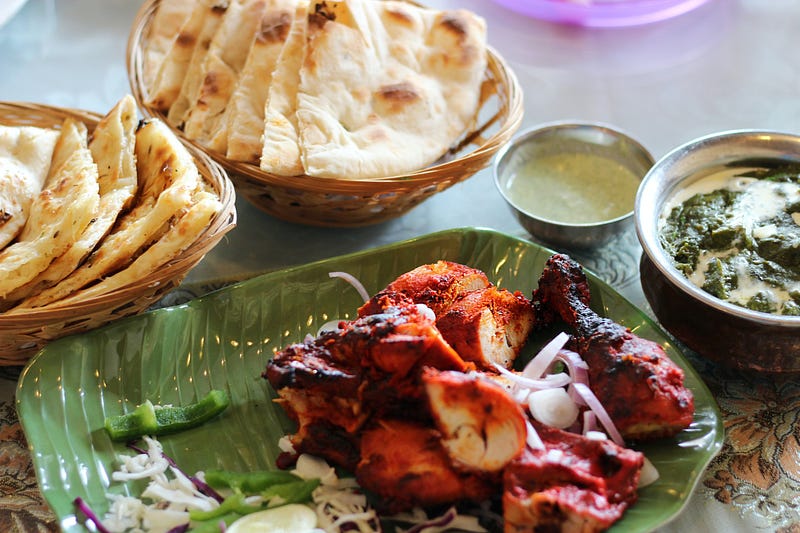
The following year we ditched tradition and went all out spicy. Our menu featured: Tandoori chicken Ghee rice with cumin Masala bhindi (spicy okra) Maa ki dal (Matpe beans curry. Loosely translated as “Mom’s curry.”) Naan
Plus two traditional favorites — mashed potato and pumpkin pie.
We enjoyed the food, but it didn’t feel like Thanksgiving. Except for the pie and potatoes, it was just another meal in an Indian household.
Mixed-up menus…
From then on, we went with mix-n-match.
Now, every year, the pie and potatoes stay, but everything else changes.
Instead of turkey, we have chicken: Tandoori, Vesuvio, Saltimbocca, or whatever new recipe catches hubby’s fancy. (He cooks most of the non-vegetarian dishes in our household.)
The veggies change every year.
This year it was roasted Brussels sprouts flavored with garlic and rosemary. And steamed asparagus tossed with butter and red pepper flakes.
Last year it was a casserole of shell pasta and sweet peppers in béchamel sauce. And oven-roasted discs of beet, sweet potato, and zucchini.
Occasionally, we throw in a Rajma (kidney beans) curry or Irish mutton stew just for kicks.
Mix-n-Match…
My family wears western attire to our Thanksgiving dinner. Hubby goes so far as to wear a shirt with a collar.
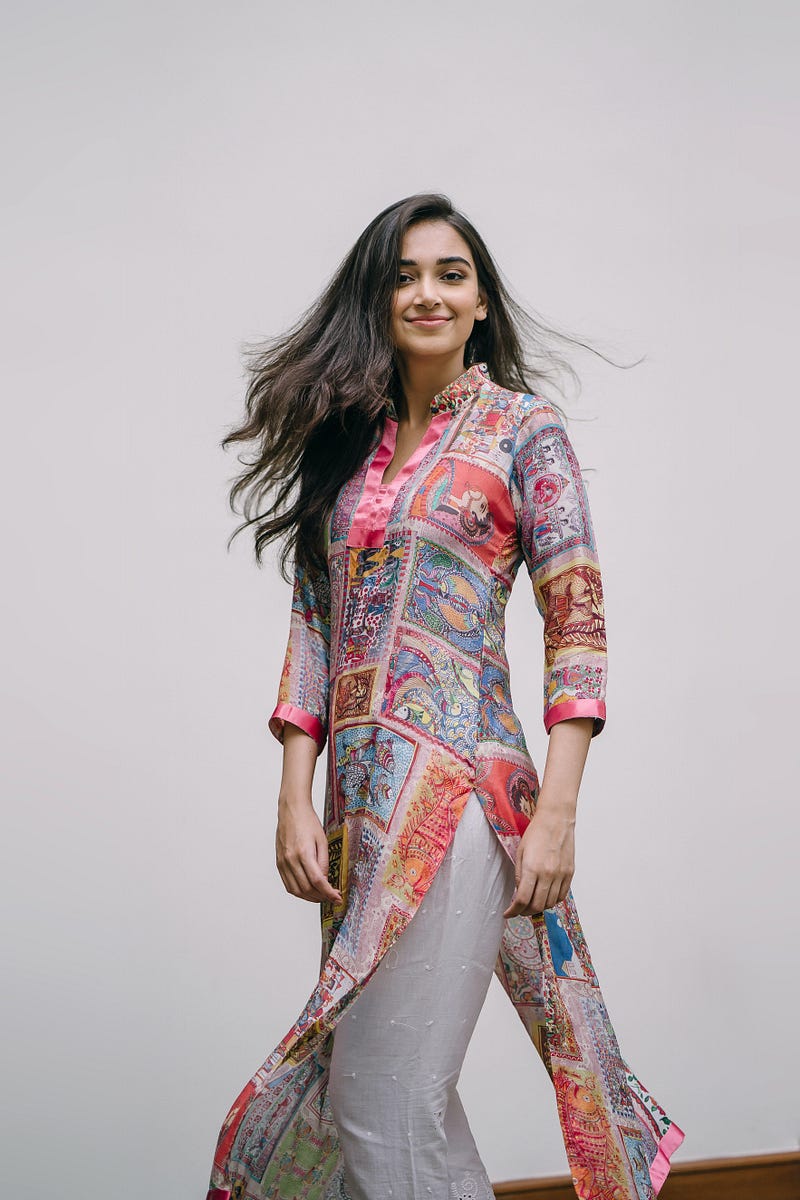
I still dress in a brightly colored salwar-kameez. But now, the style is casual, and the fabric is cotton or linen. I save my embroidered silks and sequins for Indian festivals or weddings.
(No, that’s not my photo below. Just a picture of a girl wearing a simple salwar-kameez.)
We tailor our celebration of Thanksgiving (and other American festivals and holidays) to honor both Indian and American traditions. And since we are foodies, we have zero qualms about borrowing food and beverage ideas from any country we please.
As immigrants — and citizens of the world at large — this borrowing allows us to explore other cultures while staying rooted in our own.
It gives us the best of all possible worlds.
Thanks for reading!
Lucy Dan 蛋小姐 (she/her/她) Lucy Dan’s wonderful immigrant/foodie poem on Mixed Traditions inspired me to write this story.
Thank you Dr Mehmet Yildiz for publishing my story!
You might like these stories:


