
Tales of a New York Cabbie
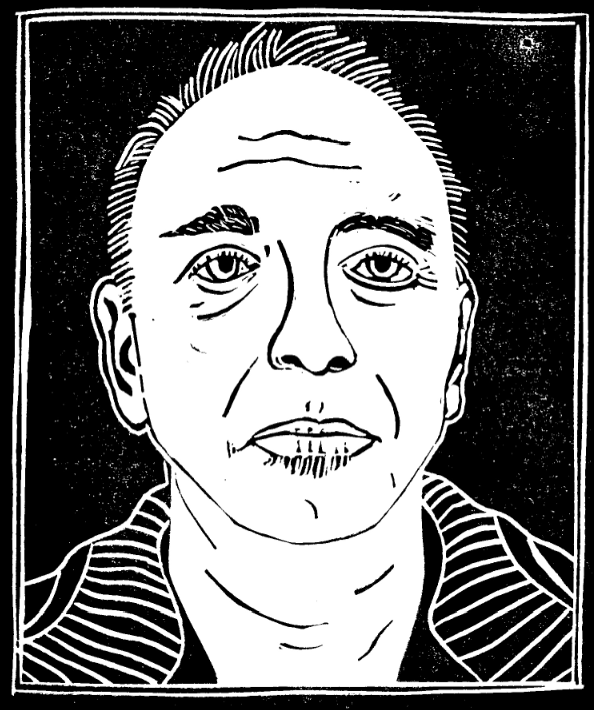
Peter Honig moved to New York City in 1979. He saw an ad in the New York Times looking for a taxi driver. With zero experience and little knowledge of local streets, he contacted the Ann Service Corporation, one of the largest taxi companies in the city. The company did a background check and agreed to help Honig obtain a Hack License.
A Hack License allows a driver to operate a Yellow Medallion Taxi in the five boroughs of New York. A Medallion identifies a cab as part of the Taxi & Limousine Commission (TLC), the governing body of New York taxis. In those days, a Medallion cost $62,000. By 2014, the cost was above $1 million. In 2021, due to competition from Uber and Lyft, the Medallion cost dropped to $80,000.
Honig passed the TLC written test, paid $30 and received a Hack license. He joined the ranks of 30,000 fellow cab drivers in the city. Most were American born men aged 40–50. There were a few Caribbean drivers and a large number of immigrant Russians who were doctors and lawyers in the old country. Honig, who played in a punk band, was among a small percentage of musicians who drove cabs.
Drivers worked a 12-hour shift starting at 6am or 6pm. On Honig’s first day, he arrived in the morning to find a long line outside the Chelsea taxi station. He waited two hours only to learn there were no remaining cabs. The next day, he arrived a half-hour early but again failed to secure a cab. On his third day, a fellow driver told him to “grease” the dispatcher a five-dollar bill. This worked and Honig had his first cab.
Drivers were given two options regarding lease payment. They could work for 40% of the meter total and the cab company paid for gas, or they could pay $62 per day ($82 for a night shift) and buy their own gas. Most rookies opted for the 40% option and a day shift since it was less intimidating.
“No one tells you what to do,” Honig says. “You’re given a cab and you just start driving.” In his first year, Honig stuck to picking up businessmen and stock brokers. Though they tipped poorly, they were safe and reliable. They also gave specific directions helping Honig learn the Manhattan streets.
Honig averaged between $50-$75 a shift his first year. (Today, New York taxi drivers average about $250 a day.) The work was relatively easy even though Honig found it depressing and stressful. He couldn’t believe he’d spent four years in college to become a cab driver.
Honig settled into a routine. He picked up his cab at 6:00 am and headed uptown looking for fares. On a good day, he’d find a businessman on the Upper West Side needing a ride to Wall Street. From there, he’d take a fare to midtown then another passenger downtown. A typical 12-hour shift yielded 40–50 fares and covered 200–250 miles.
Some passengers traveled a few blocks. To Honig, these short rides were great. Since the meter started at $1.25 and ticked ten cents every 1/8 mile, the total added up quickly. A common misnomer is that cab drivers choose busy streets to jack up the fare. This isn’t true. Traffic is an enemy to cabbies equating to fewer fares per day. Clear streets mean more money and better tips.
Honig drove a Checker Cab, the most famous cab in America. The hulking sedans fit six people in back with a bulletproof partition between the driver and passenger. Most cabs lacked air conditioning and had unreliable radios. Shock absorbers were almost non-existent. “One car was so trashed, there was a hole in the floorboard,” Honig recounts. “Every time I hit the brakes, I saw asphalt flying by.”
On slow days, Honig and his fellow cabbies played demolition derby. “If we saw a driver taking a quick nap, we’d ram the back of his cab to give him a wake up call. We’d make sure to knock off any passenger-side mirrors since the missing mirror was considered a badge of honor.”
After his first year, Honig opted for night shifts realizing he could make more money and encounter less traffic. “It was scary at first. There were certain areas you avoided like Harlem, parts of Brooklyn and the Lower East Side. But nights were easier and more exciting.”
Honig perused high-end restaurants, nightclubs and bars. He found a niche among Japanese businessmen frequenting midtown mahjong parlors. Many of these men lived in Westchester County, a coup since once you left the city you could charge double the meter reading. They also gave great tips.
“Once I was driving two Japanese guys on the Hudson River Parkway when I fell asleep behind the wheel. I was woken by the sound of a megaphone screaming, ‘WAKE UP!’ A police car had pulled beside me and noticed I was sleeping while driving 70mph down the highway. They must have had somewhere really important to go because they didn’t pull me over. I didn’t get much of a tip that night.”
Intoxicated passengers were a mixed bag. Sometimes they gave larger tips, sometimes they puked and soiled themselves. “Friday and Saturday nights were crazy. I had couples who had backseat sex, prostitutes who gave blow jobs to customers and junkies who shot up while I was driving. One time I picked up Billy Idol. I smoked weed with him and his posse.”
“The first time I was robbed was halfway through my second year of driving. It was about 5:00 am and I’d had a great shift. I was at a red light at 44th and 8th Avenue near Times Square. I had a wad of cash between my legs and I was counting the night’s take. My window was open and a transvestite prostitute approached me. She asked, ‘Hey, can you tell me what time it is?’”
“As I looked at my watch she reached into the cab, grabbed my cash and started running. I got out and ran after her but she had too big a head start. I returned to the cab and drove after her. I chased her up 44th Street and hit the gas to make it through a red light. Unfortunately I didn’t close my door all the way. As I took a tight turn, the door opened and I fell out of the cab and tumbled into the street. The cab smashed into the wall of a XXX Theater. The bumper was trashed but the engine was still running so I was able to drive to the station. I had to pay back the $250 out of my own pocket.”
Honig was robbed several times over the next few years. One night he made the mistake of driving a guy to score drugs on the Lower East Side. As he waited for his passenger to return, two Puerto Ricans approached. They stuck a knife in his face and made him get out of the cab. “Take it easy,” they said. “We just want your money. Don’t fuck around and you won’t get hurt.”
Honig hid his money in a hole in the sun visor. He told the men he had no cash since he’d just started his shift. They didn’t believe him. They searched the car, looking in the glove box, under the seats, beneath the floor mats. At the last moment, one of the guys slammed the visor and a wad of cash spilled out.
The guy with the knife yelled, “You motherfucker” and stabbed Honig in the stomach. Fortunately the wound wasn’t deep. Honig drove himself to the hospital, received a few stitches then returned the car to the station. He still has a scar to this day.
Honig’s worst cabbie experience came in 1981. It was early morning and he was coasting down 7th Avenue when he heard a loud thud on the right side of the car. He stopped and got out. He saw a pile of garbage in the street and figured he’d hit a trashcan. When he looked closer, he realized he’d hit a bag lady. The woman was tiny and appeared to be in her seventies. She was completely motionless.
Honig found a payphone and called police. By the time they arrived, the lady was dead. A witness told police the woman tried to jump in front of a trash truck earlier that same night. The cops told Honig the woman likely committed suicide and he wasn’t to blame. The incident sent him into a spiral of depression. It was several weeks before he could drive again.
By 1983, Honig grew tired of the cabbie grind. “The things that once seemed exciting — the edge, the seediness — had become depressing. I lived like a vampire and developed unhealthy habits. Plus, the city was harassing drivers, making sure we kept proper trip sheets and paperwork. It took the fun out of the job. Once the fun was gone, being a cabbie was kind of a drag.”