
Take off eh Facebook
Dear Facebook,
Thank you, and you too Mark Zuckerberg. I’ve been thinking of telling you to go ahead, make my day. And now you’ve made my day.
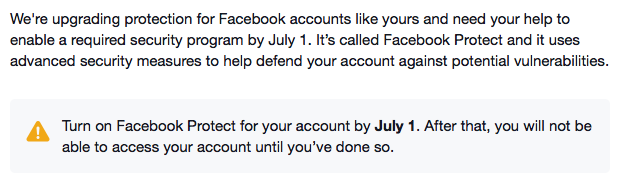
You sent me an email that I thought was a scam or a phishing expedition or some other nefarious cyberthing or another. But it wasn’t. It was legitimate, according to multiple news sources, as well as your own site.
Your “Facebook Protect” goon squad told me that I needed to secure my account against the bad actors out there. Facebook Protect “helps candidates, their campaigns and elected officials adopt stronger account security protections, like two-factor authentication, and monitors for potential hacking threats,” you said.
I don’t fit any of those categories but I am a journalist and that’s why, according to media reports, I got your email. Your campaign may have targeted those other groups initially but you have expanded it to include “citizen activists” and journalists and so that’s how I got on your VIP list.
I was taken aback when I saw the hard deadline — just a week away — of July 1 to defend myself or get locked out of my account. Again, I thought it was a scam, since they always try to get you to act right away to avoid consequences. At the very least, I thought it was a cruel Canada Day joke.
But no, it’s legitimate all right.
I had considered doing your bidding. After all, I’m protecting myself. It’s a good thing to set up two-factor authentication for all digital accounts as a way to prevent others from hacking into your space.
But I also read The Dallas Morning News’ watchdog Dave Lieber’s account of what a “workout” it was to set up the account and how the instructions he received didn’t work and so I asked myself if I needed the aggravation.
And I remembered Jaron Lanier and realized you have given me a gift, an opportunity to check out of Facebook.
I started to become wary of social media, and the internet in general, way back in 2008 after reading Nicholas Carr’s essay “Is Google Making Us Stupid” in The Atlantic. Ten years later, I read his book The Shallows and started to worry about what the “Church of Google,” ebooks and all things digital were doing to my brain. Here’s what he wrote:
“As (Marshall) McLuhan suggested, media aren’t just channels of information. They supply the stuff of thought, but they also shape the process of thought. And what the Net seems to be doing is chipping away my capacity for concentration and contemplation. Whether I’m online or not, my mind now expects to take in information the way the Net distributes it: in a swiftly moving stream of particles. Once I was a scuba diver in the sea of words. Now I zip along the surface like a guy on a Jet Ski.”
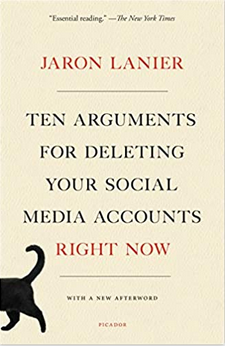
Around the same time as The Shallows came out, Lanier published Ten Arguments For Deleting Your Social Media Accounts Right Now. He used his book to shred social media global data “monopsonies,” calling your actions “relentless, robotic, ultimately meaningless behavior modification in the service of unseen manipulators and uncaring algorithms.”
Lanier knows whereof he writes. He was a Silicon valley tech geek who saw the light. He’s also an artist, musician and has cool dreadlocks.
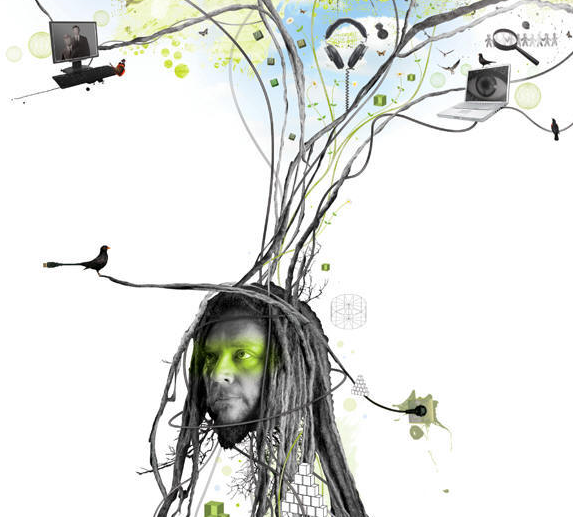
Lanier warns about social media and what Silicon Valley pushers euphemistically call “engagement” and is blunt in advising people to get off the social media train. He writes “of the large social networks, the one with the fewest assholes is LinkedIn,” but says you, Facebook, and your ilk “are becoming the ransomware of human attention. They have such a hold on so much of so many people’s attention for so much of each day that they are gatekeepers to brains.”
And make no mistake, what you’re doing is no accident. It’s all about enriching yourselves (and Zuckerberg) even if it means robbing us of our humanity:
“We in Silicon Valley like to watch the ants dig harder into their dirt. They send us money as we watch.”
I saw it all on Facebook and took the brunt of some of it too: The toxicity, the crazy conspiracy theories, fake news and crazy right-wing commentators, the social shaming, the algorithms, behaviour modification experiments and personal data harvesting. It’s creepy, just as your targeting me as a journalist to force me to do your bidding is creepy.
But it’s an addiction and I’m sure you know it. Just like the Imperial Tobacco Company of Canada Ltd. knew and continue to lure me into their deadly money trap — until 1990 when I puffed my last Matinee.
As hard as it was, I could not find a way to pry myself away from your virtual tentacles. After all, I love seeing posts and getting updates from friends and family on Facebook and keep in touch with people who are important to me on Messenger.
How could I just walk away from all of that?
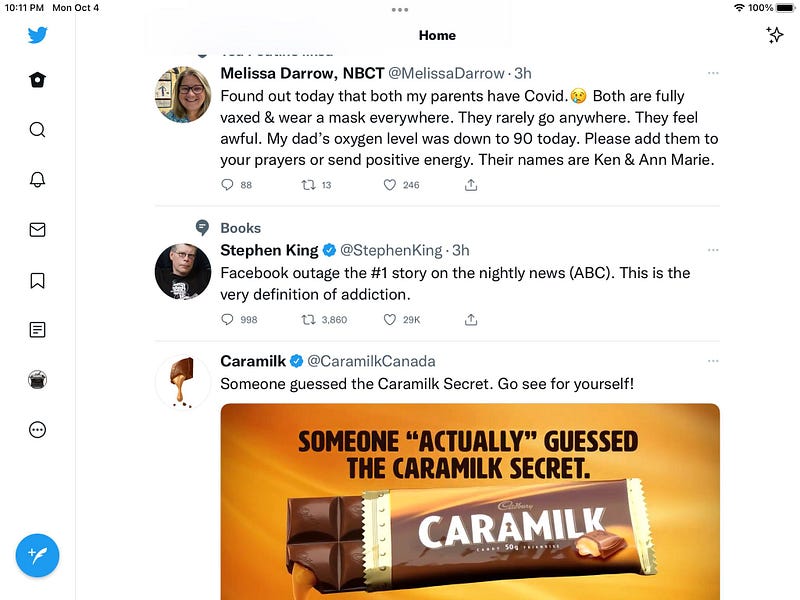
Even when your creepy algorithms freaked me out, I stuck with you in our dysfunctional relationship. On October 4, 2021, Stephen King posted this on Twitter, sandwiched between a sad story and ad for a chocolate bar, and I “engaged” in it somehow. It didn’t take long before I started seeing ads like this on my Facebook wall:
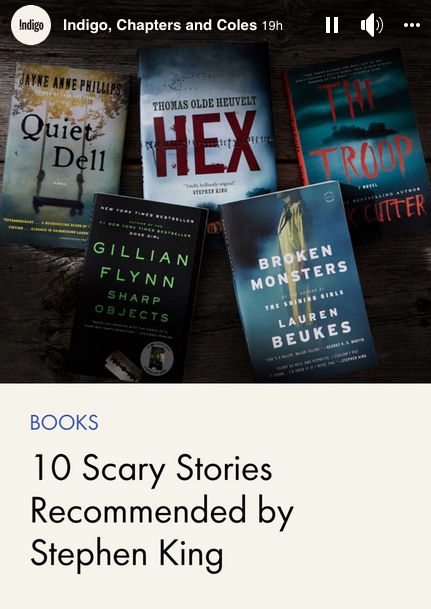
How do you do that, you creepy company of creepsters?
Around the same time, there was the appearance before the U.S. Senate by Facebook whistleblower Frances Haugen that blew up on the news. Her testimony about how your insidious business practices target its users, especially its damaging effects on young people, was shocking. Here’s one of the bombs she hurled:
During my time at Facebook, I came to realize a devastating truth: Almost no one outside of Facebook knows what happens inside Facebook. The company intentionally hides vital information from the public, from the U.S. government, and from governments around the world.
If that’s scary, here’s a dose of even scarier from Lanier:
Spying is accomplished mostly through connected personal devices — especially, for now, smartphones — that people keep practically glued to their bodies. Data are gathered about each person’s communications, interests, movements, contact with others, emotional reactions to circumstances, facial expressions, purchases, vital signs: an ever growing, boundless variety of data. If you’re reading this on an electronic device, for instance, there’s a good chance an algorithm is keeping a record of data such as how fast you read or when you take a break to check something else.
But you know all that — just like Imperial Tobacco knew what cigarettes were doing to my lungs. You survived Haugen’s testimony and probably made yourself (and Mark Zuckerberg) even more money during the pandemic. You also kept me as a willing pawn in your game.
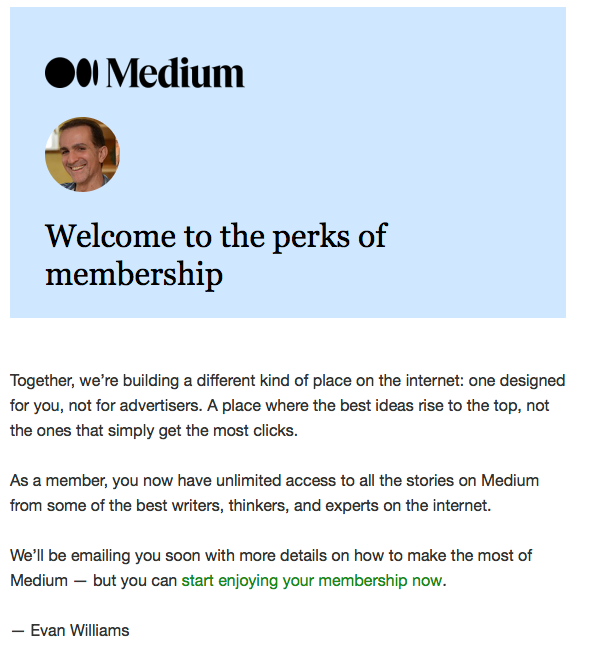
It’s not like I was unaware of the damage you caused, or the effects you were having on my behaviour. I also wasn’t solely tied to Facebook and recognized there are other companies that truly value my privacy and give me my space. Companies like Medium, for instance. With its shortcomings, I can’t help but feel good when I see this message after renewing my membership on this platform:
But I couldn’t kick the Facebook habit, you know. Not until your email landed in my inbox and I decided this is my detox determination, my moment to heal.
I knew I needed an escape. Like Lanier wrote:
We need to find a way back to reality, and the only way to do that is to have conversations that aren’t mediated by technology that is financed and animated by third parties who hope to persuade us. We must fight to speak to each other outside of the persuasion labyrinth.
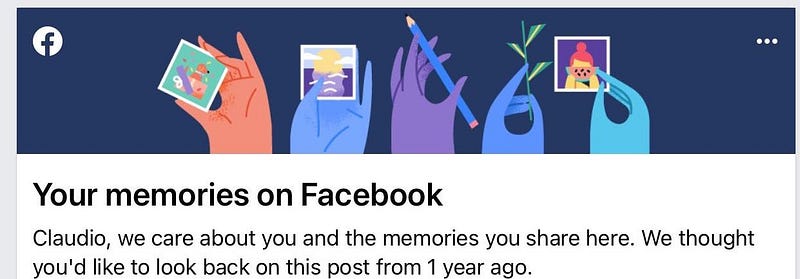
So I’m outta here Facebook. And to borrow from your own Harlequin-inspired love letter to users and former addicts like me, I’ll leave you with this: Because we are all this one big caring family, I’ll wish you a very Happy Canada Day eh!

Claudio D’Andrea has been writing and editing for newspapers, magazines and online publications for more than 30 years. You can read his stuff on LinkedIn and Medium.com and follow him on Twitter.


