
Take Good Care of Your Breasts — They Belong to You!
Are you up to date on self-exams and mammograms?
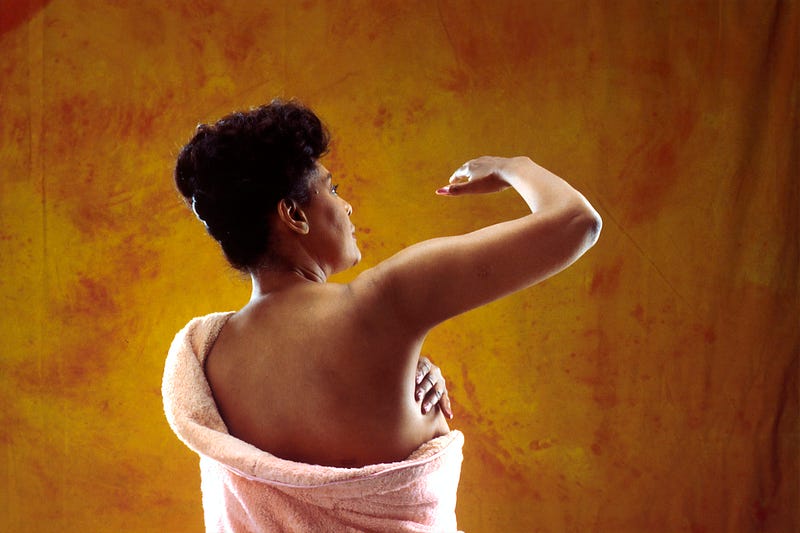
The first time I had a mammogram, I thought they’d brought back the Spanish inquisition. I learned over the years, the smaller you are, the more it hurts.
Saturday I’m going again. Even though I’ve lost a few pounds since my last check, I’m not worried. In fact, I’m happy to submit to the rigors of the test for what I hope is waiting on the other side — the all-clear.
Am I worried?
I’m not so much worried as concerned — a notch or two lower on the ladder, for two reasons. One, my mother had breast cancer. She was 75 at the time. She’s 90 now and still going strong.
She had a mastectomy, one breast, and lots of lymph nodes removed. Her attitude was great at the time and still is. At her age, surgery is recommended over chemo, which she much preferred. She uses a faux breast that slips into a sleeve on her specially made bras.
My risk is higher because of her having had it. And because I’ve had a lymphoma — Hodgkin’s Disease. That also puts me at a higher risk for breast cancer, as does the chest radiation I had at the time and my current age.
Not so high as to be tested more than every two years, so far, but when I go to my appointment, I will ask about that.
How about you? Do you have any of these risk factors?
Risk factors for breast cancer:
(from the City of Hope)
- A personal or family history of breast cancer, including DCIS and LCIS
- Inherited genetic predispositions, most commonly with BRCA1 or BRCA2 gene mutations
- Elevated lifetime estrogen exposure, including:
- Early-onset of menstruation (before age 11)
- Late-onset of menopause (after the age of 55)
- Older age of first childbirth (after age of 30) or never having given birth
- Taking estrogen and progesterone after menopause
- Having dense breast tissue
- Obesity
- Prior radiation therapy to the chest area
- alcohol, especially in excess of two drinks a day
- Age: Two-thirds of invasive breast cancers are found in women 55 or older.
- Race and ethnicity: Caucasian women are more likely to be diagnosed with breast cancer, but African-American women are more likely to die from this disease. African-American women are also more likely to be diagnosed at a younger age (under 45). (Bolding mine)
Research has also shown that a healthy lifestyle and maintenance of a normal weight, including a well-balanced diet and regular exercise, may reduce breast cancer risk.
Looking at this list, I get to add age to my factors. So now I’m up to three. This would be a great time to review the signs and symptoms — again from the City of Hope cancer center in Southern California.
Signs and symptoms of breast cancer:
The most common symptoms of breast cancer include:
- Feeling a lump in the breast area, with or without pain
- Change in breast shape or size
- Dimple or puckering in breast
- A nipple turning inward into the breast
- Nipple discharge other than breast milk, especially if it is bloody
- Scaly, red, darkened, or swollen skin in the breast area
- Itchy, scaly sore, or rash on the nipple
- Dimple pitted appearance or feel (similar to an orange peel) in the breast area
- Swollen or enlarged lymph nodes around the breast area, including the collarbone and armpits
Although these symptoms can be caused by other conditions, you should check with a doctor — preferably a breast health specialist — so they can make a definitive diagnosis.
(Sources: National Cancer Institute and American Cancer Society)
Gratefully, I do not have any of these. I combine the circling prayer I do around my heart area with a quick check for lumps and any other changes.
Are you doing monthly breast self-exams?
This reminds me, there are specific instructions for how to do our breast self-exams. They’re more systematic than what I’ve been doing. In case, like me, you haven’t reviewed them for a while, here are the instructions from the Mayo Clinic:
Begin with a visual examination of your breasts
Sit or stand shirtless and braless in front of a mirror with your arms at your sides. To inspect your breasts visually, do the following:
- Face forward and look for puckering, dimpling, or changes in size, shape, or symmetry.
- Check to see if your nipples are turned in (inverted).
- Inspect your breasts with your hands pressed down on your hips.
- Inspect your breasts with your arms raised overhead and the palms of your hands pressed together.
- Lift your breasts to see if ridges along the bottom are symmetrical.
If you have a vision impairment that makes it difficult for you to visually inspect your breasts, ask a trusted friend or a family member to help you.
Next, use your hands to examine your breasts.
Common ways to perform the manual part of the breast exam include:
- Lying down. Choose a bed or other flat surface to lie down on your back. When lying down, breast tissue spreads out, making it thinner and easier to feel.
- In the shower. Lather your fingers and breasts with soap to help your fingers glide more smoothly over your skin.
When examining your breasts, some general tips to keep in mind include:
- Use the pads of your fingers. Use the pads, not the very tips, of your three middle fingers for the exam. If you have difficulty feeling with your finger pads, use another part of your hand that is more sensitive, such as your palm or the backs of your fingers.
- Use different pressure levels. Your goal is to feel different depths of the breast by using different levels of pressure to feel all the breast tissue. Use light pressure to feel the tissue closest to the skin, medium pressure to feel a little deeper, and firm pressure to feel the tissue closest to the chest and ribs. Be sure to use each pressure level before moving on to the next spot. If you’re not sure how hard to press, talk with your doctor or nurse.
- Take your time. Don’t rush. It may take several minutes to carefully examine your breasts.
- Follow a pattern. Use a methodical technique to ensure you examine your entire breast. For instance, imagine the face of a clock over your breast or the slices of a pie. Begin near your collarbone and examine that section, moving your fingers toward your nipple. Then move your fingers to the next section.
If you have a disability that makes it difficult to examine your breasts using this technique, you likely can still conduct a breast self-exam. Ask your doctor to show you ways you can examine your breasts.
Results: What’s Normal:
(again, from the Mayo Clinic)
Many women find lumps or changes in their breasts, since some of these are normal changes that occur at various points in the menstrual cycles. Finding a change or lump in your breast is not a reason to panic. Breasts often feel different in different places. A firm ridge along the bottom of each breast is normal, for instance. The look and feel of your breasts will change as you age.
If you have any signs or symptoms listed about, follow-up with your doctor immediately so you can get tested and any needed treatment.
The sites I looked at remind us not to panic. Breast cancer is treatable, and the treatments have improved over the years. Early detection is especially important for black women in particular as the cancer death rates are higher.
They also mention that you can have pain and soreness in your breasts, and it doesn’t usually mean you have cancer. There are other conditions and diseases of the breast that can cause this. But do not ignore any of these symptoms, please. To paraphrase the old popular song:
Take good care of your girls — they belong to you!
Marilyn Flower writes political humor and satire to delight socially and spiritually conscious folks. She’s a regular columnist for the prison newsletter, Freedom Anywhere, where she writes about faith and prayer. Five of her short plays have been produced in San Francisco. Clowning and improvisation strengthen her resolve during these crazy times. Stay in touch!