
Tactile Literacy and Sustainable Living — The Kandinsky Connection
How embracing texture and variety can foster a more eco-friendly lifestyle.
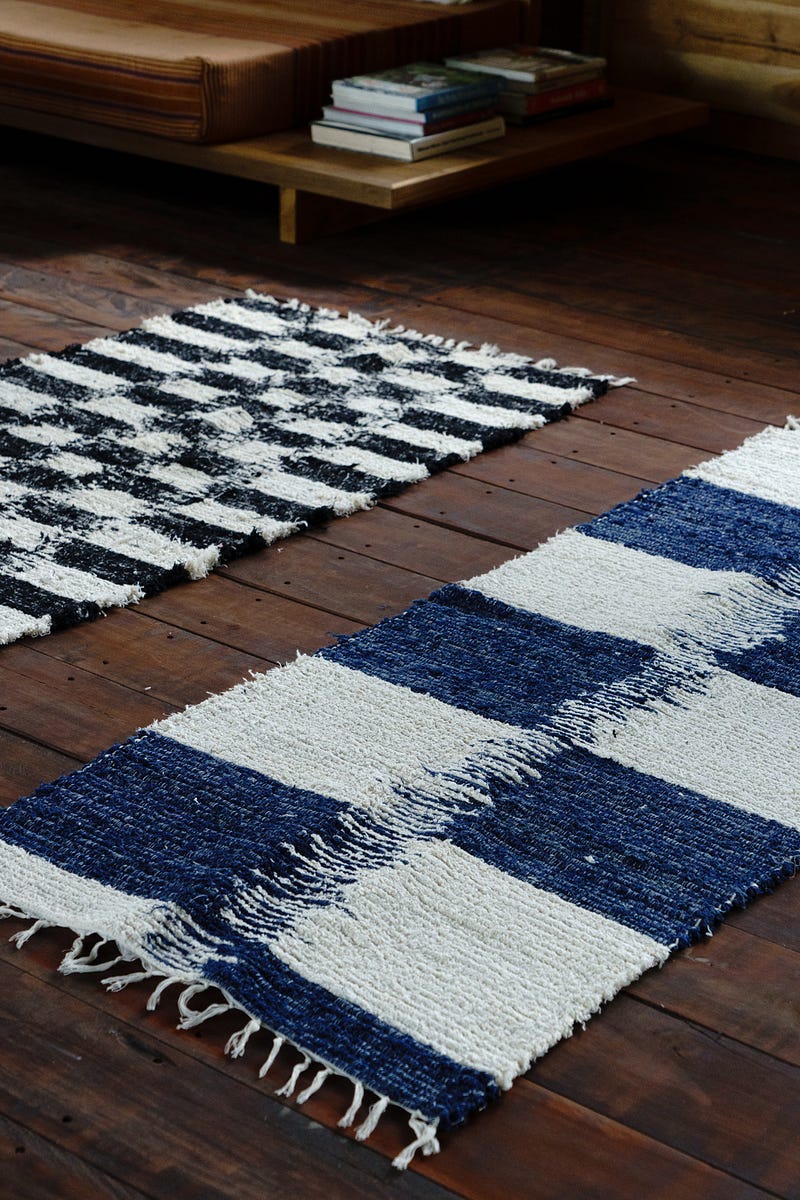
In my approach to sustainable living and sustainable design phenomenology is crucial! Let me explain.
A phenomenological approach to understanding the world and human life emphasizes that our relationship with things isn’t a distant one; rather, things speak to our bodies and affect the way we live our lives. Hence, in order to promote sustainable behavior and endorse sustainable lifestyles, things must encourage and allow for us to live sustainably—whether that means that the things we purchase and surround ourselves with are flexible or malleable, tactilely nourishing, or have a long-lasting expression.
In this context, it is worth mentioning the Russian artist and philosopher Wassily Kandinsky and his phenomenological approach to our surrounding world.
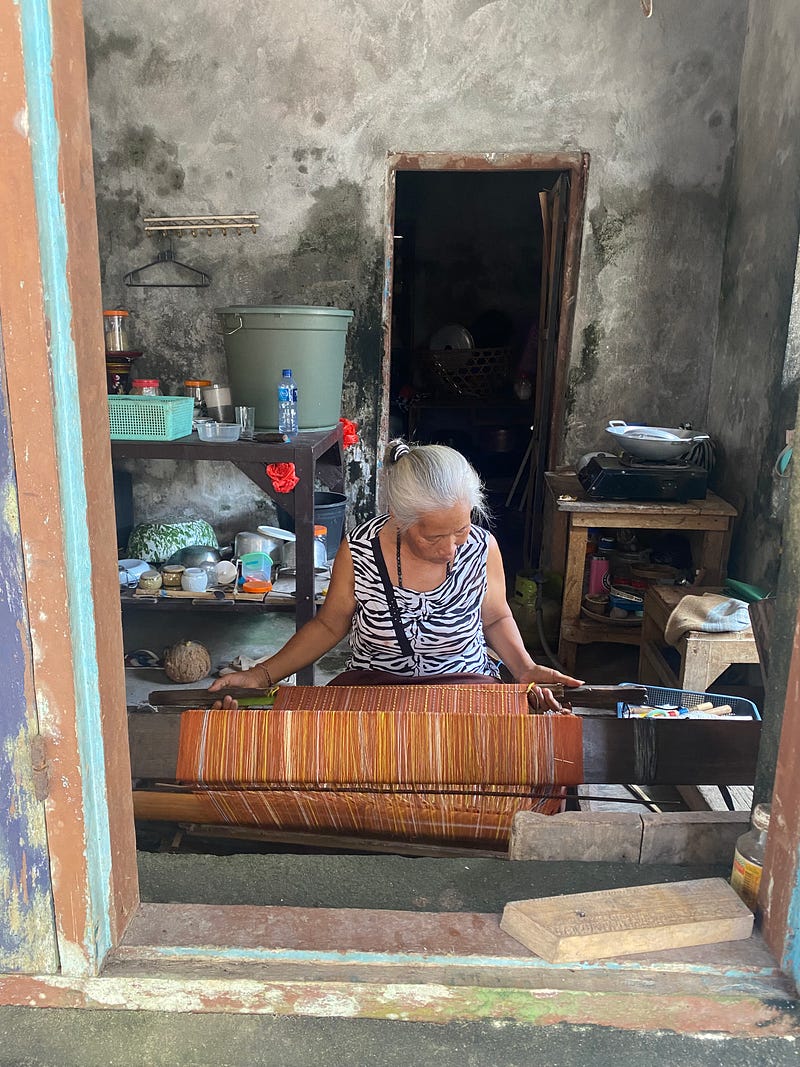
Kandinsky has an intriguing concept that he calls spiritual sensitivity. Spiritual sensitivity is interlinked with our ability to be sensuously present in the world, and to, what we could call, our sensuous intelligence.
Sensuous intelligence involves tactile literacy: our capability to perceive and appreciate the world through touch experiences and atmospheric and textural stimuluses. However, the majority of us spend most of our days in the pale-blue light of the computer screen, only being slightly tactilely stimulated by the smooth buttons of the keyboard. Even many small children are pulled away from their natural multi-sensory exploration of the world by the absorbing entertainment of the tablet or smartphone screen, which is also characterized by its smooth surface.
This fact makes cultivating tactile literacy difficult.
Furthermore, children being told that “Trees really aren’t blue” when they allow their imaginations to run free and draw from their hearts doesn’t add to our capability to engage multiple senses into our explorations of the world.

But, if we fail to build up and nurture our tactile literacy we miss out on vital, insight-providing sense-experiences. As French phenomenologist Maurice Merleau-Ponty says: “man is a mind with a body”. We cannot separate our minds and bodies.
Our late modern lifestyle and work culture, however, primarily engages our minds and visual senses. Photos are filtered to perfection on social media to stimulate and please the viewer visually; no roughness or imperfections are tolerated.
We engage in brainstorming processes and discussions at work, and hence primarily make use of our reflective, analytical, and cognitive abilities. I recently went to a conference that involved multidisciplinary professionals. In the conference-catalogue the pictogram for a designer was a laptop; not a pair of hands creating something, not needle and thread, not pencils, not sketches, not a sewing machine, or a wood cutter. In the developed part of the world, we work primarily with and on computers, and we and outsource the creation process to developing countries.
However, whenever there is an overload of something, a counter tendency tends to emerge. And, the tendency to worship off-line activities, and the leaning toward creating stuff with our hands — whether that being knitting, cooking, sewing, drawing, playing an instrument, or chopping firewood for that matter — constitutes an antithesis to the immense focus on mind-driven, non-tactile activities that are so dominant in our time and culture in developed countries.
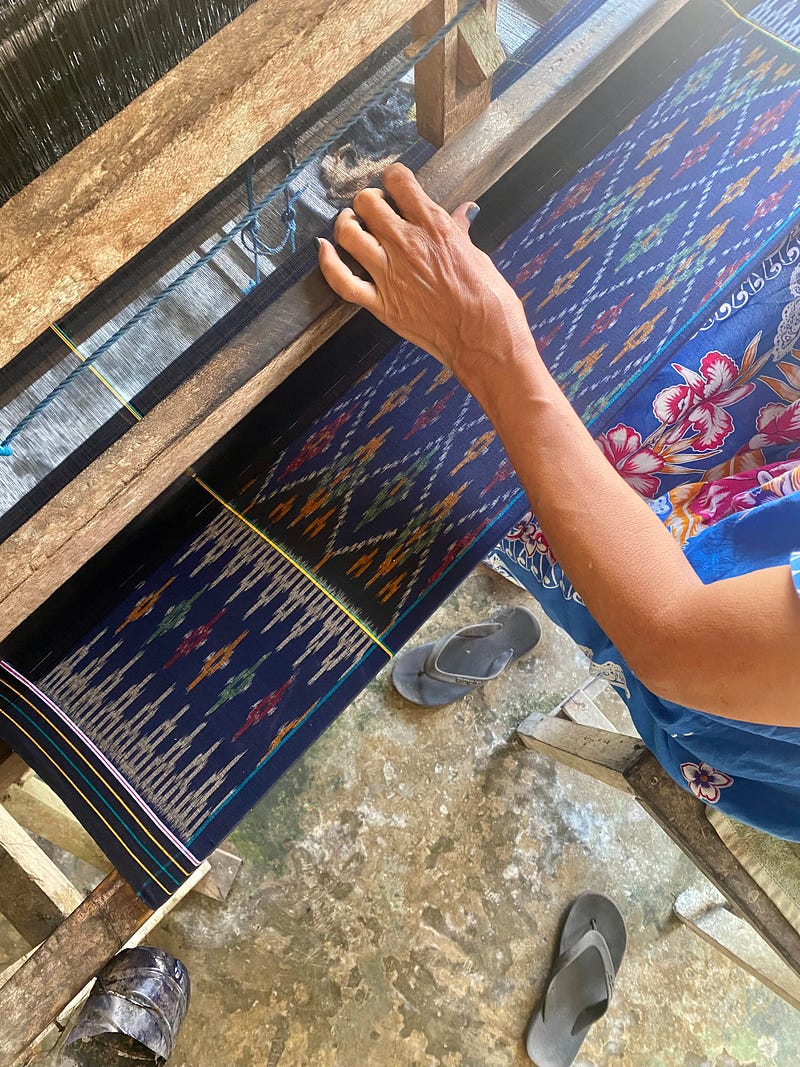
A cultivation of our tactile literacy will only happen if we seek and allow ourselves to indulge in textural stimuli, thereby expanding our sense-horizon. Tactile variation in object-surfaces is essential in order to nurture our tactile senses.
Hence, in order for familiar surroundings to provide us with ongoing pleasure and aesthetic nourishment they must contain rhythms characterized by nourishing variations and friction or some kind of anti-smoothness.
However, adding anti-smoothness to our smooth, cultivated world requires a conscious choice in relation to which objects to invest in. We need to be met by a variation of surfaces and materials in order to build up a colorful, vibrant, wide-ranging tactile literacy — and we must consciously challenge the touch-senses of our children.
Being unfamiliar with a wide range of surface variations is like having a limited vocabulary when trying to describe a visually pleasing aesthetic experience.
One comes short and is left with poor descriptions like: “It’s soft, somewhat smooth, you know…” or, “It feels kind of cold, but not like metal.” Both examples are imprecise.
In other words, in a late modern world of technical devises and lost tactility, we, the consumers and users of objects, must consciously seek diverse tactile experiences, for example by surrounding ourselves with objects that provide us with tactile variation or by choosing to invest in “non-smooth” artifacts that are meant to be used and to be shaped by wear and tear. And, to accompany the growth of tactile literacy, a vocabulary that can capture the diversity of aesthetically pleasing and challenging tactile experiences must be built up. When associating words with nourishing, tactile experiences, we become aware of their qualities and able to appreciate their worth.
Of course, however, the conscious appeal for nourishing object-experiences requires that robust, rough, resilient, sensorially stimulating design- objects are created.
Let’s connect! https://www.instagram.com/the_immaterialist/