Systems thinking made easy: The step by step process
Systems thinking should not give you a headache. Here's the step by step process with examples.
Step 1: Figure out what type of problem you are dealing with. There are two types of problems, clock and cloud. To use systems thinking, you should be solving cloud problems. The two following definitions will help you classify your problem into one of these categories.
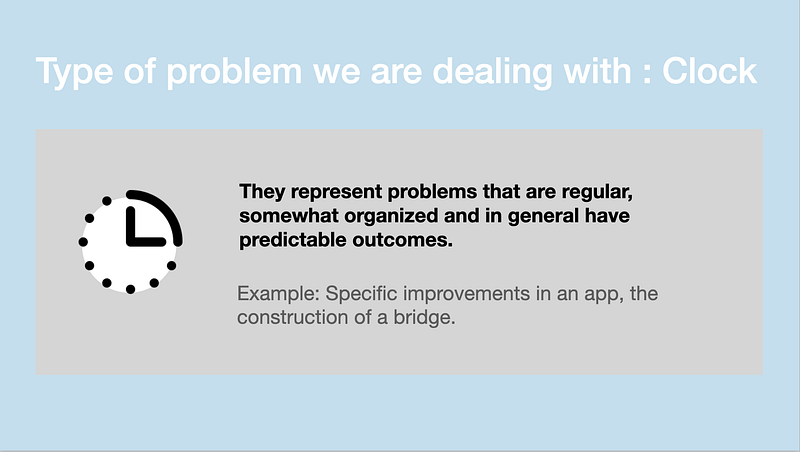
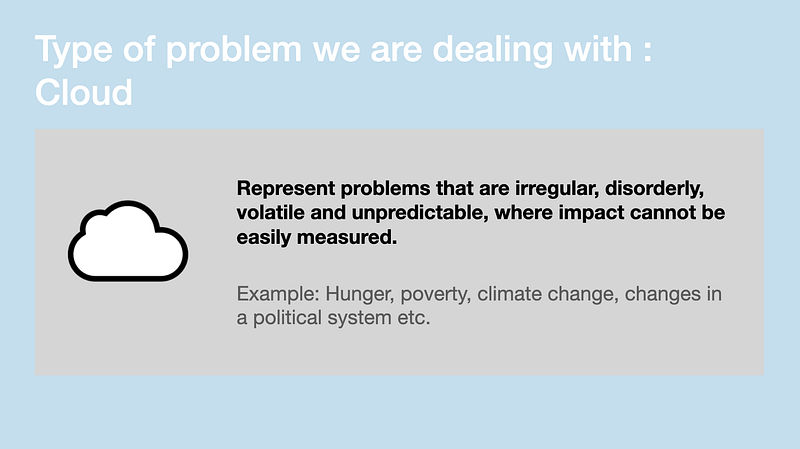
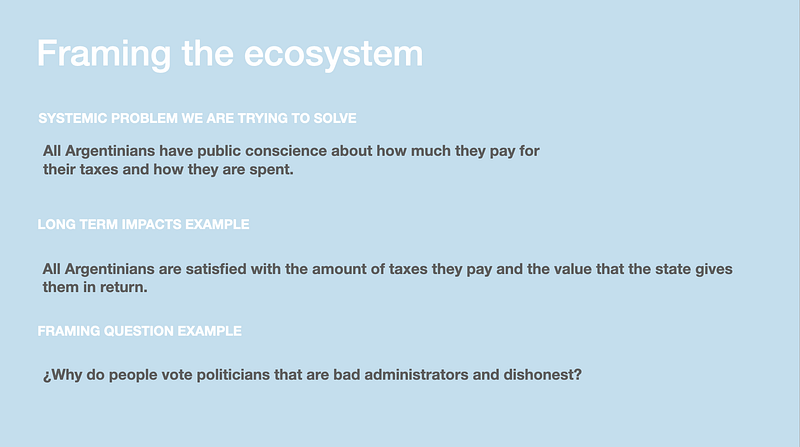
Step 2: Frame your problem/ecosystem, what are you trying to solve ? Why are you trying to solve it ? Write your sentences as clear as possible, or at least in a way that is clear to you and your team.
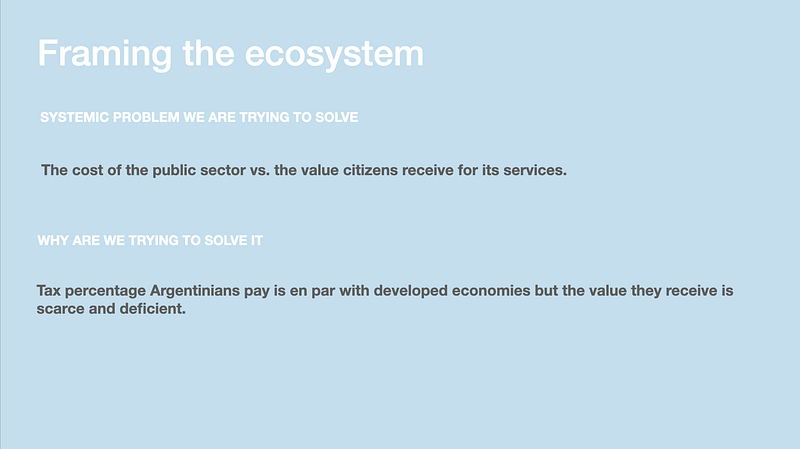
Step 2bis: Take the systemic problem description you are trying to solve and think about the long term impacts you want to create (when solving systemic problems of the sort, you have to think about the long term). It is also important to have a main framing question; you can have a main one and secondary questions that may relate if it helps to frame the subject. Adjust to your group's needs.
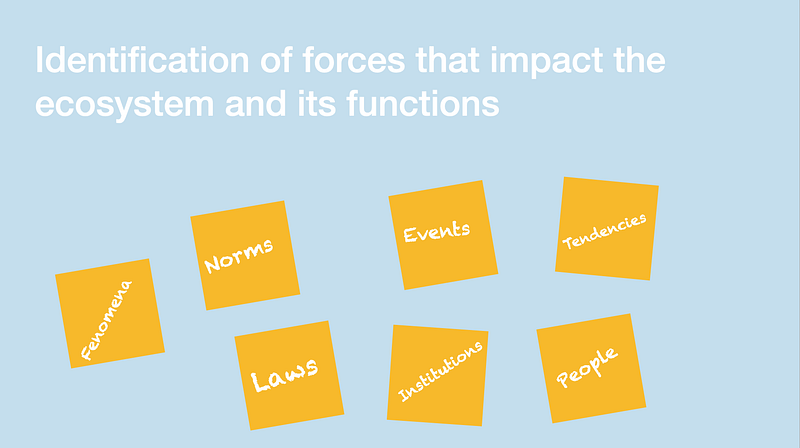
Step 4: Identify the forces that impact your ecosystem and its functions. These forces could be anything, from people, groups, tendencies, markets, specific events, norms, laws etc. Write each one of these on a post it.
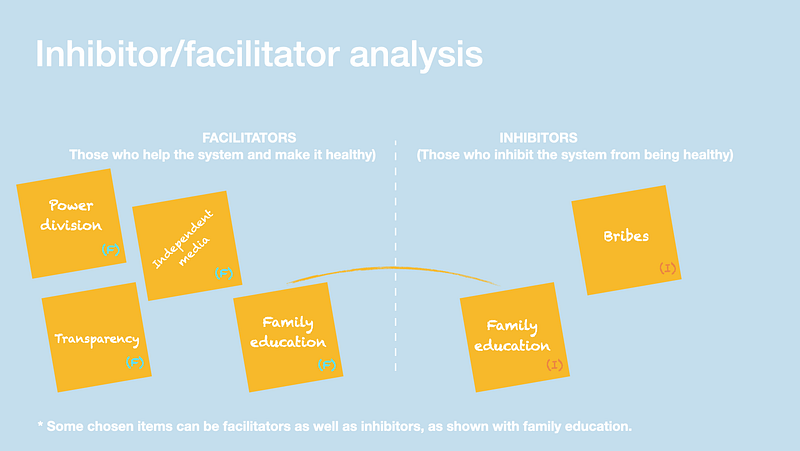
Step 5: Make an inhibitor/facilitator analysis. Separate post its in these two groups. In some cases there can be items that can be facilitators and inhibitors, like family education. If you had a good family education it would be a system facilitator, if not, a system inhibitor. Remember to label your post its with an "F"or a "I".
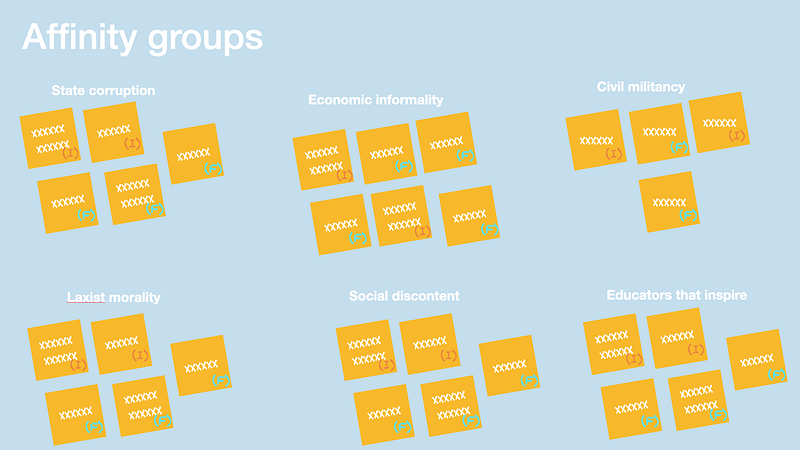
Step 6: Separate post its into affinity groups as shown in the example below. Label your groups clearly, all your post its should be marked with an "I" or an "F" from the previous exercise.
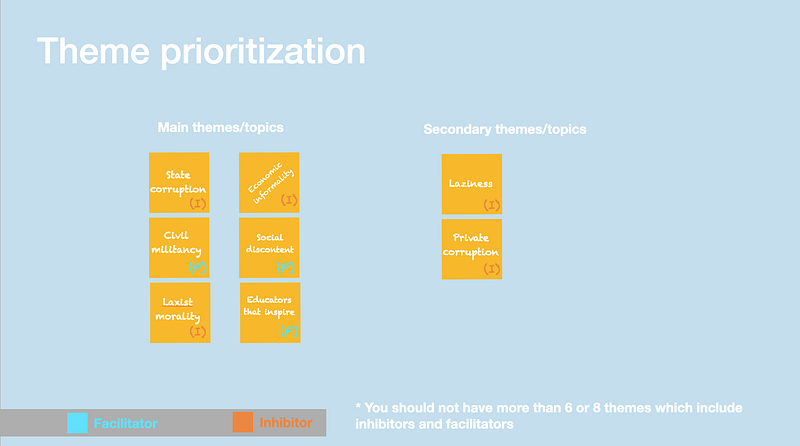
Step 7: Prioritize your affinity groups. Write the title of your groups in separate post its, classify them into main themes and secondary themes and don’t forget to mark them as facilitators or inhibitors. You should not have more than 6 or 8 themes, which include inhibitors and facilitators.
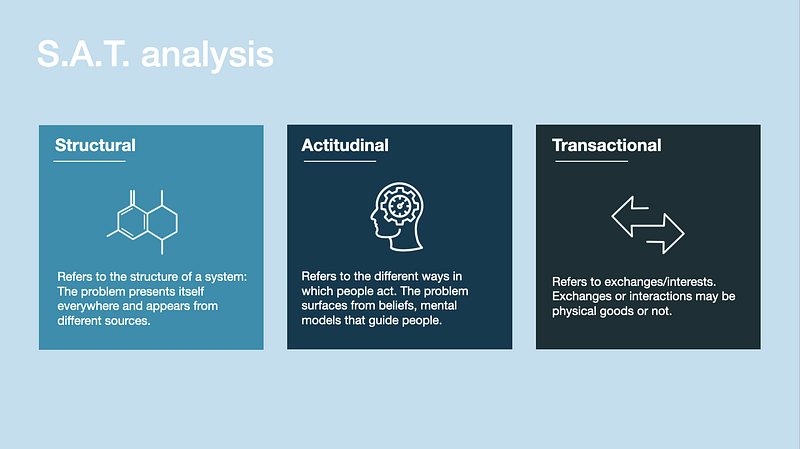
Step 8: Make a S.A.T analysis for each of your themes/groups. For each post it you wrote, you need to figure out how it impacts the system. If it impacts the system in a structural way, put an "S" on the post it, if it is Actitudinal, put an "A", or if its Transactional, a "T". This will help you pinpoint where to enter the system and what to impact first. Structural problems are usually very hard to tackle, transactional are easiest. When your ecosystem is finally complete the S.A.T. analysis will help you see where to start working.
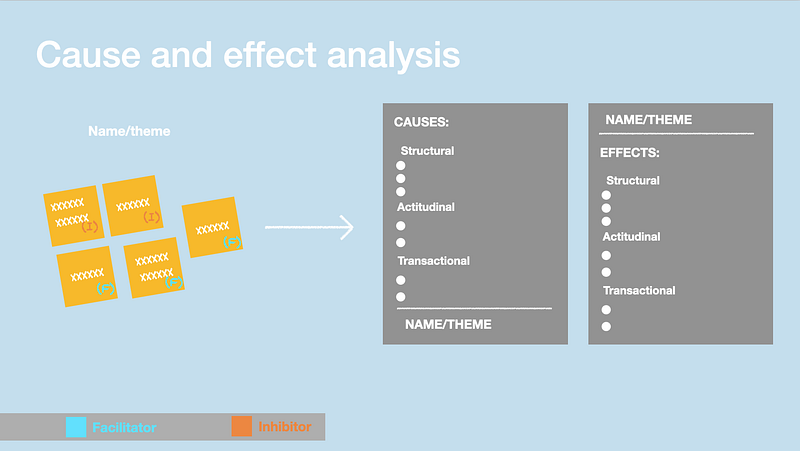
Step 9: Once we finish our S.A.T analysis, we need to understand which of them are causes and which of them are effects within the group/theme. This will help us create "Loops"with your clusters, so we can then start forming our big structure, the final stage of our ecosystem. Take two separate sheets of paper and structure them as shown below in grey. Complete both sheets for each cluster.
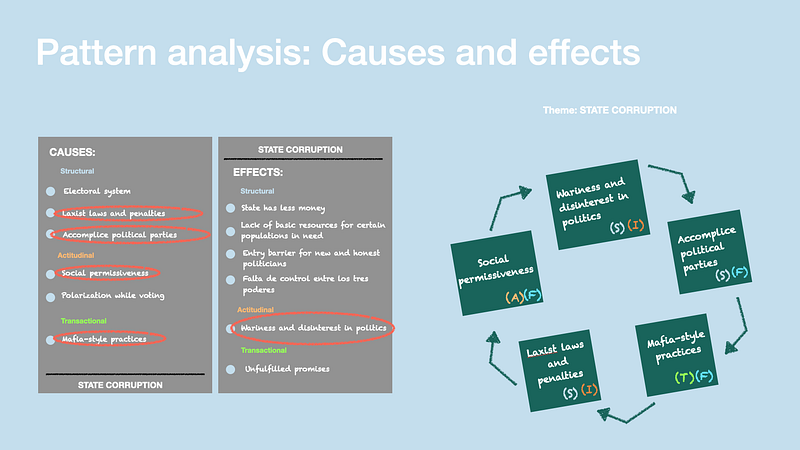
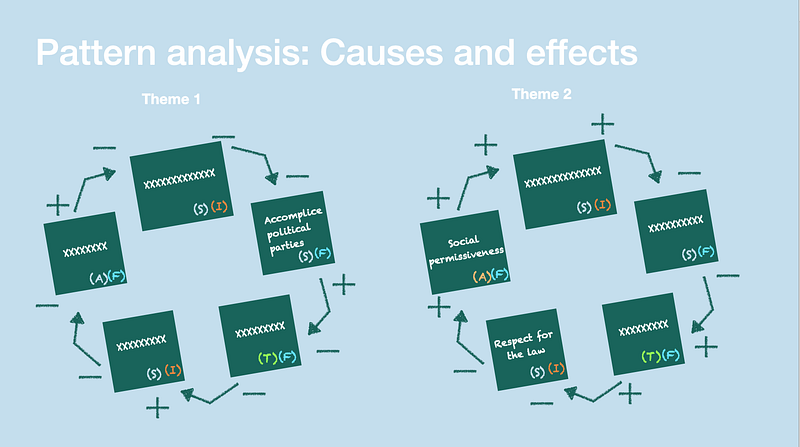
Step 10: Once you finished filling your cause and effect sheets, we need to do a pattern analysis. You may end with several loops that emerge from one theme. Below, there's one example on how to start. Choose from your lists the things that you feel might form a loop. Place your post its as shown in the right side of the slide. Each loop is like a small story that should be coherent on its own. A way to make sure the loop "works", is to read it and actually check if the post it that follows the previous one makes sense and connects to the following one.
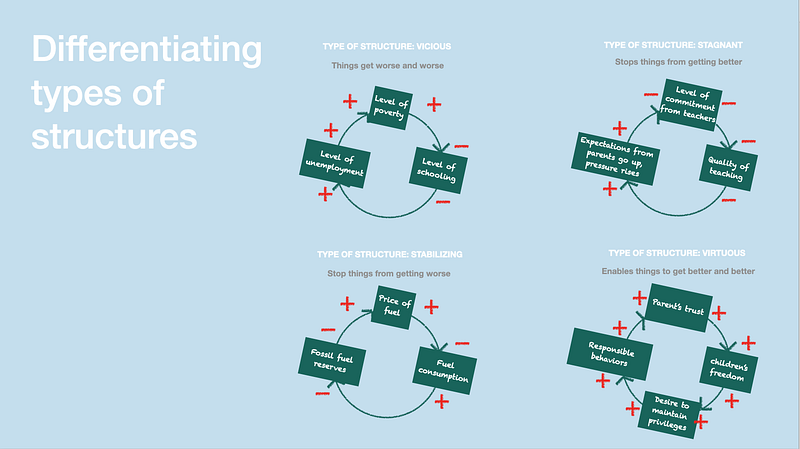
Step 11: Once you finished making your loops, we need to go one step further and differentiate the different kinds of structures that we are dealing with. there are four kinds of structures: Vicious (things get worse and worse), Stagnant (stops things from getting better), Stabilizing (stops things from getting worse) and Virtuous (enables things to get better and better). Here are some examples below that can help you identify these structures. You may notice that there are some "+"signs and "-"signs before and after each post it in the loops. You need to add them to be able to understand how each post it impacts the next. You should read the loops as follows to see if they make sense (first example vicious structure): If the level of poverty increases, the level of schooling decreases. If the level of schooling decreases, the level of unemployment increases, which in turn increases the level of poverty.
Step 12: Once you finished making your loops and differentiating your structures, each theme should look as shown below in the example. Make sure each post it is marked by all the previous steps.
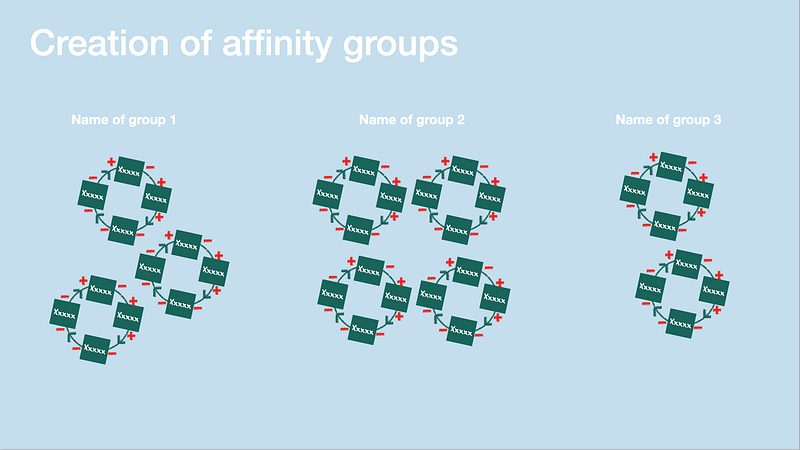
Step 13: Create affinity groups for your loops, as shown in the example below. Each loop or theme will be transformed into a main theme/group.
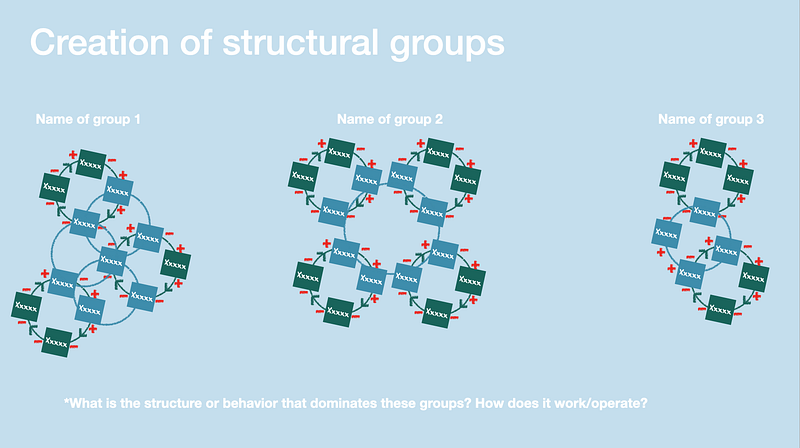
Step 14: Creation of structural groups. When you crated your groups, you may have noticed that some post its enabled to create bigger loops while connecting all the loops of the group. Sometimes some loops may not connect directly, but they should connect with at least one loop of one of the themes you constructed. When identifying your main structure, think about what is the behavior that dominates the group, how does it work or operate?
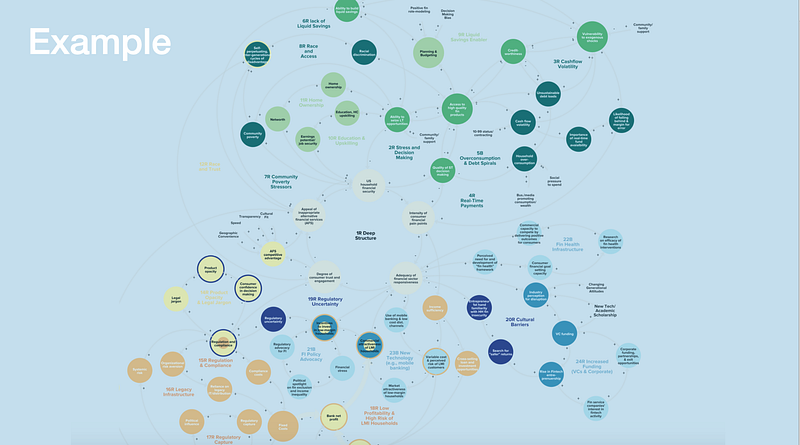
Step 15: Once you finish connecting your loops and identifying the structural groups, you will end up with a clear main structure of your entire system and satellite groups as shown below.
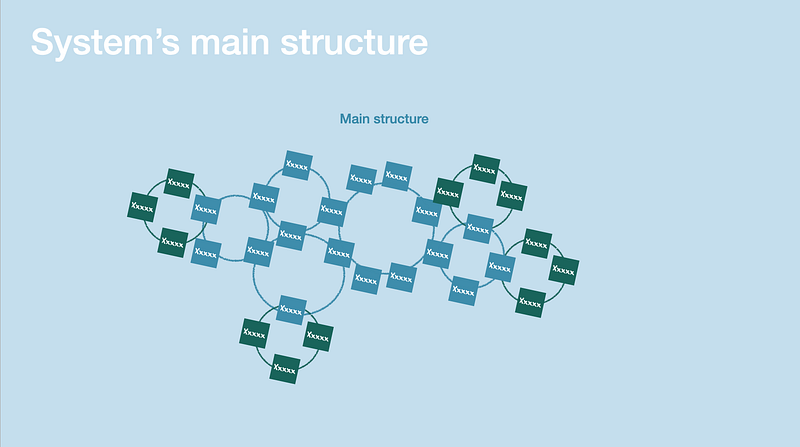
In this detailed example, you can clearly see the deep or main structure, satellite groups in different colors, main themes and secondary themes. The steps previously depicted should help to make your analysis, but feel free to bend the steps as needed to accommodate the needs of your group while working.