
What If You Abandon Your Smartphone?
Late last year, I was at a dinner with friends and we were talking about how we use our smartphones too much. It suddenly hit me that, one year earlier, I’d had the exact same conversation, yet I was still using my phone just as much.
Then and there, I decided to give up my smartphone.
Why I switched
I gave up my smartphone for three reasons:
- Excessive usage: I used my smartphone more than I wanted, and less purposefully.
- Lack of mindfulness: I felt there was an association between my smartphone and my not being as mindful and focused as I wanted.
- Quality of relationships: I wanted to try and replace “a lot of superficial friendships” with “a few deeper friendships”.
The switch
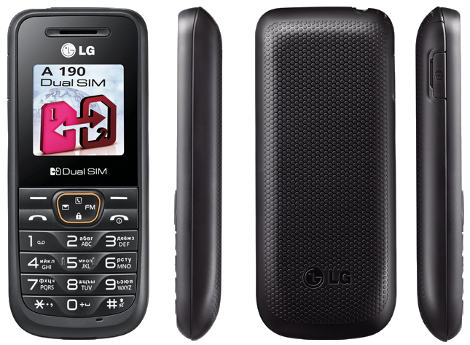
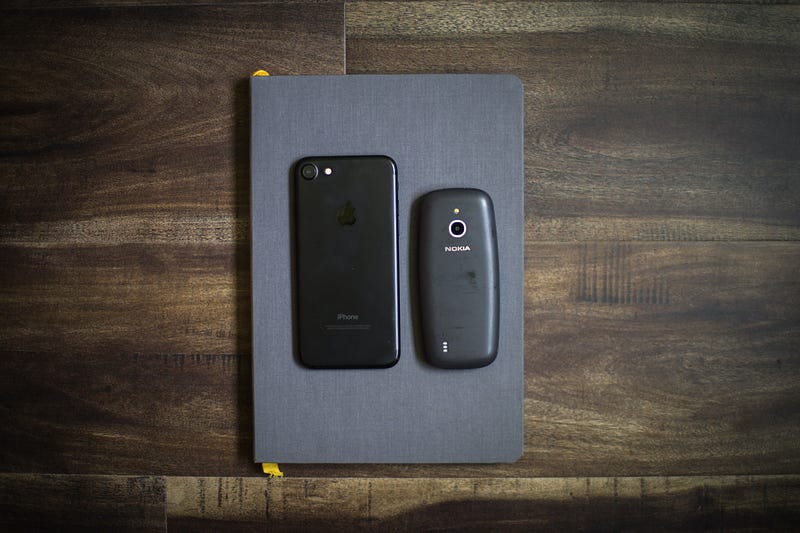
I asked a relative to give me one of his old dumbphones. Even though I wanted a Nokia for nostalgia’s sake, I ended up going with an LG A190.
The following few days were filled with pleasant surprises:
- Battery life: the dumbphone’s battery lasts about 4–5 days — no more battery anxiety!
- Ergonomics: when I picked up the iPhone after a week of using the dumbphone (which has a nice curve in the back), I was shocked at how uncomfortable it felt. I guess modern phones are just not that pleasant to hold.
- Screen works when wet: it rains a lot where I live — now I can use my phone even in the rain!
- User interface: the dumbphone’s menu system is not only pleasant but quite intelligent. I can do many things faster than on a smartphone! (If you’re interested in these UX aspects, you might be interested in this article: “Almost everything on computers is perceptually slower than it was in 1983”).
- T9 predictive text: I’d forgotten about how useful T9 is. It’s quite fast — though still not as fast as a smartphone keyboard.
The impact on my life
My “smartphone-anxiety” disappeared
I have been feeling unequivocally better and calmer since dropping my smartphone, and I didn’t think I was stressed before! The very night after I turned off the smartphone, I unconsciously tried to “check” it 7 times, just because it was on the desk next to me. Those urges are gone. As a bonus, I’ve also stopped checking my work email after hours.
I feel mentally clearer
The dumbphone requires me to regularly delete SMS’s and calendar appointments, to free up space. Every time I do it I get a fresh feeling of clarity and presence. With the smartphone, a small part of my subconscious always wondered if there was some app I needed to check. With the dumbphone, I know there isn’t.
My life became less frantic
The flexibility offered by mobile phones (in particular, smartphones) is very beneficial, but it has led to a much faster and disorganised lifestyle. Several times I’ve noticed friends needing to quickly send their availabilities to some Whatsapp group because someone in there needs to change a group appointment (scheduled for only a few hours later!). By having only a dumbphone, I have essentially extricated myself from that messiness. Once the appointment is changed, if I’m available, I’ll attend; if not, I won’t.
I consumed better content
My “book reading rate” is 2500% higher when I don’t use a smartphone (last year I read 2 books but this year I’ve already read 18 books in 4.5 months without a smartphone). What’s more, I used to be very reactive in my content consumption (thanks, attention engineers), but have now become more proactive. For the first time in a long time, I thought to myself “what are some things I should be reading more about?”
I (re)discovered checking the weather
To check the weather, now I just look outside. It’s not like weather forecasts were ever too accurate anyway. I also noticed that if some unusual weather event is going to happen, people talk about it in the days leading up to it, anyway — so I’m covered.
I started waiting less time for the bus (!)
The bus app in my city often shows inaccurate bus arrival times. I once channelled my frustration into data collection, and found that I waited an average 11 minutes for the bus (n=22 trips). When I stopped using a smartphone (and thus, the app), I started noticing certain patterns in the bus arrival times and adjusted my commute accordingly, leading my wait times to drop drastically (I don’t remember waiting more than 5 minutes). In other words, common sense did a better job at predicting bus arrival times than an app.
This is probably one of the most impressive (and counter-intuitive) outcomes of my switch to a dumbphone. What’s more, the waiting became more pleasant. I stopped being frustrated that the bus was late (compared to the app’s inaccurate prediction) and I started simply… waiting.
I became more present
For the first time in 6 months, I sat on a bus and simply looked out the window for half an hour. No music, no book, just looking out the window. Another day I just sat and thought up a new recipe for dinner. On another occasion I reflected about an idea, and had 3 other good ideas in the process. These are just examples to illustrate a broader, more important, point: without my smartphone, I became more present in my daily life and, with this gain in mindfulness, I had better ideas and became calmer and happier (it’s as true as it is cliché).
I became more productive
In my (short) time without my smartphone, in addition to reading a lot more books, I wrote a few articles on Medium; built a wooden backgammon board from scratch; composed two songs for the guitar; started my video editing project; created and maintained a substantial vegetable garden in our home; and did a number of other home improvement tasks.
These were all new activities, added to my existing work/volunteering/social commitments. When I had a smartphone, if I needed to choose between a task like “figure out how to edit videos” and “browse your smartphone aimlessly for 15 minutes”, the Instant Gratification Monkey in my brain would choose “browse the smartphone”. Without a smartphone, Instant Gratification Monkey found itself in trouble.
Social experience
I’ve been calling friends and family more
After switching to a dumbphone, I started feeling somehow disconnected from people, since I could no longer easily Whatsapp them — but I responded to that by calling them, which was an even better form of connection. Exchanging a few Whatsapp messages once every couple of months does not a friendship make. As it turned out, the feeling of disconnection was a useful indicator that I had not been in touch for a while and I should give someone a call. I’m still not doing this as well as I’d like, but I feel I’m on the right path.
I’ve stopped sending messages in place of calling
I’ve realised that a lot of modern communication relies on emojis. In the past, if someone had sent me a message on Whatsapp saying someone in their family was sick, I might have replied with a heartfelt written message, with a few emojis as well. After switching to the dumbphone, more than once I stopped myself from replying via message because I realised it would be too “dry” to reply without any emojis. As a result, I called the person instead. In other words, and quite counter-intuitively, my communications with others became richer precisely because I no longer had access to the convenience of smartphones — I had to call them and have an actual conversation.
I no longer keep track of where my phone is
Most of us have our phones relatively close to us most of the time — and I remember feeling a certain “pull” coming from my smartphone. Now I usually lose track of where my phone is. I don’t know if radiation from phones can cause cancer (who knows what sources to trust these days) but I’m pretty sure it can’t do me any harm when the phone is sitting in a different room altogether.
I’m gradually re-adjusting my behaviours
A few months after I dropped the smartphone, I was in IKEA and wondered what time the store was going to close. I thought of checking my smartphone, only to realise I didn’t have it anymore. Then I thought “Oh well, I guess I won’t know the answer.” It took me probably a full minute before I remembered I could ask the employees — or any other shopper, for that matter.
Practical advice for making the switch
1. Assess how you use your smartphone
Consider every app on your phone and answer the following question: “What things do I do on this app?” For example, “I use Whatsapp to exchange messages with people, to hold calls, to share my location, and to update my status”.
2. Decide which of those things are essential and not
To continue with the Whatsapp example, “updating my status isn’t essential, but I do want to keep communicating with people.”
Don’t be too conservative. One of the harder functions to replace was a joint shopping list that I had with my wife (we used Wunderlist for that). We used to depend on it quite a lot and there was no simple alternative when using a dumbphone. But we’ve come to realise that… we didn’t need it that much after all!
3. Look into how to do the essential things without your smartphone
Back to the Whatsapp example: ok, you’ve established that you do want to continue communicate with people. Who are the people you really want to communicate with? How can you do it without your smartphone? Can you exchange emails? Can you call them with a dumbphone? Can you see them at the park? Can you set up Google Duo calls on your laptop?
4. Be pragmatic
Don’t try to do everything perfectly. For example, I decided I wouldn’t bother to transfer all my contacts to my dumbphone (they wouldn’t fit in there anyway), just the few people I knew I would be calling/messaging from my dumbphone. If I ever needed to contact someone else, I would then pull their details from icloud.com. I probably only had to do this about 10 times.
5. Learn by doing
You can overthink the dumbphone switch to death. Just try it for a week and see how it goes! You can analyse a watermelon all you want, but you’ll only really know what it’s like on the inside when you crack it open.

Finally… take the leap!
Crack that watermelon open already! You just might love how sweet and fresh it tastes.
If you decide to do it, I’d love to hear about how it went. Good luck!


