
Sustainable Snowdonia — The Centre for Alternative Technology
The Welsh tourist attraction that has been ‘going green’ for fifty years
“Some 80 million homes could be built from the straw that is wasted every year all around the world,” says Peter, our guide. Immediately, I think of the three little pigs’ nursery story and the big, bad wolf huffing and puffing to blow them all down.
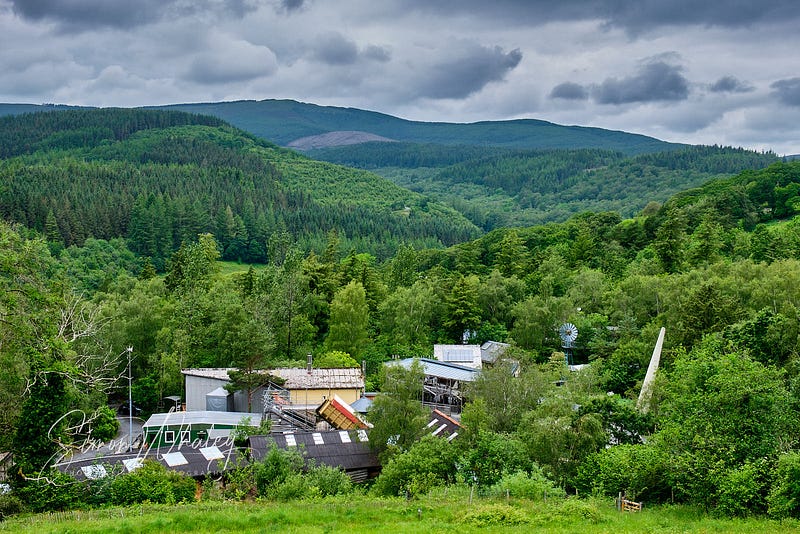
But straw houses are not as flimsy as they may sound, as I’m discovering at the fascinating Centre for Alternative Technology (CAT), on the edge of the Snowdonia National Park, near Machynlleth, Wales.
We’re standing beside the Centre’s Straw Bale Theatre, a sturdy building that would definitely exhaust any passing wolf. Constructed with a wooden frame that supports the roof, the walls are made from ordinary straw bales. They’re thick, and extremely good insulation.
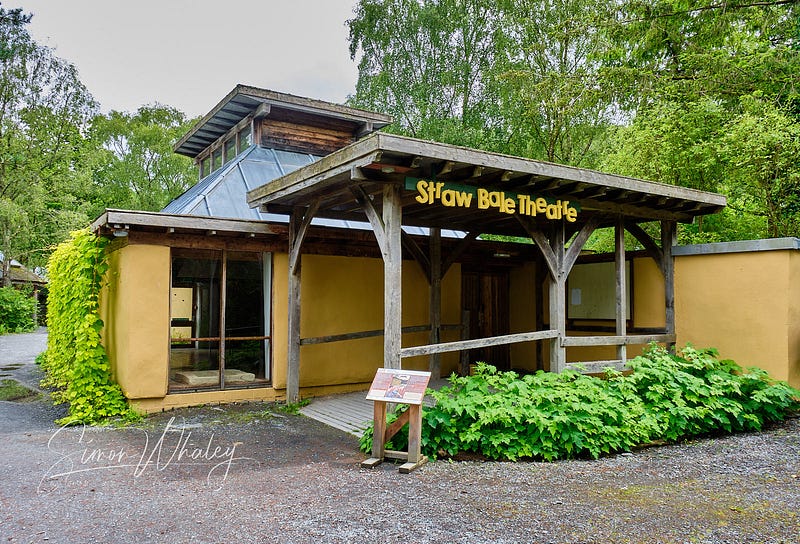
Apparently, the idea first came about in Nebraska, in America’s Midwest, at the turn of the 20th century. Building materials were scarce, but there was a lot of waste straw. Straw bales are like giant bricks. Stack them on top of one another and you soon have a tall, thick wall. Once the walls are rendered and painted with breathable materials, you wouldn’t know it wasn’t a typical brick building!
The Centre for Alternative Technology is one of those places I’ve been meaning to visit for years, and now I’m here, I wished I’d visited sooner. There aren’t many places where you have to get on the Cliff Railway and be hauled up the side of a mountain at a speed of 70 centimetres a second to get in. (That’s about one and a half miles an hour.)
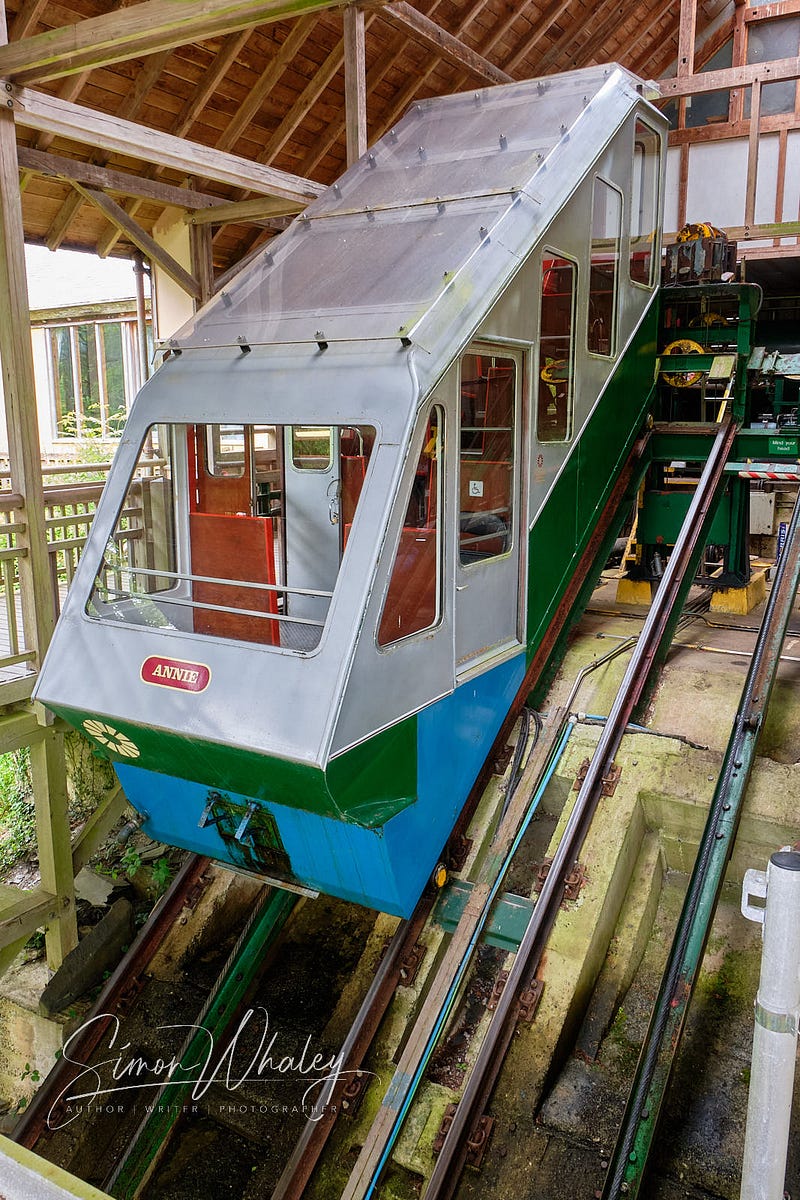
Like everything else here at CAT, the cliff railway is powered by a sustainable source of energy — water. It’s a good job they get plenty of rain here!
There are two carriages that operate on the railway, each having a water tank. The carriage at the top is filled with water, and so when the brakes are released, gravity pulls this heavier carriage downhill. This is connected by a cable to the carriage at the bottom, with an empty water tank. As the heavier carriage descends, so it pulls the other lighter carriage, and any passengers, up to the top.
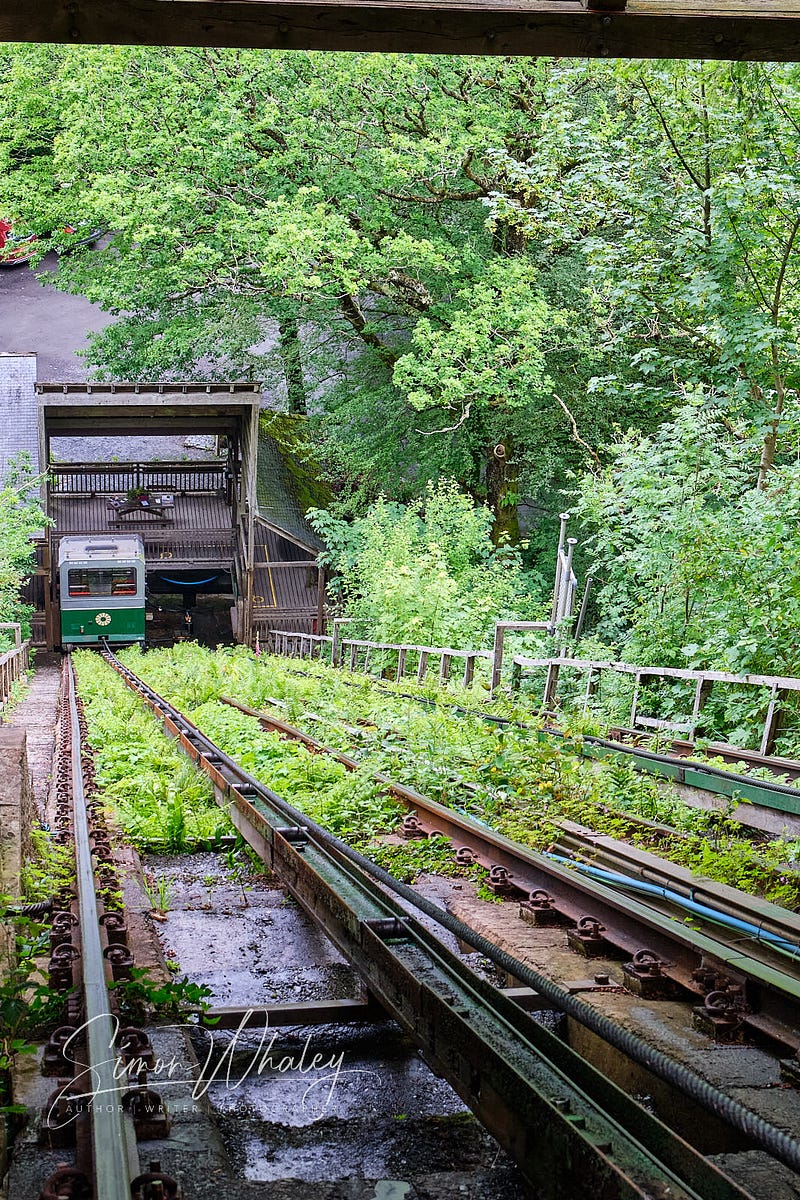
At the top of the station is the shop and information centre, and a lake. Well, where do you think the water for the Cliff Railway comes from? Visitors can wander around freely, exploring all of the exhibits, but there’s also an opportunity for guided tours of the site by one of the Centre’s many volunteers.
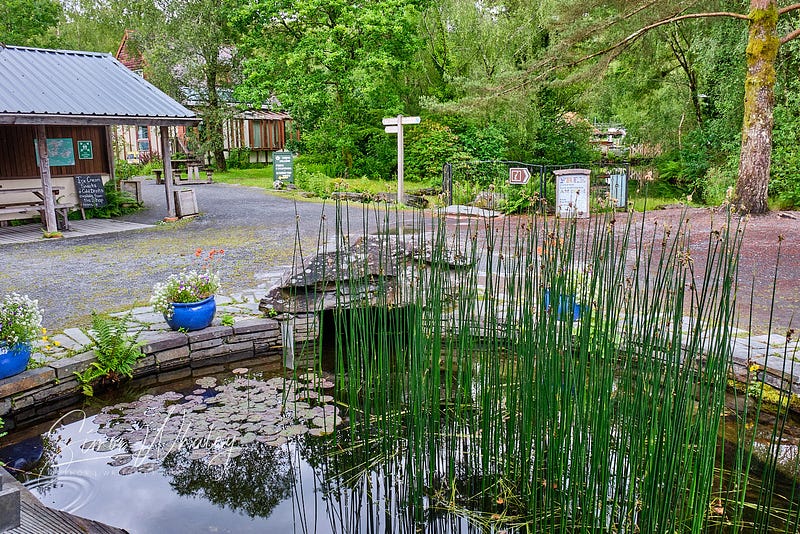
The Centre is sited in what was once a thriving slate quarry, until it became uneconomical in the 1950s. Twenty years later, in the early 1970s, Gerard Morgan-Grenville wanted to create a self-contained community of like-minded individuals, keen on living a low-tech lifestyle in an environmentally-friendly way.
Although the plan was to keep themselves to themselves, it didn’t work out like that. People began visiting, wanting to learn what they were doing. They were not connected to the National Grid, so they had to generate all of their power themselves. To begin with, the entire site ran off 3.5 kilowatts of power. And today, the Centre for Alternative Technology continues to generate its own hydro and solar power.
In October 1974, they opened their first visitor centre, and they’ve been open to visitors ever since.
As Peter takes us around the site, it becomes clear that this is a testing ground. It’s all a series of experiments, trying to work out what works and what doesn’t. He stops and points to another straw bale building, where the render has come away.
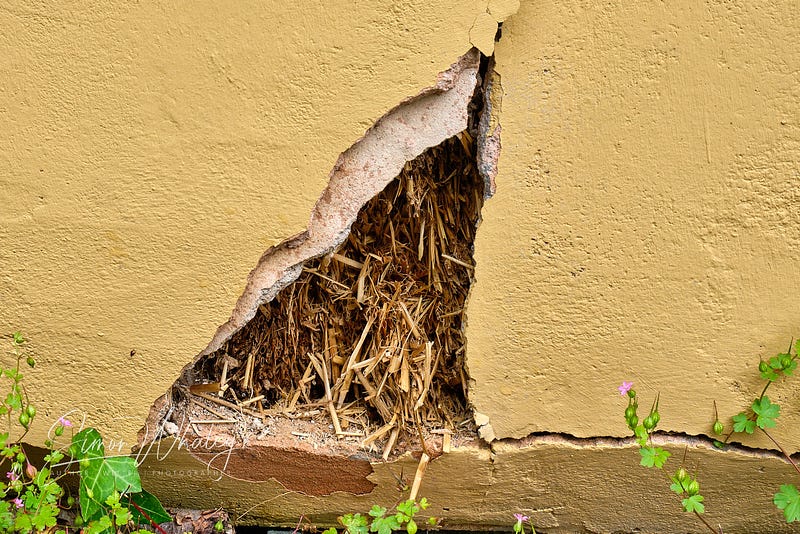
“We’re always learning here. The render on this wall is too thin, and so it has deteriorated in the weather, exposing the straw. That’s not good now, because the damp straw loses its insulation properties.”
And they certainly know their stuff here. For not only is it a visitor attraction, but they run courses here, ranging from postgraduate courses in sustainability to one-day courses in greenwood crafts and renewable energy. There’s even a four-day course on how to build your own tiny house!
Suddenly, a group of children and their parents wander past, carrying rucksacks and armed with magnifying glasses and binoculars. It turns out they’re taking part in the new Living Wales citizen science project, and this group are collecting data about the bugs and creepy crawlies who live at CAT.
Nearby is an exhibit called The Whole Home. “When it was built in 1975,” Peter continues, “it was the most well-insulated house anywhere in Europe. The windows are tiny. They’re not double-glazed, or even triple-glazed. They’re quadruple-glazed!”
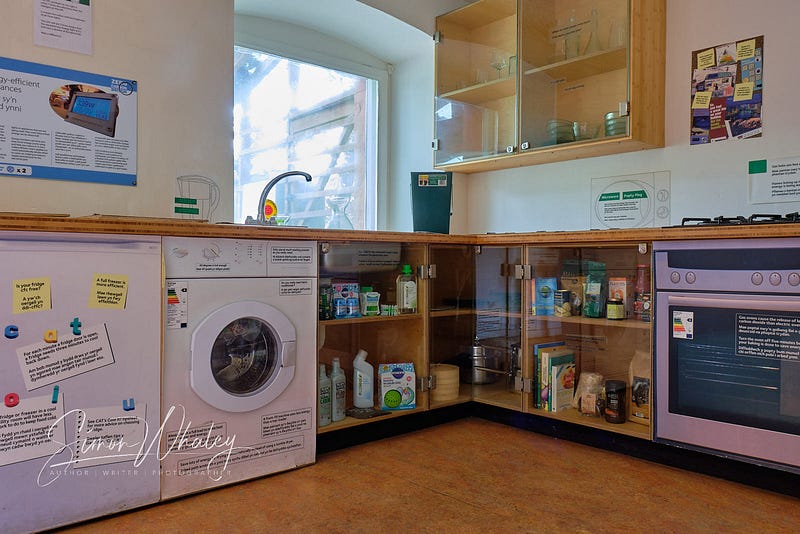
In the seventies, it was thought that most of our household heat was lost through the windows, but as glass technology has improved we now understand that it’s better to let in light and heat from the sun. The Whole House was so well insulated, there was only one radiator in the entire building.
Now, my fingers aren’t particularly green, but it’s amazing what has been achieved here at CAT considering they sit on an old slate quarry. The Whole Home garden has a vegetable plot, and a vast array of flowers to encourage bees, insects and other pollinators, who are so vital in enabling us to grow our food.
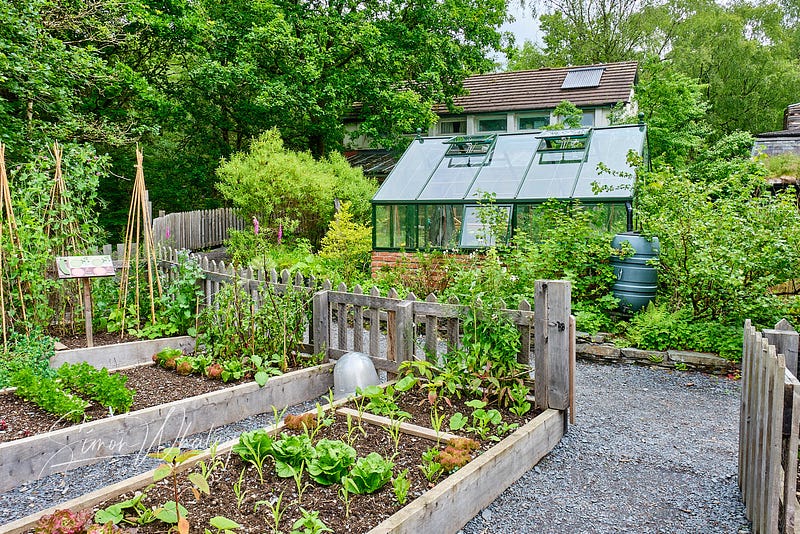
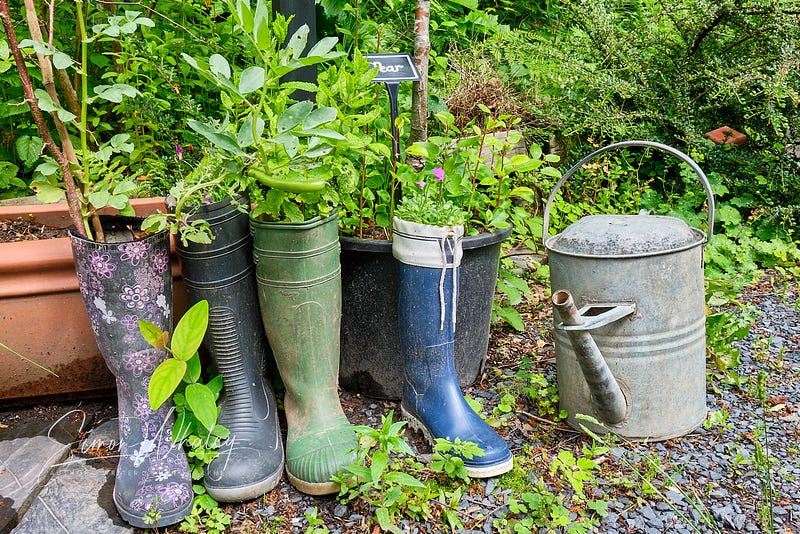
A short distance away is the Container Garden, where they’ve found an interesting use for wellington boots!
I’m sure many gardeners will be envious of CAT’s polytunnel, which is designed to be cool in summer, but warmer in winter. They must be doing something right judging by the size of their grapevine. But this polytunnel has a surprise up its sleeve.
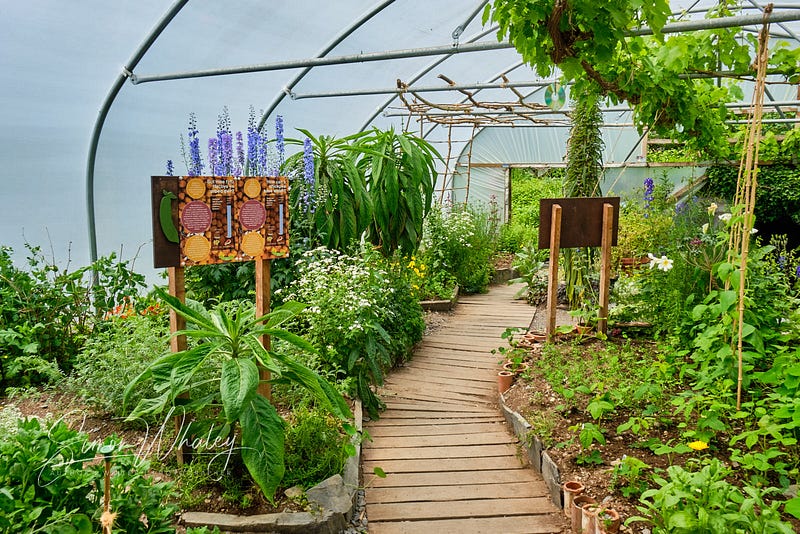
“Is anyone scared of the dark?” enquires Peter. We all look at each other, but nobody owns up if they are.
He grins. “Follow me.”
Instead of leaving the polytunnel, we’re taken down a small path that drops down into the ground and passes through a curtain into … pitch darkness!
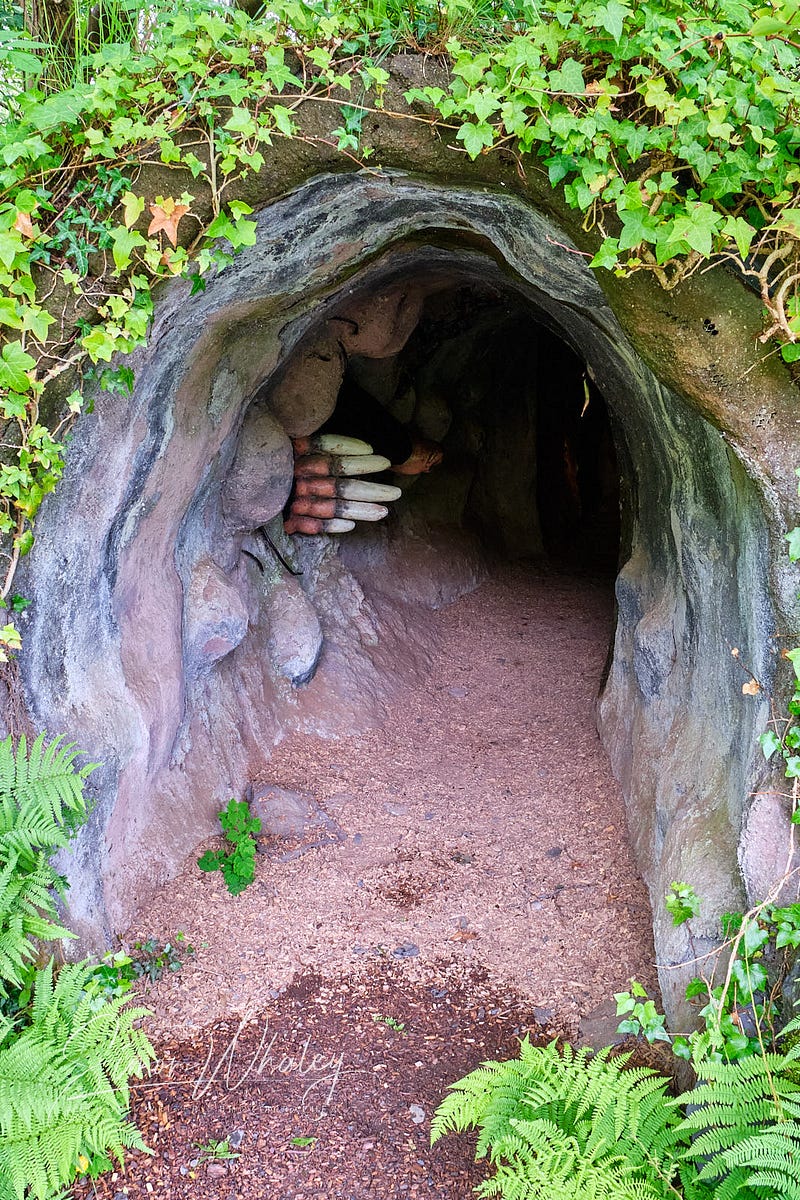
It takes my eyes a while to adjust, but eventually, I spy some small lights ahead and hear squealing children. With my hands out to the side, I feel my way forward, slowly negotiating the dark tunnel with illuminated displays explaining the importance of worms and insects that live in our soil. An acre of land can be home to over one million earthworms!
Edging further forward, I sense the tunnel curve and … yes! There’s light ahead. Pressing onwards I suddenly come face to face with a huge mole that’s burrowed his way through into the tunnel.
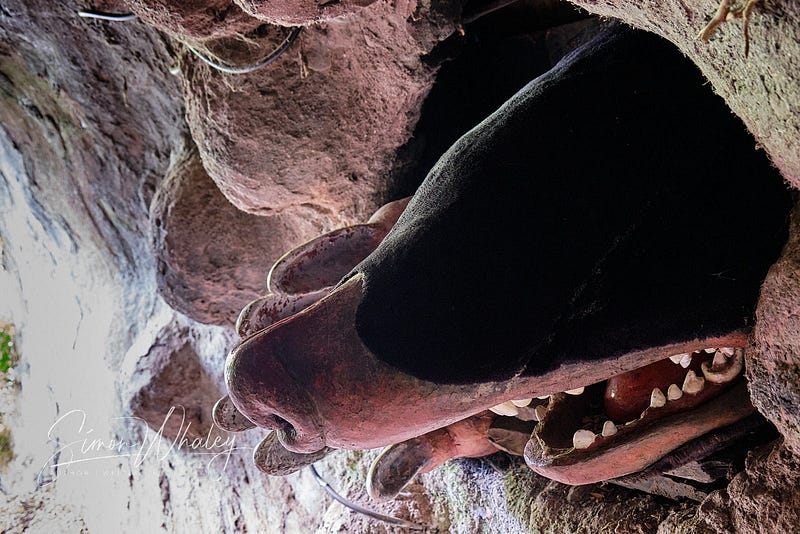
I’m not the only one captivated by it. There’s a toddler patting it, who clearly wants to stay and make friends, although Granddad wants to move on.
The Centre has experimented with many different types of wind power. Much of what has been learnt here over the past forty years has influenced today’s commercial wind turbines.
In the centre of the site, overlooking the allotment stands the hub of an old wind turbine. It’s taller than me, and I’m over six feet. But by today’s standards, this is small. Even so, it once stood 70 metres high in the air, with blades that were 36 metres long.
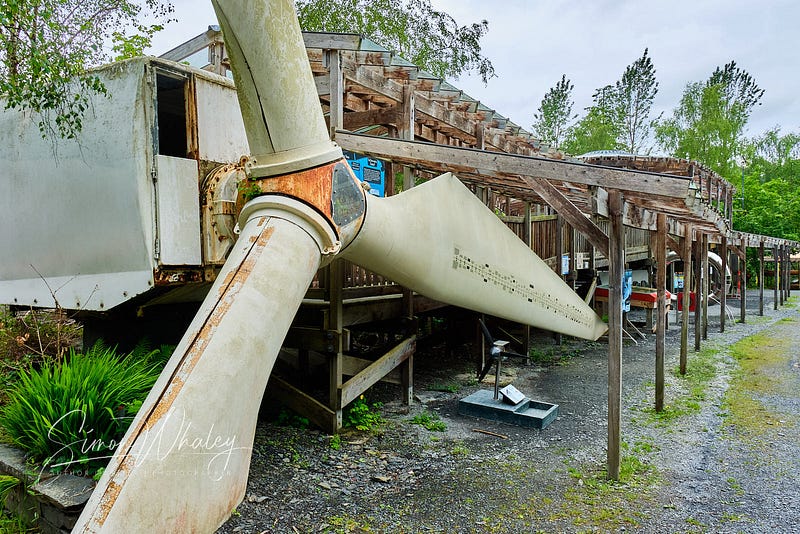
Next to the Wind Pavilion lies a turbine blade, bearing a timeline of wind power’s history. Blades of this length were capable of generating 1.65 megawatts of power. Today’s large wind turbines have 60 metre blades, which are capable of generating 7.5 megawatts. That is four and a half times more power.
Adjacent to this display is a mechanical wind turbine. These are used for pumping water or grinding corn. Here at CAT though, they’ve connected it to a seat. You can sit on it and let the wind move you up and down. Sadly, there isn’t any wind today!
Not all of the wind turbines were successful here, and that’s because of the landscape.
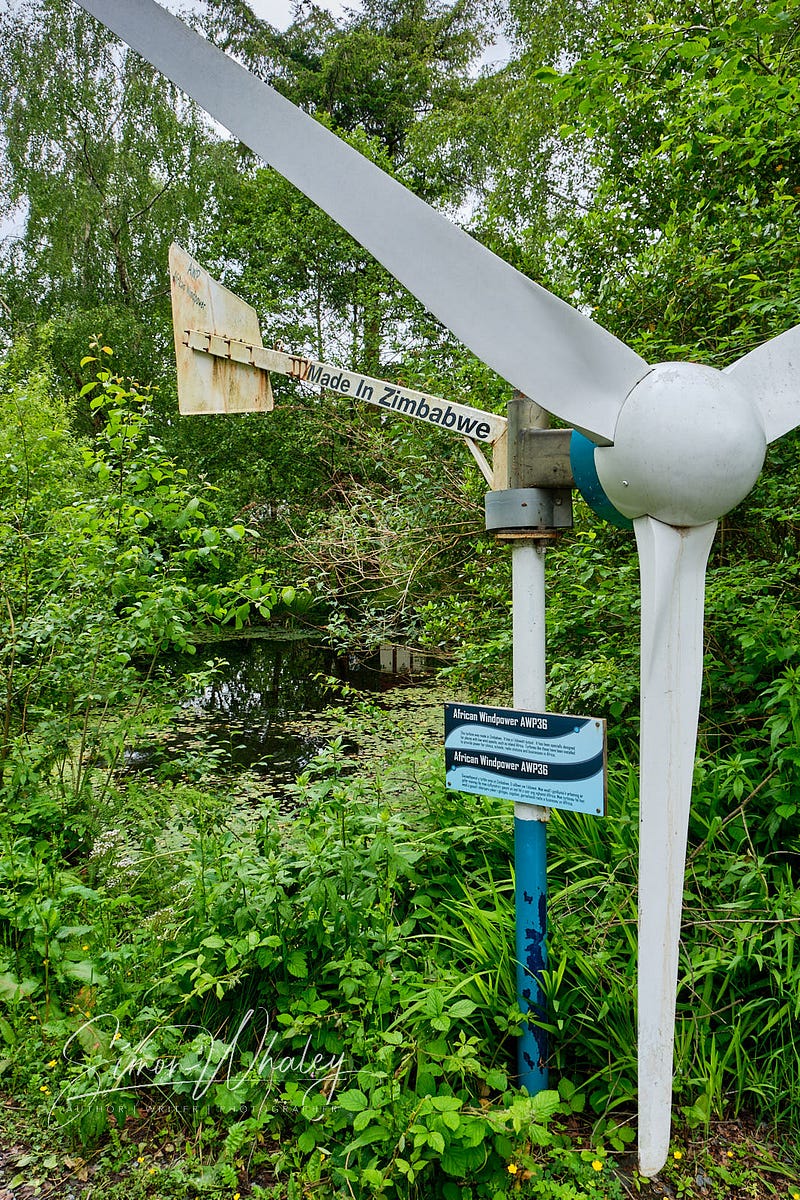
“Wind turbines need a steady blow of wind from the same direction,” explains Peter, “which is why offshore wind farms are so much better at generating electricity. We placed a couple of turbines on the surrounding hills, which although they’re windy, the wind direction constantly changes because of the way it bounces off the mountains.”
There’s a good view of a wind turbine from the Quarry Trail, as we clamber behind the site up to the old quarry. It’s now owned by the local community in Machynlleth, who sell the power to the National Grid and then use the income for community projects.
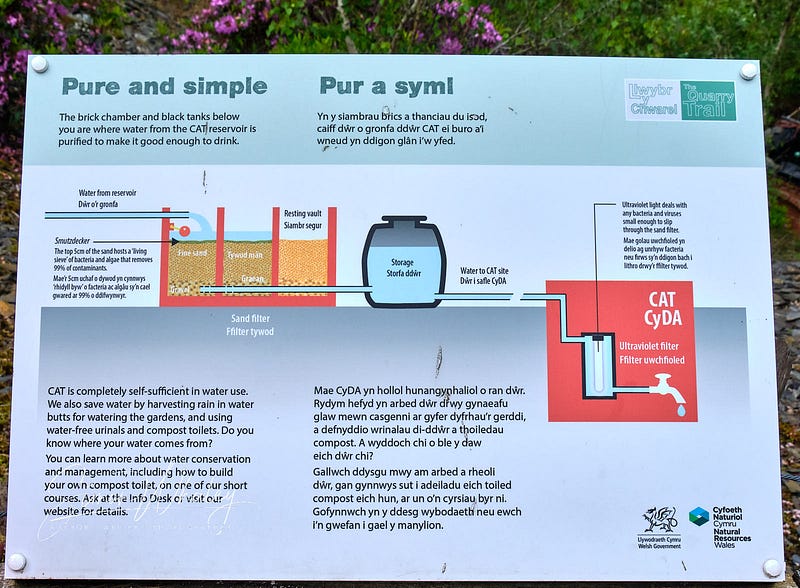
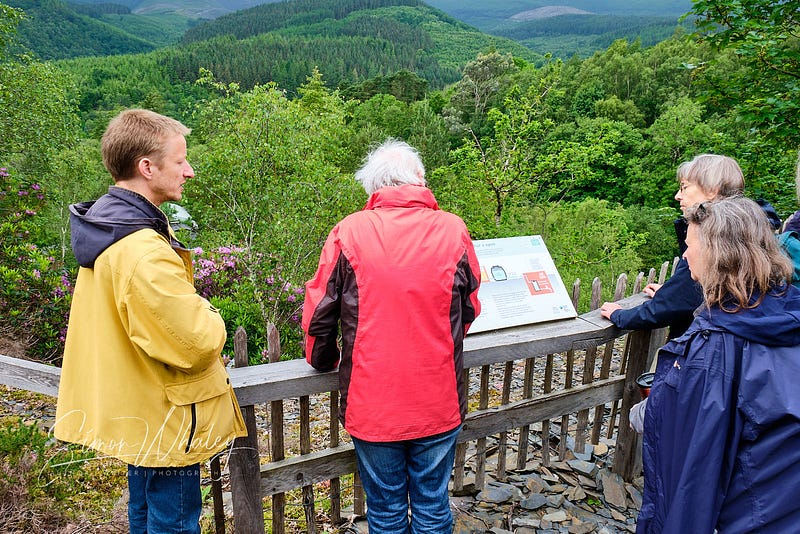
The Quarry Trail also passes CAT’s water treatment plant. All CAT’s water, including the drinking water, comes from its reservoir. It’s cleaned using fine sand, which traps foreign particles before it is then treated with UV light. This is one of the few places in the UK where you can drink water that has not been chemically treated!
The sun comes out, and suddenly I launch into a sneezing fit. Thankfully, as I check over my shoulder, all the straw buildings are still standing. This just goes to show that the if the three little pigs had come to CAT first, they needn’t have bothered with a brick house at all.
Getting There
The Centre for Alternative Technology is at Pantperthog, 3 miles north of Machynlleth, on the A487 between Machynlleth and Dolgellau. Machynlleth is on the Birmingham to Aberystwyth railway line, and Bus Service T2 links the railway station with the Centre.
Want To Know More?
Centre for Alternative Technology, Machynlleth, Powys, SY20 9AZ
Tel: 01654 705950
Website: www.cat.org.uk
Email: [email protected]
Entry fees apply. (Those arriving by public transport get 20% discount.)
Open daily: April to October — 10am till 5pm, November to March — 10am till 4pm (Closed between Christmas and New Year)
For details of short courses visit: https://www.cat.org.uk/courses-and-training/
For more British Travel pieces, check out: