
Surviving Trauma by Distilling The Joyful Lightness of Being
In this personal deep exploration, I am going to show you what resilience means to me. I propose that everyone has ways of being resilient, because we all face challenges at some time in our lives.
Sharing our ways of being resilient may encourage or inspire each other to be resilient, even how to overcome trauma.
To me, being resilient means withstanding all of life’s experiences, and once you have found what really makes you joyful then you can live.
Table of Contents
· Finding What Resilient People Have in Common · My Personal Experiences that Needed Resilience ∘ The Early Lessons that I Learned ∘ Existing But Not Living ∘ Getting Better ∘ The Human Hierarchy of Needs by Abraham Maslow ∘ The Deeper Motivations and Dealing with Emotions ∘ Anger ∘ Resentment and Forgiveness ∘ Fear and Courage ∘ Guilt and Love ∘ Character traits of survivors ∘ Acceptance and Self-love ∘ The Unbearable Joy of Being
Finding What Resilient People Have in Common
If you know people, whether they are popular figures or people close to you, who are resilient or flexible and who don’t give up, have you thought about what makes them resilient?
Have you ever asked what is it that seemed to keep Mahatma Gandhi, Martin Luther King, Nelson Mandela, Oscar Romero and others who campaigned for the justice that they wanted, accepting of what they went through, in terms of acknowledging things and changing what they could change?
Could faith and intent give a rush of oxytocin, the hormone that makes you feel happy, or is it a placid mind and the ability to control one’s temper that lets one prevail when the going gets tough?
The literature will tell you that people who are resilient are aware of their own emotional reactions and the behaviour of those around them. By remaining aware, resilient people can maintain some control of a situation and think of new ways to tackle problems.
Another characteristic of resilience is the understanding that life is full of challenges. While we cannot avoid many of these problems, we can remain open, flexible, and willing to adapt to change.
This viewpoint points toward resilient people not only being calm, but also having the emotional intelligence to not only be self-aware but to appraise or evaluate the situations they are in, on the basis of logic and readiness to deal with them.
My Personal Experiences that Needed Resilience
I can vouch for the fact that these characteristics of resilient people are an important part of how to survive traumatic experiences. I was born in September 1963, in the Federated States of Malaya.
My personal life has been filled with trauma, notably the following experiences.
- My non-identical twin sister and I were placed in a Catholic orphanage in Penang, Malaya, as babies because our mother was unwell and not able to look after us full-time.
- At 15 months of age, we were flown to Australia, and this was due to an English couple in Australia who had heard from friends in Kuala Lumpur, that we were available for adoption.
- At 3 years of age, my sister and I were legally adopted, becoming the oldest living inter-country adopted persons in Australia at the time of writing this.
- At 5 years of age, my adoptive mother told me that I was adopted, but this confused and worried me. She told me that other children would make fun of me and not believe me when I told them that I was the sister of another girl at school (my adoptive sister). I was hurt and confused because I thought that I really was my adoptive sister’s sister.
- The five youngest children in the family were molested by several older brothers, and this included me being molested at age eleven and a sibling who was six years old at the time being interfered with.
- My adoptive parents had nine of their own children, and adopted my sister and me, and fostered two other children, one younger than me, and one older, who was one of our abusers. The age range of the thirteen children spanned ten years.
- At primary school, I went from being happy and bright and a leader, to being cowed, frightened, nervous, confused, and lacking self-confidence.
- At high school, I was withdrawn and quiet and had little sense of self-worth, and other school children, unaware of the causes, taunted me a lot and there was an under-current of racism.
- People in public were racist toward me, and this was stressful or upsetting, but mainly it eroded my self-esteem, while at the same time, I was puzzled about why it happened, and I questioned it.
The Early Lessons that I Learned
My early teens were the most difficult time of my life, when my nightmares were so great that my own energy generated “monsters” that traipsed around my bed.
I was too scared to tell anyone what had happened and it seemed that nobody cared enough to help.
At age twenty one, I sat outdoors in front of my student flat in the beautiful sunshine. I had been surrounded by people, at home, school, and in the community; but I felt a loneliness that I will never forget.
It was as though my Spirit or Soul had been stripped of joy, the joy of being a happy, healthy, normal human being, wanting to and needing to connect positively to others, but held back from doing so.
At age twenty one I came to the conclusion that I can’t control human nature and that someone would always treat me as Asian just because I looked Asian.
I wrote a poem about this sort of acceptance, which is on my personal website, Peace in Practice. Part of resilience is accepting what you can’t immediately change, and knowing how to try to effect a change; and knowing the difference between the two.
Nelson Mandela, South African anti-apartheid activist, was imprisoned in 1962 and wrote in his autobiography, “Long Walk to Freedom” how he and other prisoners organised strikes for tolerable conditions.
Accepting what happened to them did not entail leaving it at that, but involved acknowledging and focusing on situations and addressing them full on, to the best of their ability; not sweeping them under the carpet or letting the repercussions persist if they had any chance of changing the causes.
My twin sister and I, while we had similar values and interests, have very different character traits. A full astrological reading has shown us to be 70% the same according to the theory of Western Astrology.
I believe that if there is a 30% difference that it may include my being calm and emotionally stable, while my sister is very sensitive and prone to being emotional.
Some say “show me the child, and I’ll show you the man or woman” but this may only be true for children whom have not had a lot of psychological and emotional trouble, because it is predicated upon assuming that the child’s interests, values and personality will be apparent and will stay on the same trajectory throughout their life.
I seemed normal to any casual observer, but I was unhappy and tense because I didn’t acknowledge or disclose all of my feelings, and I invested my energy on trying to please others.
I had learned to hide my feelings and to be my own harshest critic.
Existing But Not Living
When we turned twenty seven in 1991, my sister and I were sharing a flat together; but we were existing, not living.
We were both unhappy and some of this stemmed from how our adoptive family was still treating us. For example, we were not invited to be with our adoptive father when he was at home, unwell and at the end of his Life.
This made us feel excluded and we would have been there had the family told us what was happening.
I had changed my name back to my birth name by deed poll, and my adoptive father, believing me to be ungrateful, without checking the facts, punished both my sister and me by leaving us less in his will.
While I never really blamed my adoptive parents for neglecting us, some say that when someone you love is hurt, that it causes deep anguish.
I felt awful and guilty that the repercussion of my changing my name had affected my sister also.
Another thing that I remember clearly, even today, is that I felt awful that dad scolded me for hiding food under our pillows, stopping me from feeding my twin sister and me when we were at home.
It was a double-edged sword, displeasing my father and letting my sister go hungry.
My sister and I were often hungry because we were left alone or with a few older brothers for days at a time.
We didn’t eat because we were too scared to move around in the house that we lived in, and when mum was at home I sometimes took extra food to hide so we could eat it during those times we were hungry.
Nobody asked why I was hiding food under our pillows, and I didn’t tell anyone that we were hungry because I was too scared to do so.
We often felt that we were not part of the family, and in hindsight, this was because my family was very dysfunctional altogether. We weren’t trained on how to meet our natural needs as we grew up, which affected my sister a lot.
We had gone from saying bitterly “I wish I had never been born” to “nobody cares about us” to “what’s the point of living?”
Nobody would have thought that we were without goals or a sense of purpose of living.
We considered a double suicide, at age 27, but as “Fate” would have it, or perhaps as our guardian angels or higher selves stepped in, our interest in living was, surprisingly, sparked by an online contact.
Through an online Bulletin Board System we met a man living in Chicago, the U.S.A. who had the same interests as us, and who treated us as normal, trustworthy, competent, interesting people.
This online friendship pulled us out of our malaise, and our Spirits were revived.
Getting Better
One year later I felt a lot better about myself, having been to a support group and seen a couple of psychologists; but mainly through self-reflection and deciding to nurture myself and to make the best of things and to appreciate what I had.
You could say that I am a “people person” and I wonder if perhaps this is what I have in common with Nelson Mandela, Mahatma Gandhi and others, who seem to be genuinely interested in all other people and in understanding others, and who are actively engaged in trying to co-create a happy, healthy, just and comfortable world for many.
While I have not studied any psychological theories in detail, I am aware that having goals is essential to living; and for a long time, my goal was to hang around so that I could help others.
Nelson Mandela’s goal was to end racial discrimination, and my goal to help others had as strong a hold on me as did Mandela’s on him.
I have witnessed people around me who have had traumatic experiences, who also like to support others; but are very unhappy and tense and have had or have serious health problems.
I propose that these people have been resisting having their needs met, even if subconsciously or through self-sabotage.
The Human Hierarchy of Needs by Abraham Maslow
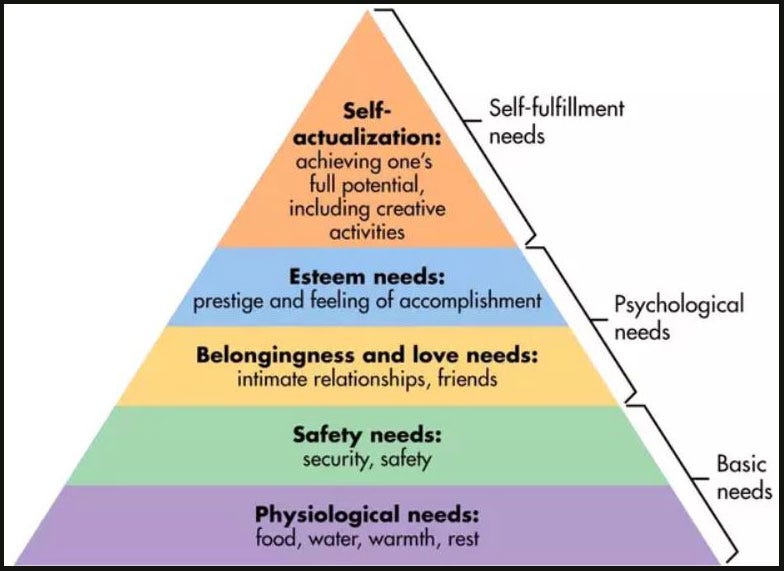
Abraham Maslow was an American psychologist who put forward a hierarchy of human needs, which points to human beings having a belongingness and love need after their physiological and safety needs have been met.
McLeod, S. A. (2018, May 21). Maslow’s hierarchy of needs. Retrieved from https://www.simplypsychology.org/maslow.html
Consider Nelson Mandela, a social justice activist in South Africa, living in prison for twenty seven years. His physiological and safety needs were poorly met, but in an interview after he was released, he said the one situation that was close to intolerable while he was in prison, was that he was not permitted to go to his mother’s funeral.
Belonging and feeling loved are a part of psychological needs. Nelson Mandela described the first fourteen years of his imprisonment as the dark years in his autobiography “Long Road to Freedom.”
They were the days when this need was strongly curtailed because of the absence of nurturing support or love and a tenuous sense of belonging.
While Mandela’s self-esteem was eroded by being in captivity, he never gave up on his goals, and this staunchness and spirited will or resolve helped him to organise his goals even while in prison, and upon release.
Feelings of esteem have been put forward separately to belongingness and love needs by Maslow. Maslow felt that there are levels of needs, such that a person has to feel that she belongs and is loved before she can feel a high level of self-esteem.
I did not feel safe while I was living at home. I left home when I was seventeen, and while I felt safe from the people in that family who had abused me, I did not feel safe from similar types of abuses happening to me, from others.
My self-esteem or my sense of self-worth was quite low from age eleven, rising a little over 44 years and only peaking around May this year, the year that I turn 56.
For 44 years I carried a great burden, one that of all feelings weighs one down and, I think, can be enough to totally crush your Spirit, and that feeling was guilt.
From the age of eleven, I had felt enormous guilt over my siblings being hurt when we were children.
Even though I saw a Gestalt therapist who tried to show me that the abuse would have happened no matter what I personally had done; given my sense of caring for others and my mind-set from that age, being to be very literal and to designate a specific cause of an effect, such as my not looking after my siblings leading to them being hurt, the blight set in and stayed.
My extreme low self-worth and an over-riding sense of guilt were covered up by the fact that I am a naturally cheery and positive person, and capable of interacting positively and appropriately with others.
I wore a mask and few saw the sorrow and pain underneath it.
I did not feel as though I belonged safely and lovingly to any group of people, and I had low self-worth, which meant that I was far from Maslow’s top level in his hierarchy, that of self-actualisation.
Self-actualisation is about achieving one’s full potential, including creative activities.
Although I had some support from my sister and a few others, it was not enough, because I needed to be part of a larger loving group.
Belongingness means feeling that one is an integral and a respected and cared for part of a group of people who share your interests and/or values.
The Deeper Motivations and Dealing with Emotions
Looking back, mechanically, I could say that it was just a matter of time before I started to really love and care about myself and to fully stop feeling guilty; but was it?
I believe that I have always sought to self-actualise myself, because this is innate to all people. This wanting to be the best version of myself innately has been critical to my survival.
As we age, we have more experiences, but this does not automatically mean that people who have been through similar stressful experiences all cope as well as each other.
External situations are drawn to us partly due to our nature or to our personality in action, and partly due to trying to meet our subconscious and conscious needs and wants.
Although I was in some mentally harmful relationships while I was in my twenties, I was fortunate enough to come across a few people who genuinely wanted to understand me and to support me.
Even though some could say that “fate” put them my way, it takes two to be collaborators, and my conscious participation in accepting this help, and reinforcing it with my own studies and reflections, was essential to meeting my needs.
The needs in the four lower categories in Maslow’s hierarchy of needs are called deficiency needs because a deficiency of them motivates people to fulfil these unmet needs.
Once these needs have been met, they became salient or integrated components of a person, and the growth needs of achieving one’s potential or reaching complete self-fulfilment are aimed to be met.
It took 44 years for my deficiency needs to be met, and I hope that by sharing my experiences of resilience that my story will help others to have all of their needs met within a much shorter time-frame.
Understanding what a traumatised person goes through and how they manage themselves so that they are balanced and happy; and understanding their special needs, is key to helping people who have undergone traumatic experiences.
Anger
My studies of Jungian psychoanalysis showed me that traumatised people may have unrealistic expectations of themselves, and blame themselves for things they don’t like, and consequently may direct all of their anger toward themselves.
They need to recognise this and deal appropriately with anger issues.
For example, I had turned my anger inward, against myself. I have been able to manage my anger at myself literally by venting them in my dreams.
I dealt with it when one day I had a dream that I was in a murderous rage with somebody, and when I awoke, I knew that somebody was me.
I learned to recognise consciously, during my daily life, when I was bottling up anger, and I consciously made efforts to rationalise what was really happening and to scale down my dislike of feeling how I felt.
I had to learn to dampen my angry thoughts and feelings, even if I wasn’t aware of the deep-seated motivation for all of them.
Later I would try to reflect upon what was at the bottom at the anger and was aware that I had some psychological issues to address.
Now I experience only mild annoyances instead of full-on anger when angry thoughts are triggered in me.
This is because I realised that anger episodes were about my thinking that I not only have been unfairly dealt with but that maybe I deserved what happened, which would be accompanied by feelings of humiliation, fear and anguish.
Anger is a form of fear, and when I changed my mindset from being afraid of repercussions or of doing something to help myself, I was able to curb feeling an irrational level of fear; and recently as I have come to accept and love myself more, my fear of being myself is vanishing.
Resentment and Forgiveness
If life has dealt you a rough hand, try not to hold grudges, because the energy spent on being resentful or jealous is not only wasted on such but is actually harmful because it drains one’s energy and contributes to the body becoming tense and worn out.
I consider that I am fortunate to have learned to be conscious of when I start to feel resentment, and I am fortunate to have the aforementioned mindset.
I try to turn resentments into mild annoyances, and have had varying degrees of success.
The environment that you are in can have quite a hold on you, for example, a few years ago I worked with two other people who constantly complained and were upset and I absorbed or took on this atmosphere and found it easier to also complain.
I remember at the time that I was quite aware that I was being negative, but I also wanted to please these people.
Part of the reason for this was that the feeling of guilt, that I had, was the biggest controller over much of my life.
I hated others being upset or hurt, and if I didn’t do what I thought they wanted, I felt guilty.
Also, it is easy to be within your comfort zone of feeling resentful or annoyed with others, thereby passing on responsibility for how you are, onto others.
One day when I was at home, before I turned seventeen, my adoptive mother said to me “I hope you go blind” when I insisted on reading in the dark.
This and other innuendos and verbal abuses upset me a lot but more than that they greatly eroded my self-esteem.
For a while, I felt resentful toward my adoptive parents for taking greater care of their own children, than of my sister and I, as inter-country adoptees.
It took a long time for me to forgive all of these things, because the blows from those, who are supposed to care about you, hurt the most.
But I have forgiven my adoptive parents for any hurt they contributed to because I believe that they honestly did their best to look after me.
I thought about how my parents treated me for a long time and came to the conclusion that, with their upbringing and due to their personalities or character traits, they had acted the only way they could.
My adoptive father passed before I could have a reconciliation with him, but I did get to speak to my adoptive mother about the abuse from the adoptive brothers, and she was sad about this and tried to make up for it.
I only bore resentment against the adoptive brothers who abused us, for a short while.
Perhaps the main reason for this is that I only had so much energy to invest in things. Putting up a front that all was okay, and wrestling with my dysfunctional thoughts and feelings, to survive, took all that energy.
Besides getting on with living, and choosing not to focus on benighted thoughts of justice, regarding my adoptive brothers, I know that another character trait that helped me not to feel bitter or resentful was acceptance, which I will discuss in detail later.
Basically, I found that it was illogical and unnecessarily upsetting to demand or expect something, such as those responsible saying they were sorry.
I thought long and hard about what I would like for amends, and left it at eventually revealing to my adoptive mother what had happened.
Her genuine sorrow and offer to make up for it was a help.
Fear and Courage
I was not aware until the start of this year, that I was still very scared of something. I was scared of being myself.
You’ve heard about people being afraid of success or of failure. People who are abused are inevitably frightened of things, for example, of interacting with others who may hurt them or frightened of applying for jobs, for the reason that they feel that they are not able to meet the expectations of others.
Until I learned to truly love myself, for which I needed to fully stop feeling guilt, I did not believe in myself as a lovable, competent, able and successful person, capable of and deserving to become self-actualised.
The mantra of “feel the fear and do it anyway” was only helpful to the extent that I knew what I was afraid of.
People who have been through similar trauma to what I have encountered, need a lot of understanding, encouragement and positive reinforcement from not just a psychologist, but from a daily source or sources, showing them that their fears are unfounded.
In 2014 the year that I turned fifty-one, I had open-heart surgery, for a condition called supra-valvular stenosis, that I was born with.
Before I went into the hospital, I told my close friends that I wasn’t afraid of it; and that I had a “good innings” in life and was ready to go, if it came to that.
I felt that I had done a lot of good with my life, and knew that if I wanted, that I could exit Earth at that time. But I decided to stay around for a bit longer, as I felt I had the chance and the courage to continue to try to live my own life well, in addition to continuing to support others.
Guilt and Love
I know that my guilt has gone now because when I do something or don’t do something, and notice that someone around me gets upset or feels aggrieved or misses out on something in connection to this, I no longer feel guilty.
The greatest weight has fallen from my shoulders with the crushing burden of guilt, that blind-sided me, gone.
I am free now to look at my interests and values, and at my wants and needs, and to fulfil these with all of my energy directed toward this.
When I was eleven, I felt mortification, which is guilt and sorrow, at the abuses of the young children in my adoptive family.
Guilt is a huge burden to shoulder, especially from such a young age. At age twenty seven, I discussed what had happened to us as children with my sister.
She thought that we were okay and that we didn’t need help, and said that I had been a hindrance to her, not a help. Again I felt mortification.
It was around that time when I thought about ways of killing myself.
The one thing that got me through was love. It was my love of helping others and my sense of duty toward the other, that made me decide to live.
This year I was finally able to shed the guilt, after my psychological needs of esteem and of belongingness and feeling loved or appreciated and acknowledged, were met.
My self-help efforts and reflections were augmented by the appreciation, understanding, and acknowledgement that I received from people close to me, including my sister, over the past ten years.
The amount of guilt that one can feel is equal to the amount of love that one has, and I had it in spades.
But guilt stops you from being yourself, and part of being yourself is experiencing joy.
Character traits of survivors
Childhood trauma makes one push others away, and if you get expert enough at it, then you feel that it is normal to be alone and unloved or not acknowledged or appreciated; and subconsciously you hijack or sabotage yourself.
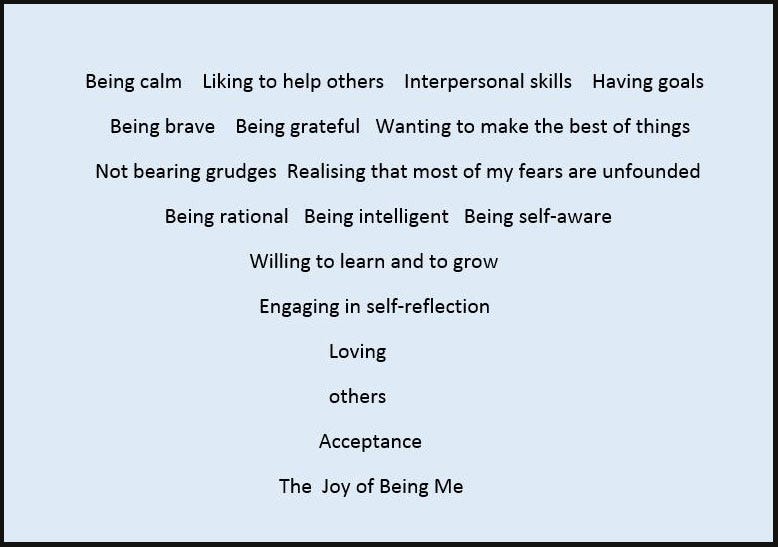
So now we have the following list of characteristics that have helped me to survive.
So far I have distilled the following from my own life, which are markers of living or of surviving as a rational being amidst trauma.
- Being calm
- Liking to help others
- Interpersonal skills
- Having goals
- Being brave
- Being grateful
- Wanting to make the best of things
- Not bearing grudges
- Realising that most of my fears are unfounded
- Being rational
- Being intelligent
- Being self-aware
- Willing to learn and to grow
- Engaging in self-reflection
- Loving others
You could say that these are the normal or healthy characteristics of all human beings.
These are the traits that people who have undergone trauma need to have fostered or brought out in them. I count myself blessed for innately having these.
When you question were these the attributes of people like Mahatma Gandhi and Nelson Mandela, that helped them survive their difficult experiences; and are these all the traits that help people get over trauma, you may find some unexpected or little spoken about attributes.
Acceptance and Self-love
Acceptance has played a huge part in my life; and this is not accepting or agreeing with the systems, or with the abuses and the neglect and torment that I was subjected to, but is a deep acceptance, in terms of acknowledging that something is happening or has happened, and “resting with it as best I can.”
Mindfulness and meditation practitioners will tell you that it is better to focus on what is literally happening in the present, or to try to relax, as best you can, into a stressful or painful situation or an exertion; to allow your body intelligence to deal with it and to get over it.
What your mindset or belief focuses on, grows, and resistance to accepting what has happened will only zap your energy and make you feel even more miserable and bitter, which in turn will make resentment brew and even blind you to or prevent you from taking your own affirmative actions to improve your life.
Acceptance or acknowledgement of a situation does not mean acceptance of why it is happening or of its results.
Once I was able to accept that some people in public were racist toward me, I then started to question why and ask myself what I could do about it.
I sometimes confronted people with it, and this would turn a mirror to that person, showing him or her how foolish and inappropriate and unfair their actions or words were.
The Serenity Prayer states:
God, grant me the serenity to accept the things I cannot change, the courage to change the things I can, and the wisdom to know the difference.
I believe that people like Gandhi and Mandela lived the serenity prayer, and this approach also helped me to survive.
Deep acceptance or tolerance of something leads to transformation because you are open to opportunities to change what you don’t like or what stresses you.
You open yourself up to finding creative ways to support what you want or support someone or something else, within your reach, through patiently working through the causes or stimuli of what has happened, and coming up with actions that may influence the causes.
If you focus on the intolerable, what you prefer not to tolerate will constantly appear in your Life.
I found it intolerable that I could not protect people from harm, and punished myself for years, and this only engendered constant situations in which I would feel guilty about causing others to be upset or to miss out on something.
The reticular activating system (RAS) is a network of neurons located in the brain stem that mediates behaviour. It filters out unnecessary thoughts.
The RAS seeks information that validates your beliefs, so in this way, when something happens that you, as a person prone to feeling guilty, are connected to, you will look for how your actions literally resulted in impeding somebody else’s satisfaction or happiness.
Acceptance of what is right in front of you can be a double-edged sword. For me I was on the “hamster wheel” accepting that I was responsible not only for myself, but for others, to an unrealistic degree, so my acceptance was an unreal inflated acceptance of my responsibilities.
Your psychological needs must be met as well as your physiological needs before you deeply or truly accept yourself.
Humility to me means not just being modest or humble, but understanding that we are all interconnected and that we each contribute to the network of human consciousness and spirituality.
My humility helped me to overcome anger, resentment, fear, and guilt; because I realised that we are all human beings, doing and learning, that nobody is perfect, and we each have the capacity to address our adversities and make use of what’s available, to reach self-actualisation.
While I accepted what others did to me, in terms of trying to make sense of it, and in terms of engaging in actions that helped me to meet my deficiency needs; I did not accept what I had done to myself until this year.
When I began sharing my personal stories on Medium, from November 2018, starting with “the Ascent”, in order to be recognised and to help others, I was surprised to discover that fear had its tendrils still wrapped around me, and it was illogical fear, even the smallest hue of it, that was holding me back.
Survivors of abuse and trauma are brave simply by being a part of the community in a semblance of normalcy.
It takes self-acceptance, including self-love, for them to rise fully above adversity.
My greatest fear was of being myself. I thought that I was bad and that nobody, not even myself, could or would like me much, let alone love me. The anger, the guilt, the fear, and my twisted acceptance fuelled my dislike of myself.
After I had chipped away at the aforementioned, I found a writing outlet in Medium, where I felt that I could write and be read by people who cared.
I felt that I belonged, and I began to feel really good about myself. At last, I had fulfilled my needs of esteem and belongingness.
My attitude of acceptance now embraced acceptance that I have done well, against the odds.
Saying that I don’t dislike myself is not the same as saying “I love myself”, but I am nearly there.
I have only just accepted that I have survived inestimable stresses; and with encouragement and support, and acknowledgement and understanding, I will be able to live from self-acceptance and self-love.
The Unbearable Joy of Being
The dance of support structures and of your own internal being are the tango of your life. You need both for your needs to be met.
Take people who have gone through similar situations and you may find that one has become happy and satisfied while the other is unhappy and dissatisfied.
They have responded differently to the push and pull of external circumstances that have arisen.
Perhaps Nelson Mandela and Martin Luther King and others, being supporters of others and being creative and intentional were part of their joys.
When you know what makes you joyful, and have been precluded from it for long, revisiting it can be unbearable.
For a moment, your high of knowing and accepting who you are is eclipsed by thoughts and feelings from the past, which makes you second-guess yourself.
But if you question yourself and your life enough, and distil your most enjoyable and memorable or meaningful moments, you settle on some core motivations that drive you.
You will find stepping stones to help you meet your needs. You will find joy in embracing those stepping stones and reaping the positive results of them.
Added to acceptance and self-love, as character traits of people who have survived traumatic experiences, is the trait that may be overlooked, that of a person’s ability to identify and carry through their heart song.
It is the song in a person’s heart or Soul that can be the unbearable joy of being. It is an integral and intrinsic part of you, to claim as the bearable joy of being.
Your heart song is what at the heart of you.
I have distilled my heart song by taking the time to look at the feelings and learning throughout my life which are most memorable, for good reasons.
Age 0 to Age 16
I loved observing my family talking and discussing, and often wrote my observations of normal pleasant family interactions in my diaries. I remember being delighted with a conversation between one of my nice brothers and his friend, over a scene from “The Streets of San Francisco.”
The friend said about a man in the movie “He’s got hero written on his forehead” to which my brother quipped “No, he’s got “Stay away from me” on his forehead.
I distilled that there was a natural flow of language and thoughts and that there were opposing viewpoints from these two people, whom I trusted and liked.
I took a great interest in the image and appearances and beauty interests of my older sisters. I loved watching them use Clairol frost tips to color their hair, and they inspired me to keep scrapbooks, into which I pasted newspaper and magazine articles and beauty advertisements.
I distilled from this that being organised and preserving what you like is satisfying and can be important for research or reviving good memories later.
Age 16 to Age 30
My sister and I played computer games endlessly, on the Amiga, the Sega Mega Drive and on the PC. We loved the old point and click games and those which you used the PF keys for; and some of my favourites were Alley Cat, Kid Chameleon, Dolphin Quest, Space Quest, Sonic the Hedgehog, and Xor.
I distilled from this that play and creativity and imagination and using my intellect was highly important in keeping me pleasantly occupied and motivated.
Age 30 to Age 40
My love of writing led to my blogging on WordPress. My blogging is for personal use, which I do for a hobby.
It includes a Book Reviewers site where I publish my reviews of books that I read. I have also written numerous Guidelines or instructions on using software and hardware and founded a community support group on MeWe, an online social networking platform.
My writing skills have been put to use by me, in the workplaces I attended, to help my colleagues.
However I feel that my skills in reading, writing, researching, editing and proof-reading, and relating and using information have never been fully acknowledged and respected in the workforce.
I distilled from this that I am a good writer, and because I love writing and reading above all other activities, I aim to make something of my writing, and maybe one day write for a living, which is what I want.
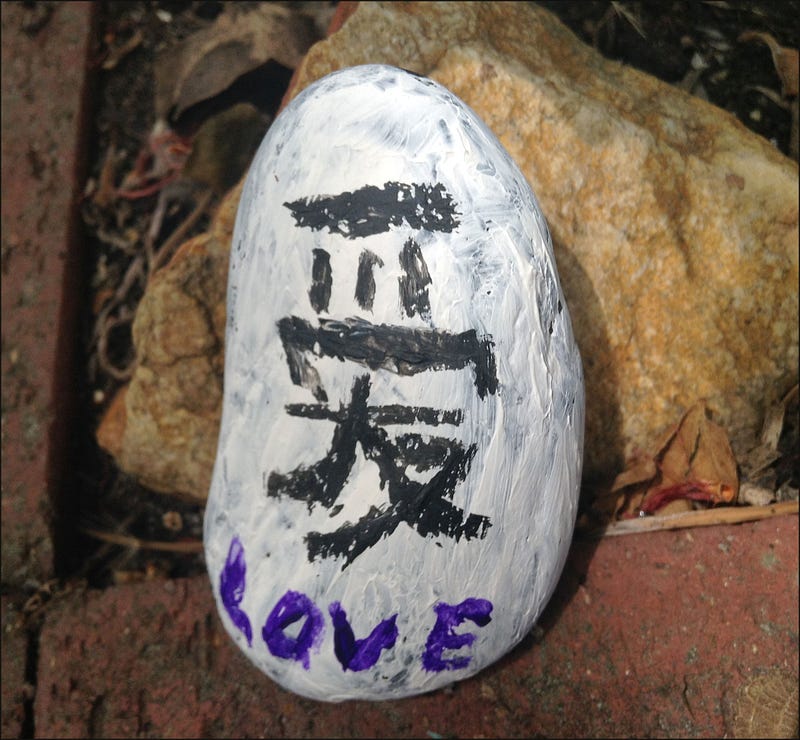
So, acceptance (including self-love) and the joy of being who you are, are two important facets of living well, and I postulate are essential for people who have been through trauma, to have all of their needs met, including self-actualisation.
The unbearable joy of being, for me, is knowing that there is a natural flow of language and thoughts and actions and differing viewpoints, knowing that being organised and preserving what I like is important, and being creative, imaginative and open-minded; and knowing that I am a good writer, and I aim to write for a living one day.
These may not be unique to me, but they are mine, part of my heart song or what I put out into the world.
We each have to drink from the cup of our choosing, and I am ending this exploration by sharing mine with you. I have distilled the joy of being me from the unbearable joy of being which I have tracked through a life full of challenges.
Drink well.
About the Author
Celine Lai was born in Malaya and is the oldest inter-country adopted person in Australia. She loves reading and writing, and runs WordPress blogs and writes technical documents. She blogs mainly on Fascinating Animals.