
Surviving the Subsequent Pandemic of Sadness
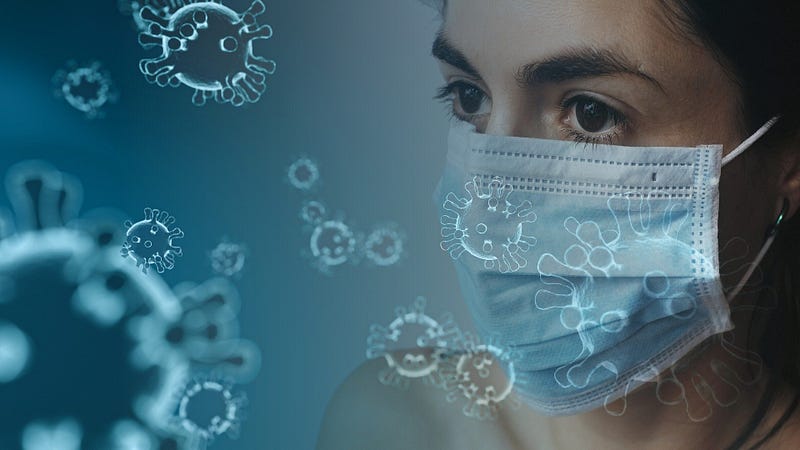
As anxiety skyrockets and drastic social distancing takes effect in the face of the coronavirus, I reflect on the impact this is likely to have on individuals’ mental health and what we may be able to do to minimize the damage.
To say that these are wild and uncertain times we are living in would be a gross understatement. At the time of writing this, there are 145,339 confirmed cases of coronavirus (COVID-19) across 137 countries. The confirmed death toll stands at 5,416. Given the huge dearth of testing kits in countries (like here in the U.S.) and the lack of streamlined screening and central reporting mechanisms in other countries, these numbers are almost certainly a vast underestimation. Understandably, the World Health Organization declared it a pandemic earlier this week and the White House just declared a National Emergency.
I truly believe that the overarching goal for everyone at this moment must be containment. Although the vast majority of cases are and will be mild, there is a significant minority of people for whom contracting the virus will be fatal. Additionally, if we don’t “flatten the curve” our health care system will become quickly oversaturated, likely leading to a host of other health problems. The two recommendations are consistent, frequent, and thorough hand-washing and social distancing. The former is no problem for most of us, but the latter is causing major upheaval to the daily lives of people all over the world. Schools are closing. Major industries are closing up shop or mandating employees to work from home for the foreseeable future. A plunging stock market is wreaking havoc on people’s retirement accounts and investment portfolios. Major events that bring immeasurable joy to people and are essential to the economic prosperity of many have been canceled.
Given all of this, it is unsurprising that acute anxiety abounds. Research shows that perceptions of uncertainty and uncontrollability fuel worry and fear. And there are few things more uncertain or uncontrollable than a global pandemic. And the uncertainty is certainly not helped by the fact that we can’t rely on even our own government to give us accurate information about what is going on, let alone a sound plan to contain things.
Although panicking is almost never productive, the anxiety we are experiencing is normal and healthy. It makes sense that we are worried about our own health and the health of our loved ones. It makes sense that people are scared of economic ruin. And it makes sense that not knowing whether schools will be open, grocery stores and drug stores will be stocked, travel will be canceled, or how long this will all go on for provides major daily stress that accumulates quickly.
I believe that the steps we are taking with social distancing are absolutely essential and, in fact, I think that many people are not taking the recommendations seriously enough. But these measures are hardly without cost. Certainly economists, CEOs, and journalists will continue to churn out regular analyses of the financial costs, but I am almost certain that far less attention will be paid to the emotional costs.
Here is a sampling of factors that decades of mental health research have shown to contribute to problems like depressive and anxiety disorders:
- Inactivity
- Social isolation
- Decreases in values-aligned behaviors
- Disruption of daily routines
- Economic problems
All five of these things will undoubtedly be drastically worsened for millions during this pandemic, even for people that will never experience a single physical symptom of the virus itself. Thus, I expect a significant rise in cases of clinically significant depression and anxiety, particularly symptoms of loneliness, worry, and lethargy. Of course, this whole thing could be resolved quickly and the emotional damage I am anticipating could be mitigated, but with each passing day that looks like less of a realistic outcome.
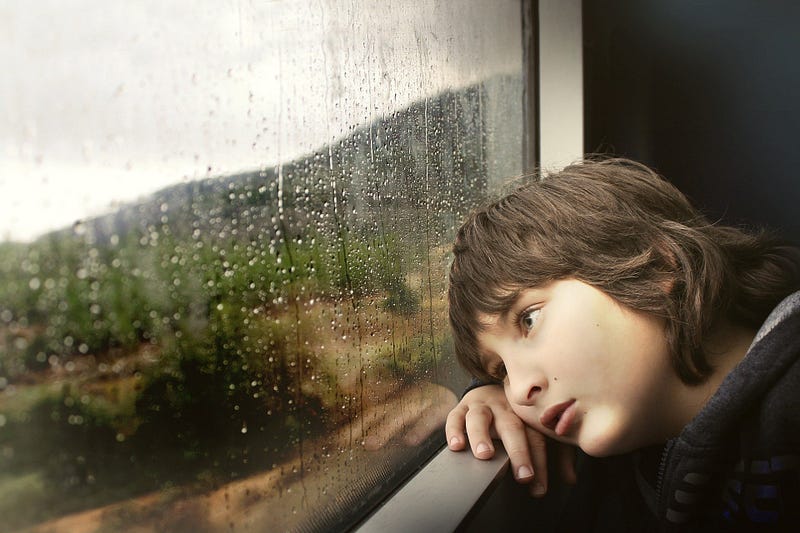
My mental health is already getting marginally but noticeably worse just a few days in. I’m finding it hard to disengage from the never-ending coronavirus updates on CNN even when doing literally anything else would be better for my mood. I’m worried that I won’t be able to go to one of my best friend’s weddings across the country at the end of the month in which I am hoping to reunite with close friends I haven’t seen in many years. I’m lonely working from home everyday. I’m sad that visits from my best friend and my parents had to be canceled. I’m going stir crazy from lack of movement and change of scenery (the uncharacteristic two weeks of rain L.A. is in the midst of certainly isn’t helping). I’m disappointed that events that I was really excited for and heavily financially invested in are canceled or indefinitely postponed (particularly PaleyFest).
And if this is how I’m feeling as someone who has no loved ones with the virus and no imminent economic ruin, I honestly can’t imagine how others are feeling.
I have spent the last few days thinking about what I can do, even while essentially quarantined during a pandemic, to reduce the likelihood of falling prey to negative thoughts and feelings. Here’s the list I have come up with so far. It was shaped by my training and practice as a clinical psychologist as well as my personal experiences. I hope it will serve as a jumping off point for self-exploration for readers, even for those for whom my suggestions don’t particularly resonate with.
- I can make sure that social distance doesn’t become social isolation. It is easy to look at the recommendations for social distancing and the rampant canceling of social gatherings as inevitably resulting in social isolation. But that does not need to be the case. I can use this time of reduced activity to set up Facetime dates with friends I haven’t had a proper conversation with in months or years. It is also all too easy to conclude that now is not a good time to reach out to anyone in our lives because people will be all stressed out. But maybe now is actually the ideal time for me to reach out to people. To tell that that I care about them, that I miss them, and that I understand the stress they are going through.
- I can use my free-time to engage in values-driven activities that I just “never have time for.” My bookshelves are filled with books I have been waiting to have the time to read. I have a backlog of about 50 seasons of television shows I have been eager to binge watch for years. There are countless classic movies I have always said I would get around to seeing someday. There are creative projects that I have long procrastinated on. (And, of course, there are all those manuscripts I never got a chance to write, but for now I will try to focus on things that bring me joy not more anxiety.) So why am I so worried about being bored without travel or social engagements? I need to make a list of all of these things so that when I am feeling stir crazy or bored or restless or hopeless I can shift my attention into something that is personally meaningful. It’s undoubtedly harder for folks whose passions are not as easily accessible as many of mine (like travel, attending live events, community engagement, and outdoor activities) or whose hobbies have been upended by the virus (my sympathy goes out to all the disappointed basketball fans!). But it will be time for people to think outside the box. Consider taking up a new hobby or trying out a new type of entertainment.
- I can find ways to stay active and keep up a routine. For me, working from home all the time and having my entire social calendar wiped clean is a recipe for upended daily routines. With the boundaries between work and home life rapidly eroding and pent up energy with limited effective outlets, it is far too easy to stay physically inactive, mentally disengage, eat out of boredom, and get inconsistent sleep. But I can try to maintain a normal sleep schedule, modify my normal workout routine to something more feasible, and eat healthily with some extra planning and effort. (Thankfully my husband is far, far better at these things than I am.)
- I can limit my social media and news exposure. Increasingly, research is showing that the internet can be a dangerous place for our mental health. The two types of messages that gain the most traction on social media and news sites are those that convey panic or vitriol. The result is countless distorted messages being delivered provocatively every second of every day. As hard as it will be, I need to limit my exposure. I need to mute certain accounts on social media. I need to carefully consider which websites I get my news from and how many times per day I visit them. I need to both consume and create non-coronavirus related content for my sanity.
- I can practice radical acceptance. Dr. Marsha Linehan, one of the most influential psychologists of our time, popularized the idea of “radical acceptance.” The term refers to a deliberate choice to accept life on life’s terms. It involves not resisting what you cannot or choose not to change. Radical acceptance is about acknowledging the reality of life as it is, whether you like it or not. It is a remarkably hard skill to practice in the face of tragic and unjust events, but it can be a profoundly liberating one if it can be achieved. It’s not about enthusiastically welcoming the reality of a pandemic, it is about acknowledging where we do and do not have control and expending our emotional and physical resources accordingly.
By no means have I mastered all 5 of these things, nor do I anticipate being able to during this stressful time. But just writing them out, I feel the calmest I have felt in days. Putting my feelings into words and identifying what things — however small — I have control over is both relieving and empowering. If you’re struggling, consider doing the same. And if you try everything that people like me are suggesting and you can’t get “unstuck,” reach out to family and friends or call a professional.
We have very little control over the havoc the coronavirus pandemic is wreaking on the physical health of our most vulnerable citizens and on our economy. But we do have some control over our own mental health. And by embracing that which we do have control over we just might get through this with minimal emotional scarring.
If you are feeling unsafe and need immediate support, call 911 or the Suicide Prevention Hotline: 1–800–273–8255
For evidence-based resources for anxiety and depression treatment, visit ADAA, ABCT, and NIMH.
Note: All images are courtesy of Pixabay, a free and fair use resource for images.