Surviving Dissociative Identity Disorder (DID)
My true account of surviving this disorder from youth to adulthood.
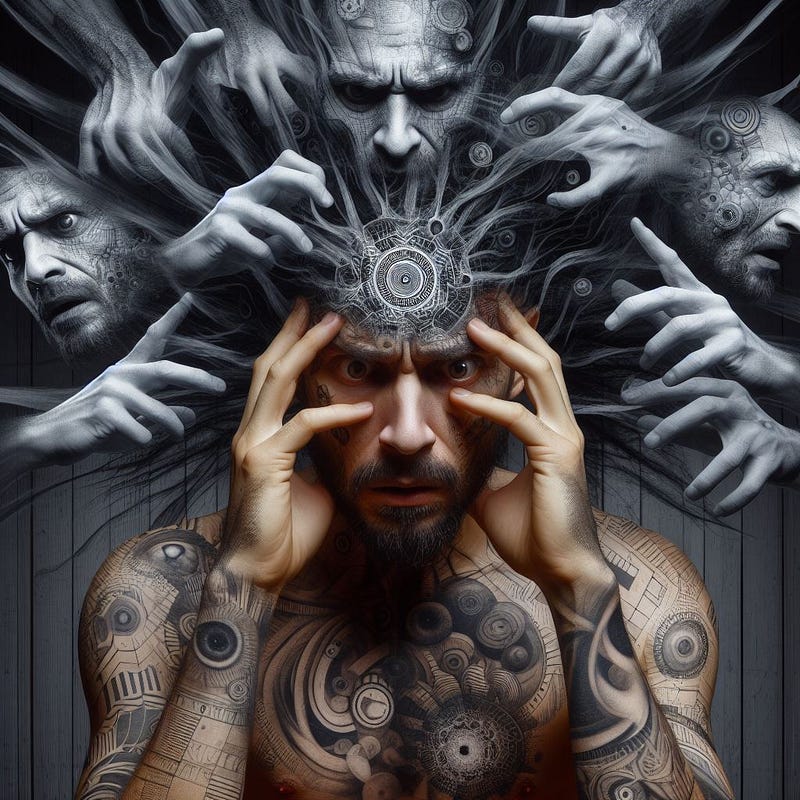
What Is Dissociation?
Dissociation or dissociative disorder is a mental process in which a person disconnects from their thoughts, feelings, memories, or sense of identity. The phenomenon can range from daydreaming to more severe forms like dissociative identity disorder (DID). According to the International Society for the Study of Trauma and Dissociation, there’s a strong correlation between early childhood trauma and the development of DID.
While dissociation can be a natural response to trauma, chronic dissociation can interfere with everyday life and well-being.
Early in my life, I met up with another person. We have the same body but different personalities. The other name for him is dissociative identity disorder, but that’s a mouthful, and you’ll hate it when I call him that. So, I call him DD, not to get myself in a muddle.
I listen to him turn cruelty into charm. His ancestry goes back to the Norsemen, invaders, slashing bodies, and drinking blood. He gets mad with anger. Sometimes, when he’s drunk, he hangs around dark street corners, behind doors, scaring people to death.
There’s something in him that wants to present himself as a someone else.
Anyone who knows me understands this is not who I am. Or what if you understand me differently? When DD is around, I disappear. I don’t want to be coupled to such a beast. I’m the one who uses backcountry words, full of emotion, about love and death and how it makes me repent, and how I cannot say goodbye, and it tears my heart out.
I knew early on that I could never be a part of DD’s world. The sad thing is I know all the trapping he hangs up in my imagination.
I’m very aware of DD — without ever being afraid — and sometimes would follow him into strange, complicated adventures. It happens when I feel depressed, when I feel dull and insignificant.
These are times when DD gets mad, offering nothing but disdain. I swear, when DD leaves me alone, it feels like I knew what it was to have been swallowed up by his brutishness.
I’ve often wondered if I should have listened more to his sadness when he was young. Suppose I had done. Would I have heard it any better then? He attacks my softness, spending hours or days shaming me for believing in love, and then gets mad at me if I cry.
I cannot improve him, cannot understand him, but I have never found a way to kill him off. He lives in this dark heaven, dizzy with fear, sinking into a horrible blackness.
I made a vow that I would never leave him. I’m all of him. What would he do? He doesn’t know another soul.
There are times, a few at least when I forget the wretchedness into which I’ve fallen.
More From Harry:
Adrienne Beaumont, The Sturg, Vidya Sury, Collecting Smiles, Trisha Faye, Karen Schwartz, Nancy Oglesby, Katie Michaelson, Bernie Pullen, Michelle Jimerson Morris, Amy, Julia A. Keirns, Pamela Oglesby, Tina, Pat Romito LaPointe, Brandon Ellrich, Misty Rae, Karen Hoffman, Susie Winfield, Vincent Pisano, Marlene Samuels, Ray Day, Randy Pulley, Michael Rhodes, Lu Skerdoo, Pluto Wolnosci 🟣, Paula Shablo, Bruce Coulter, Ellen Baker, Kelley Murphy, Leigh-Anne Dennison, Patricia Timmermans, Keeley Schroder, Jan Sebastian 🖐👩🦰, James Michael Wilkinson, Whye Waite, John Hansen, Trudy Van Buskirk, | Dixie Dodd
(No offense will be taken if you dislike being tagged for various reasons. Please let me know, and I’ll be sure it doesn’t happen on my posts again. If, on the other hand, you’d grace me by allowing a tag, I’d be thrilled to add you.)