
Surviving Alone in the Alaska Wilderness
I did not see another person for six days.
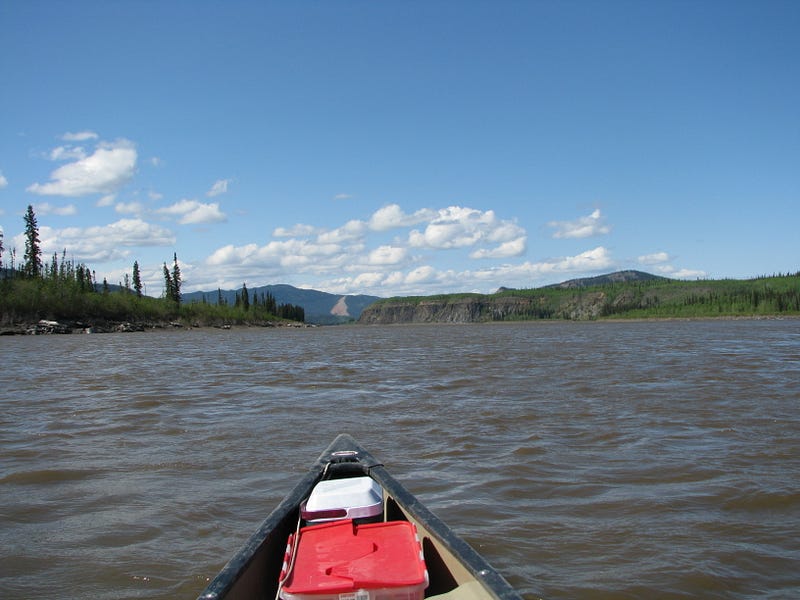
I’m a loner by nature. I love getting off by myself in the outdoors. If I spend too much time indoors and around other people I get grumpy. And no one likes a grumpy old fart.
For the last 15 years before I retired I lived and worked in an office in Alaska. I fell in love with the wilderness and back country, especially when I could get away alone.
I was pretty sure that once I retired I would likely move south. I wanted to be active with my free time, not spend six months of the year up to my butt in snow waiting for spring. So while I was there I tried to make the most of the Alaskan experience.
One of my dreams was to canoe solo down the Yukon river. Or at least part of it. I finally took this trip in 2008 when I was in my late 50s.
The back country of Alaska is mosquito heaven. They are so thick in the summer season that they have been know to drive animals crazy. Not wanting to get any crazier than I already was, I tried to arrange my trip early enough in the year that the post-winter mosquito hordes had not yet arrived.
My strategy was to start the trip as soon after breakup as was safe for a canoe. I was hoping that if I timed it right, I would avoid the worst of the mosquitos.
Breakup is exactly what it sounds like. This is when the ice on the river, which can be several feet thick, breaks up and washes downstream. Until the large ice flows have cleared away, it is not safe for a canoe.
My plan was to canoe from the village of Eagle, which is close to the Alaska — Yukon border, to the village of Circle, 180 miles downstream. About 160 miles of the trip was entirely in the Yukon-Charley Rivers National Preserve, a wilderness area with only a few empty cabins which are used mostly in winter during dog sled races.
There is a person in Eagle that has half a dozen canoes that he rents out for one way trips to Circle, though usually for groups of people, not loners like me. When enough canoes are piled up in Circle, he goes down with his power boat and tows them back to Eagle.
Getting back to Eagle turned out to be relatively easy. In the Alaska back country businesses are fairly flexible. There is an air freight company that makes a regular trip from Fairbanks to Eagle. For a reasonable fee, they will stop at Circle on the way and pick up a passenger.
So, enough about the logistics. Trip day finally arrived. I drove from Anchorage to Eagle, staying the night in the local motel, ready for an early start the next day.
Day 1: I started my river voyage on May 25. The launch point was a couple of miles upstream from Eagle village. At this point the river is about a mile wide. Here’s a view of Eagle from the water as I went by.
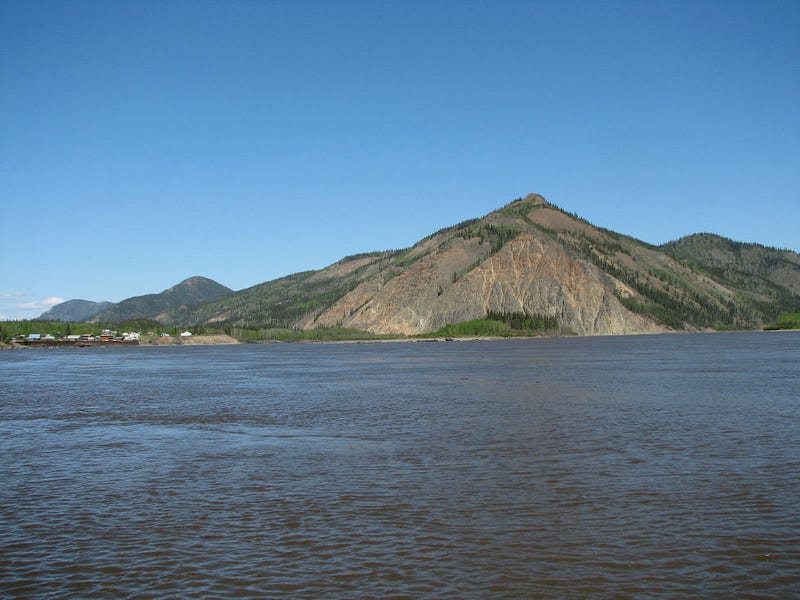
It was a beautiful clear day with a cool, light breeze.
The Yukon’s current flows between five and eight miles per hour depending on the width of the river. When the river narrows the water flows faster, slowing some when the river widens.
I quickly learned that once you get out into the middle of the river the winds can be fairly strong. When facing an upstream wind while riding a downstream current, the canoe acts like a wind vane.
I had loaded my canoe with not enough weight in the front which meant that the front of the canoe protruded a bit higher than the back where I was sitting. It wasn’t long before a strong breeze turned the canoe around so that I was floating downstream backwards. How embarrassing!
The wind wouldn’t let me turn the canoe the right way around. I travelled backwards down the river for a few miles before, over my shoulder, I saw a sand bar on which I could land.
After landing and rebalancing the weight in the canoe, facing the direction of the river flow was a lot easier. While I was getting back on the river, I saw my last piece of river ice float by.
That first day I saw my only moose on the trip, working its way along a steep section of the river bank.
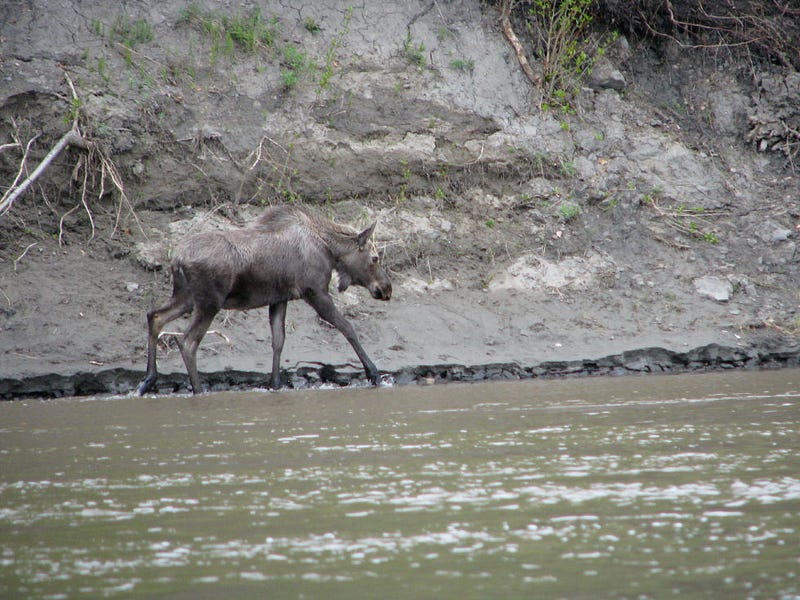
That night I landed on another sand bank and camped in a tent.
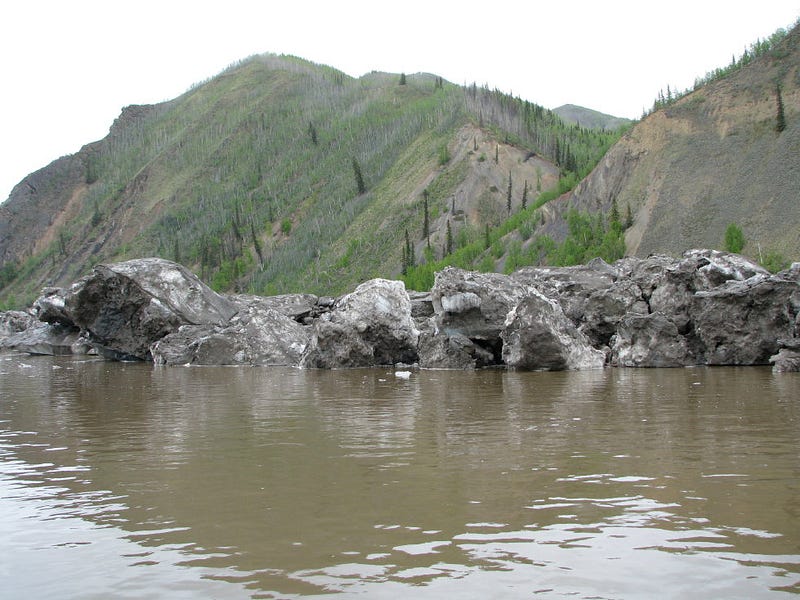
Day 2: The next day was fairly uneventful though I did get a good view of how big the ice blocks could be during breakup. In the picture below the small block in the middle was about the size of a Volkswagen.
When one is travelling on the river alone, letting the current do most of the work of moving you downstream, you get a lot of time to just sit and be. For such a large river, it is surprisingly quiet. And being so far away from the things of man, there is very little to disturb that silence.
As you can see from the pictures the river has a lot of silt in it. In the middle of the river it was so silent that the only thing I could hear was the sound of silt sliding along the side of the canoe. One doesn’t get that kind of quiet in the city.
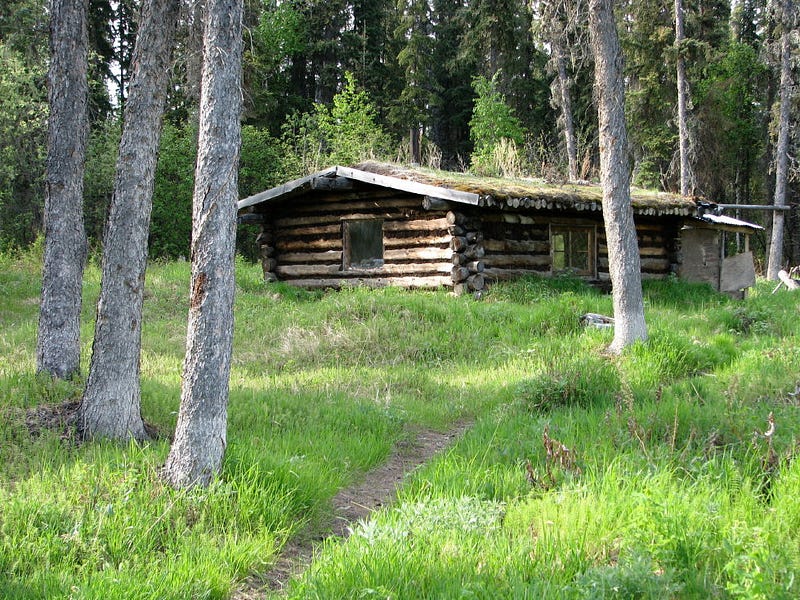
That evening I landed at a spot that had a National Park Service (NPS) log cabin where I stayed the night. Cabins in the park are usually left overs from the gold rush days and are left unlocked, available for use on a first come first served basis. Here’s the cabin:
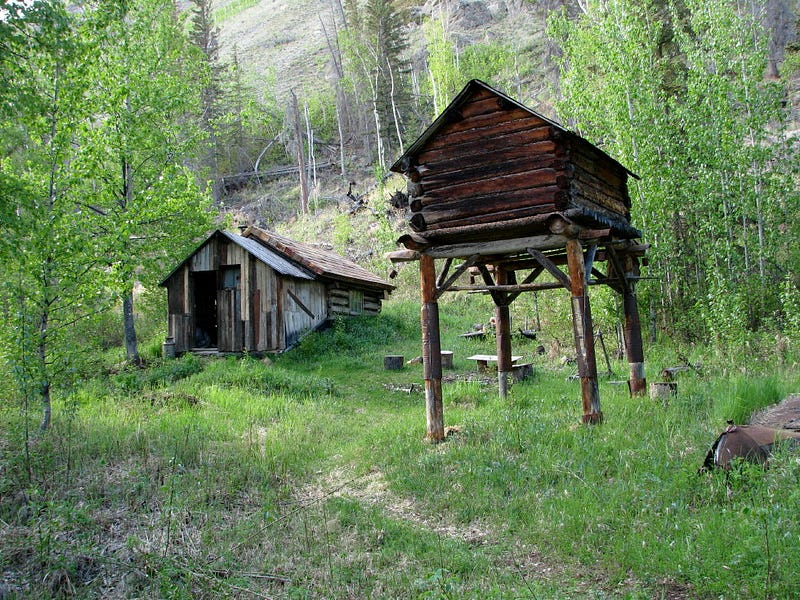
The structure on the right is a food cache. That is where anyone living at the cabin stores their food so that bears can’t get to it. A full time resident would hunt in the fall and, if successful in getting a moose, would package it up and put it in the cache. Six months of freezing weather would store it for the winter and keep them fed until spring.
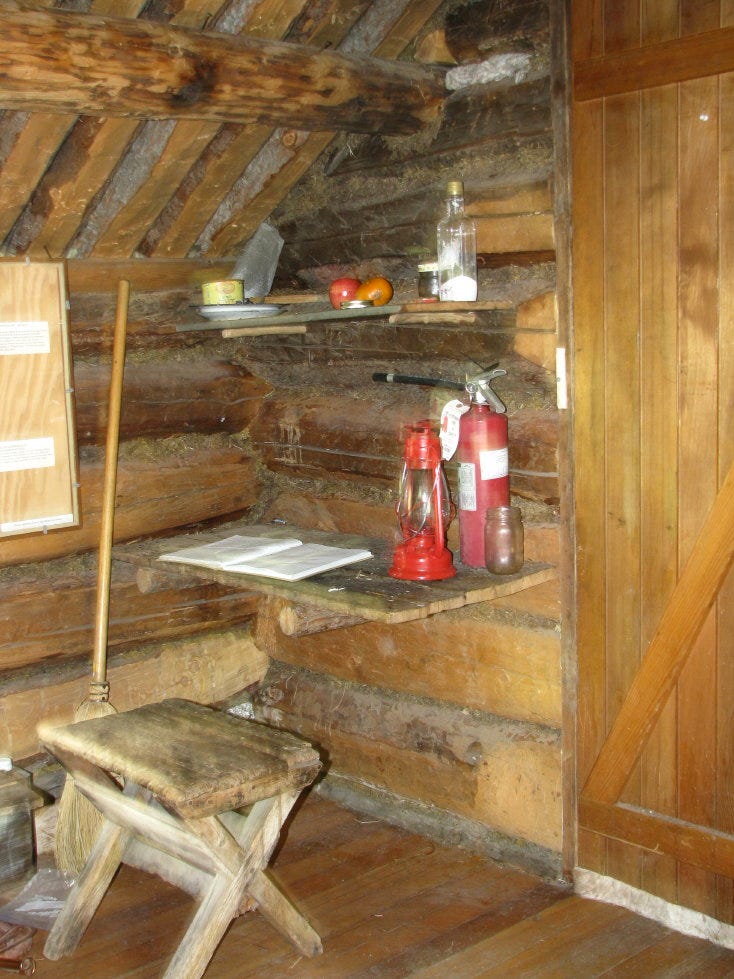
Here’s an inside view of the cabin. Much neater looking than the outside.
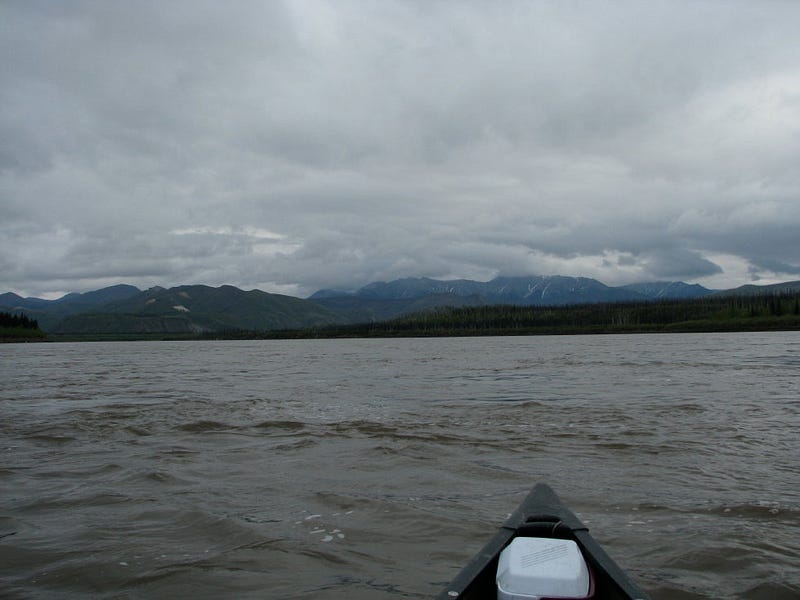
Day 3: The next day I got an early start. The weather was threatening but fortunately didn’t turn bad. When you are in the middle of a huge river with just a canoe and a paddle, stormy skies can be a bit intimidating.
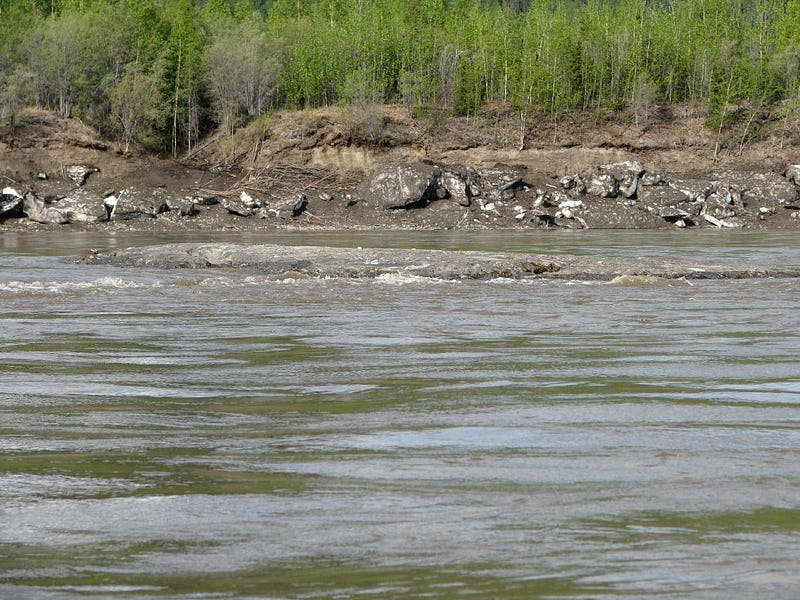
At one point I started hearing something that sounded like rapids. In the late 1890s they were running steam boats up to the Yukon during the gold rush, so there weren’t supposed to be rapids on the river!
Again, the quiet was playing tricks on me. After a couple of miles with the sound getting louder, I finally came upon the “rapids”. They were just a few rocks that protruded above the water and the sound was the water rushing by them. It sounded a lot scarier than it was.
That night I stayed at another cabin in the park. This one had a particularly interesting detail. Notice the windows. These are unusual in that grizzly bears have no problem breaking glass and climbing into a cabin to get at food.
These windows had removable plywood panels with many four inch nails protruding out of them. This was so that the bears couldn’t break in without getting nails in their paws. If one wanted light inside, you removed the panels. Just remember to put them back when you leave!
Day 4: Another early start. As I was paddling out of the creek that led to the cabin into the main river, I came across this guy. He took a look at me and then headed the other way.
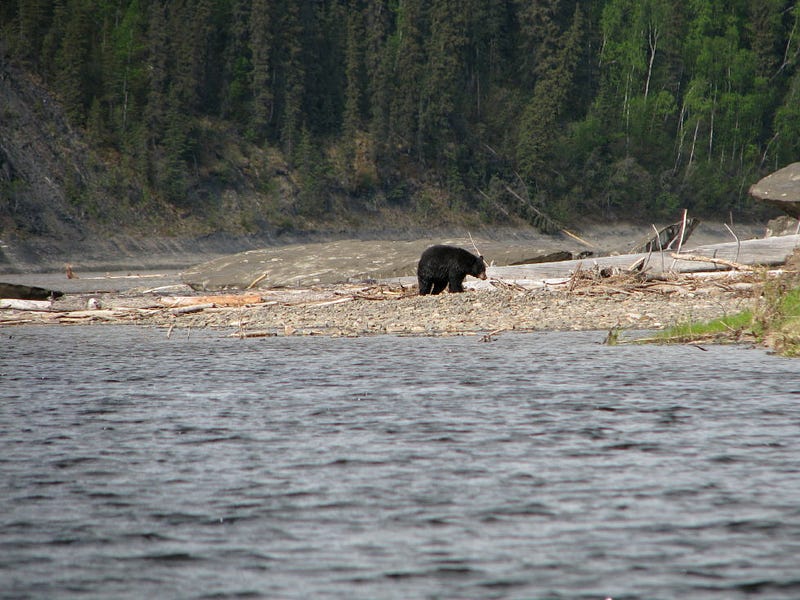
Black bears in Alaska are somewhat cautious. Grizzlies have been known to kill and eat them now and again so that caution make sense.
This was my worst day for weather. About mid day a storm came up with high winds and heavy rain. Unfortunately I was at a narrow place in the river that offered nowhere to land with a fast current. I kneeled down into the bottom of the canoe (to lower the centre of gravity) and spent an hour paddling hard to keep the canoe from being turned by the wind.
There was wind, rain, and hail. I got well soaked and did worry whether the storm would swamp the canoe. Fortunately, it passed with no harm done.
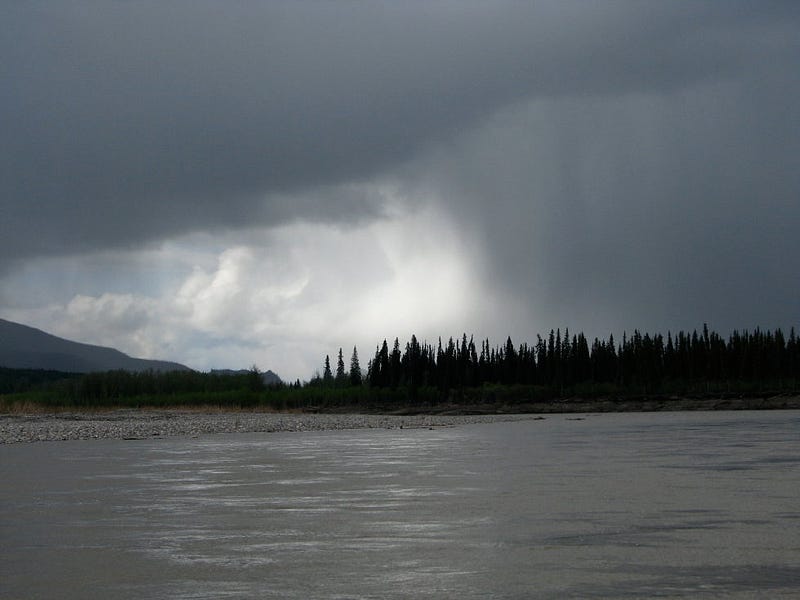
After the storm passed the clouds broke up and the sun came out. That night I stopped at another NPS cabin. Another storm came through with more rain, wind, and hail, but I was already in the cabin so I was able to sit on the porch, drink hot tea, and watch the weather.
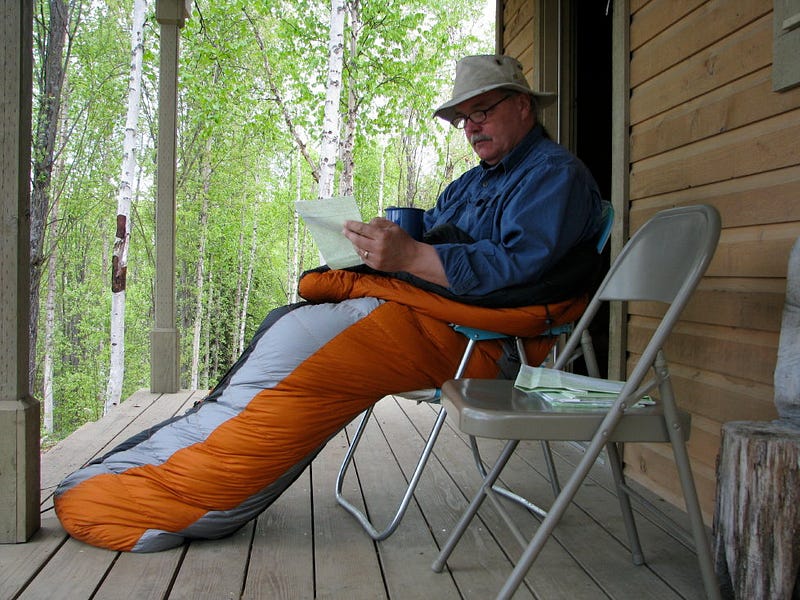
Day 5: This was the first day that there was no head wind. Until then I had had to keep paddling to keep the canoe pointed in the right direction. Today I was able to just sit, enjoy the water and the view, and let the current carry me along. I needed a restful day after the storm.
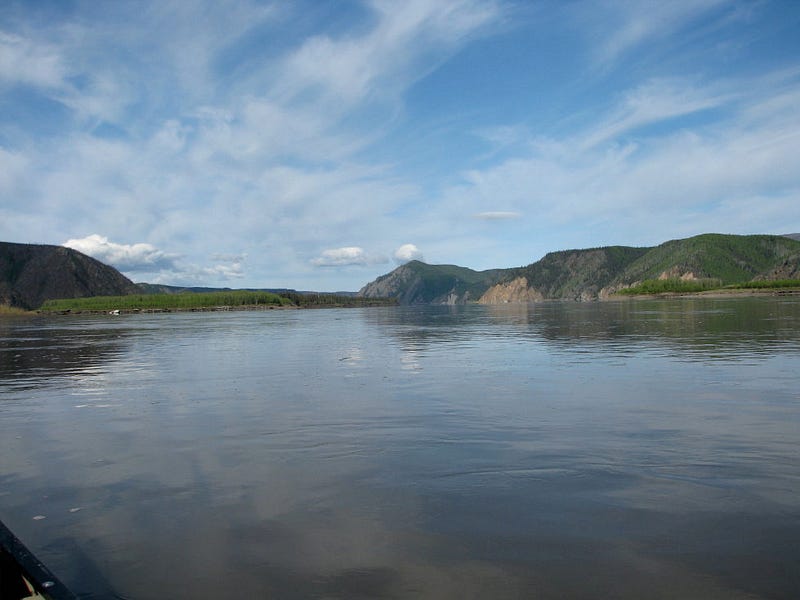
There is something elemental in sitting in the middle of a mile wide river floating along at seven miles per hour five days away from the last time you saw a human.
One is exquisitely alone and solely dependent on one’s own skills and resources. At the same time there is something intensely peaceful in knowing that no one is going to disturb you or the quiet that surrounds you.
I loved it. I sat that way for hours as the river carried me along.
That night I camped on the river bank, sleeping in a tent. Fortunately, no bears came by to investigate my camp.
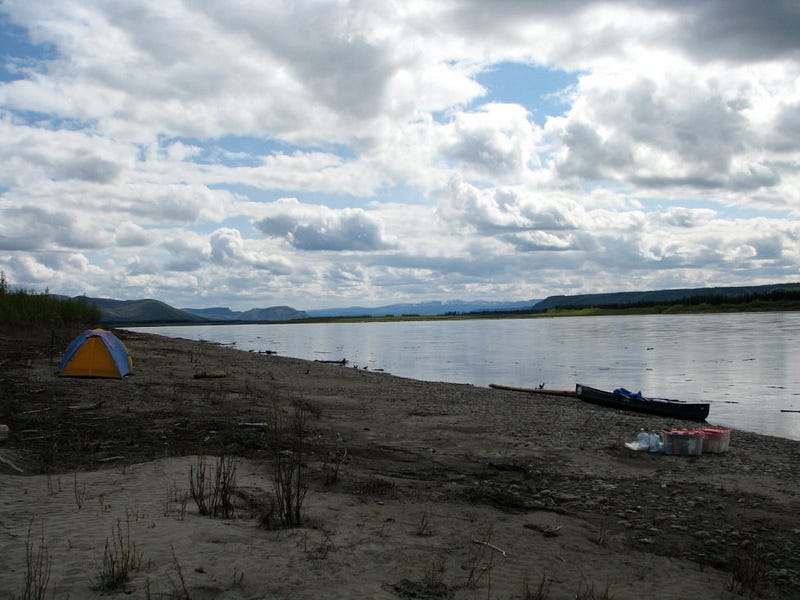
Day 6: This was my last day on the river. Around mid day I arrived in Circle. Shortly before landing I saw my first mosquito. I had timed my trip well.
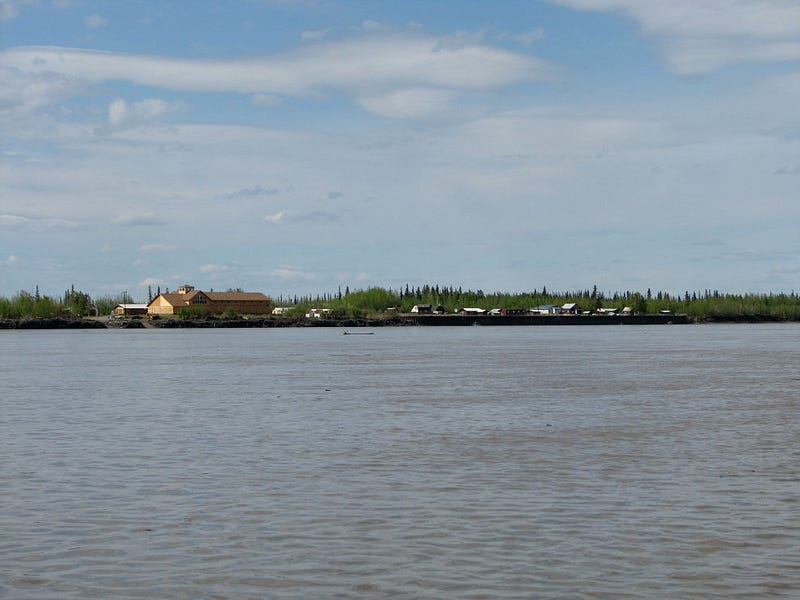
Before the Klondike gold rush Circle was the largest mining town on the Yukon river. At its peak it had a population of 700 people with dance halls, government offices, and even an opera house. When I arrived the population was only about 100 people. As of the 2020 census, there are only 42 people left.
Shortly after arriving I made my way to the one and only store and, using a pay phone (no cell service), called the air transport company to arrange for pickup the next day.
There was a lady in town that rented out cabins so I didn’t have to stay in my tent. She included a wonderful moose stew with dumplings in the price for the cabin!
I wandered around town to see the sights, such as they were. The opera house is still standing, though unused.
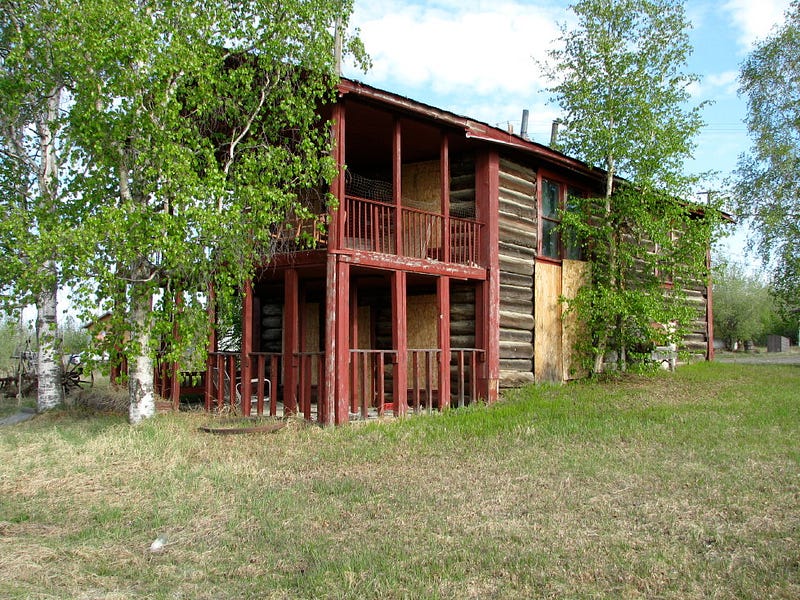
And of course I had to visit the graveyard.
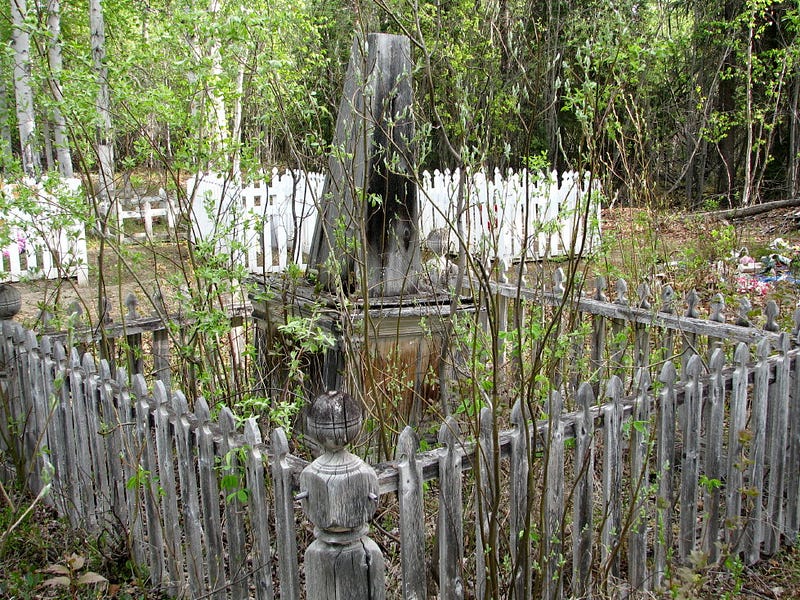
I loved this trip. It was the first time I had been that alone, for that long, with that much quiet. It fed something in my soul. It gave me something I hadn’t known I was missing. The only name I can put to it is “inner peace”.
Thank you for reading my article.
If you found this story interesting, here is another of my Alaska adventure stories that you may like.
Here are some articles by writers who inspire me to write. If you enjoyed my article, perhaps you will also enjoy theirs:
Mia Verita also writes about the healing powers of being on a river.
And when one has to get back to the human world, Michele Maize (The Sober Vegan Yogi) has helpful words to share to reduce your disappointment in the human condition.
Finally, I wish to thank the following people whose words I have been reading recently. Some wrote stories. Some provided their comments. All gave me interesting things to think about. I am grateful to all of you for making my days brighter with your words!
And I encourage others to read their stories.
Dr. Fatima Imam, Mansimar Singh, MartinEdic, Thomas Ott, Debika Kumari, Rachel C., Malini, Gina Patrick, Suma Narayan, Charles The Scientist, James Beaufait, Barry Leung 👑, Wounded Healer, Tara Desai PhD, Carmellita, Victoria Suzanne, Giulia Montanari, Julie Gaeta, Sahil Patel, J.W. Bertolotti, The Autlaw, Margie Willis, Sean Kernan, Ossiana Tepfenhart, Mary McGrath, Alberto García 🚀🚀🚀, indi.ca, Gunnar De Winter, Mani Goel, Dr.Preeti Singh, Ed Luo, Judy Millar, Pathless Pilgrim, David Price, Janice Macdonald, Keira Fulton-Lees, Simão Cunha, Sarah McManus MSc, Roz Warren, Jillian Enright, Douglas Giles, PhD, Simon Dillon, Ali, Jessica Wildfire, Jenny Lane, StephenwithaPhD, Teresa Roberts
Thank you all for sharing your words and spending your time with me. I probably should spend more time writing and less time reading however you are all so interesting!
I wish you well!


