
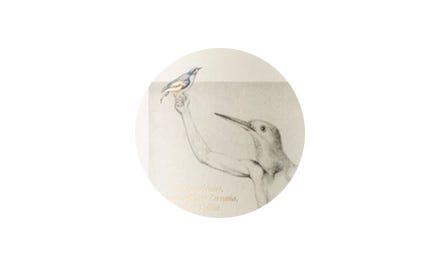
Surrealism and product branding
In the new post-pandemic world, boundary-pushing artistic brand expression leads the way
When we refer to surrealist art, creators such as René Magritte, Leonora Carrington, Salvador Dali, André Breton, Frieda Kahlo, Joan Miró, Leanor Fini, Rufino Tamayo, Méret Oppenheim, André Masson, even Francisco de Goya and Hieronymus Bosch in much earlier times, come to mind.
They all share a passion for dream-like scenes filled with symbolic images, distorted figures, biomorphic shapes, presented in unexpected and often illogical set-ups.
Surrealist creativity lets the unconscious mind express itself freely
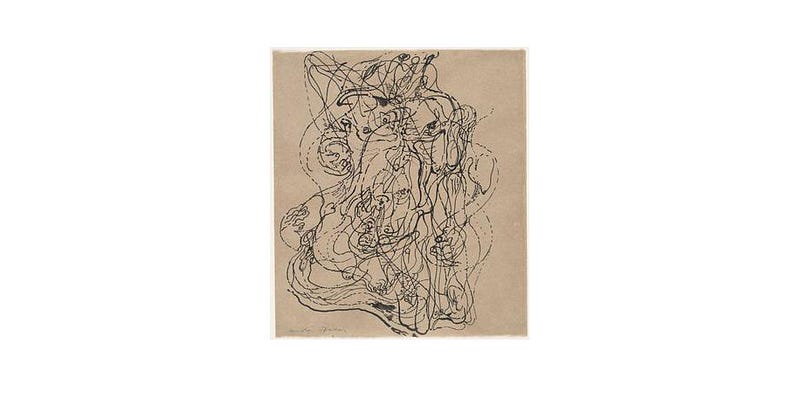
In this drawing by André Masson, a fantastical interpretation of a personal experience is drawn freely.
User habits have evolved to embrace the fantastic
Undoubtedly, consumers have expanded their minds. They want to experience new creative horizons, hear and buy from other people — not bots. Users want stories, fantasy, and dreams.
Let’s look at how makers embrace the surreal to bring their products to market
Note: I have no affiliation with the product creators featured below. The brand images are shown as creative case studies. Also, alcohol is for adults only, not minors.
Dreamy and surrealist imagery has emerged on many product categories. It is most dominant on wine labels, cocktail mixes, and food packaging.
The Marko wine series
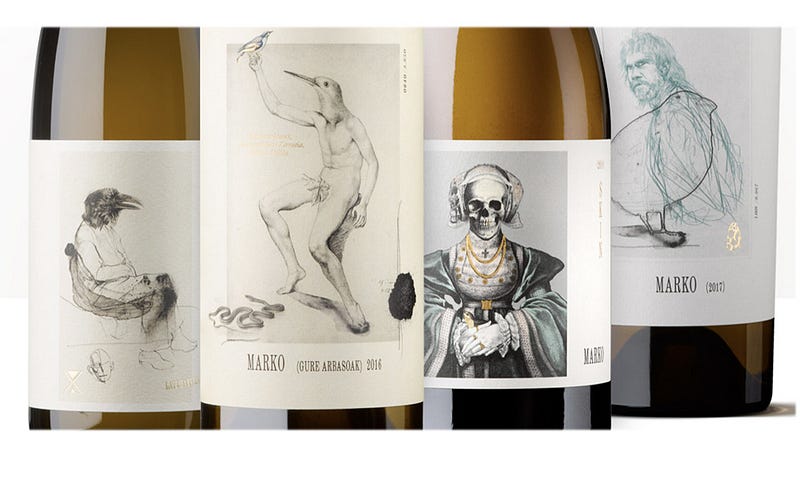
The (calcco) design of the Marko wine labels is an excellent example of the dreamy surreal pleasure contained inside.[2] Drawings by Goya come to mind as inspiration for this series.
Meet the Capo Nativo characters from Chile
Similarly, Capo Nativo wines from Chile embrace the quirky and surreal.
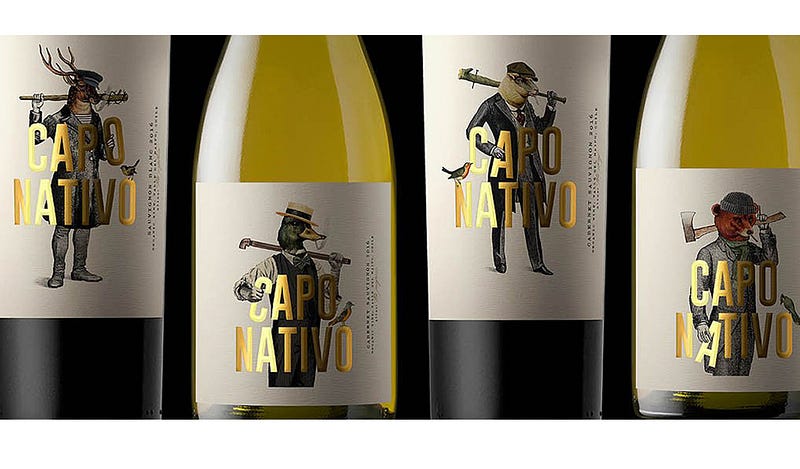
Oveja & Remi design studio has created an excellently narrative in the visual labelling and typography of this Chilenean wine Capo Nativo, described as…
Next time you walk through the countryside, be careful, farm animals are not as good as they seem, at least on these labels.
A stag, duck, sheep and fox character dressed elegantly holding some kind of tool each embody the flavors of this wine in a peculiar fashion.[3]
The fantastical world contained in one grain of rice
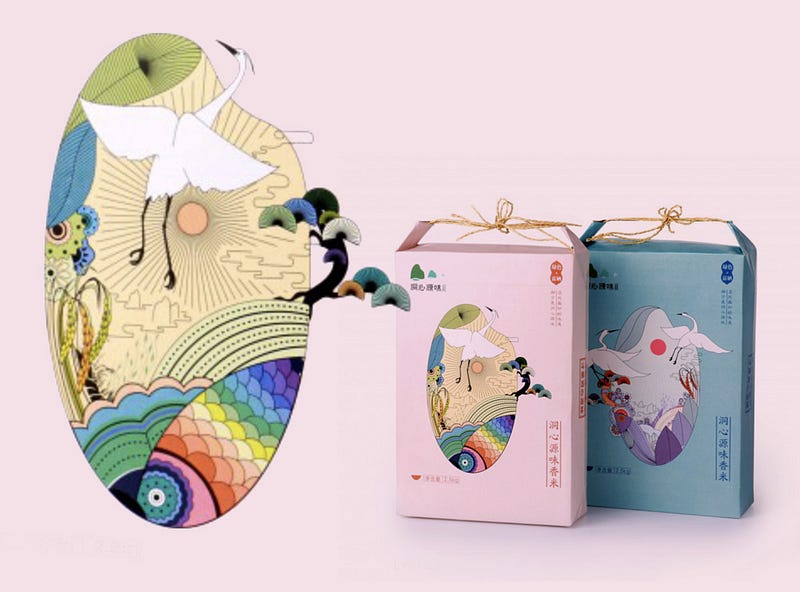
Artist/designer Liang Hongning packages the world of rice in one grain. He and his product partners, Dongxin Yuanwei Rice, see their world filled with soaring cranes, rainbow fish, fabulous large flowers and trees. Theirs is an homage to the rich cultural landscape.[4]
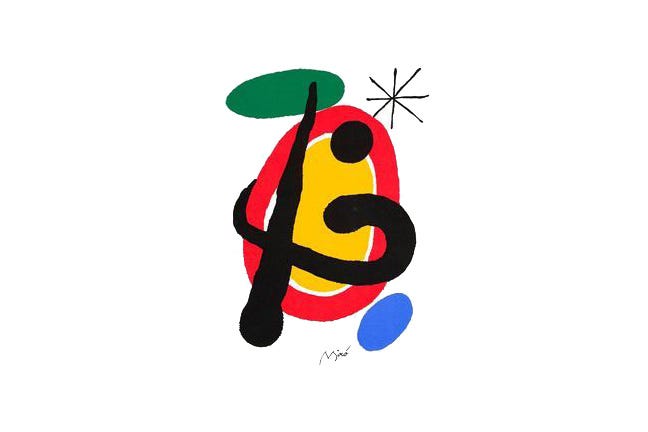
Although Honging’s colors are softer and gentler, Joan Miró’s fantasy iconic scenes play with similar structure.
Meet Lilian Tang’s absolutely gorgeous mooncake box designs
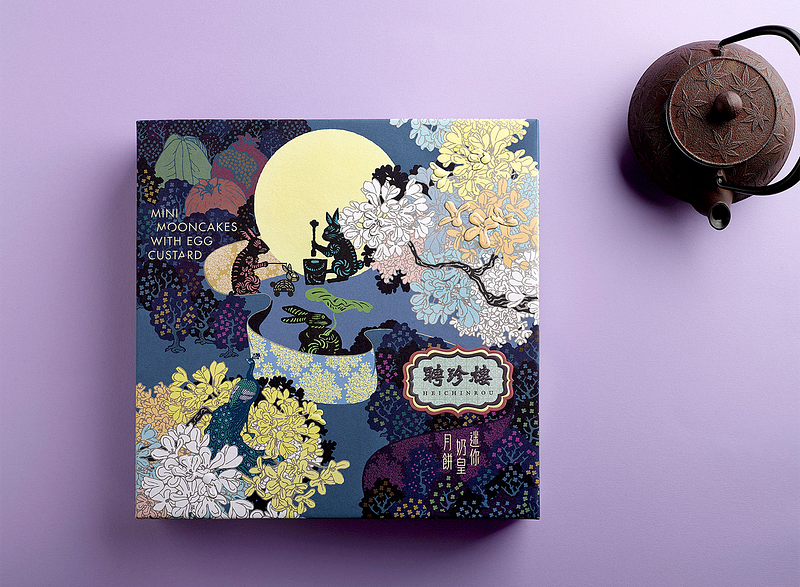
These box designs by Lilian Tang holding mini mooncakes, created for the Heichinrou restaurant group, are breathlessly beautiful and… surreal.[5]
They celebrate the Mid-Autumn Moon Festival, for all things reunion, romance and fairy tales.The richly decorative box designs were inspired by 19th Century European biscuit tins and Chinoiserie, with fairy-tale illustrations featuring rabbits, peacocks, giant flowers. They present a sense of magic and mystery.
From mooncakes to C by B chocolates
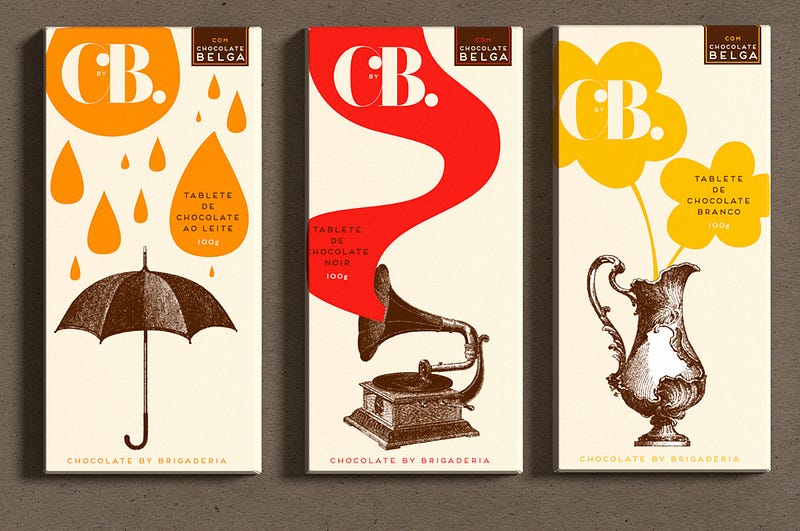
C by B is a most eye-catching design that gives homage to René Magritte and the many collage artists of the surrealist movement.
Designed by the supremely talented design firm of Casa Rex in São Paulo, Brazil, it is a testament to how a story told in fabulous visual puns can captivate the audience forever.[6]
Indulge in contemporary visual narratives! — Casa Rex
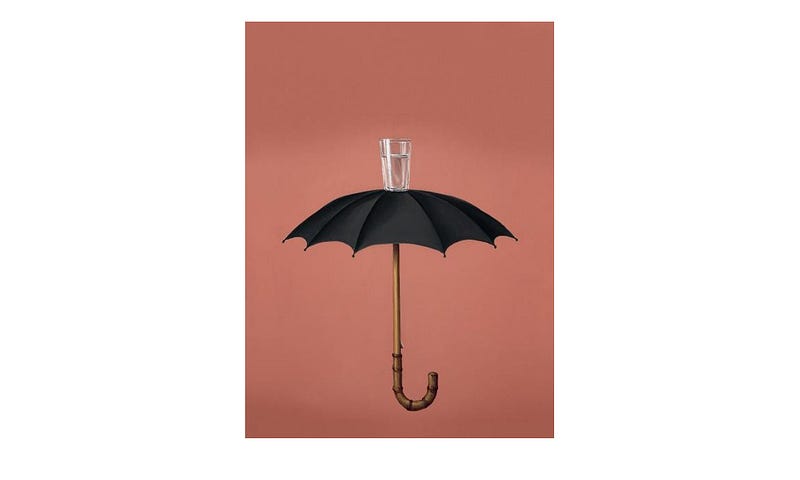
Toffees and marshmallows, anyone?
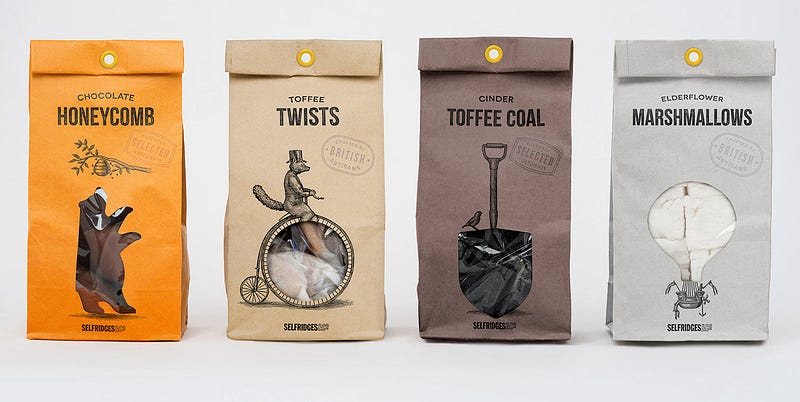
Displaying inspiration from Magritte as well, designer Ben Galbraith playful packaging for the sweets selections at Selfridges celebrates a range of confectionery sourced from British artisans. The packs feature quirky illustrations inspired by the product, and a die-cut window revealing the confectionery inside. The branding is an ode to surrealist collage art.[7]
Last but not least, the unexpected surreal world of tea flavors
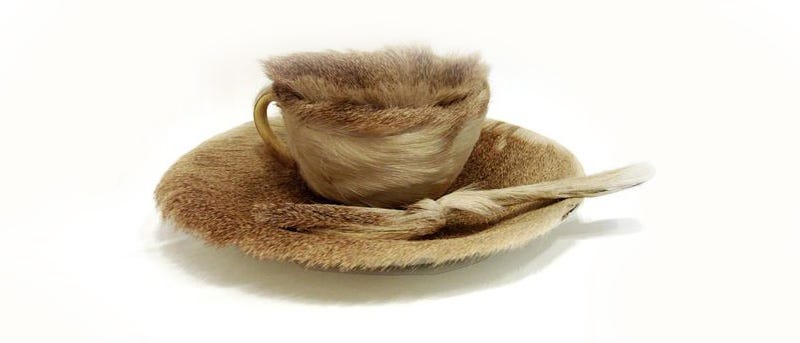
In 1936, the surrealist Meret Oppenheim wrapped a teacup, saucer and spoon in fur. Even today, the work remains surprisingly breathtaking and otherworldly.[8]
Designer Shaobin Lin invented the unfolding tea story for client Runyuanchang tea.[9]
For the Yunyuanchang ancient tree tea series, Cloudy Tea is prized for its rich and special aftertaste. This tea’s long history and cultural significance is told int the gentle unfolding of the dreamy drawing.
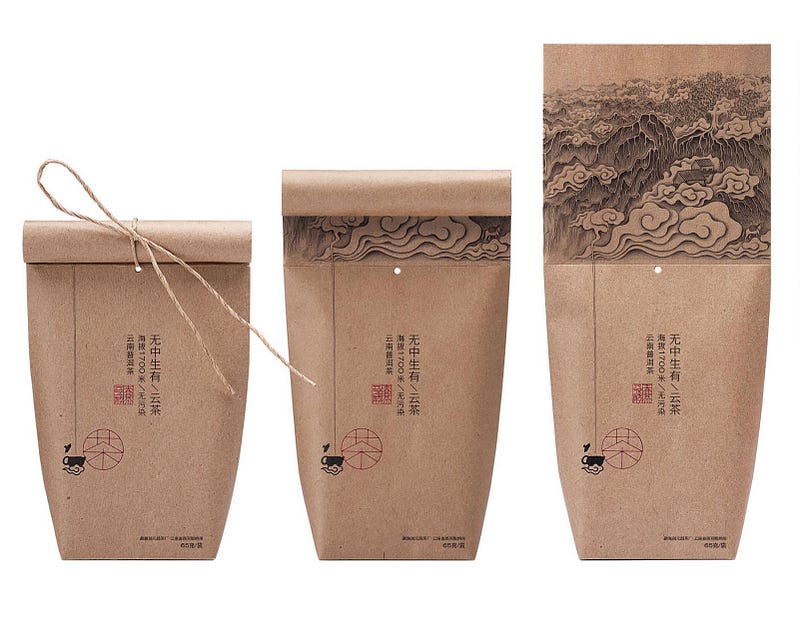
This earth-toned packaging harmoniously reflects the nature-related philosophy underlying the product. As in Oppenheim’s tea cup, saucer, and spoon, a world beyond the ordinary is invoked in this gentle and poetic story.
In summary
Surrealist imagery can inspire product narratives beyond the ordinary.
A dream world is captured through fantastical branding.
Customers embrace the extraordinary brand story.
Surrealist artists and designers can inspire beyond what has previously been experienced by consumers.
Explore it.
Read about design, branding, UX, and art. Join Medium.
References:
[1] Collection Museum of Modern Art, New York.
[2] (calcco) design studio: https://www.calcco.com/trabajos/packaging/familia-marko/29
[3] Oveja & Remi design: https://ovejaremi.com
[4] Designer Liang Hongning: http://designers.org/profile.php?ID=159152
[5] Lilian Tang design: https://ltdhk.com/rabbits-lanterns
[6] Casa Rex design team: http://casarex.com/english/
[7] Ben Galbraith designer: https://www.bengalbraith.co
[8] Meret Oppenheim, MoMALearning. https://www.moma.org/learn/moma_learning/meret-oppenheim-object-paris-1936/
[9] Lin Shaobin Design: http://www.linshaobin.com
All images are copyright the creators, designers, and artists. They are used for case study purposes only.
Get inspired. Discover these articles on art and design.
Thank you.