
Surprise! Kobe Beef Isn’t From Kobe
A Delicious Treat for Meat Eaters But Kobe Residents Prefer Fresh Fish
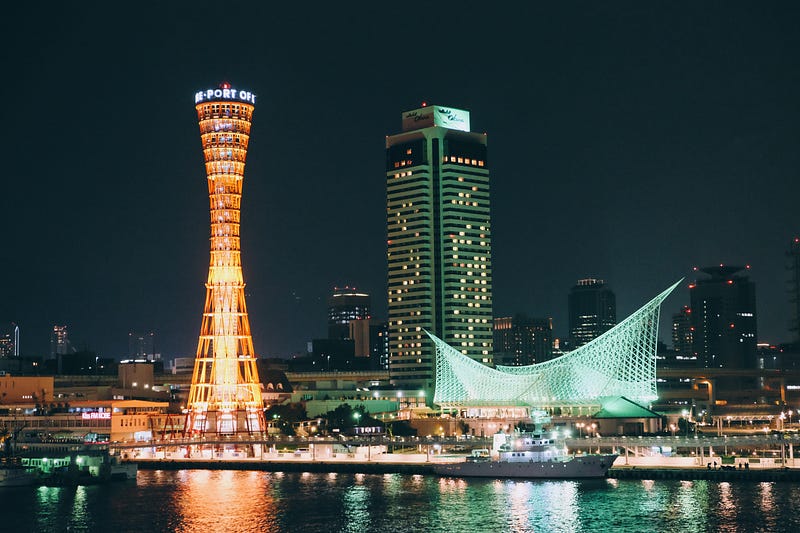
Whenever I say my Japanese home is Kobe, the reaction from Americans is inevitably, “You must enjoy the wonderful Kobe beef!”
I’m never sure how to answer.
Within Japan, Kobe is known as a chic city of trendy shopping and great food. Kobe is the 7th largest city in Japan, and the capital of Hyōgo Prefecture, nestled between the sea and the Rokkō mountains.
It’s famous primarily for its ijinkan Meiji-era foreigners’ residences, shopping in San-no-miya, and the taiko-shaped Port Tower landmark overlooking Osaka Bay. Oh, and don’t forget the yakuza.
Kobe is indeed renowned for the quality of the local cuisine. But mostly that means seafood that comes in through the busy port and from nearby Akashi, as well as the delectable French bakeries and an expansive Chinatown. Kobe is a rich city, more famous for gourmet restaurants than the lively street food of Osaka, just a short train ride away.
But outside of Japan, Kobe is known globally for one thing: Kobe beef. Oh, and Kobe Bryant, the basketball superstar who was named after Kobe beef. (Yes, really.)
Ironically, despite living in Kobe for many years, I’ve rarely eaten Kobe beef. In fact, Americans are shocked to find Kobe residents aren’t really into Kobe beef. And never were.
For most of my years in Kobe, I never saw a Kobe beef restaurant. However, with the influx of tourists, restaurants loudly advertising Kobe beef steaks have sprouted in the San-no-miya, often with signs in English, catering to tourists rather than locals.
Until the opening of Japan with the Meiji restoration, Buddhists’ precepts prohibited the eating of meat. Cattle had been brought to Japan from China in the 2nd century, but for use mostly in plowing (and fertilizing) the fields rather than for milk or meat.
It was the Westerners who flocked to the port of Kobe to trade with the newly opened country who brought an appetite for beef.
Foreign cattle were brought to Japan to satisfy the demand. Later, around the turn of the century, the imported cattle were cross-bred with the native stock, with the result being what’s now known as wagyū (和牛) which literally means “Japanese cattle”.
Still, with beef expensive and “foreign”, consumption remained low until well after the country recovered from WW2.
Kobe beef is exclusively one particular strain of wagyū, the Tajima version of the Japanese Black Cattle. But unlike almost all other location-based appellations such as Champagne or Camembert, Kobe is not where Kobe beef is raised; it’s where the customers were located.
Kobe beef is especially known for its high marbling that gives it a distinctive melt-in-your-mouth flavor. Mostly that comes from the genetics of the cattle. But stories abound of the cattle getting massaged daily and serenaded with classical music while munching on the best quality grass. Compare the marbling in this photograph with the steaks at your local Kroger.
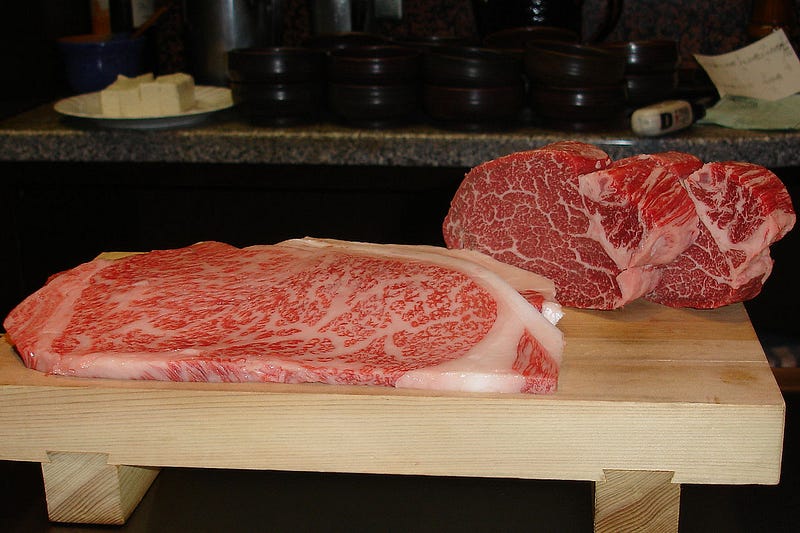

Only 3,000 cows each year meet the strict requirements to be designated as Kobe beef. They must be:
- Tajima cattle born and raised in Hyogo Prefecture
- Less than 500 kg
- Processed at a slaughterhouse in the Kobe area
- Highly marbled (BMS of 6 or higher)
- Meat quality score of 4 or 5
As a young salaryman living in a company dormitory, I never saw Kobe beef. Once a week we might have curry rice that included some kind of mystery meat. It was beef in Kobe (maybe) but not Kobe beef.
Now that I’m older, my wife and I are fortunate to be able to enjoy better quality food. But in Kobe that means fresh sashimi, or Chinese food, or even takoyaki hot off the griddle. I don’t see Kobe beef at our local grocery store.
In contrast, in the US, where beef is the go-to protein, the local Asian supermarkets offers Kobe beef, “Kobe-style beef”, and wagyū. Only the Kobe beef is imported from Japan and is both ridiculously expensive and rather brown and sad looking in vacuum-packed containers.
The “Kobe-style beef” sold in the US is a premium beef, but really nothing like real Kobe beef, without the same marbling. Usually, it means wagyū cattle originally from Japan, but often cross-bred with local cattle such as angus. But since there is no official designation for Kobe beef in the US, it can be anything.
If you’re planning a visit to Kobe, you can look forward to a delightful culinary experience. But I recommend the fresh seafood and the wonderful bakeries where the locals shop rather than the Kobe beef restaurants for tourists.
References:
https://ja.wikipedia.org/wiki/神戸ビーフ
If you enjoy Japanese food and drink, you’ll enjoy my novel, To Kill a Unicorn, set in the Japanese in the center of Silicon Valley.