
Cognitive Psychology
Surprise! I’m Coming for You
Why I hate and fear surprises in all forms
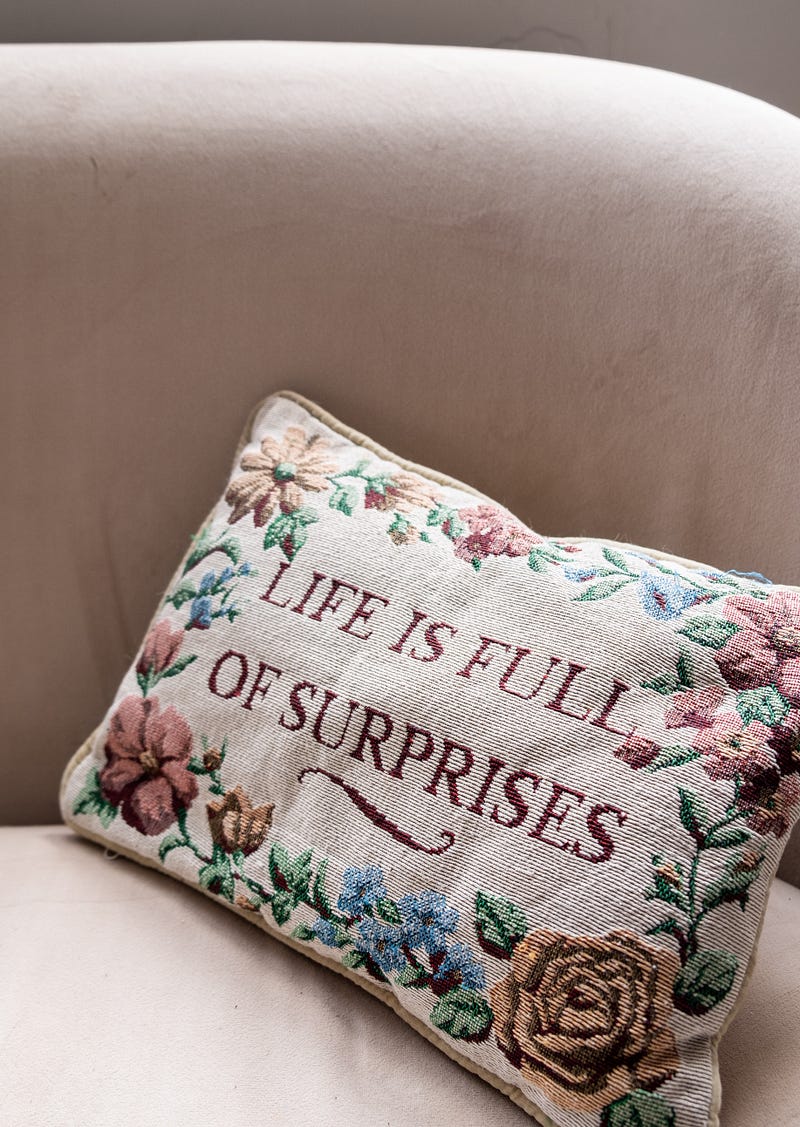
I hate surprises, and I’ve been this way since I was a child. I did not like playing games in which people would sneak up on me behind my back and say “gotcha.” I didn’t like games like hide and seek or tag because you never knew who or what was coming and when.
I didn’t realize it then, but much later when I took a few psychology courses and read some self-help books, I learned that one reason I didn’t like surprises was the lack of control inherent in activities based on chance or other people’s motivations and decisions.
I wasn’t a control freak in the sense that I needed to determine everything I ate, wore, or engaged in. I was just plain scared of the unpredictable — those life events and processes that hid like ghosts or phantoms in the dark, musty corners of my mind, then jumped out in front of me to obstruct my path when I least expected or wanted it.
Once as a pre-adolescent I developed a series of painful ear infections that seemed to have a life of their own. They didn’t give warning; they just began with a tiny ache similar to a toothache that indicated something was wrong. The throbbing picked up steam until the pain became unbearable, at least to my younger self.
One time I was with a friend — a sleepover/pajama party — and the ear pain pushed up and into my awareness. My parents weren’t home, and my friend didn’t know how to help me. Not only did I have to deal with stabs of pain, but I also had to cope with embarrassment and dependence. Such was the nature of this surprise that it tied my hands and turned me into a complaining infant consumed by the need for medical attention.
As I aged, I took my dislike of surprises to greater lengths. I didn’t like receiving grades in school because I never really knew what to expect. Many times I genuinely would not know how I fared on a project, a test, or a quiz. In my mind I frequently highlighted the mistakes I had made and concluded that I had failed or done badly.
I was wrong so many times I was forced to develop a wait-and-see attitude. The result was many surprises. And whether they were good surprises or bad ones, the unknowingness of it tortured me. I simply did not have a clue what to expect, and this gnawed at my sense of control. Or should I say non-control because the fact that I could not alter the past unnerved me in the present.
For me, the biggest horror in school, especially college, was the “pop” quiz. I would hear that phrase, see the mimeographed papers in the hands of the professor, and instantly tense. Even if I had read the assignment and was up to date in my studies, I got stressed because you just never know. You don’t know what the questions are — they could be multiple choice, true/false or essay — and they could cover material that you paid little attention to while you were doing your homework. The unknowable became my surprise, and it handicapped me with its obscurity and its inability to reveal itself.
The worst of the pop quizzes was in my French class where the professor would give something he termed a dictee. This entailed him reading a few paragraphs from an unknown source. We students would have to strain our ears to decode his accent and delve into our knowledge of French grammar and vocabulary so we could approximate on paper what the teacher had said. While I was extremely nervous throughout each dictee, all these years later I cannot, for the life of me, remember how I fared on these quizzes. That surely says something about the qualitative and quantitative effect of surprise, I guess, or the impermanence of memory.
Other “surprises” occurred in the social sphere. You met a guy and thought you hit it off, he said he’d call, and then you waited. Either way it was destined to be a surprise. If he called and asked you out, you felt nervous and clumsy as you conversed or sipped wine; if he didn’t call, then that was also a surprise, one you might obsess over for weeks. Was I too quiet? Did I dress too much like a frump? Did he think I wasn’t smart enough?
Then there were the health surprises that happened to you and your loved ones. The biggest surprise for teenaged me was the plague of acne that I struggled with for many years. One day I had a smooth baby-soft face; the next day, it was all pimples and redness.
Then decades later came the surprise of multiple basal skin cancers all over my limbs. I should not have been surprised given the enormous amount of time I spent in the sun and at the beach as a child and young adult, but of course I still was surprised. No one ever recognizes that fate is constantly preparing you for something.
The most awful health surprise in my family was my parents’ dementia, which occurred only about eight years apart. My mother’s senility dragged on for two years, and every time I saw her or spoke to her, she was a surprise to me. In the beginning she was hostile, aggressive, dangerous — her temperament was the total opposite of what it had been when she was a healthy fully-functioning adult.
The surprises kept coming, and they were rarely good. She didn’t want to take showers — they scared her. She walked the corridors setting off fire alarms. She couldn’t remember that I lived in Arizona. She couldn’t remember me. She couldn’t walk. She couldn’t talk. She had difficulty eating. She constantly surprised me until that fateful day when a 3 am telephone call awoke my grief. It was the one time she did not surprise me. I’d had two years to prepare for the inevitable.
This is why I hate surprises. I told my husband never to surprise me with a birthday party. Thank God he never broke that promise. It was bad enough being a freelance writer and waiting for surprises to come in by email or snail mail. Would Editor B like my query? Surprise, surprise. The rejection letter came, surprise surprise. Editor C called and told me she liked my idea, but could I supply more primary sources. Surprise, surprise.
Then there were the surprises about the health of my pets whose lives meant more to me than life itself because they grounded me. Without my pets I was dangling in mid air, my feet kicking wildly, my mind flying in umpteen directions imagining the horrors that might land at my front door. Surprise!
At various times the veterinarians handed out diagnoses and depending on the roll of the dice, I got reports that were good or bad. The worst surprise I ever got was a double diagnosis of terminal illness for a beloved dog. I went into a deep depression and tried not to leave my dog’s side for a moment. The surprises kept coming. He was eating, he was sleeping, he was acting ok. He wasn’t living up to his negative diagnoses. Surprise, surprise, the vets were wrong, and I could rejoice.
Now I’m in the later years of life, that interval of time in which you can become ill with a chronic disease like heart problems, aneurysms, strokes, diabetes, or gall bladder disease. Will I escape it, or will I have to undergo the trials and tribulations of hospitals, doctors, and rehabilitation?
Of course the final surprise is death. When will it come? Will I precede my friends and spouse? Will I suffer or be lulled to sleep by a morphine drip? Of course I could take the surprise out of it and die by my own hand, but why would I do that? Not many people would commit suicide for that reason alone. It probably would not even occur to them. Of course it occurs to me, but I’m too much of a coward to delete this surprise from my life agenda. There is no preparation for death.
Even the surprise deaths of friends and celebrities you consider to be part of your generation dig crevices in your soul. When I learned of the “surprise” death of Robin Williams on returning from a dog show, I was stunned, and the hurt intensified because of course I had no real warning , no time to prepare myself. I was a faceless fan and didn’t know of the challenges he faced and the depression it might cause.
Of course the greatest surprise for me will be whether I get dementia or not. Only a few years ago, it seemed, scientists promised Baby Boomers that there would be a preventive or cure. But the odds that a cure will present itself before my elderly years descend is growing dimmer by the minute. My hunch is that the pandemic is slowing down all other scientific research — Alzheimer’s, cancer, kidney disease.
So the grand surprise will be whether my genetics and lifestyle steer me toward dementia or from it?
The variables of life that lead to surprises never cease to amaze me. Some say they are essentially the fabric of life, and to try to avoid them is analogous to avoiding life.
But I’ll stick with what I said at the outset. I don’t like surprises. I need lots of preparation to cope with life’s challenges, and surprises do not heed that caveat.