
Supreme Court, My Life, and the Law
Outside changes and inner needs
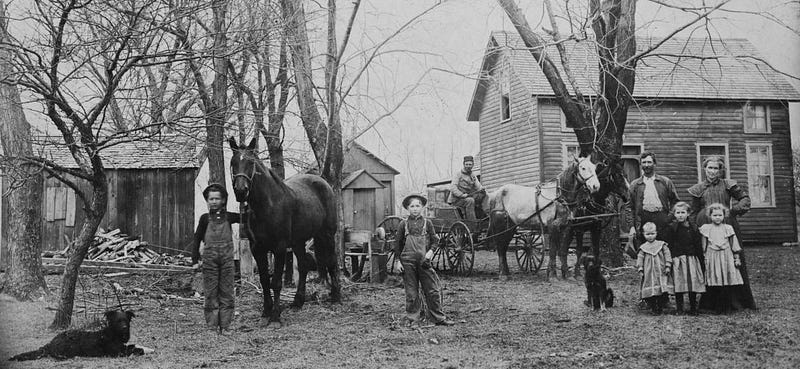
The age of my body says it’s 2022, but the decision to eliminate Roe v Wade turns the clock back to my childhood. It’s the forties or maybe fifties. Women were asked to give up their jobs so the men returning from war could have them. Patriotic women were to stay home, cook, clean, and have babies. They were subordinate and replaceable.
My mother hated it. She liked to work and earn her own money. She wanted financial independence. My father would have gone to engineering school but he already had a child, me. Men were expected to financially support their wives and children so he went to work as an artist in advertising. This was before photography gained dominance and illustrations were drawn in pen and ink by an artist.
Waves of feminism and my life
THE FIRST WAVE of feminism was the fight for the right to vote. It started in 1848 with the convention in Seneca Falls, NY organized by Elizabeth Lady Stanton and Lucretia Mott. Attendees signed the Declaration of Sentiments affirming women’s equality with men, including the right to vote. It supported the abolition of slavery.
Then the Fifteenth Amendment granted black men the right to vote before women could cast a ballot and privileged white women resented it. White feminists marginalized black feminists like Ida B. Wells and Sojourner Truth.
All this was before my grandparents were born. My grandmothers approached politics differently. My mother’s mother's challenge was the Catholic church’s teaching on birth control. She was told by a priest that, if she used the rhythm method of birth control, she could not receive Holy Communion. My grandmother was very devout. She gave birth to eleven children. Seven survived to adulthood. I assume that she voted but her children and her spirituality were foremost. She did not approve of women who engaged in politics.
My father’s mother was an active member of the local Democratic Party. She volunteered, was active in political campaigns, organizing, and voted. She and my paternal grandfather agreed on limiting their family size. She had two sons.
Betty Friedan’s book The Feminine Mystique (1963) announced A SECOND WAVE of feminism. Inspired by the civil rights movement and protests against the Vietnam War, it called for a re-evaluation of traditional women’s roles and an end to discrimination against women. Privileged white women dominated. They did not see the challenges of women of color and working-class women or understand the wisdom and power of these women.
There is no enthusiasm without wisdom and no wisdom without generosity. -Paul EluardIn 1965 the U.S. Supreme Court decision Griswold v Planned Parenthood rolled back state and local laws that outlawed the use of contraception by married couples.
My brother was born in 1958. My father was having affairs with various women. My mother wanted him to stay with her. My mother stopped using the rhythm method in order to conceive my brother. She was convinced my father loved his children more than he loved her.
In 1963 I was a sophomore in college in Washington, DC. President John F. Kennedy was assassinated. I marched in support of the Civil Rights Act of 1964. My father left our family for Connecticut with his secretary. My mother attempted suicide.
The 1970’s “women’s liberation” featured Gloria Steinem and Bella Abzug who founded the National Women’s Political Caucus in 1971. The Equal Pay Act passed and the Supreme Court decided Roe v Wade which established women’s reproductive freedom. The conservative backlash held back the Equal Rights Amendment. The backlash dominates our Supreme Court today.
In 1970 my brother came back from summer camp an alcoholic. He was twelve years old. His pediatrician said that, for some people like my brother, the first drink makes them addicts immediately. We tried to get my brother to attend AA meetings with no success. My brother committed suicide in 1975 after he broke up with his first love. Friends told us they stopped several previous attempts, but on New Year’s Eve in 1975, he was at home alone with our mother.
I was teaching elementary school in a working-class school in Yonkers, NY. After a stint at Prentice Hall in New York City, I taught in a private Catholic girls’ school in New Rochelle, NY. Members of my family seemed addicted to suffering and I was helpless to effectively intervene. In 1979 I came to California to study Sanskrit and Vedanta. My mother died in 1981.
The third wave of the 1990’s tackled sexual harassment in the workplace. The testimony of Anita Hill before the Senate Judiciary Committee regarding sexual harassment by Supreme Court nominee Clarence Thomas prompted mixed-race Rebecca Walker, Alice Walker’s daughter, to declare the start of the third wave of feminism in 1992. It was called the Year of the Woman. Many women were elected to Congress that same year.
In 1990 I attended my first AA meeting. I continued faithfully for 90 days. Then I switched to an alternative program that focused on self-esteem, Charlotte Kasl’s Sixteen Step Discovery and Empowerment program. I kept that going for several years. Now there are many healing options. What was wrong? From a political and legal standpoint, women’s lives were improving, weren’t they? Those changes were external. Why didn’t my spiritual studies bring peace? Several others who studied with my spiritual teacher also battled addiction.
Sharing their challenges with the swami who taught us, we all realized that mental health and emotional balance were not included in the teaching. In the Hindu tradition, these are managed by spiritual practices. We were not required to become Hindus to study Sanskrit and Vedanta.We needed to use the remedies of our culture to heal. Those included therapy and 12-step or other recovery programs.The Swami started sending his students to AA.
I felt such terrible pain that I self-medicated myself with alcohol. I needed big healing from the inside out. External changes involving women’s rights and opportunities did not fix the inside.
My healing adventure continued. I had a prison ministry for twenty years. As the inmates healed, I learned with them. When one declared a problem with PTSD, I recognized my own. I understood my woundedness in theirs and sought help.
The greatest help for me came from Jon Kabat Zinn’s 8-week Mindfulness program. It gave me the ability to see my crazy thinking and not let it carry me away.
Our power is our vulnerability
The power of women is the ability to bear children. Bearing, giving birth to, and raising a child demands attention and care for decades. Thus this capacity is also a woman’s greatest vulnerability. Without the ability to choose whether and when to bear a child, a woman’s life is not her own.
Margaret Sanger founded the American Birth Control League, the forerunner of Planned Parenthood. She dedicated her life to finding a simple way for women to control their fertility with a pill as easy to take as aspirin. The solution was the birth control pill.
I felt weighed down by emotional problems. I didn’t want to be a terrible mother because of my own issues. Also, I had been born prematurely and was diagnosed with hydrocephalus. My mother had German measles in the first trimester of pregnancy with me.
I was convinced that the virus would have damaged the cells that would become my eggs and result in disabled children. I avoided romantic relationships. Perfectionism blocked my full life.
Rev. Aikya Param is an ordained minister serving as Staff Minister at Agape Bay Area. She creates visual art with fountain pen and watercolor and writes articles and poems. Aikya earned an M.A. in Women’s Spirituality from New College of California (San Francisco), and a Certificate in Spiritual Leadership from Holmes Institute of Consciousness Studies, Golden, Colorado. She is a member of Bay Area Independent Publishers’ Association, the American Poetry Society, Alameda Island Poets, Bay Area Poet’s Coalition, and Benicia Writer’s Salon. For more from Aikya, see authory.com.
Originally published at https://aikyaparam.substack.com on July 2, 2022.


