
Supreme Court Demands a Second Look by Lower Courts on St. Louis Police Use-of-Force Case
How the Lombardo vs. City of St. Louis brings to light how police use of force has killed too many and their son
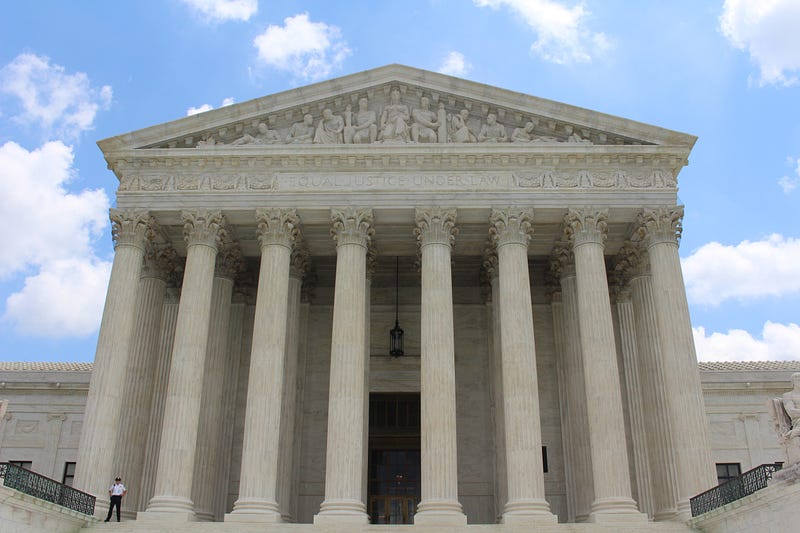
The case of a handcuffed and shackled man who suffocated and died in a St. Louis jail lying face down in his cell while officers put their weight on his back, the Supreme Court has stepped in demanding that the local courts’ judges to do their job regarding a travesty against humanity. What kind of animals are these officers who are out there patrolling the streets, somewhere? God knows what they may do to another defenseless person.
It doesn’t take a court to see this was an excessive force by several officers who need to be punished with incarceration, sued and any other punitive damages to set the precedent for other officers not to follow in their footsteps and there are others of the same mindset patrolling the streets who have and is betraying the badge they wear to protect and serve. Was this type of excessive force necessary? Perhaps someone should do the same to them, so they can see how it feels to be treated worst than an animal.
The Supreme Court possesses some sense of common decency whereas a federal judge and the 8th Circuit Court in response to a lawsuit filed by the victim’s parents that the use of prone restraint was deemed necessary when a detained person continues to resist. Did the federal judge not remember that the man was handcuffed, shackled and lying down in a jail cell? Who could he harm and how much resisting could be done done? This judge needs to place himself into this victim’s place. What is the victim suppose to do, be grateful and not rebel? Who wants to be locked up, no matter the circumstances? The matter is several officers sat on his back, was that truly necessary?
No! Thanks to the Supreme Court for checking these biased judges who justified such inhumane tactics and are part of the problem in society where so much systemic racism has become the norm where the courts and law enforcement endorse especially when it comes to people of color.
The Supreme Court demanded that the judges reweight evidence suggesting the use of force violated the 4th Amendment. The victim, Nicholas Gilbert was arrested for trespassing in an abandoned building. Two key words, trespassing and abandoned building, what harm did he do to the building or anyone else to warrant death at the hands of these St. Louis officers.
According to these officers, he wrapped a piece of clothing around a jail bar, and they thought he may commit suicide, therefore six officers intervened to subdue him, by sitting on his back until he stopped breathing. One man with six officers on his back trying to prevent him from committing suicide, really? Are they serious? Is the public and his family suppose to believe this? Why did it take six officers to subdue him? This is simple math 1 handcuffed and leg shackled man against six trained officers who set on his back for 15 minutes. St. Louis law enforcement instructed its officers that pressing down on the back of a prone subject can cause suffocation. Where is the misunderstanding here?
These officers should be individually sued and held liable for using force violating the 4th Amendment’s ban on an unreasonable seizure. Their actions warrants much accountability for they took a life and now their life and/or freedom need to be taken away for they did the unthinkable against humanity.
Nicholas Gilbert’s parents lawsuit asked the court to decide the constitutionality of a police tactic that has killed hundreds of people and that serves no legitimate purpose where 134 people in the past decade have died in police custody from asphyxia/restraint in a similar manner to their defenseless unarmed son, some may have had mental illness or drugs or alcohol related issues, each having been pressed face-down to the ground, handcuffed and held their until death.
While Nicholas Gilbert fought to breathe, thrashing about for fifteen minutes, these officers continued to hold him down even as he told them they were hurting him, they remained on his back until he died. This reminds me of George’s Floyd’s death where Chauvin kept his knee on George Floyd neck until after he had died. Nicholas Gilbert’s autopsy showed he had a fractured sternum and cause of death was forcible restraint inducing asphyxia.
Again but not surprisingly, St. Louis city’s medical examiner attributed Gilbert’s death to methamphetamines in his system, heart disease and drug abuse along with forcible restraint. Similarly, in George Floyd’s murder case, his health issues was considered as a factor in his death. This is an age old tactics to free the guilty of punitive damages.
Federal judges with the backing of the Supreme Court repeatedly threw out suits that sought to have a jury decide whether police had used excessive force and they highlighted that officers had “qualified immunity” because it is not clear that a constitutional right has been violated, like in this St. Louis case where the judges ruled the officers did not use unreasonable force.
In conclusion, all the courts need to stop protecting the perpetrators and start protecting and serving all the people. Perhaps, even the courts need to revamp their system of judgement and punitive damages when it comes to law enforcement. “Qualified immunity” is and has become a major obstacle and a problem for the protection of the people against racist cops. The Supreme Court created qualified immunity, why is it so tough for Congress to get rid of it?
For additional reads:


