
Supporting Survivors after On-the-Job Injuries and Deaths
It’s every employer’s worst nightmare: an employee is injured or killed at work
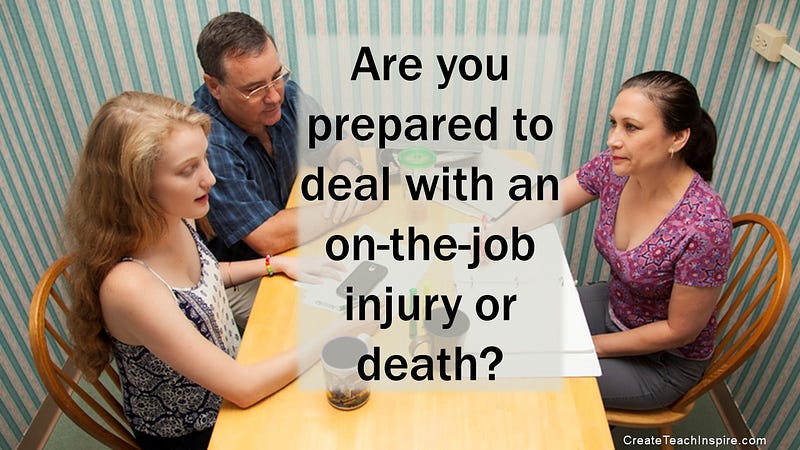
Industrial accidents, or even an employee who has a heart attack and dies while on the job, are traumatic situations for both co-workers and family members. Worse still are homicides that occur in the workplace.
Could it happen at your company? Consider these statistics from the U.S. Bureau of Labor Statistics: In 2018, private industry employers reported 2.8 million nonfatal workplace injuries and illnesses. The same year, 5,250 workers died from a work-related injury and 453 workers died by homicide while at work.
Accidents can happen anywhere, any time. Be prepared to deal with the event itself and the long-term impact on survivors.
When an incident occurs, the first step is, of course, to seek immediate emergency assistance for the individual and notify their family. It’s better if the employer can reach the family before the hospital, a law enforcement agency or other source does.
The responsibility for this difficult task belongs to the business owner or a senior manager. Explain what has happened and assist the family members in getting to the hospital or other location. Assign a company representative to stay with the family to provide support and assistance.
Keep in mind that the definition of family may extend beyond the traditional spouse, parents, siblings and children.
Be sure your emergency contact information files are current and respect any non-traditional relationships the victim may have.
Secure the site
You’ll also want to secure the incident site as quickly as practical and possible so that any necessary investigations can be conducted. Notify the appropriate authorities and your insurance carrier as soon as you can so they can implement their own response procedures.
Assist workplace survivors
Equally important is to deal with the impact of the situation on other employees. If you have a severe on-the-job injury or an on-the-job death, consider closing down for the day. Then monitor employees for possible emotional reactions that could affect their performance and their own workplace safety.
Offer counseling to help employees deal with their feelings, fears, and grief. Depending on the severity of the situation, you may choose to make counseling mandatory before allowing employees to return to certain positions (check with a labor attorney to make sure you can legally implement such a policy).
Keep in mind that survivor guilt can be deep-rooted with long-lasting effects. Individuals may struggle with feelings of “it could have (or should have) been me” or even “I should have been able to prevent it,” causing far-reaching psychological distress that can impact every aspect of their lives.
You cannot undo a tragedy once it has occurred, but with support and proper intervention, you can strengthen your own and your employees’ ability to cope with and recover from the trauma of a workplace accident.

This article was originally published on my site at CreateTeachInspire.com. You can reach me there or email me at [email protected]
Additional reading:
Here’s a little more about me:
I’d love to connect with you! May I send a brief inspirational message every Saturday morning? Visit CreateTeachInspire.com/saturday to receive messages like these:


