
Supporting Children’s Free Learning – An “Alternative School” and the Diversification of Education
Education is the foundation of a nation. Investing in education is a surefire way to strengthen a country’s power.
In Japan, where I live, a national reform known as the Meiji Restoration took place in 1860. At that time, the nation’s leaders held the belief that education was crucial for enhancing the country’s strength. As a result, despite having been in a state of national isolation (strictly prohibiting diplomacy and overseas travel) for nearly 260 years, Japan acquired formidable power comparable to the Western powers, including military might.
While this may be an overly exaggerated example, education has been a matter of great importance for nations throughout history. And I believe that the ways in which education is provided should be diverse.
In this article, I would like to introduce you to the concept of “alternative schools” through the specific example of “Kodomo no Mori Gakuen” (Children’s Forest School) in Osaka, Japan, and explore the appeal of its educational programs. I hope to create this article together with you.
Through your comments, I aim to bring more diversity to this article and the comments section. Please read through to the end, and share your various opinions with me!
Introduction
In our society, the importance of education is increasingly being emphasized. However, there has been a growing demand for new alternatives to the traditional educational policies of public and private schools. This article focuses on “Kodomo no Mori Gakuen,” a school in Osaka City that operates based on its unique educational philosophy. We will explore its characteristics, challenges, and the possibilities it presents for diversifying education.
The Educational Approach of Kodomo no Mori Gakuen
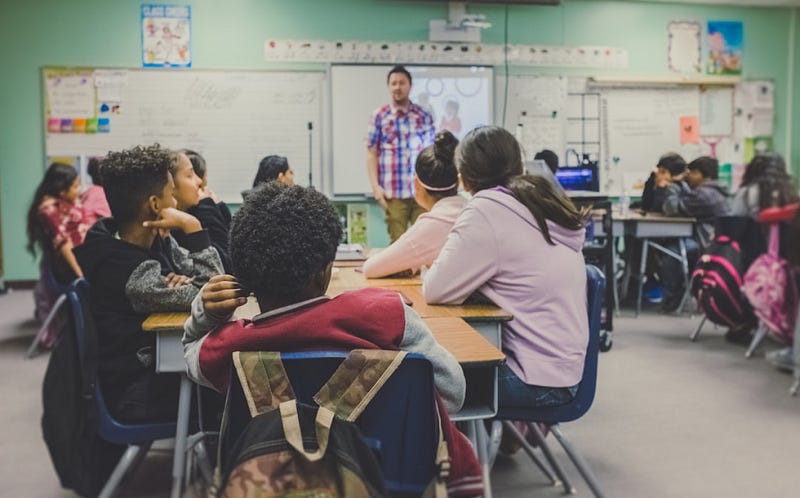
Kodomo no Mori Gakuen is a small school attended by 67 students from the first grade of elementary school to the third grade of junior high school. Here, traditional subjects such as Japanese language, mathematics, and science are not taught. Instead, students independently learn reading, writing, and arithmetic skills based on their own assessments of what they need.
The teachers merely observe the children’s learning process and provide guidance when necessary.
Additionally, more than half of the week at Kodomo no Mori Gakuen is dedicated to “integrated time” and “project time,” where children decide on themes based on their interests and engage in activities such as creating works or conducting research. For example, children who enjoy Pokémon might create Pokémon-related sculptural works or dioramas.
In this way, Kodomo no Mori Gakuen practices an educational approach that emphasizes each child’s autonomy and creativity. Rather than teacher-led, one-way lectures, the children themselves become the subjects of learning, freely exploring their interests and curiosities. This is a significant characteristic of the school.
Alternative Schools
Kodomo no Mori Gakuen is considered an “alternative school.” Alternative schools are institutions that operate based on educational philosophies different from those of traditional public or private schools.
Alternative schools originated from an educational reform movement that emerged in the late 1960s in America. It was a response to the one-size-fits-all approach of public education, seeking a new educational style that emphasized children’s individuality and fostered creativity in a free atmosphere.
In Japan, alternative schools gradually gained popularity starting in the 1980s. Parents who questioned the excessive emphasis on entrance exam competition and discipline in public education found resonance with this new educational perspective. It is said that there are currently over 100 alternative schools in Japan.
The key characteristics of alternative schools include:
- Emphasis on creativity
- - Child-centered, free learning
- - Respect for individuality
- - Equal relationships between teachers and students
- - Student participation in school management
Kodomo no Mori Gakuen embodies these characteristics and can be considered a representative alternative school.
Facilitating Free Learning
At Kodomo no Mori Gakuen, various measures are implemented to support free learning.
First, the children create their own learning plans and progress at their own pace. There are no tests, homework, or report cards. Since the children learn based on their interests and curiosities, they do not require external evaluations.
Furthermore, the school rules are decided through discussions among the children themselves. For instance, when planning a school trip, the children are responsible for everything from planning to fundraising. They engage in various discussions, such as selecting the destination, deciding the itinerary, and budgeting, until everyone is satisfied with the decisions.
Children are also involved in establishing rules for daily life. For example, after a previous incident of noise in the bathrooms before bedtime, a rule was established to maintain quietness during that time. Through this process of recognizing problems and devising solutions, the children develop autonomy and a sense of responsibility.
Challenges and Future Prospects for Education
On the other hand, Kodomo no Mori Gakuen faces some challenges. First, as an unapproved school, it receives no government subsidies, resulting in high educational costs for tuition and other fees of approximately 50,000 yen per month, which is not inexpensive. Additionally, the absence of tests makes it difficult to assess academic performance, according to some critics.
Moreover, for children who are enrolled at local elementary schools while attending Kodomo no Mori Gakuen, they often do not receive grade evaluations or attendance recognition, risking notifications of compulsory education violations. For the learning at unapproved schools to be officially recognized, various administrative challenges need to be addressed.
However, as evidenced by the examples of its graduates, Kodomo no Mori Gakuen’s educational philosophy holds significant value in nurturing autonomy and self-determination. Through the experience of discovering their interests and proactively choosing their learning paths, children develop a rich sense of humanity.
The diversification of education provides children with a variety of choices and important opportunities to maximize their individuality and potential. In addition to public and private schools, it is our hope that new educational styles like Kodomo no Mori Gakuen will be accepted in society, and that every child’s “right to learn” will be more widely realized.
Conclusion
In this article, we introduced the educational philosophy and practices of Kodomo no Mori Gakuen and explored the challenges and possibilities for diversifying education. This school, which nurtures children’s autonomy and creativity through free learning, brings a new perspective to traditional education. While challenges remain in terms of educational costs and institutional aspects, the proliferation of such new initiatives will open up more possibilities for each child. The future of education holds diverse choices and dreams. And supporting children’s free learning is the responsibility of all of us.
Thank you for reading this far.
Please share your rich experiences and perspectives from your country in the comments section! Your wonderful insights will undoubtedly enrich my amateurish writing and provide great value to future readers as readers engage in discussions through their comments.