
Supernormal Stimuli — Why TV, Social Media, and the Modern World Captivate You
This is the evolutionary explanation

We do really weird things that don’t seem to make any sense. Teenage boys get erections while staring at slabs of glass hooked up to wires, toddlers remain motionless for hours in front of light-emitting plastic boxes, girls obsess about the relationships of people they’ll never ever meet, and you seek out news every day about events that have no possibility of impacting your life in any way whatsoever.
The world you live in has been engineered to captivate you as effectively as a lightbulb captivates a moth. As a result, you engage in behaviors that are as ludicrous as a bird incubating a massive neon-blue plaster egg with black polkadots, even though the dummy egg is so large that the bird repeatedly slides off it.
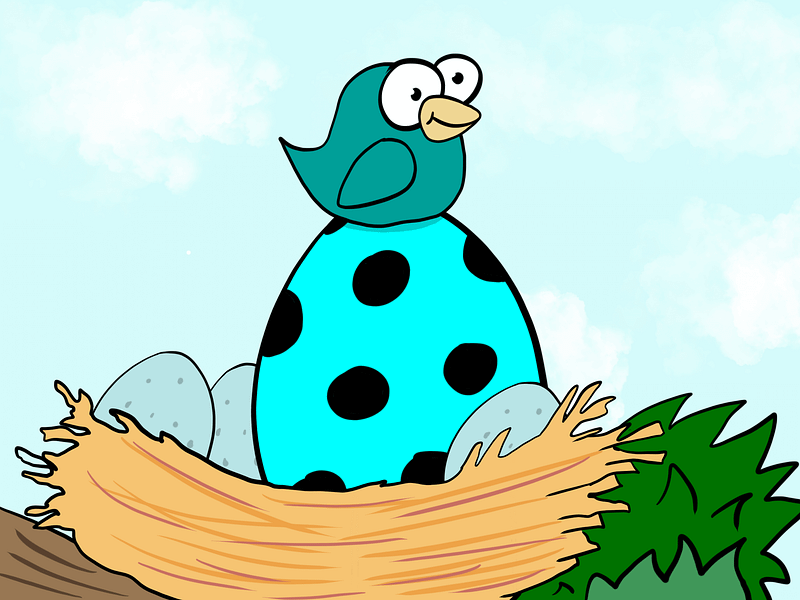
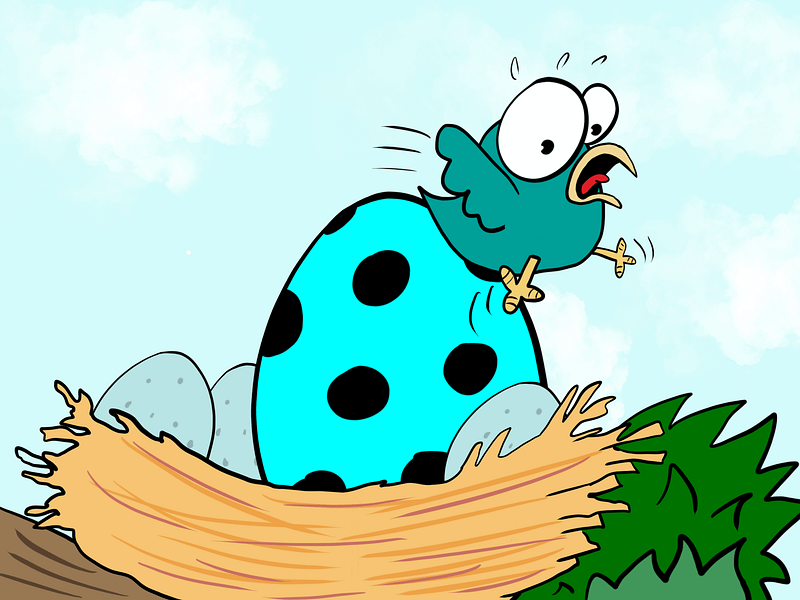
An alien scientist studying us would be baffled: “What the heck is going on with these creatures? Instead of socializing with each other, they sit all by themselves and socialize with objects they call televisions, phones, and computers. They laugh, giggle, and smile at these objects at one moment, frown at them at another, and sometimes get all emotional in front of them. I’ve even seen some specimens engage in what I can only describe as a completely misguided attempt to showcase their sexual prowess to these inanimate objects.”
Luckily, to understand these seemingly absurd human behaviors, the alien scientist just needs to understand one concept: the supernormal stimulus.
What’s a supernormal stimulus?

Do you see that girl up there? Yes? Well, that’s not a girl. What you’re seeing up there is a section of glass that’s emitting some light. I repeat: you’re looking at a flat piece of glass that’s shining light on you. Furthermore, the picture conveyed by that light doesn’t even resemble a human being. No human looks like that. And yet, you respond to that bunch of pixels in much the same way you’d respond if you were looking at an actual teenage girl from a distance.
And if you’re a hetero male, you probably respond even more strongly to the following bunch of pixels:

Do you realize how weird that is? From an alien’s perspective, it doesn’t make any sense that you’d react to the above specks of light any differently than to the following ones:

And yet, you do. One of them hijacks your social and (possibly) reproductive instincts, while the other doesn’t.
When it comes to our behavior, we really aren’t much different from an Australian jewel beetle who gets turned on by a stubby beer bottle:

Just as the beetle has been primed by evolution to copulate with anything that, like a female beetle, has a shiny amber-brown surface and dimples, we have instincts of our own that are constantly being hijacked by the objects in our artificial environments.
But what’s even more curious is that we not only respond to fake stimuli in the same way we’d respond to the real equivalent, but that we often respond to fake stimuli stronger than to the real one.
And that’s precisely what a supernormal stimulus is: “an exaggerated imitation [that pulls] instincts more strongly than the real thing.” For an Australian jewel beetle it’s a beer bottle it humps while disregarding a real, but smaller, female. For a song bird it’s a massive polkadotted bright-blue dummy egg it incubates instead of its own eggs. For a greylag goose it’s a volleyball it rolls into its nest while ignoring its own displaced egg. And for us? Well, we have our own.
Here, watch Dove’s famous Evolution commercial:
That woman at the end, on the billboard, is fake. It doesn’t exist and it can’t exist. Real humans don’t have such perfect skin, big eyes, and long necks. But — as advertisers well know — we respond to the fake stimulus stronger than to the real one.
And before you proudly proclaim that you are the exception, that you prefer real people over photoshopped ones, just think about what the heck you’re doing each time you’re watching television. TV provides you a constant barrage of supernormal stimuli — stimuli you won’t find in your real life and that you prefer.
Take the TV show Friends, for instance. As Dr. Deirdre Barrett pointed out, it’s no accident that the show is called “Friends.” It’s about you sitting in your living room, seeing their living room, and staring at smiling faces and people making cute jokes and laughing — all without you having to do any effort whatsoever. The show is a supernormal version of the social stimuli you’re conditioned to seek out: attractive people with friendly faces being effusively nice to you, constantly smiling and laughing, establishing social relationships, etc.
And TV is far from the only supernormal stimulus wooing us. There’s also junk food, candy, surgically enhanced body parts, makeup, social media, music, pornography, videogames, high heels, corsets, bras, steroid-enhanced bodies, synthetic drugs, and countless other real-life imitations designed to elicit a stronger response from you than anything equivalent in our ancestral environment. We are the beetle humping the beer bottle.
Are we helpless slaves to supernormal stimuli?
Unlike Australian jewel beetles, we have a cerebral cortex that can override and silence our primal instincts. The sad reality, however, is that we rarely choose to do that. Instead, we work hard to acquire supernormal stimuli, we bring them into our homes, we even put our children in front of them, and then we indulge in the exaggerated imitation without knowing proper bounds. The result? Obesity epidemics, irritability, insomnia, loneliness, distorted perceptions of sex, body image issues, unrealistic life expectations, etc.
Maybe the situation isn’t as bad as it got for the beetle, which almost went extinct and where males have even been observed to hang onto a bottle while their genitalia were devoured by ants, but we’re probably not too far off either. There are, for instance, plenty of stories of people collapsing and even dying after binge playing video games without end.
So, what’s the solution? In the case of the beetle it certainly wasn’t self-control. Instead, as Robert Krulwich notes,
When beer companies in Australia learned that their bottles were having a discernible effect on the population of jewel beetles — [that] so many males were spending useless hours fornicating, often dying under the hot Australian sun and leaving no heirs — the companies decided to change their bottles. The little bumps were eliminated to be replaced by smooth glass, the beetles lost all interest in bottles, and life in the Australian west — at least beetle life — went back to normal.
Although eliminating supernormal stimuli from the environment worked for the beetle, it won’t work for us. There’s too much vested interest in keeping us hooked and we ourselves would rebel if someone decided to eliminate these stimuli from our lives.
Moreover, it’s not as if they’re all inherently bad. There’s no harm in enjoying the occasional movie or cake, making a bit of an effort to look nice, or using modern technology to connect with people. But it’s worth realizing that these are all supernormal stimuli and that you need to engage your higher brain functions to keep your primal instincts in check, lest you become so engrossed with an over-the-top imitation that you don’t even notice the ants eating up your junk.




