
Superheroes in the Arabic culture
Are there any superheroes in Arabic literature?
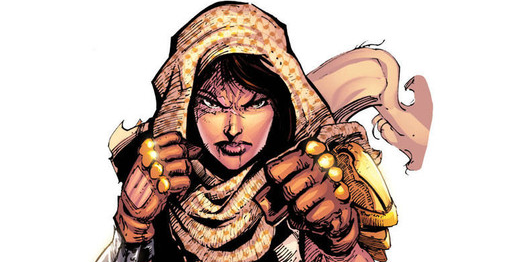
The current superhero craze took the world by surprise. Movies, such as The Dark Knight (DC) and The Avengers (Marvel), contributed to the fame of superheroes nowadays. The success of these movies and the superhero franchise gave rise to multiple new Arabic comics depicting superheroes in the Arabic world. These “Arabic superheroes” are based on the popular formula of how superheroes are portrayed in the known comics; masked hero, superpowers, good doer, sad backstory, and in some cases spandex. Some of the Arabic comics didn’t want to give their superheroes supernatural powers, instead, they decided to use a certain twist from the Islamic culture to opt-in the characters certain powers or in this case their significant attribute.
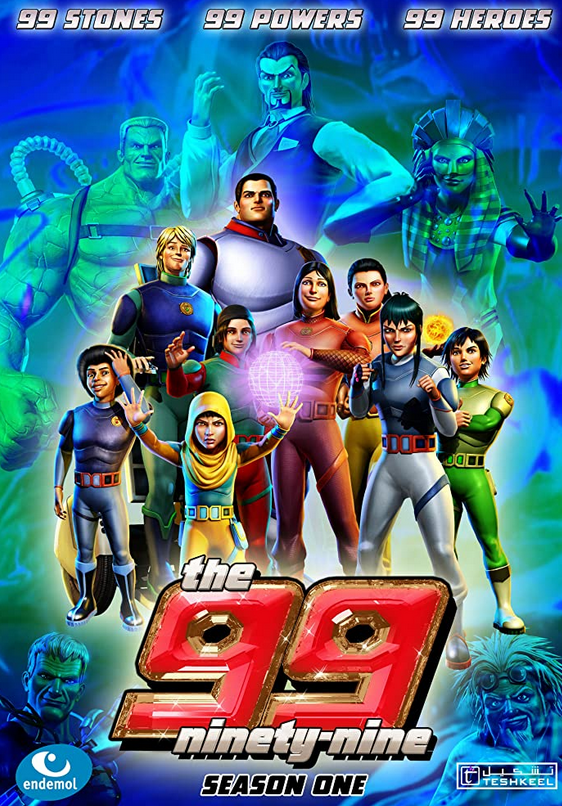
The 99 is a comic published by Tashkeel Comics (2007–2014) featuring a group of superheroes with special abilities based on God’s 99 attributes in Islam. This comic was a huge success to the extent that a theme park and an animated series were based on it. It was also mentioned by President Obama on multiple occasions when he praised the creator of this comic describing it as “the most innovative response”. Other comics were also published in many countries like Jordan or the UAE to name a few. Some of these comics had great success, while others didn’t.
Who is the first Arabic superhero? And when were his/her stories published for the first time? I’ve always known Arabs and their culture to be one of the most imaginative out there, so I couldn’t believe that the first Arabic superhero was only introduced in the 2000s, this contradicted with my expectations of the Arabic culture that I grew up with and love. Therefore, I felt the need to answer some questions first.
What defines a superhero?
The most typical answers would be: masked, wears a cape, fights evil, and has superpowers. However, these answers are not true and contradict the current superheroes cast known by the majority of people. For example, Batman doesn’t have superpowers, Spider-Man doesn’t wear a cape, Tony Stark and Captain America don’t hide their identity, therefore, this definition of superheroes isn’t entirely true and the superhero definition, as we know it, is a different one, namely that they do good and/or fight an evil entity which wants to harm them. They do not necessarily have superpowers nor are they extremely rich. The majority of them; however, have a sad backstory to make us empathize with them and understand why they do what they do.
Growing up in the Middle East in the ’90s, I used to read two Egyptian pocket novels called “The Man of the Impossible: Ragol Al Mostaheel” and “The Future Files: Malaf Al Mostakbal”, both written by the Egyptian author Nabil Farouk. In his novels, Mr. Farouk wrote about superpower potions, time travel, impossible military missions, babies that were lost in a time vortex, a piece of technology to teach one a certain language instantly, etc.
Adham Sabry, the main protagonist of The Man of the Impossible, is a highly trained military commando; he is involved in espionage, uses mixed martial arts and is very professional with high morals. He never kills, he is religious and his principles are the main guidance for his actions. The same aspects of his character can be found in the main characters in “The Future Files”.
The rise of popularity of pocket novels in the ’90s among the Arabic publications allows assuming that this era introduced the first adventurous characters with the modern understanding of a superhero. However, old fables and characters from the “One Thousand and One Nights” stories have the typical superhero traits.
Superheroes in fables
In the Arabic fables (even though the origin of some of these characters might be Persian or even Chinese), three characters are currently well known and might be considered as superheroes. These characters are Aladdin, Ali Baba, and Sindbad. Based on the legends, all these characters lived during the Abbasid Caliphate (750–1258 A.D.). This is a debatable topic, but words like Sultan or Wazir and the architecture described in these stories goes very well with the political construct and architecture of the Abbasid Caliphate. To give a summary of these characters:
Aladdin: I guess you all know this guy from the Disney movie, but to summarize, he was a poor boy, pure-hearted, found a magical lamp with a genie, promised the genie to set him free, wasn’t poisoned by the power of the lamp, put others’ needs ahead of his own. In sum, he had the traits of a.classic superhero.
Ali Baba: He was a woodcutter who discovered a thieves’ den, which could only be opened by the phrase “Open Sesame” (Arabic: افتح يا سمسم). The thieves discovered this and plotted to kill him, his slave-girl (This is what you will find in the English description of Ali Baba, although, in the Arabic stories she wasn’t his slave-girl, but rather his servant). However, Ali Baba foiled their plot, set her free, and married her to his son. This is not your typical superhero story and Ali Baba in this story was the thief who stole from other thieves. Yet, Ali baba was linked to Aladdin in multiple media and there are stories in which Ali Baba and Aladdin traveled together and went onto adventures.
Sindbad: My favorite character of the three. He was a sailor who went onto voyages to the seven seas throughout the east of Africa and south of Asia. His adventures are filled with mystical creatures, monsters, magical realms, genies and many more. These stories are the typical superhero stories with different adventures, different monsters, plot twists and new places to discover.
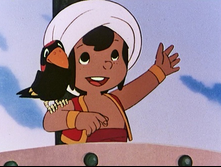
These three characters were also depicted as friends in the anime “Arabian Nights: Sindbad’s Adventures” (1975) as well as in “Magi” (2012), which is based on a Manga of the same title. In my opinion, putting these three in a team together could be the best Arabian superhero team. The three didn’t have any superpowers, only a genie, but their high morale and readiness to help anyone in need make them worthy of a superhero consideration.
Pre-Islamic era superheroes
But let’s go even further back in history, let’s go way back even before Islam, did Arab tribes have a superhero idol? Did they praise anyone and give him a superhero status? To answer this question, let’s discuss the Mu’llaqat (don’t worry, it is a hard word, but is amazing). Mu’allaqat translates to the suspended odes. These poems are from the pre-Islamic era and were hung on or in the Kaaba at Mecca in the pre-Islamic era. These poems are considered the best of their time and are one of the primary sources for early Arabic literature. These poems were first compiled together in the 8th century, even though the poems themselves date back to the 6th century or earlier.
One of these poems was by Antara ibn Shaddad (Antara the son of Shaddad). Antara was the illegitimate son of one of his tribe’s most respectful men and warriors. His mother was a slave from Ethiopia and therefore Antara was a slave for his own Father. There is no mentioning of how he trained to become a warrior. One night, as his tribe was invaded and were almost about to lose, his father asked him to fight with the warriors. Antara answered: “the slave doesn’t know how to invade or how to defend but is only good for milking goats and serving his masters”. His father answered: “defend your tribe Antara, and you are free”. And you have guessed it. His tribe won and Antara became free and lived happily ever after.
Well, here it ended a little bit differently. Antara became a free man and was respected by his tribe. Yet, when he asked to marry Abla (his cousin and both were in love before he was freed), her father could not simply decline because this would have caused problems with his brother. So, he decided to ask Anatara to do a lengthy and almost impossible list of tasks hoping, that Antara would fail and therefore not marry Abla. So, he went on these impossible tasks, was able to finalize them and came back to his tribe. After that, it is unknown whether he ever married Abla or not. It is also not known how he died.
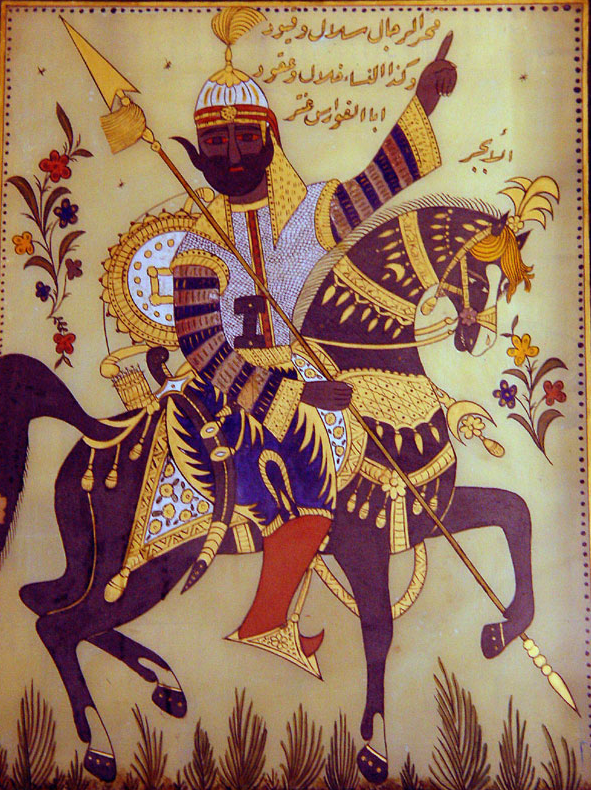
This Antara is a real character that existed in history and is not fictional. Based on his poems and based on what we know about him now, he was stronger than 1000 warriors. He was imprisoned once and was able to break his iron chains with his bare hands, he was able to find 1000 rare types of camels in the desert and brought them back to Abla and much more. The stories that we know of him now allow us to believe that he was the first Arabic superhero.
His superhero status came from his poems, in which he described his enemies as huge warriors with huge swords and horses and that he won against a handful of them. In his era, war was ongoing between two tribes over a horse race, this war is known by the “Dahis and Ghabra” war. In his poems, he also referred to his morality, strength, poetry and his journey to marry the love of his life.
Arabs are known to exaggerate in their storytelling and their poems. This led to them creating multiple superheroes over their history from the pre-Islamic era to our modern days. Back in the day, Arabs never identified these people or characters as superheroes with superpowers in the Islamic era because this would have been considered blasphemy, but now, looking at it from the perspective of our modern superheroes, we can identify that these characters had the typical traits of a superhero.
Antara was not the only character, who dates to the pre-Islamic era. Zarqa Al-Yamama was a blue-eyed woman from the same region as Antara, who was able to predict events before they happened. It was also said that she could see someone as far as three days walking distance.
So, think of Anatara the next time someone asks you or debates with you about the first superhero. Now you know it’s not Superman!
P.s.: as I was writing this, I found out that there is a new Arabic comic, in which Antara is the main protagonist. I’ll give it a try to see if he ended up marrying Abla or not.


