
Supercharge Your Text Analytics: 6 Open Source NLP Tools for Data Scientists
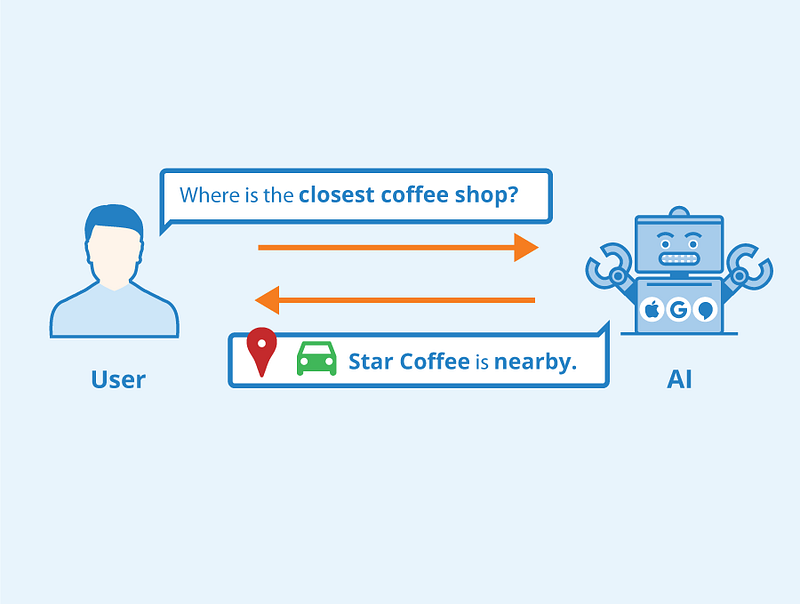
Text data is everywhere, and as a data scientist, you’re bound to encounter it in your next project. Whether you’re mining tweets for sentiment analysis or analyzing customer reviews, mastering the art of text analytics is essential. That’s where Natural Language Processing (NLP) tools come into play. In this article, we’ll explore the top six open-source NLP tools that will help you make sense of the text data deluge and elevate your data science skills.
As the famous computer scientist, John McCarthy once said:
“To understand natural language is to understand the concepts in the language, not just the words.”
In this comprehensive guide, we’ll cover:
- An introduction to the world of open-source NLP tools
- A deep dive into the top 6 NLP libraries and their unique features
- How to choose the right NLP tool for your data science project
- Real-world examples of NLP in action
The Open Source NLP Toolbox
Before we dive into our top picks, let’s briefly discuss why open-source NLP tools are so valuable. By leveraging the collective knowledge of the data science community, these tools are constantly evolving, ensuring that you have access to cutting-edge techniques in text analytics. Plus, they’re free to use, which means you can experiment without worrying about breaking the bank.
Now, let’s take a closer look at the six NLP tools that should be on your radar:
NLTK (Natural Language Toolkit)
- The granddaddy of open-source NLP libraries, NLTK has been around since 2001. It offers a comprehensive suite of tools for processing and analyzing text data, from tokenization and stemming to sentiment analysis and named entity recognition. Perfect for beginners, NLTK boasts an extensive documentation, which makes it a great starting point for your NLP journey.
- Example use case: Analyzing the sentiment of movie reviews
spaCy
- Designed with performance and ease of use in mind, spaCy is a modern NLP library that excels at large-scale text processing tasks. It’s built on Cython, which means it’s blazing fast, and it supports over 60 languages. With a focus on industrial-strength applications, spaCy is ideal for data scientists looking for a powerful and efficient tool.
- Example use case: Extracting named entities from news articles
Gensim
- If you’re working with large text corpora and need to discover semantic structures within your data, look no further than Gensim. This library is particularly well-suited for topic modeling and document similarity analysis, thanks to its efficient implementations of algorithms like Latent Semantic Analysis (LSA) and Word2Vec.
- Example use case: Discovering topics in a collection of research papers
Stanford NLP
- Developed by the prestigious Stanford University, the Stanford NLP library is a collection of state-of-the-art NLP tools. It includes a powerful dependency parser and a named entity recognizer, both of which leverage advanced machine learning techniques. If you’re looking to incorporate cutting-edge NLP research into your project, Stanford NLP is the way to go.
- Example use case: Parsing complex sentences for question-answering systems
TextBlob
- TextBlob is a user-friendly NLP library built on top of NLTK and another library called Pattern. Itsimplifies common NLP tasks such as part-of-speech tagging, noun phrase extraction, and sentiment analysis, making it an excellent choice for data scientists who want to get up and running quickly without sacrificing functionality.
- Example use case: Analyzing customer feedback for product improvements
Hugging Face Transformers
- If you’re looking to harness the power of transformer models like BERT and GPT for your text analytics project, the Hugging Face Transformers library is your one-stop shop. With a focus on pre-trained models and an easy-to-use API, this library enables you to take advantage of the latest advancements in NLP research without getting bogged down in the nitty-gritty details.
- Example use case: Fine-tuning a pre-trained BERT model for text classification
Choosing the Right Tool for the Job
With so many great open-source NLP tools available, how do you decide which one is right for your project? Here are some factors to consider:
- Ease of use: If you’re new to NLP, you might want to start with a user-friendly library like TextBlob or NLTK. On the other hand, if you’re an experienced data scientist, you might prefer the power and flexibility of spaCy or Gensim.
- Performance: Consider the size of your text data and the complexity of the tasks you need to perform. Some libraries, like spaCy and Hugging Face Transformers, are designed for high-performance applications and may be more suitable for large-scale projects.
- Language support: If your project involves working with text data in multiple languages, make sure to choose a library that supports the languages you need. For example, spaCy and Stanford NLP both offer extensive language support.
- Specific NLP tasks: Different libraries excel at different NLP tasks. For instance, if you’re focused on topic modeling, Gensim might be your best bet. If you need advanced parsing capabilities, Stanford NLP would be a great choice.
Final Thoughts
No matter which open-source NLP tool you choose, mastering text analytics is a valuable skill for any data scientist. By leveraging the power of these tools, you can unlock new insights from your text data and supercharge your data science projects. So, go ahead and dive into the world of NLP — the possibilities are endless!