avatarMehek Kapoor

Free AI web copilot to create summaries, insights and extended knowledge, download it at here

2172

Abstract

e rocks and pebbles.</p><p id="431a">These rocks, with time, acquire the taste of marine life, and start tasting like fish. So, when they are cooked, they don’t exactly have an earthy or muddy flavor, but rather a flavor of fish, oysters, or clams.</p><h2 id="1efd">Preparation of Suodiu 🥘</h2><p id="6c24">Suodiu is prepared the same way, a warm winter soup would be prepared. With a lot of condiments, spices and also some side dishes. The best Suodiu is the one that’s prepared straight from the river-bed. If you leave these rocks out for long, they might lose that flavor. So, it’s advised to use fresh rocks for the dish and cook them as soon as they’re taken out of the water stream.</p><p id="7078">First, the rocks are fried in lard or some other animal fat <i>(or even plant fat)</i>, so that flavor from the rocks is transferred to the oil. Then some garlic, chillies, ginger are added to it, sometimes people also add shallots, onions, carrots, cabbage, peppers, and more veggies to turn it into a soup-like dish. Finally, you can top it up with some salt, black pepper, and chilli flakes, and enjoy the meal.</p><p id="6080">The way it is eaten is — the rocks are sucked upon, to take in maximum flavor out of them, and thrown away. One by one, all rocks are sucked and thrown away, and finally, when you’re left with everything edible, you can eat it normally like you would eat any other soup, and you can notice a distinct, strong, fishy flavor from the rocks, transferred to the soup.</p><p id="bb0d" type="7">Just remember — DON’T CHEW THE ROCKS. If you don’t want to pay the hefty dental bills!</p><h2 id="3664">Here in the video below, you can see a Tuija man cooking and enjoying his Suodiu near the riverside:</h2> <figure id="d4da"> <div> <div> <img class="ratio" src="http://placehold.it/16x9"> <iframe class="" src="https://cdn.embedly.com/widgets/media.html?src=https%3A%2F%2Fwww.youtube.com%2Fembed%2FjhAQYlOmkjY&amp;display_name=YouTube&amp;url=https%3A%2F%2Fwww.youtube.com%2Fwatch%3Fv%3DjhAQYlOmkjY&amp;image=http%3A%2F%2Fi.ytimg.com%2Fvi%2FjhAQYlOmkjY%2Fhqdefault.jpg&amp;ke

Options

y=a19fcc184b9711e1b4764040d3dc5c07&type=text%2Fhtml&schema=youtube" allowfullscreen="" frameborder="0" height="480" width="480"> </div> </div> </figure></iframe></div></div></figure><h1 id="e3e7">References:</h1><div id="0fe2" class="link-block"> <a href="https://food.ndtv.com/food-drinks/mud-cake-a-delicacy-made-with-mud-in-poverty-stricken-haiti-1437242"> <div> <div> <h2>'Mud Cake' - A Delicacy Made With Mud in Poverty Stricken Haiti</h2> <div><h3>The next time you scrunch up your nose at what's on the table, chew on this - if you lived in Haiti, one of the poorest…</h3></div> <div><p>food.ndtv.com</p></div> </div> <div> <div style="background-image: url(https://miro.readmedium.com/v2/resize:fit:320/0*UzfnEpjQYheqWdsy)"></div> </div> </div> </a> </div><div id="5977" class="link-block"> <a href="https://www.sohu.com/a/353144279_164838"> <div> <div> <h2>香草美人风流蕴藉,高峡平湖风光旖旎,这里是秭归,很高兴遇见你_屈原</h2> <div><h3>秭归之名来源《水经注》--"屈原有贤姊,闻原放逐,亦来归,因名曰姊归","秭"由"姊"演变而来。这是一座古老的城,香草美人的故事吟诵了上千年之久;这也是一座风情的城,西陵峡风光旖旎,大江大湖烟波浩渺...... 屈原故里文化旅游区 ...</h3></div> <div><p>www.sohu.com</p></div> </div> <div> <div style="background-image: url(https://miro.readmedium.com/v2/resize:fit:320/0*lpWkSL2WjOoll0z2)"></div> </div> </div> </a> </div><div id="2d1d" class="link-block"> <a href="https://www.sohu.com/a/277110700_711535"> <div> <div> <h2>局长代言秭归旅游啦 ‖ 听听他都说了些啥!_屈原</h2> <div><h3>楚天交通广播覆盖全省 5000 万听众,约 360 万听众会同时在线收听,《辣妹说旅游 …</h3></div> <div><p>www.sohu.com</p></div> </div> <div> <div style="background-image: url(https://miro.readmedium.com/v2/resize:fit:320/0*HciUp7sYCoUibO5U)"></div> </div> </div> </a> </div></article></body>

Food and History

Suodiu (嗦丟) — Is One Of The Weirdest Dishes Eaten In China, And It’s Not An Animal!

Just when you think that you’ve seen it all, there are things that blow your mind away. This story is about one such dish that is eaten in China, and no, it’s not even a weird animal or an inedible plant. But it is — rocks.

I bet everyone on the internet already knows about the mud that is eaten in Haiti (Caribbean Sea), in the form of pancakes. Also called the mud cakes of the poor, it is considered to be a delicacy in the country, majorly because of the nutrients and minerals present in the mud. It is prepared with a special kind of mud, water, salt, and margarine.

But this story isn’t about mud cakes. It is about something that is eaten in China, and also considered a delicacy there. If you think eating dogs is the limit, welcome to a region in China, where people also eat rocks. Famously called Suodiu (嗦丟), it is a recipe containing river rocks and some condiments and spices.
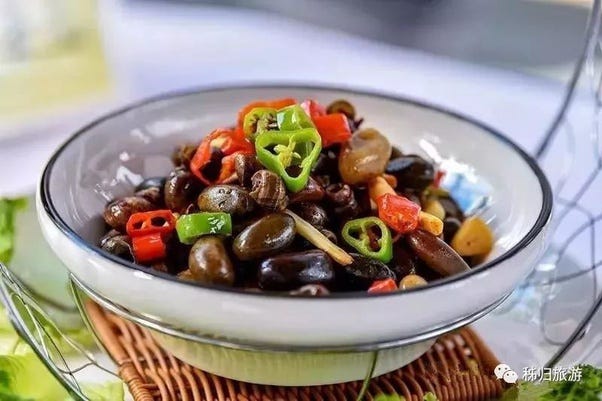
Suodiu (a dish of rocks)

History of Suodiu 🪨

Well, to understand how people eat rocks, we have to understand why they eat rocks anyway?

Suodiu is not exactly what you or I would assume, actually. It’s not that people cook rocks or chew them raw, they just use them as a flavor in a soup. The rocks used in this dish are not just any typical rocks, but the small rocks usually found in freshwater streams or rivers, where abundant fish or marine life is found.

Back in time when portable foods were not there, preservatives were not used, it was really hard to keep and store food for long times, especially in summer and humid months. So, the boatmen who had to travel for weeks and months at stretch, without storing much food, would rely on such stones and pebbles for flavor. They would sometimes hunt for fish, and if they couldn’t find fish, they would use rocks and pebbles.

These rocks, with time, acquire the taste of marine life, and start tasting like fish. So, when they are cooked, they don’t exactly have an earthy or muddy flavor, but rather a flavor of fish, oysters, or clams.

Preparation of Suodiu 🥘

Suodiu is prepared the same way, a warm winter soup would be prepared. With a lot of condiments, spices and also some side dishes. The best Suodiu is the one that’s prepared straight from the river-bed. If you leave these rocks out for long, they might lose that flavor. So, it’s advised to use fresh rocks for the dish and cook them as soon as they’re taken out of the water stream.

First, the rocks are fried in lard or some other animal fat (or even plant fat), so that flavor from the rocks is transferred to the oil. Then some garlic, chillies, ginger are added to it, sometimes people also add shallots, onions, carrots, cabbage, peppers, and more veggies to turn it into a soup-like dish. Finally, you can top it up with some salt, black pepper, and chilli flakes, and enjoy the meal.

The way it is eaten is — the rocks are sucked upon, to take in maximum flavor out of them, and thrown away. One by one, all rocks are sucked and thrown away, and finally, when you’re left with everything edible, you can eat it normally like you would eat any other soup, and you can notice a distinct, strong, fishy flavor from the rocks, transferred to the soup.

Just remember — DON’T CHEW THE ROCKS. If you don’t want to pay the hefty dental bills!

Here in the video below, you can see a Tuija man cooking and enjoying his Suodiu near the riverside:

References:

Food
History
Culture
China
Social Media
Recommended from ReadMedium