avatarDesiree Driesenaar

Free AI web copilot to create summaries, insights and extended knowledge, download it at here

2745

Abstract

: url(https://miro.readmedium.com/v2/resize:fit:320/0*HQxsRvcftnVQna7A)"></div> </div> </div> </a> </div><p id="9989">When we compare our planet to a human body, often the rainforests are compared to a lung. But just like our body, our planet has two lungs. The oceans are the other lung.</p><p id="aeda">Rainforests and oceans both draw in carbon dioxide from the atmosphere, reducing the gasses in our atmosphere that cause global warming.</p><p id="bc6c">The rainforests rely on large trees that grow slowly over the decades. The oceans use microscopic organisms, phytoplankton, for <a href="https://en.wikipedia.org/wiki/Carbon_sequestration">carbon sequestering</a>. Phytoplankton is no thicker than a human hair, but there are billions and billions in our oceans.</p><p id="22d3">The rainforests and oceans follow two different strategies for the same result. Both regulating the amount of carbon dioxide in our planet’s atmosphere.</p><p id="ceac" type="7">“Nearly 25 percent of the carbon dioxide in our atmosphere is “pumped” into the ocean, where it converted into organic carbon by phytoplankton at the ocean surface all over the world.”</p><p id="db65" type="7">— Mathieu Dever in The Living Breathing Ocean</p><h2 id="4feb">Teaching our Children</h2><p id="4d59">So why do I tell you about my meeting with the funny sunfish? Why does it matter so much to me?</p><p id="d4c9">Well, the longer I work within the sustainability field, the more convinced I’ve become that <b>curiosity and care</b> are the main drivers for sustainability action.</p><p id="6e62">Our children are curious. And they definitely care.</p><p id="79f6">So all we have to do is feed their curiosity with wonderful examples of nature’s wonders. Like the sunfish.</p><p id="1082">National Geographic Explorer Tierney Thys, marine biologist, is perhaps best known for her work tracking massive 10-foot long, 5,000-pound ocean sunfish around the globe.</p><p id="7b5a">In the little film below, she tells us about her fascination with the sunfish. And her hope for the future of the ocean.</p><p id="c743" type="7">“That is the most ridiculous fish I’ve ever seen. It looks like a mistake” — Tierney Thys in National Geographic</p> <figure id="02d7"> <div> <div> <img class="ratio" src="http://placehold.it/16x9"> <iframe class="" src="https://cdn.embedly.com/widgets/media.html?src=https%3A%2F%2Fwww.youtube.com%2Fembed%2F6jCuoohMARY%3Ffeature%3Doembed&amp;display_name=YouTube&amp;url=https%3A%2F%2Fwww.youtube.com%2Fwatch%3Fv%3D6jCuoohMARY&amp;image=https%3A%2F%2Fi.ytimg.com%2Fvi%2F6jCuoohMARY%2Fhqdefault.jpg&amp;key=a19fcc184b9711e1b4764040d3dc5c07&

Options

amp;type=text%2Fhtml&schema=youtube" allowfullscreen="" frameborder="0" height="480" width="854"> </div> </div> </figure></iframe></div></div></figure><p id="ac41">So, here’s my request to all teachers in the world. Please, feed the curiosity of our children. Teaching outside as much as you can, so nature can help you bring the message across.</p><p id="7185">It’s the best hope we have for a sustainable future in which human life, plant life, animal life, and the-planet-as-a-whole life matters.</p><p id="7cb6">If you want to connect, you can find me on <a href="https://www.linkedin.com/in/desireedriesenaar/">LinkedIn</a>, <a href="https://twitter.com/driesenaar">Twitter</a>, or <a href="http://www.driesenaar.nl/">my website</a>. Or somewhere snorkeling in an ocean. Meeting sunfish and building up my wisdom…</p><p id="a226"><i>Thank you, Mike, for adding your wise energy to my words.</i></p><p id="61b0">I hope you like this story, my friends in sustainability: <a href="undefined">Amy Marley</a>, <a href="undefined">Livia Dabs</a>, <a href="undefined">Agnes Laurens</a>, <a href="undefined">Zairah Khan</a>, <a href="undefined">Josine Bakkes</a>, <a href="undefined">Marleenbeumers</a>, <a href="undefined">Kathryn A. LeRoy, Ph.D.</a>, <a href="undefined">Timothy Key</a>, <a href="undefined">Trista Ainsworth</a>, <a href="undefined">Mike Alexander</a>.</p><h2 id="7eb9">Further reading</h2><div id="10fc" class="link-block"> <a href="https://readmedium.com/the-trees-are-leaving-this-world-6d49cb06be9d"> <div> <div> <h2>The Trees Are Leaving This World</h2> <div><h3>A poem about trees leaving this world and their capacity to transform emotions</h3></div> <div><p>medium.com</p></div> </div> <div> <div style="background-image: url(https://miro.readmedium.com/v2/resize:fit:320/1*5SiYOTHJzPUS-0jXiMIPOw.jpeg)"></div> </div> </div> </a> </div><div id="eb8d" class="link-block"> <a href="https://readmedium.com/explore-the-world-enjoy-abundance-8e87385eefb8"> <div> <div> <h2>Explore the World. Enjoy Abundance</h2> <div><h3>Travel for mindful souls. Is it even possible? Would it help to connect to a place and co-create its future?</h3></div> <div><p>medium.com</p></div> </div> <div> <div style="background-image: url(https://miro.readmedium.com/v2/resize:fit:320/1*7ix65IiesubrMXE5Plyr1w.jpeg)"></div> </div> </div> </a> </div></article></body>

SUSTAINABLE FUTURE

Sunfish or Moonfish, She Gives Me Joy

A tanka. A story about oceans and their efforts to reduce climate change. What gives me joy? I met a sunfish in South Africa
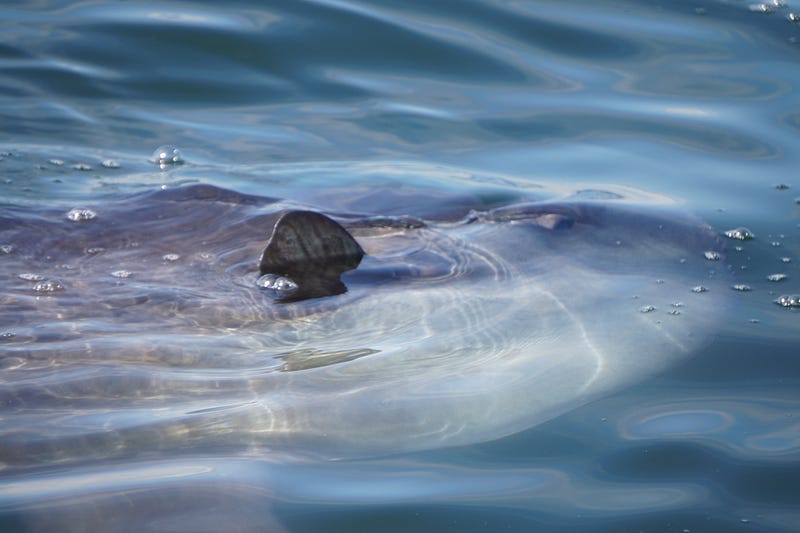
The sunfish I met near Capetown, South Africa. What a fish! What an ocean spirit! Picture by author.

A curious sunfish is floating, waving her fin. And when I call her, she wonders why this Dutchie calls her a sunny moonfish.

This tanka is my poetic way of celebrating the life of a sunfish I met in South Africa. Sunfish are gorgeous! They are funny.

Sunfish are funfish.

This one was waving her fin at me as if to say: “Hey, nice to meet you. How are you doing?” And I responded: “Hello moonfish.”

In my language, Dutch, the sunfish is called a moonfish. Why? I haven’t the slightest idea. Sun or moon, both are round, both are shaped like a sunfish or moonfish...
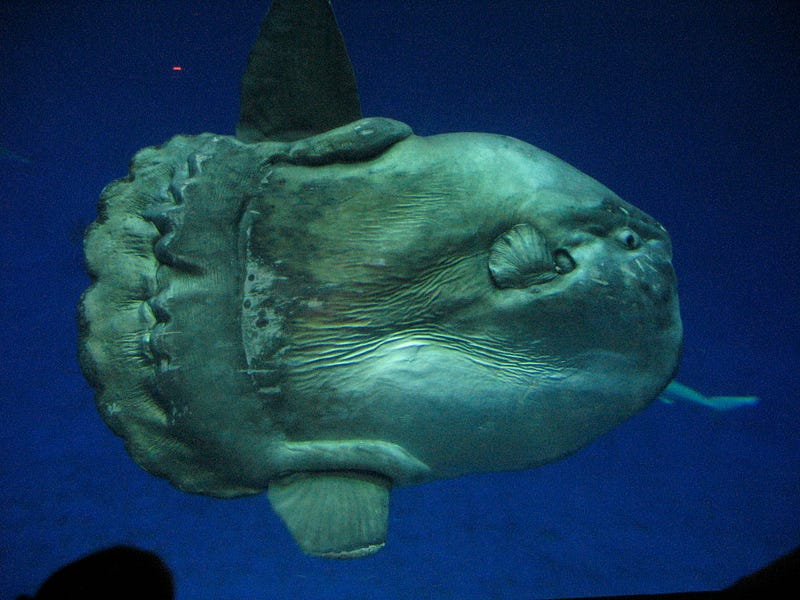
I assume this is an aquarium picture. You can see the shape of the sunfish. Picture credit: Eric Chan on Flickr.

Sunfish are the most curious creatures. They can weigh tonnes, they are heavy fish. And funny ones. They are like floating fish heads...

The Lungs of the Planet

According to the National Ocean Service (USA), the oceans cover more than 70% of our beautiful planet. They are home to a wide range of animals, fish, seaweeds, and micro-organisms.

The Woods Hole Oceanographic Institution wrote a great research story about oceans and their function on our planet. Here is the link.

When we compare our planet to a human body, often the rainforests are compared to a lung. But just like our body, our planet has two lungs. The oceans are the other lung.

Rainforests and oceans both draw in carbon dioxide from the atmosphere, reducing the gasses in our atmosphere that cause global warming.

The rainforests rely on large trees that grow slowly over the decades. The oceans use microscopic organisms, phytoplankton, for carbon sequestering. Phytoplankton is no thicker than a human hair, but there are billions and billions in our oceans.

The rainforests and oceans follow two different strategies for the same result. Both regulating the amount of carbon dioxide in our planet’s atmosphere.

“Nearly 25 percent of the carbon dioxide in our atmosphere is “pumped” into the ocean, where it converted into organic carbon by phytoplankton at the ocean surface all over the world.”

— Mathieu Dever in The Living Breathing Ocean

Teaching our Children

So why do I tell you about my meeting with the funny sunfish? Why does it matter so much to me?

Well, the longer I work within the sustainability field, the more convinced I’ve become that curiosity and care are the main drivers for sustainability action.

Our children are curious. And they definitely care.

So all we have to do is feed their curiosity with wonderful examples of nature’s wonders. Like the sunfish.

National Geographic Explorer Tierney Thys, marine biologist, is perhaps best known for her work tracking massive 10-foot long, 5,000-pound ocean sunfish around the globe.

In the little film below, she tells us about her fascination with the sunfish. And her hope for the future of the ocean.

“That is the most ridiculous fish I’ve ever seen. It looks like a mistake” — Tierney Thys in National Geographic

So, here’s my request to all teachers in the world. Please, feed the curiosity of our children. Teaching outside as much as you can, so nature can help you bring the message across.

It’s the best hope we have for a sustainable future in which human life, plant life, animal life, and the-planet-as-a-whole life matters.

If you want to connect, you can find me on LinkedIn, Twitter, or my website. Or somewhere snorkeling in an ocean. Meeting sunfish and building up my wisdom…

Thank you, Mike, for adding your wise energy to my words.

I hope you like this story, my friends in sustainability: Amy Marley, Livia Dabs, Agnes Laurens, Zairah Khan, Josine Bakkes, Marleenbeumers, Kathryn A. LeRoy, Ph.D., Timothy Key, Trista Ainsworth, Mike Alexander.

Further reading

Oceans
Sustainability
Climate Change
Teaching
Travel
Recommended from ReadMedium