
Sunday with Johnny Cash
Sundays were Johnny Cash days
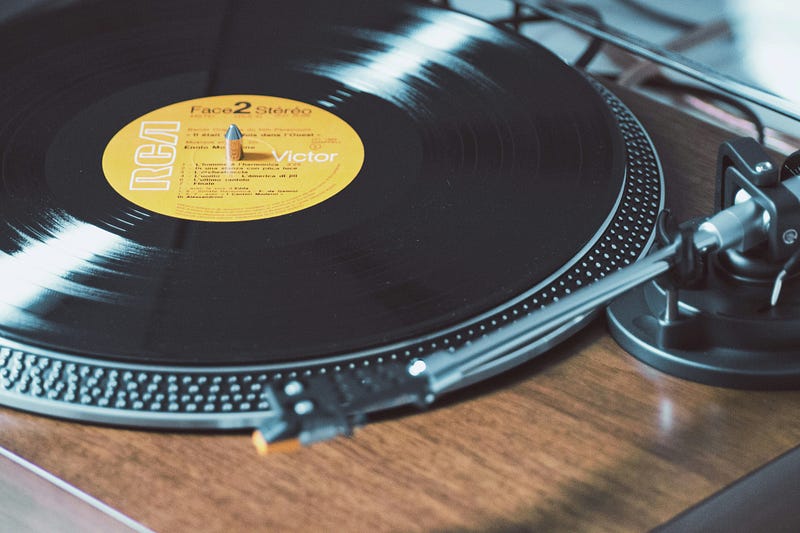
In the 70’s playing music involved harnessing a large piece of furniture, notably a radiogram. An unweildly piece of furniture that played music via the radio and record player contained within its polished wood exterior. It took up lots of space and in many houses like ours, it had pride of place
Ours stood under a window in our living room framed by two upright tapestry armchairs. It was made of a pale wood and had all the dials of a radio along the top between the in built speakers. To access the record player you had to lift the heavy lid. Inside was the turntable, and a space to keep records. The record player had the ability to stack up to 6 records one above the other. The idea being that when the first record had finished playing, the next one would immediately drop down and begin playing. A forerunner of the way music is played continually on our devices today. Mostly it was never quite as seamless as that, and either more than one record would drop or the record that did drop would then slip so that the sound was distorted and interrupted.
Our radiogram was not used every day. BBC Radio 2 or BBC Radio Norfolk were usually on in our house. Records and the radiogram were mostly saved for weekends when playing music was a ritual and an event.
Ours was a traditional household, on Sundays my mum would cook a Sunday roast, usually after she arrived home from church. An apron tied around her Sunday best. Roast chicken or pork, or if we were lucky, our favourite roast lamb. Dad would mostly carve, usually after he had got home later than planned from the pub.
Apart from the tension between Mum and Dad because of Dad’s lateness, an accompaniment to both these activities was the country and western music they both enjoyed.
My parents had an eclectic collection of LP’s. Andy Williams, The Beatles, Dolly Parton, Manfred Mann, Jim Reeves and a collection of bagpipe music all graced the turntable at one time or another; but it was Johnny Cash who was king.
In between wielding a carving knife and trying to placate Mum, Dad took on the role of DJ. Carefully removing each record from it’s sleeve, holding it by its smooth edge whilst checking the shiny black surface in minute detail for signs of scratches before lowering it reverentially onto the turntable.
By this time Mum was red faced and glowing from the heat in the kitchen and the tension between them was as taut as the strings on Johnny’s guitar.
Sundays in the 70’s were quiet days, mainly because nothing was open. A big lunch, The Sunday Express newspaper, sport or a western on the telly and sometimes a walk followed by crumpets and homemade cake for tea. These were the basis of our Sundays, but, it was the lilt of Johnny’s heart breaking melodies drifting above the aroma of a hot oven, roasting meat and the familiar smell of lunchtime beer on my dad’s breath and skin which really made up my Sundays.


