avatarSukhi

Free AI web copilot to create summaries, insights and extended knowledge, download it at here

1484

Abstract

singing. It is said that when he sang Meg Malhar Raga, clouds would gather in seconds and it would start raining. He was known for taming the wild beasts with his powerful music too. The most famous of his legends is about igniting a fire only by performing Deepak Raga.</p><figure id="9e2a"><img src="https://cdn-images-1.readmedium.com/v2/resize:fit:800/1*FhXic0tbQaKUeUY1e-Vx0g.jpeg"><figcaption>Mughal court on fire</figcaption></figure><p id="42c5">Some courtiers of Akbar were extremely jealous of Tansen so they plotted to kill Tansen with his own music. It is believed that if someone perfectly sings Deepak Raga then it makes his surroundings so hot that a fire starts and burns the singer to ashes. The courtiers persuaded Akbar to make Tansen sing this raga to prove his ability. Tansen could not deny the king but he took time to prepare. During this period he taught Meg Malhar Raga to his daughter.</p><p id="b02b">On the appointed day, the whole city gathered outside the court to see him sing. When Tansen started singing Deepak Raga, the lamps of the palace lighted and a fire erupted. When his daughter saw the flames, she started singing Meg Malhar Raga that summoned clouds and it started to rain. The rain saved the life of Tansen.</p><figure id="6ded"><img src="https://cdn-images-1.readmedium.com/v2/resize:fit:800/1*8BObBM_3x0fA9ycsZ6MGjQ.jpeg"><figcaption>Tansen of Gwalior (1585-’90). National Museum, New Delhi. Image credit: Wikimedia Commons</figcaption><

Options

/figure><p id="1565">There is a portrait of Tansen in The Prince of Wales Museum, Bombay. The inscription on the back of the painting says, “Tansen sang the raga Deepak, and the fire ignited by his wonderful music consumed his body”.</p><p id="186d">Tansen created so many Ragas and also invented a string instrument called Rabab. Rabab is mostly played in Northern India and Pakistan now.</p><p id="f2f6">All of his children were taught by him and many schools of music in current-day India and Pakistan are from his lineage. It is said that he became Muslim during his stay in the Mughal court. His grave is in Gawaliar and it has a Tamarind tree over it. It is widely believed that if you eat a leaf of this tree, your voice will become as melodious as the great Mughal era maestro.</p> <figure id="0109"> <div> <div> <img class="ratio" src="http://placehold.it/16x9"> <iframe class="" src="https://cdn.embedly.com/widgets/media.html?src=https%3A%2F%2Fwww.youtube.com%2Fembed%2Fh1Oe4u_0tPo%3Ffeature%3Doembed&amp;display_name=YouTube&amp;url=https%3A%2F%2Fwww.youtube.com%2Fwatch%3Fv%3Dh1Oe4u_0tPo&amp;image=https%3A%2F%2Fi.ytimg.com%2Fvi%2Fh1Oe4u_0tPo%2Fhqdefault.jpg&amp;key=a19fcc184b9711e1b4764040d3dc5c07&amp;type=text%2Fhtml&amp;schema=youtube" allowfullscreen="" frameborder="0" height="480" width="854"> </div> </div> </figure></iframe></div></div></figure></article></body>

Summoning Rains and Lighting Lamps by Singing: Legends of Tansen

Image by Gohati

They say he could make it rain by singing a Raga called Meg Malhar (rain song) and he could light up the lamps by singing Deepak (Fire) Raga. Tansen sits on the highest throne when it comes to the music history of South Asia.

Tansen (pronounced as Taan Sehn) was born in Gawaliar city of India around 1500 AD. He was well advanced in age when the great Mughal Emporer Akbar brought him to his court. Mughal kings were famous for their patronage of arts. Tansen lived in Mughal court until his death in 1586.

The royal court’s historian Abul Fazl writes about Tansen:

“A singer like him has not been in India for the last thousand years.”

Akbar’s son. The great king Jahangir writes about Tansen in his biography in these words:

“There has been no singer like him in any time or age. In one of his compositions, he has likened the face of a young man to the sun and the opening of his eyes to the expanding of the lotus and the exit of the bee. In another place, he has compared the side-glance of the beloved one to the motion of the lotus when the bee alighted on it.”

There are many legends about Tansen’s soulful singing. It is said that when he sang Meg Malhar Raga, clouds would gather in seconds and it would start raining. He was known for taming the wild beasts with his powerful music too. The most famous of his legends is about igniting a fire only by performing Deepak Raga.
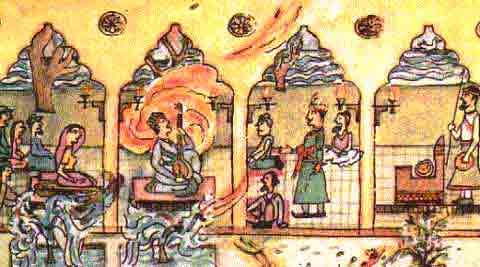
Mughal court on fire

Some courtiers of Akbar were extremely jealous of Tansen so they plotted to kill Tansen with his own music. It is believed that if someone perfectly sings Deepak Raga then it makes his surroundings so hot that a fire starts and burns the singer to ashes. The courtiers persuaded Akbar to make Tansen sing this raga to prove his ability. Tansen could not deny the king but he took time to prepare. During this period he taught Meg Malhar Raga to his daughter.

On the appointed day, the whole city gathered outside the court to see him sing. When Tansen started singing Deepak Raga, the lamps of the palace lighted and a fire erupted. When his daughter saw the flames, she started singing Meg Malhar Raga that summoned clouds and it started to rain. The rain saved the life of Tansen.
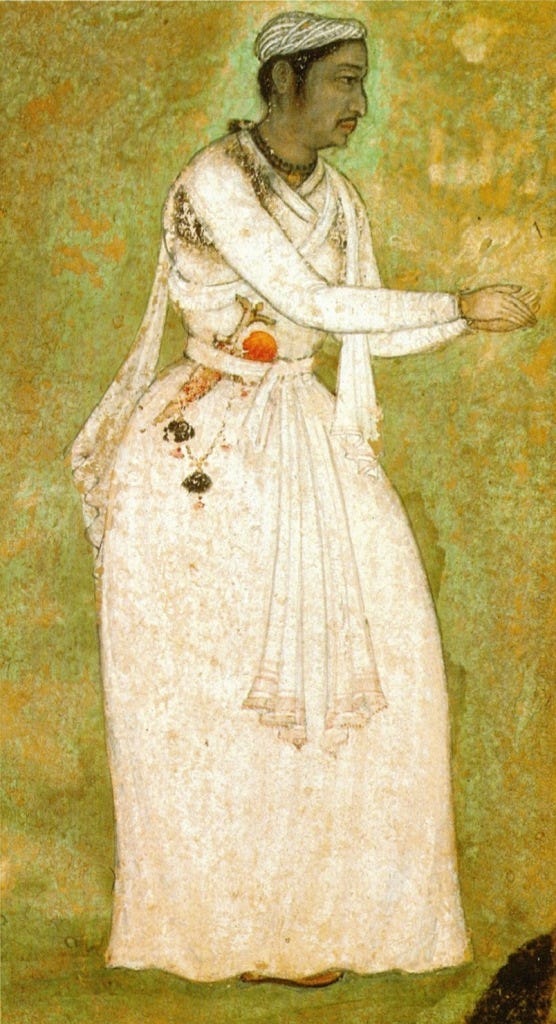
Tansen of Gwalior (1585-’90). National Museum, New Delhi. Image credit: Wikimedia Commons

There is a portrait of Tansen in The Prince of Wales Museum, Bombay. The inscription on the back of the painting says, “Tansen sang the raga Deepak, and the fire ignited by his wonderful music consumed his body”.

Tansen created so many Ragas and also invented a string instrument called Rabab. Rabab is mostly played in Northern India and Pakistan now.

All of his children were taught by him and many schools of music in current-day India and Pakistan are from his lineage. It is said that he became Muslim during his stay in the Mughal court. His grave is in Gawaliar and it has a Tamarind tree over it. It is widely believed that if you eat a leaf of this tree, your voice will become as melodious as the great Mughal era maestro.

India
Music
History
South Asia
Culture
Recommended from ReadMedium