Summer Delights: Quick Recipes from the Garden
Summer’s most delectable eats from Europe and the US
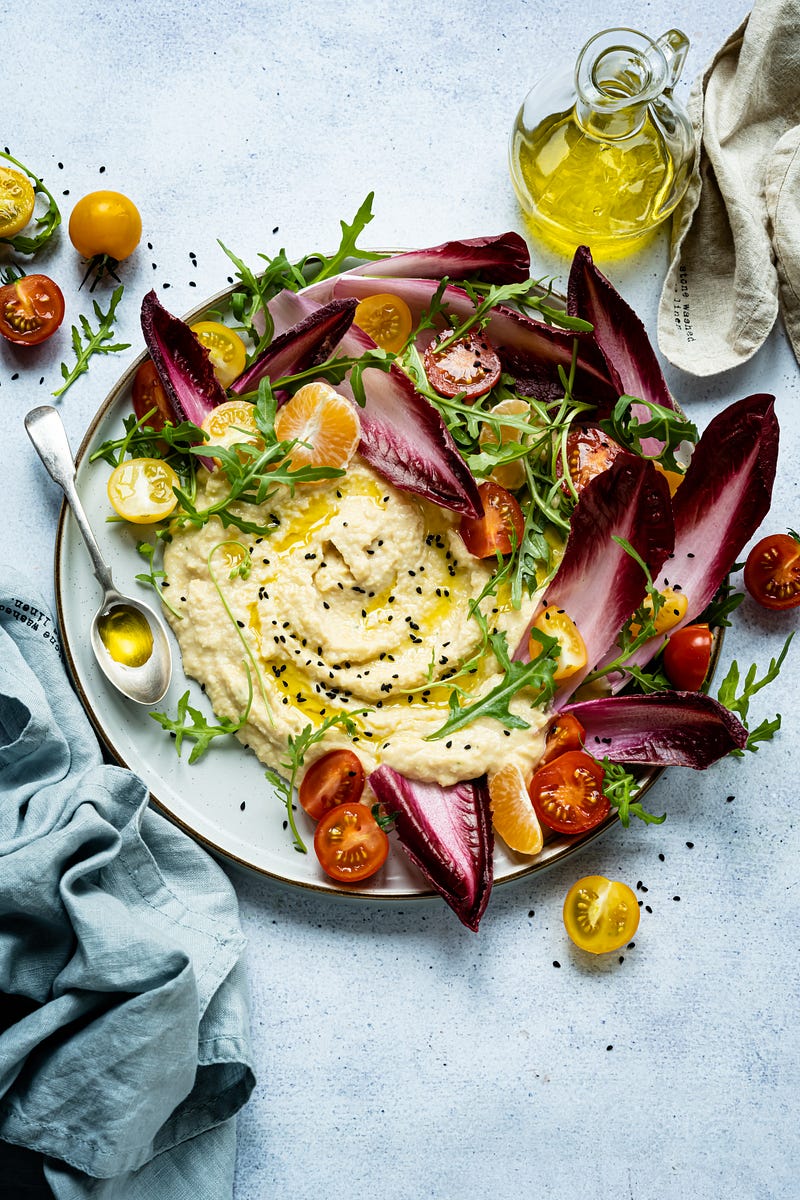
As a homesteader and resident of rural America, I love this time of year. I’m constantly pulling delicious food from the garden and whipping up quick eats for myself and others. And since I can’t feed you, dear readers, the next best thing I can do is share the ideas/recipes. Even if you don’t have a garden, you will be able to find most of these ingredients at your local health food store, farmer’s market, or directly from a nearby farmer. I won’t take credit for all the ideas I’m about to share below as many came from or were inspired by my French relatives, Greek farmers for whom I did a few volunteer stints, and my neighbors.
Garlic Scape Fries
Mmmmm. If you like garlic, these are about as addictive as a snack can be, but far better for you than typical fries or potato chips.
Garlic scapes are those marvelously whimsical, curly stems (and flower buds) that grow from the top of garlic stalks. We food growers snip off the scapes to encourage the garlic heads/bulbs to fill out and grow as much as possible the last month before harvest. However, no one tosses them into the compost heap.
Instead, we eat them. You want to save/eat the firm, green stem. (You can compost or dispose of the rest.) Rinse the remaining stems. Now, there are two delectable options:
- Dress them in EVOO and Himalayan salt and toss them on the grill.
- Heat a pan with EVOO. Chop garlic scapes into small “fries” and toss into the pan with Himalayan salt.
Whichever option you chose, remove them once they are lightly browned and slightly “crinkly.” For those who haven’t eaten garlic scapes before, just know that they are bit more mild in flavor than garlic cloves.
(By the way, garlic is incredibly easy to grow and has the better rate of return than any investment––one clove yields entire garlic head––so if you have some growing space, go for it!)
Stuffed Zucchini Flowers (Kolokythanthoi)
This is a recipe I learned from a Greek couple who owned a farm in a remote part of Greece that I volunteered at. They often made the most beautiful meals for their volunteers––one of the many reasons I kept going back––and this was one of my favorite dishes.
Since I’ve managed to find a similar recipe online, here it is. However, let me share the differences from the kolokythanthoi (pronounced koh-loh-kee-than-thee)that I experienced. The first is that my hosts used dill, not mint. Another is that they served it with greek yogurt and tzatziki on the side for “dipping.” They also had another spin on it––which I admittedly did not try––that was similar, but it had half the rice, and then replaced that half with feta. (If dill is not your thing, oregano will create a different flavor palette, but still works nicely).
For those of you who have gardens and grow your own zucchini (courgette), you’ll need to pick the “male” flowers. Those are the ones that grow at ends of green stems. It’s best to leave the ones closer to the center of the plants as those are the “females” and will grow the fruits (zukes).
Whether you’re picking them or buying them, zucchini flowers are rather delicate, so be sure eat them the same day.
Unique Pestos
Pesto is fun and easy to make. I love chatting with my local friends, who also grow plenty of food, to swap ideas.
Here are a few we’ve toyed with over the years:
- Carrot greens (tops)+basil+pine nuts+EVOO+salt+pepper+cheese**
- Garlic scapes+basil (and/or arugula)+pine nuts+EVOO+salt+pepper+cheese**
- Spinach (and/or arugula)+walnuts+EVOO+salt+pepper+cheese+dash of lemon juice**
*If you use arugula, you can skip the pepper.
**parmigiano-reggiano or romano cheese optional
Mediterranean Style Greens & Broccolini
More Greek-inspired dishes. In Greece, I gorged on a side dish known as xorta (pronounced: horta), which is basically boiled greens. But wait! It’s far more delicious than it sounds. (Just hang tight until I get to the recipe.)
Vlita, a type of xorta, is made from edible––there are ornamentals––green amaranth. Other types of xorta are made from wild greens such as dandelion, wild spinach, zucchini leaves (towards the end of the harvest), and more.
The Greeks boil their greens, salt them, dress them with olive oil and squeeze some lemon juice on top. However, I use kale and put a slightly different (read: less healthy) spin on it:
- Wash kale and chop off the thick, hard stem (bottom half).
- Heat a pan with oil of your choice. (I prefer organic EVOO.)
- Prepare your kale using the chiffonade cut.
- Lightly sautée chopped garlic on medium heat.
- About a minute after adding the garlic, toss in your kale, salt, and stir.
- Sautée until the kale has wilted and is a tad crispy.
- Plate your kale and top with fresh lemon juice.
For broccolini, do the exact same thing, except all you have to do is remove the small leaves. No need to chop the broccolini stems. You can put them in the pan whole. You can do the same with kale raab (usually available late winter-spring) and broccoli rabe (September).
Grand-mère’s Stuffed Tomatoes
I used to eat these as a child during the summers my brothers and I spent with our grandparents in the rural France. Our grandmother––we called her mère-mère since my eldest brother couldn’t pronounce gran in French as a little boy––used to make us these huge, sprawling lunches of many plates. I joke that she taught us how to eat. She took her rambunctious little American grandchildren––technically French-American, but we will never be French in the eyes of full-blooded French people raised in France––and taught us how to eat slowly, to savor food, and to love different textures and flavors.
And this is one dish that I used to beg her to make us, especially when it was tomato season and I would pick them off the vine and eat them like candy: tomatoes stuffed with tuna salad––an incredibly unique spin on tomates farcies. Unlike the traditional tomates farcies, these were neither baked, nor stuffed with beef and cheese.
First, she made her own mayonnaise from scratch. (Far easier than most people think.) Because I can’t fully remember her recipe, I’m linking to one that matches my memory and is comparable to how I make it when I cook for others (I’m plant-based now). The two differences I remember are 1) she used whole eggs, not just the yolks, and 2) she always used olive oil––never sunflower oil.
After the mayo is done, she would put it in the fridge until she needed it. Then, she lightly sautéed tuna in a pan with salt and a little EVOO (sans bones and skin). After which, she let it cool in the fridge. (You do not need to do this, though––high-quality canned tuna will be just fine.) She then mixed the following into a bowl:
- tuna
- homemade mayonnaise
- red onions
- fresh dill
- garlic powder and salt (to taste)
- EVOO
- dash of lemon juice
Then, she would use a spoon to scoop out the seeds and core of medium-sized tomatoes, and load them with tuna salad. Each one was topped with a sprinkle of cayenne and chopped fresh chives (finely chopped scallions or onion tops will do just fine too). If you’re concerned about portion sizes and quantities necessary, feel free to use a typical tuna salad recipe’s weights/amounts and then core tomatoes accordingly.
Skordalia
I’ve got to give it to the Greeks. After volunteering on organic farms in Greece and learning how to cook from some of my hosts, a few of their dishes have stuck with me for over a decade. This is one of them. Skordalia (pronounced score-dahl-YIAH) is Greek garlic potato dip. Sometimes, I opt to make it as Greek garlic mashed potatoes, in which case I make a ton more than recipe calls for and serve it hot.
For the sake of saving space in this article, I’ve found a comparable recipe for with similar preparation steps. However, there are some key differences in the recipe from how I learned to make skordalia in Greece. Here you go:
- no nuts
- lots of dill (you make a garlic and dill paste, as opposed to a garlic and nut paste listed in the recipe)
- if I’m making it as a cold dip, I mix in 1 tbsp of red wine vinegar
- dash of lemon juice is optional
Infusions
Although not edible, these infusions are hydrating tonics for the hot summer months, and are very simple. You can either grow the herbs yourself, buy them fresh from a local farmer, or maybe at your local grocery or health food store. (Note: You must use fresh herbs to get the full flavor and benefits.)
My favorites are a little more exotic than your run-of-the-mill cucumber/mint or lemon infusions, so here they are:
I’ve linked to their individual health benefits above. I usually put a 3" sprig of one the herbs listed above into a 32 oz ball jar and let it infuse for 8–12 hours.
Enjoy
I hope you enjoy these summer delights as much as I do. If you have any unique, simple dishes people can make from fresh summer ingredients, please feel free to share them in the comments below.
Bon appetit! Kalí óreksi!