
Suicide in Our Time — 4 Factors Investigated — Part 5 — Thoughts and Recommendations

Complexity
One of the main things I would heavily emphasise is that suicide is not necessarily complex. Certain factors will make a person far more likely to take their own lives. For any single individual, the reasons as to why they took their own life may not be wholly clear. This duly noted, we are here dealing with probability, and it can be said unequivocally that the presence and persistence of certain factors— alcohol, drugs, poverty, access to lethal means, social oppression, entrenched racism — will make the likelihood of suicide, often dramatically so, more probable. Individual cases are hard to pin down. General trends are not.
From this perspective, suicide is not complex at all. It can be layered, intersectional, multifactorial, contextual and environment-dependent, but with regard to probabilities, certain things are exceptionally clear. Accordingly, such factors need to be seen for what they are, as real, impactful, pernicious hazards to a person’s health, often more generally, but specifically in relation to suicide.
The Individual
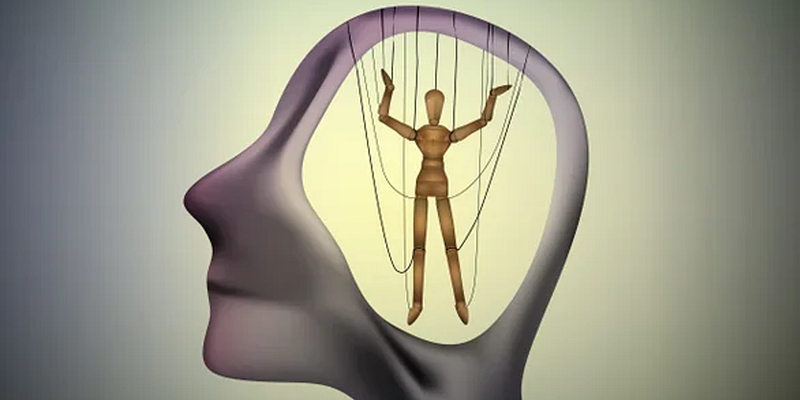
A second point is in regard to how much an individual can be expected to take responsibility for themselves and their own environment. This also empties into implementation. The western world holds at its heart the notion of the individual, and it is this image that is the life blood of its societies and peoples, of its ethico-legal architecture, of its political culture, of its socio-psychological aspirations, of its understanding of reward, rightfulness, justice, and fairness. When we dream we think of our own individual selves being celebrated for something our own individual self has done. When we think of the future we see the things we ourselves would choose being realised and enjoyed with people we would choose to be with or already have chosen to be with. This self is understood to be fully responsible for its own decisions and achievements, the driving force behind its own course and destiny, culpable for the bad, commendable for the good, and stands as that most essential and indispensable vessel charged with carrying our most valuable concepts — reason, will, agency, volition, consent — the omnirational self is the backbone of the Hermetic caduceus,
This idea has been invaluable for Western societies and has had an incalculable impact on how we see the world. In spite of this, how much an individual actually possesses free will and the capacity for rational choice is severely limited in the eyes of most socially-minded thinkers. Moreover, science increasingly reveals free will and rational agency to be perhaps wholly illusory or at least heavily circumscribed by one’s environment, physiology and genetic make-up.
Punishing an individual who commits a crime or extolling a person who achieves a high station in life makes a lot of sense in many ways, but we all know there are deep underlying factors which can either push a person up or drag them down. Owing to such limitations on how much an individual person can simply act or decide so as to best maximise what may be deemed most beneficial to themselves, much of what needs to happen to better come to grips with suicide needs to take place at the level of state and society, where groups of humans have access to all necessary data and tools to understand the big picture and take those actions that are not reasonably feasible for single humans. In parallel, it is essential to reappraise what an individual is capable of and likely to be able to control and change, with science and a more balanced reading of society and the individuals within it as guides.
An Indian women suffering from mistreatment at the hands of her husband or a person living in abject poverty or a soldier turning to alcohol after the psychic sledgehammer of war are not going to be easily able to overcome their circumstances by the mere force of their rational mind and tenacious endeavour. Outside help will more than often be required, and if we are going to be fair, sometimes a considerable amount of it.
Let us take an example. Let’s say a man loses his job. For some people, getting a job of some type is rather easy. For others, it requires a lot of work to even get the chance to work. However, let’s say it isn’t important for our purposes how he got the job and how he lost it. Let us simply focus on the aftermath.
So, he had a job and now he doesn’t. If he has a college degree or some specific trade it will likely be easier to get back in there. Some people are extra motivated and singularly-minded in getting such qualifications (they are usually in the minority). Others are lucky in that they are born to parents with sufficient wealth and resource to make success of some kind for their child quite likely. Some folks don’t have either. For these, it can be rather difficult to get on the horse in the first place, let alone get back on the saddle. Our friend has not been lucky enough to be born into a more secure position in life, and he is not part of the small minority that has managed to drag itself upwards through perseverance, talent and luck.
Some will say that the most important factor in becoming gainfully employed again is your own self and that putting yourself out there with sufficient zeal and consistency will see you back sooner rather than later. It’s not bad advice in some ways. It paints a picture with you at the centre with the power firmly in your hands. The simplicity of the story has a certain charm, but it blacks out a number of truisms. Where you are from limits the number and type of job opportunities that will be available in your area. Where you are from also limits the likelihood that you will have the sort of skills and qualifications to make it easier to get a job. Where you are from also raises the chances that certain habits and temptations, such as the consumption of alcohol, drugs or unhealthy food, will be both more common and more normalised in your locale. An individual cannot easily change any of these facts by the force of their own being. The reality is that for our friend, and many others in real living societies, there are fewer opportunities, fewer skills, and more temptations in the foreground of his life in comparison to others.
How and ever, let us continue. Let us say the man that lost his job in some other neighbourhood but had a diploma of sorts is happily back in the saddle. However, our friend doesn’t and isn’t. He can’t get back in. He has less chance of getting back in than others, but nonetheless he defines himself according to the above narrative, the dominant narrative, which says all the power is in your own two hands, and likewise the fault if you do not succeed. According to such thinking the buck starts and stops with you and your work ethic and entrepreneurial proclivities.
He defines himself by his ability to provide and with time this increasingly eats away at him. He cannot provide for his family. In some societies he will receive rather decent social welfare, in others he will receive buttons, in both cases he may be vilified for accepting such unbecoming succour. He may begin to seek comfort and solace in alcohol, probably buying something cheap, poorly produced and extremely bad for his health. The issue is then compounded. If on top of this we add a number of additional elements such as discrimination because of race, background or gender or the stresses of being a single parent, then the struggle to get back above water becomes all the more challenging.
And this is the heart of the matter, many factors that raise the chances a person will take their own lives — discrimination, joblessness, racism, a lack of education, impoverishment — limit the options and means a person has at their disposal to alter such conditions. These phenomena are often largely or wholly immutable for the individual who is subject to their whims. To drag oneself out of poverty requires uncommon levels of perseverance, no small slice of luck and a superabundance of will power. Such an individual is in the minority and many other individuals simply don’t have to overcome such daft odds. So why emphasise this story when it misrepresents what is possible for the majority of us and when we have such different starting points?
The parabolic individual at the heart of the American Dream is a cartoon chimera not even, or perhaps especially, fit for children. It doesn’t mirror American society, or Irish, or Australian, or British, or the statistics. And if we look at these, we see that the top universities overwhelmingly take from the top of society, 40% of those born to the very poor remain very poor, 40% born to the rich remain rich, and in contravention of the supposed classless meritocracy upon which the USA is founded, it is better to be born rich than born smart.
Science tells us the individual is very much a dynamic creature, swept along by forces beyond its own ken and powers. The statistics tell us that environment plays a huge factor in what will be the fate of any one of these individuals. Why continue to tell, or more to the point believe, a story that willfully and flagrantly disregards truth? It is time to update the story and put the vulnerable, imperfect individual back into the environment that will shape them.
Alcohol — A Universal Demon

In certain quantities and with care, self-control and awareness, there are some debatable benefits of alcohol and certain drugs (hallucinogens are now known to be beneficial in a number of ways, and seemingly non-addictive given the potency and potential unpredictability of the experience, for example). This is most likely true, if not in the medical sense, then perhaps in the sense that certain small pleasures enjoyed with people you like are acceptable for most people in most cases.
With this small proviso out of the way, there are a whole host of health problems which become more dramatic, numerous and impactful as you drink more and over longer periods. And given that alcohol is addictive, the health issues that develop as time goes by and intake rises are hard to avoid for many people.
Over time, alcohol will make you sad, stressed, depressed, confused, unhappy, less strong, less smart, less vital and a shell of your former self. Given enough time and sufficient quantities this will be the same for everyone. Alcohol plays havoc with the chemistry of your brain and messes your relationships up, personal and professional. As things progress you will need to drink more to derive pleasure from the experience. At the same time your dopamine system will learn there is pleasure to be had and crave it. These cravings can be satisfied for a short period by drinking but are also perpetuated when you drink. They will get stronger and less easy to satiate as the years go by. If you give up, they will slowly subside but many drinkers don’t wait nearly long enough for this to take place before they kick themselves back into the same pounding cycle of transient pleasure followed by the depressive aftermath, all to the constant hum of cravings ebbing and flowing. The tide, however, always gets stronger with time.
After a number of years and with rising consumption, the game will be played in negative figures for a considerable number. You may not notice it but your mind and body are not operating as they should and can because of alcohol. Drinking under these conditions is more about an ephemeral jolt from the negative created by drinking itself rather than the provision of genuine pleasure. In effect, the booze creates the ailment and then offers itself up as the natural remedy to its own machinations.
This can and will happen to everyone given sufficient time and quantities. The speed with which it will take place will depend on many factors but the trajectory will be the same. It is undeniable that some never get to the latter stages of alcohol use disorder for a myriad of reasons — environment, genetics (in that some people have a dislike for substances from the very start), luck, good relationships, cultural norms — but all can. The us-and-them mentality of ‘good drunks’ and ‘normal drinkers’ on the one side and ‘piss heads’ ‘bottom-of-the-barrel alcos’ on the other is a misnomer. Genetics do play a role but anyone can become heavily dependent on alcohol given the right set of conditions, and the fact that you haven’t isn’t so much a testament to your genes or your innate character as it is to the family you were randomly born into, the successes you’ve had in life, the people around you and the semi-arbitrary context of your own existence.
AA
Alcoholics Anonymous cleaves the story of alcohol in exactly such a way, with its quasi-religious and pseudo-scientific understanding of alcoholism as a spiritual crusade which only the afflicted few will have to fight. Thus the narrative is grounded in the binary, and alcohol is deemed a demon with designs on those few wretched souls left on the wrong side of the division. Going forward, these will need to be forever vigilant, always on the lookout for the devil ready to pounce.
To my mind, this bestows upon alcohol a wholly undeserving and incommensurate place in a person’s life, as a central figure that will be with them watching and waiting until they die. AA sees the situation in the binary, with its alcoholic/non-alcoholic narrative, and also in the negative. The solution offered is a type of negative transcendence whereby the demon will be given centre stage, with hexes and exhortations being incanted weekly to ward off the creature.
If AA worked or works for you, I wish you all the best, however the statistics give little reason for optimism (more on this below) and the story told to members is rather quite dangerous in a number of ways. You don’t move on by filling your life with something new and life-affirming, saying goodbye to alcohol once and for all. Rather, you remain rooted to the same spot, fighting the same fight, as the demon’s name must be continuously spoken to be kept at bay. In some sense, the afflicted has become like some cursed community from a fantasy novel, or some territory in hoc to a feudal suzerain, condemned to pay its sacrificial blood tithe in the shape of never forgetting, never moving on, always an alcoholic and never someone that simply doesn’t drink.
This entrenches a number of ideas.
Firstly, for the person with alcohol issues, they will need to take this self-assignation of alcoholic deep into their being. This will be from now unto death one of their core and defining features: father, mother, husband, wife, lawyer, teacher, Christian, atheist, alcoholic. This must be so as the cure entails never moving on from the sickness. This fixation on vanquishing the evil that dwells within contains an undeniably powerful spiritual message, but is life on the edge of oblivion really a winnable war for the majority of us? Perhaps, it is better to say there is no war and you are not sick, merely that instead of filling your life with bad habits, you are now going to find good hobbies with which to preoccupy itself. Yet another narrative of course, but who cares for grandiosity when it very often doesn’t work? The central concern here is finding a narrative that works for you, and if possible, a story that works for most people.
The second issue is calling alcohol for what it is. The problem here is that the thought process at the heart of AA perpetuates and cements the idea that alcoholism is something which only troubles those few freaks who are possessed of such demons, residing either in their genes or spiritual composition. There is no sense of a gradual demise or a universal demon that can come to possess all. For alcoholism to develop, there must be alcohol and the right kind of person mixed with it. Simply put, alcohol cannot cause alcoholism without the right substrate to act upon. The person is therefore complicit, in that their ‘weakness’ is crucial for the concoction to take effect. Thus, society and alcohol are absolved of any potential for wrongdoing. Only an accursed few can carry the sickness, and these poor sin-eaters will hold the entire malevolence of the beast within themselves. For the rest of us, alcohol can be enjoyed without too much danger and society has no real issue.
This is a dangerous narrative for both society and the individual, and needs to be readdressed using what science tells us about the dangers of alcohol to frame the issue in the right way. If AA has helped you, you should continue with it and I wish you all the best with your recovery. However, its success stories, 8–12%, are far from impressive (these is a lot of debate about whether AA is generally beneficial, the difficulties of calculating its efficacy, and the inherent issues with its core message. I attach a number of links). In addition to its low but debatable success rate, the central message is extremely harmful for how society and the millions of people that drink understand themselves, their problems and how alcohol affects them.
Health Impact
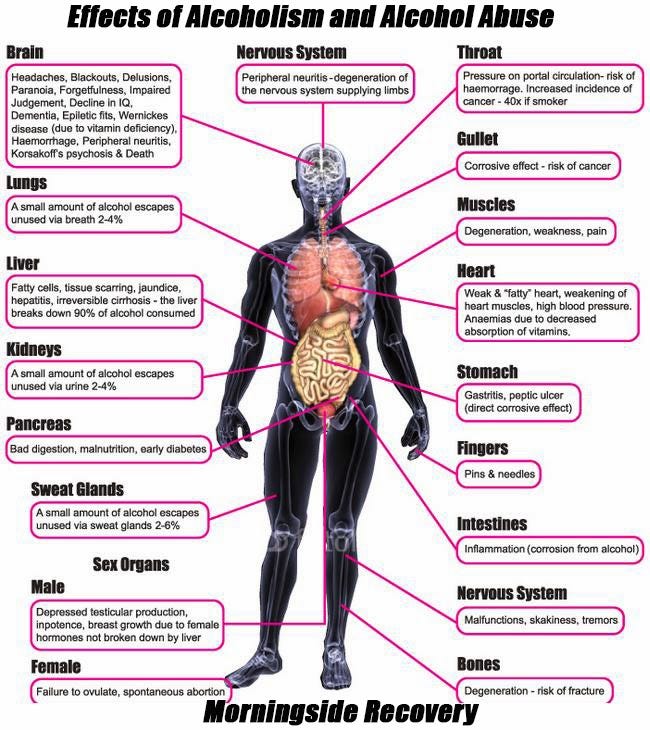
This grounding of alcohol and the myriad health problems that follow in its wake as an issue for society as a whole, and as an evil that can come to visit any individual, is extremely important. The sheer pervasiveness of drinking normalises a large part of the behaviours and habits that go along with it, and as long as a very select group of people are scapegoated as being representative of the sickness it will be difficult to have a reasonable and grown-up conversation about how much and in which capacity alcohol can and should be part of our lives.
Alcohol use disorder makes a man up to seven times more likely to beat his significant other, and a person dependent on alcohol is up to 120 times more likely to commit suicide than a person not dependent. Binge drinking makes homicide, sexual assault, assault, car crashes, accidental death, the contraction of sexually transmitted diseases, and impulsive and dangerous acts all more probable, sometimes many times more.
Heavy drinking over time takes a large toll on one’s skin and sleep. It compromises the prefrontal cortex and so makes decision-making and the ability to reason significantly impaired. It causes depression and mental health problems, and a long list of scary illnesses all become more likely — dementia, Wernicke-Korsakoff syndrome, liver disease, heart disease, cancer of the breast, mouth, throat, oesophagus, colon, liver. You don’t need to be drinking vodka on a park bench at 9 in the morning for some of these events and potentially terminal illnesses to become all too real for you.
So, the knowledge and understanding of what alcohol does to a human and how it affects others exists. It exists, there is a lot of it and it is extremely well-researched. There are some tentative benefits within narrow limits, and there may be some socially, if not medically, positive aspects in relation to drinking. I believe there are, but I also know the long list of negatives is irrefutable and destroys countless lives each year in a multitude of ways. The issue then becomes how to translate knowledge into meaningful action.
Action
Individuals should, as much as it is possible and reasonable, educate themselves and moderate or abstain accordingly. They should also educate their children as best they can about drinking and alcohol. This is true for many things in life, and in a perfect world all people would possess a vast store of accurate and useful knowledge, and act according to the veracity and moral guidance of that store, and then pass this, plus what they themselves glean, on to their children. Of course, this isn’t probable for a range of reasons relating to upbringing, social environment, genetics, education, cultural norms, individual failings and cognitive dissonance.
As something of an analogy with alcohol awareness and understanding the health risks of drinking we may take the computer. The majority of people use a computer in some capacity, whether it be a tablet, a smart phone, a desktop or a home computer. There are a small number of experts who understand the intricacies which lie beneath and beyond the screen. There are also a larger number of people who are quite au fait with how computers work. However, vast swathes of people know enough to get by, will call an expert if there is some genuine issue, don’t see their lack of knowledge as a problem, don’t wish to know more, and are very aware that most of their friends are in the same boat and do the very same as themselves. If you see no problem and are surrounded by people who also see no problem, and moreover you rather enjoy using this thing that some are now saying may be problematic, it is not reasonable to expect rapid or drastic change. To think individuals are, on mass, capable of such an overhaul of their lives is not realistic to put it politely. Thinking of individuals as you want them to be is utopianism, thinking of individuals as they are is realism.
Thus, a large part of the burden for redressing the impact alcohol has on the minds and bodies of many millions of people will have to fall to the state and society. Knowledge may equate to power in many respects, but there are many powerful drives in an individual’s life. As such, the following are my recommendations for what I believe can help.
Thoughts and Recommendations
1. Make the Truth Visible: Alcohol makes you up to 120 times more likely to kill yourself. This needs to be written on every label. Alcohol can have devastating consequences for your health. If you are depressed and/or suicidal and are drinking large quantities, what you’re feeling is more than likely an affect of the alcohol — it’s not you, it’s alcohol, it’s not you, it’s it.
2. Change the Narrative: Anyone can become an abuser of alcohol and what is sometimes called ‘normal’ is actually abuse. Vilifying small groups of people as being ‘alcoholics’ helps no one and allows society to lie to itself.
3. Knowledge is Power: Educate yourself if you can. However, comprehensive education that shows the full spectrum of health issues that may develop at a state level is paramount. This should not be a once-off programme either but a continuously-run class that tackles issues of health in society.
4. Take a Wide View: Alcohol and drug abuse doesn’t happen in a vacuum. Social issues cause substance abuse and substance abuse causes social issues. Pay particular attention to the most vulnerable and offer support accordingly.
5. No more Normalisation: Drinking a lot regularly is normal for many societies. Doing heroin isn’t. Alcohol may have a place in society, but it shouldn’t be centre stage.
Poverty — A Social Disease
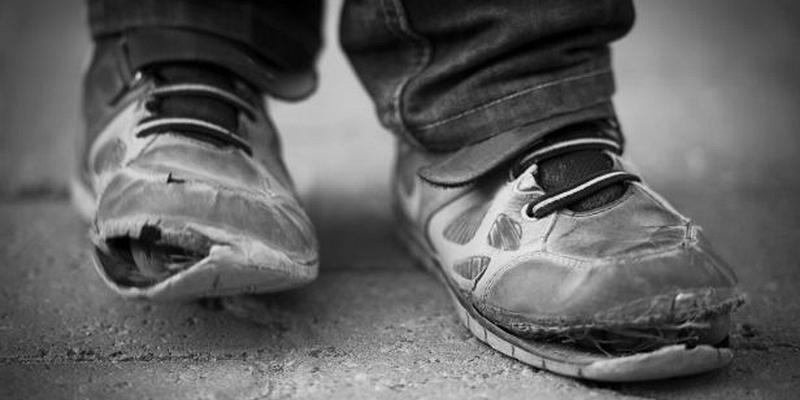
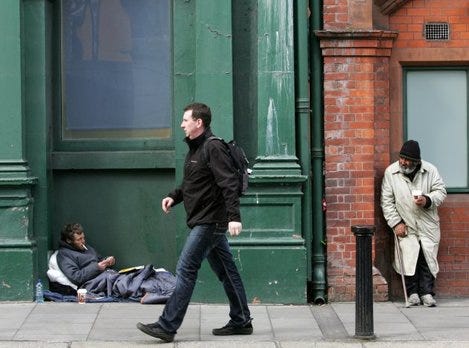
Poverty takes many forms but the most singular element which runs throughout is the absence and seeming unattainability of something fundamental for life or extremely important for a person’s well-being. This may be something necessary for survival like food, or something crucial for self-development and growth such as education, or something hugely sought-after in the society you’re born into but seemingly denied to you, such as a decent job with decent pay.
The first issue here is that a person in poverty lacks something either essential for life or extremely important. The second, which may apply or may not, is that depending on the specific context others may possess this thing that you lack and this fact has the effect of exacerbating your already difficult and traumatic condition by significantly impacting your state of mind; humans are an intensely social species, we cannot help but compare ourselves to others. The last issue is that by not having this thing that others have, you are at a severe and immediate disadvantage and hence less able to obtain or achieve other aims as a result.
To wit, a hungry person not only lacks food which will make them weaker and get sick more often, but as a result will find working, studying and even moving to be far more difficult; 690 million people go to bed hungry each night to put the scale of the problem in context (we are here talking about people that or not in immediate danger of dying due to hunger but are suffering from a shortage of food on a continuous basis. In a famine situation it is obvious that a person is only thinking about food). A person without education will be less able to get a job, less able to understand the workings of society, less able to understand their rights, what they are due and how to negotiate the world in which they live. A person without a decent job will lack the money to shape their life and support others, and will not gain the status they need to feel good about themselves.
This is an absence that takes away more than its own non-existence. This is an absence that sucks potential, devouring like some kind of black hole the light of your being, draining your power — the power to survive, grow, flourish, emulate, support, plan. At its most extreme, it becomes a powerlessness you are powerless to correct. Which is why ideologies that place emphasis on individual endeavour as the cure to poverty fundamentally misdiagnose the disease.
Depending on your politics and how you view society, you may stick to this line of individual endeavour and perseverance utilising your own wits and God-given talents being the best way out of any bad situation. You may also stick to the notion that there is such a thing as helping too much and too much support stifles the more entrepreneurial and self-propelling parts of a person. More than likely this type of thinking won’t be applied to the developing world, as the insanity of saying whole nations should get their house in order with a few good ideas and a little bit of elbow grease is sufficiently nuts to dissuade all but the most faithful. Rather, this attitude will be applied to the developed world, where poverty, if it exists, must be somehow self-inflicted or self-perpetuated.
Fortitude, self-reliance, industriousness, general nous are obviously very positive characteristics, but when we look at the statistics that tell us Ireland’s most deprived citizens are 10 times more likely to commit suicide than its richest, Scotland’s poorest are 3 times more likely to die young, Washington’s infant mortality rate is 10 times greater for the poorest than for the richest, this, mixed with the mind-boggling fact that 8 men possess the same wealth as half of the human race, 3.6 billion people, this should tell us that the experience and impact of poverty transcends the bounds of the ‘pull yourself up by the bootstraps’ philosophy, which draws partly from libertarianism, partly from conservativism.
Poverty is not a small discrete neatly-fenced-off phenomenon. It is heavily connected with one’s environment, permeates a person’s life, spills over from one area to another, and has many knock-on effects. This in concert with the scientific knowledge that individuals are neither fully rational nor in possession of a wholly free will (I attach a number of links for some current discussion of one of the most important topics there is), means that merely choosing what’s best for oneself and working hard in that direction will not solve the problem. An interesting example of the interdependent and environmental nature of poverty appeared during the 2019 debate between Slavoj Zizek and Jordan Peterson.
One of Peterson’s assertions in his 12 Rules for Life is to ‘set your house in order before you criticise the world’. This advice was brought into question by Slavoj Zizek, putting to Peterson, “what if in trying to set your house in order you discover that your house is in disorder precisely because [of] the way that society is messed up?” Zizek correctly took Peterson somewhat to task for the glaring caveats omitted from his platitude. Peterson’s position is simple and sounds good, and therefore sells books. It also contains some sense and a certain stoic pragmatism, but is ultimately an extremely inappropriate net for capturing the animal that is the human social experience, which in some quarters can be as propitious, pampered and manicured as it can be cruel, cut-throat and enervating in others. We may extract the human animal from society in the legalistic or liberal sense, but never from society in reality. One’s environment will always play a very large role in who a person is and who a person will become, and cannot and should not be discounted.
It is reasonable to suggest that a person may be able to self-educate with regard to alcohol abuse, the dangers of alcohol and how it connects to suicide, and if so, this may, over time, help them to quit or cut down or at least recognise dangerous signs in their life. However, suggesting self-education for something as so completely limiting as poverty is unfair, unintelligent, and extremely unrealistic for the vast multitude of people who are blighted by one form of poverty on another. To say to someone deep in poverty to simply set their house in order is akin to asking them to fix their house and the whole neighbourhood at the same time.
The Price of Poverty
To illustrate just how potent and powerful poverty can be as an ontological experience, the evidence suggests that it can drive your IQ down by as many as 13 points. The general understanding is that being forever bedevilled with problems that need to be quickly solved and drowning in a sea of stress severely drains the mind’s capacity to devote itself to non-essential tasks, with the inevitable result that it simply doesn’t work as well.
Certain countries lament brain drain. Poverty is brain drain. It sucks the brain’s vigour and vitality. It makes you less smart, less happy, less productive, less able and more likely to end it all. Now imagine millions of these individuals in your country, not only are they not being given the opportunities to make themselves and society richer and smarter and better, but they are being made worse in a whole manner of ways for everyone involved. There are a small number of actors who benefit from such unequal societies with large numbers of uneducated well-conditioned consumers. For the rest of us, the price of poverty is immense.
For some individuals, poverty can be the result of their own choices. This is inescapable. For these, the subsequent question is whether these deserve their fate as a form of moral punishment? The answer is of course, no. A helping hand for those who slip is as much of economic use as it is a moral dictum. Only a cruel society with no aspirations towards greatness omits of redemption and rejuvenation. This is not to say that making poor choices repeatedly should see one rewarded or mollycoddled, however.
For the vast majority of people suffering from poverty, the limitation on the choices one can make is a central feature of the sickness itself. Poverty is not simply just the way some countries are or a moral punishment or always your own fault or a great way to incentivise people. Poverty is a poison forced upon a person, who is then told they drank it themselves and therefore should be responsible for finding the cure. This just doesn’t hold water — logically, morally, economically, socially, spiritually, which I hope I have been, at least somewhat, effective in illustrating throughout this series of articles.
It is time to get serious about the true scope and consequences of poverty, and leave the free will/free choice arguments for the phrenological dustbin of history. Poverty comes in many shapes and sizes. All of them cause pain and suffering. Stress, addiction, disease, suicide, early death — all become more pronounced and probable as poverty grows. Poverty makes you more dangerous and drains the power of your brain; this is as bad for the economy as it is for the moral conscience. Humans are not interest maximisers. Humans are not fully or even mostly rational. You can’t choose your way out of poverty and you shouldn’t be able to choose your way into it.
Thoughts and Recommendations
1. Poverty is a Social Disease, Diagnose it accordingly: It exists in all societies in one form or another and many people are born into it. Many others end up in it through little fault of their own. Once in poverty, it is difficult to simply get out of it by your own power. Notions of fault, choice, weakness, individual endeavour completely miss the mark. Poverty is a social phenomenon that has deep repercussions for the whole of society. It needs to be diagnosed accordingly.
2. Poverty causes Suicide, Early Death, Addiction, Crime: Make the message clear and unequivocal. There should be no ambiguity in any governmental or non-governmental messaging.
3. Poverty is a Thief: Poverty is not only an absence of something, but also a thief of potential and possibility. It steals from what you can do and who you can become. It drains your brain, hacks away at happiness and cuts years from your life. This has serious consequence for the economy and society at large. Want a country full of angry, drained, dangerous people, or a safe, civil and prosperous place to live? Be clear on your choice.
4. Societal solutions not Individual Choices: Humans are not wholly or even mostly rational creatures and science shows that the concept of the free will is at best on shaky ground. As such, one cannot simply ‘choose’ their way out of poverty. We are all responsible for solving this issue.
5. Disease of the Environment, not the Individual: Set society in basic order and the individuals will follow suit. Humans are products of their environment. The narrative of people simply climbing out of their environment sits neither well with science nor history.
Methods and Environment — From the Where the What Begins

In 1995, Sri Lanka had one of the highest rates of suicide in the world, 47 per 100,000. From 1955 up to this point, suicide increased six-fold and it seems that the main culprit for this severe spike in the figures is pesticides. The Green Revolution saw the introduction of pesticides in the 1950s and 60s, with these becoming widespread in Sri Lanka in the 1980s. Following a series of bans on the most lethal pesticides, beginning in 1980, the rate of suicide began to come down, declining by 70% over a 20-year-period, reaching 24 per 100,000 by 2005, and 14 by 2019. During this timeframe, Sri Lanka also experienced an almost three-decade-long civil war, which ended in 2009, however, the evidence points to pesticides as the predominant reason for the huge fluctuations in the figures. Even with underreporting and some dubious data, it is clear that introducing the right measures has the power to ameliorate social problems, such as suicide, in real, meaningful and substantial ways.
Additionally, we have the Chinese example and the dramatic drop in the female rate of suicide precipitated by the shift from being largely a rural society to being urban for the most part. Again, we see that a change in environment and the toxic influence it can exert on those within it, can lead to massive improvements in the lived experience and well-being of people, in this case, China’s women.
Lastly, there is the example of Russia and alcohol. Male suicide, still among the highest in the world according to the WHO, has come down from a staggering 93 in 2000 to today’s still extremely high 43.6 (2016). This drop was achieved with ever-greater restrictions being put on the sale and consumption of alcohol, taxes on liquor being steadily raised and other anti-alcohol measures coming into force. It is important to note that this continuing decline has taken place against the background of the slow recovery after the fall of the Soviet Union and concomitant shifts in tastes and behaviour among younger generations. There may be much work to do, but by zeroing in on perhaps the most pernicious health issue in Russian society, real change has come about. This is evidenced by the fact that alcohol consumption and the rate of male suicide are falling together in direct proportion to one another regardless of a number of economic shocks hitting the country. A remodulation of the social environment has yet again yielded positive results for individuals.
These examples show that change is possible. And a society needn’t radically overhaul itself as in the style of China. By looking at the problem, removing political and normative bias, and focusing on something like means and social environment, genuine improvements in the lives lived by the people of a country are very much in the reach of any society.
For the USA, suicide by firearm is by far the most lethal means of committing suicide. Children between the ages of 5 to 14 are 11 times more likely to be killed with a gun in the United States than in other developed countries. Suicide is 4 times more likely for children living in houses where a gun is present than not, and overall the risk of homicide becomes 3 times more probable when a member of the family owns a gun. Pretty grim statistics that take messianic levels of zealotry to deny.
The most obvious answer to this, if it is possible to strip normative concerns and the political dimension from the issue, is to ban or heavily restrict the sale and ownership of guns. All the knowledge and statistics needed exist to paint a very clear picture of the problem. It is politics and the twin peaks of libertarianism and conservatism which stand in the way of solving what is, in effect, a rather simple issue.
For the developing world, banning and restricting hazardous chemicals like pesticides and insecticides will be of great benefit and will help to save many lives. The reasons as to why a person may decide to suicide are numerous, but people can be impulsive and reckless; you may be distraught today, but that is no guarantee you will be tomorrow, the opposite, in fact, is more likely to be true. By eliminating some of the more lethal elements from the social environment, be they pesticides, firearms, or powerful pills, many people will be given the opportunity to see another day to try and work through their problems.
Admittedly, the abuse of women in India and the Middle East will require something much more akin to the Chinese transformation for real improvements to materialise. Patriarchal domination is not an easy thing to challenge or change. Moreover, the necessity of kerosene and kerosene lamps as a primary light source for 380 million Indians mean that this means will remain omnipresent and unchangeable for some time.
For this change to be realised, two things must take place. Firstly, there must be a willingness on the part of government to disregard those traditional and social norms which interdict the authority of the state behind closed doors and closed institutions. And for government to begin to challenge the fault lines of India’s deep tectonic heart rather than entrenching them it must be sufficiently motivated. This means that the calculus of risk and reward must see a shift, meaning that enough of the electorate, both women and men, need to be willing to speak out, to show their visceral disapproval of certain erstwhile sacrosanct norms. Staying in power is an extremely good instigator for change.
Secondly, the ineluctable logic of economics may see, and more to the point, require, greater numbers of Indian women take up paid positions, which should hopefully, as with China’s women, give them a new lease on a life shaped by their own desires and wishes, not someone else’s. At present, three fifths of China’s women are in paid work or seeking employment. This compares with one fifth for Indian women, and just 7% of India’s urban female populations works or is looking for work. This is not to say that India’s women simply don’t work. The burden they bear in terms of labour is huge, however, they do not often receive money for the work they do, and for many the male-dominated world of India’s workforce is not a comfortable place to be to put it politely, with 20 million dropping out from 2005 to 2012. Rectifying this problem and helping more Indian women enter the labour market could see GDP increase by 27 percent. Change may prove both inevitable and irresistible.
Thoughts and Recommendations
1. Examine the Social Environment: What methods and means are being employed when people take their own lives and commit violent acts? What in the social environment represents an unreasonable danger to citizens?
2. Access to Lethal Means makes Impulsivity Lethal: Humans are impulsive. People make decisions they regret all the time. Remove extreme lethality and many people will live to try and work through their problems.
3. A Good Start: The reasons why someone is pushed to commit suicide are extremely important. Large issues like poverty, racism or gender inequalities are easy to identify as root causes of suicide. These are not easy to solve. However, looking at the methods and the immediate social environment is still of great use and a good place to start.
Religion — A Source of Strength and Sorrow

Religion, on the whole, acts as a sort of socio-psychological buffer which can render suicide less thinkable and less actionable or acceptable in the mind of the believer. This has its roots in the ideational matrices of faith and the way a person may view the world and themselves because of their beliefs. It also stems from the social dimension oft-encountered with religion, where succour and a sense of security are offered by virtue of being a member of the congregational community. The nucleus of this social network is often family, with upbringing and religion being largely coterminous in many cases, this providing an additional centripetal element which cements a feeling of familial togetherness and belongingness. The manner in which a church is organised and how spirituality is commonly understood and practised within a particular society or culture are also telling factors (private versus public spiritual practices and collective and individual spirituality for instance). Overall, it has largely been proven that religion is a net positive for weakening the probability of suicide. It is also the case that these benefits seem to be heavily contextual.
This contextuality permeates the literature alongside the net beneficence of religion, showing that religious belief and its attendant habits can be a potent force in guiding a person away from attempting suicide given the right set of conditions. Given the wrong context and cultural background, religion can become positively associational for suicide and a potentially corrosive element, exacerbating other issues.
We see this corrosivity at work with regard to believers whose lives contravene one or a number of the tenets or teachings of the Church. A 2018 US study of over 21000 college-enrolled students aged between 18 and 30 showed that both suicide ideation and lifetime suicide attempt were elevated for LGBTQ students who held religion to be important in their lives. It is unclear whether this is predominantly due to discrimination within the Church, the individual’s own inner moral turmoil or the influence of the opinions and condemnations of family and close friends, or, indeed, some other factors, faith-related or otherwise.
As noted above, religious belief has the power to pull families and communities closer together, providing a focal point for all and furnishing a higher meaning for those who believe in its message. This force also works the other way round — to make the black sheep feel shame, guilt and self-loathing for being different, to make the erring sinner fear the contempt of their peers and the judgement of their God, to pull the believer in two desperately opposing directions — whether to sit snug in the sanctuary of the group and deny the self or to affirm one’s identity and risk expulsion into the wilderness. This equates to a choice between home or truth in the most extreme cases.
If the stars align and your being, upbringing and faith more or less comport with one another, you are lucky, and your person will most likely be enriched and strengthened by your beliefs and practices (although there may be many negatives for society as a whole depending on how religious belief manifests itself. This is beyond the scope of this article however.). If this is not the case, your belief and the ones you share it with, may be a source of great pain, and hopefully, for people who find themselves in this situation, love can overcome scripture. Belief is a powerful force and as with all powerful things can be extremely rewarding or extremely destructive.
Accordingly, maturing in a religious context and religious belief are harmful for a member of the LGBTQ community, and indeed for many other groups who find themselves at odds with religious doctrine, where we see the potentially positive socio-psychological qualities of religion becoming an oppressive element which can smother a person on a number of fronts. When assessing the alleviative potential of religion, it seems that context is king.
Getting the Best from Religion
Regardless of the sum benefits of religion with regard to suicide, those who don’t believe aren’t going to start simply for the perks, in a twist of Pascal’s wager. And those who do believe, don’t do it for the promise of sturdier life insurance. One may be born into religiosity or slowly cultivate it over time, however, the venality of one’s higher critical faculties is unlikely to be a viable means of extracting the best parts of religion for the average person.
The main lesson that can be drawn from religion in the case of suicide and depression is that humans need something beyond their own anomic selves, particularly in trying times, to hold to. This something may come in the form of social support, participation in group activity and the security of knowing that there are people to talk to. It may also come in the form of ideas which can bond communities together and tie the individual to the world in which they live in meaningful ways.
Neither of these necessarily need nor imply religion. Social networks can be based on myriad foci, and whilst there are not myriad transcendental ideas in the world apart from in the spheres of religion, nationalism and ideology, it may be that a healthy feeling of community and a sense of belonging are robust enough to replace an all-encompassing deity.
There are many movements born over the last few hundred years which inculcate the sanctity of the individual and these have some fundamental advantages over group think. That being said, it should come as no surprise that being sufficiently integrated into a whole can confer certain benefits for such a relentlessly social animal as Homo sapiens. History is riddled with the abominable harm done to the individual when integration is too final, too complete, too unbreakable. Equally, any society that walks too far in the other direction and forgets that the human being is most fundamentally, most essentially, a social creature, will inevitably incur costs.
Thoughts and Recommendations
1. The Social, the Moral and the Psychological: Religious belief manifests ideas, values and notions in the mind of the believer and as habits and social practices in their lives and communities. Suchwise, religion can be said to contain a social, a moral and a psychological component. More research is required to understand this dynamic and it may be that these components are not mutually exclusive. At present, it seems that social integration and a focal point or core value system are important for grounding a person and warding off suicide. This need to be integrated socially and psychologically needs to be made part of any conversation about suicide. Without it, humans can be vulnerable.
2. Protect your believers: Belief is powerful and words can carry great weight. Accordingly, any religious institution that really cares, should understand the torment some of its believers will be put through when certain, often archaic aspects of the faith, are emphasised. The path should be obvious for any loving and compassionate church.
3. Isolation is dangerous: The Middle Way and the golden mean make infinite sense. Thousands of years of human history have shown us of the dangers of too much integration. Too much isolation is also dangerous. This is the lesson we can learn from religion.
Contacts
If you or someone you know is dealing with depression or suicidal thoughts, it is extremely beneficial to talk to someone. To share your thoughts and know that someone is listening. To even hear yourself speak about the turmoil within is helpful. This may mean talking to a friend or family member or it may not. And there are many organisations that want to listen and will help you get a handle on what’s going on in your life. We all suffer. Suffering in isolation is extremely hard and extremely dangerous and can swallow a person. The mere fact of sharing your suffering will help. The below are a number of organisations that are ready to listen and help.
The Samaritans — https://www.samaritans.org/how-we-can-help/contact-samaritan/ Contact Number — 116 123 (UK and Ireland)
CALM — https://www.thecalmzone.net/ Contact Number — 0800585858 (UK)
Pieta — https://www.pieta.ie/ Contact Number — 180247247 (Ireland)
Lifeline — https://www.lifeline.org.au/ Contact Number — 131114 (Australia)
AASRA — http://www.aasra.info/ — Contact Number — 91–9820466726 (India)
Sravni — https://www.sravni.ru/enciklopediya/info/gorjachaja-linija-psikhologicheskoj-pomoshhi/ — Горячая Линия — 8 (800) 333–44–34 (Россия)
Suicide prevention lifeline — https://suicidepreventionlifeline.org/ — Contact Number — 1800 273 8255 (USA)


