
Suicide in Our Time — 4 Factors Investigated — Part 2 — Religion
Suicide for the Church
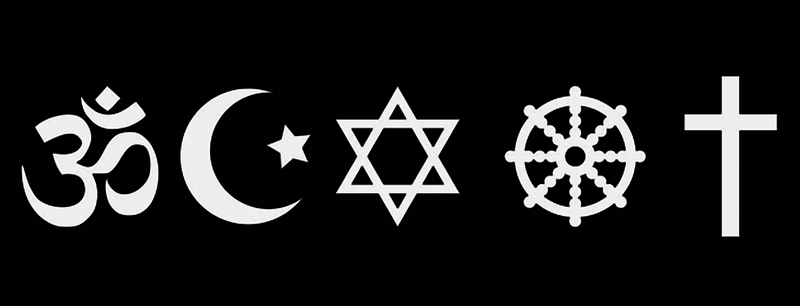
The spiritual realm of humankind splits into a million suppositions to a million questions that all spin off asymptotically to spawn their very own universes to repeat the practice all over again. Is God of the world or beyond the world, immanent or transcendent, is it everything at the same time but also more than the sum of its parts? Does God come in ones or twos or thirty-three millions? Is the Divine a single entity which subsumes all categories within its being but cannot itself be categorised or corporealised, or even depicted? Or is God to be known and worshipped through an endless revolution of deities which attest to its omnipresence? What is the jurisdiction of the Church and what is the role of the Priesthood? Are spiritual matters to be mediated by the institutions of man or does there perdure the possibility for direct communion with God? How should I live in the here and now and where will I go to in the hereafter?
As opposed to the Pollockian mess up above, all major, and presumably most minor, religions are fairly agreed in their universal and unequivocal condemnation of suicide as an affront to God and that which gifts us with life (the Catholic Church’s present day stance has relaxed somewhat from its classical viewpoint). From the Mahabharata to the Koran, the Talmud to the Bible, suicide is denounced formally, or interpreted thusly.
There are a number of exceptions and interdictions: self-immolation by a widow after a husband’s death (Sati, Hinduism), a slow starving-to-death at the end of life, now outlawed but formerly considered sacred (Sallekhana, Jainism) and the ritual honour suicides associated with Samurai and some other groups (Sepukku, Bushido/Shinto). These are, however, aberrations with specific stipulations and lie far from the settled land of common credulity. For religion, suicide is perceived as an impingement on what is seen to be sacred and a trespass on holy ground.
Suicide for the Believer
Contrasting with how the world’s religions largely view suicide, the very act of believing in a higher power may aid a person suffering from depression or suicidal ideations. Such belief manifests itself in how one views the world, how one interprets society, and how a person comes to terms with where they fit in within the great scheme of things. Faith is also often, but not always, embedded within a complex web of social norms, group dynamics and fixed patterns of behaviour. Whether religion as a socio-celestial experience or as a lived secular environment carries greater weight is rather hard to pinpoint, but regardless, the research generally suggests that religion will have a net positive influence for a person pushed to the brink.
That there may be some positive correlation between religion and suicide is not a new conjecture. Emile Durkheim in his seminal work Le Suicide of 1897, which is considered the first methodological study of a social fact, came to the conclusion that Protestants commit suicide at a higher rate than Catholics and Jews owing to lower-levels of social integration and control among the former. The crux being that stricter norms and greater social immersiveness may actually ward off certain tendencies particular individuals are prone to when left to their own devices.
There exist a number of criticisms of this assertion. Firstly, there are the age-old problems of sociology: structure and agency and the relationship between the macro and the micro. Protestants, for instance, may commit suicide more often than Catholics at a macro-level, however the claim that denomination specifically has a significant bearing across the board at a micro-level may be wholly unfounded. For instance, Protestants may work in certain professions more than Catholics, or engage in different pastimes, or grow up in different social classes, and these may be the real root causes of the divergence (for more on the vagaries of sociology see macro and microsociology and Simpson’s Paradox).
Secondly, Catholics may simply report suicides less than Protestants on average, which would beg subsequent questions as to why this would be the case.
Thirdly, Durkheim’s study centred on the Germanic world and so any broad sweeping claim apropos Catholics and Protestants would require an equally-broad expatiation of the interplay between religion and society across countries and regions.
Religion as a Protective Force
Irrespective of how religion styles itself (with important caveats), it has been linked positively to suicide prevention in many cases in the literature. In addition to the modalities of integration and social control elucidated by Durkheim, commitment and belief are also essential elements. To put it somewhat obtusely, belief is universal to religion, and the condition of being in faith and what this engenders can provide the believer with a greater buffer against suicide.
Faith and belief, for better and worse, are extremely powerful forces for the person that holds them in head and heart, and at their most transcendent and circumscriptive, puncture the whole of existence with the twin talons of totality and teleology. All is subordinate to a single ultimate story that one believes speaks the truth of the world. This imbues the universe with a certain moral power that Durkheim believes exists as a reality for the believer beyond the borders of the self proper, and not merely as a sense of certainty or assuredness contained within.
In the literature (I attach a number of studies, reports and articles which can be easily accessed), this moral power is generally, although not always, seen as bequeathing hope in times of despair, structure and order when things are seen to be falling apart, and a means of contextualising the sort of problems that may swallow the self but diminish in the light of an all-encompassing whole. Religious believers have been shown to be less likely to have a history of suicide and frequent religious service attendance has been linked to long-term protective benefits against suicide.
It should again be impressed that with religion we see a number of elements which interpenetrate one another and may act in concert — belief in a transcendental idea, social participation, adherence to a moral code, group norms — and whether the interaction between these various features is crucial or whether one especial feature is of particular benefit is unclear. I would suggest that in cases of what may be called public spirituality, where believers attend a church and practise their faith out in the open as it were, the group (congregation/friends of faith) and that which bonds the group (faith) are largely inseparable and probably work in tandem. For religions and individuals which inculcate the importance of directly communing with a higher power on one’s own, belief and its attendant moral code is more likely to be of major importance.
How we get to this point with religion being a net protector against suicide is extremely important. Be that as it may, it is a point that has been established to be true more often than not. For greater clarification, we need to move to context.
The Dark Side of Religion
All Big Others — symbolic orders which reside in and between individuals, mapping the seas of inter-subjective relations — think ideology, think worldview, think language, think ism — contain almost boundless potential for harm and destruction owing to their very power and pervasiveness. Anything which casts itself as the mediator of meaning for society and its members will naturally possess vast potential for both good and evil. And, according to contemporaneous conventional wisdom, religion is top of the pile
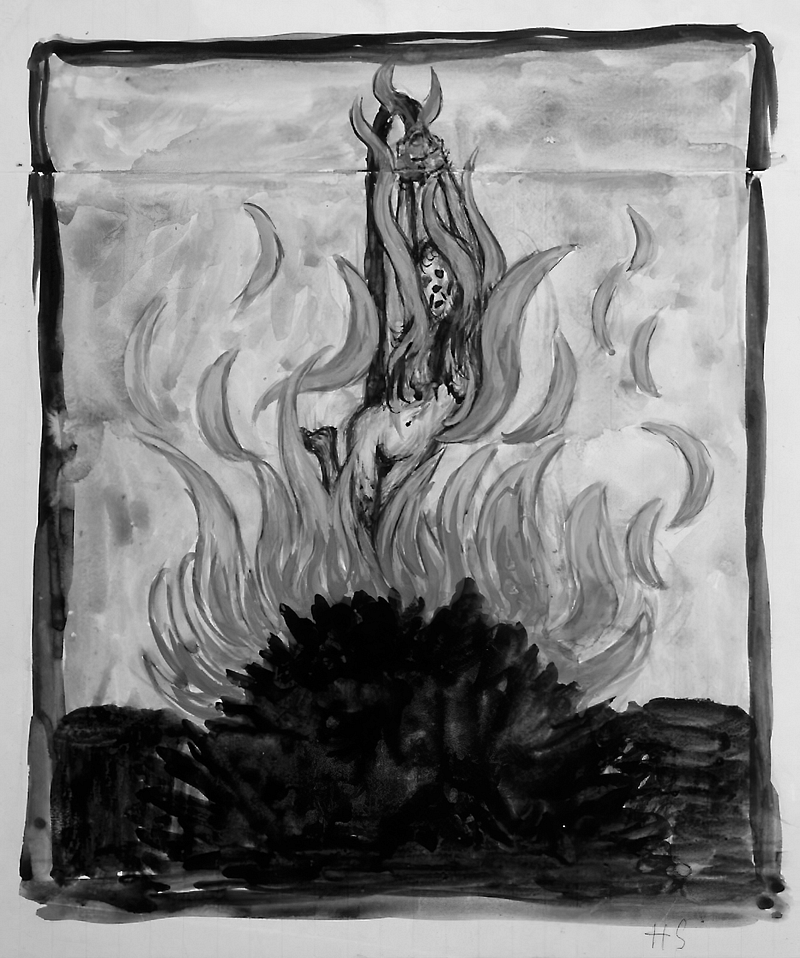
Religion promulgates codes of ethics and moral standards with the authority of the divine, and so in the wrong hands or minds, wickedness receives the numinous seal of approval. The sort of ataraxis, spiritual durability and social stability linked to religion at its best may be quickly flipped on its head when a member of the flocks errs. In such cases, a member of the LBGTQ community, a ‘fallen’ woman in some societies, a disobedient wife, divorcees, and a whole manner of other believers who go against the grain may quickly feel the full weight of the tyranny of cousins and the social power of scripture.
LGBTQ young adults who grow up in a religious environment have been shown to suffer from suicidal thoughts and attempt suicide more frequently than other LGBTQ young people. The evidence suggests that members of such communities who hold religious beliefs will experience shame rather than hope, persecution as opposed to protection, and a general feeling of diremption as the eyes of the whole look down upon a part of their being with contempt and castigation.
This is the flip side of the power of religion, and it may be that context is all when it comes to how one’s faith will affect a troubled soul. As there is such a thing as the tyranny of cousins, there is also the tyranny of the self, which may be characterised (among others) by excessive isolation and introspection, a hyperabundance of self-criticism with a deficit of that which looks back at the self from beyond the self — to give context, offer assurance, provide guidance, and merely present the other side of the coin. This need for someone or something to turn to, from within or without, is very real and religion can bring the sort of support and meaning that can ground a person socially and psychologically, offering something like a psychic anchor to cling to and hold you fast in stormy seas. Conversely, the firm soil of religion at its most life-affirming becomes a swamp when at its most repellent, serving only to magnify a person’s imagined failings from on high and bury a person ever deeper in depression and self-loathing.