
Suicide
‘People rarely bring flowers to a suicide’ (JN)
It is the dreaded S word.
The one banned from all conversations except those that only happen because of it.
The one that causes grown people to cross the street to avoid encountering someone they know has been touched by it.
The one that is preceded by bold-letter warnings and followed by a list of useful helplines.
As if it is a contagious disease that spreads by the mere mention of it.
It is how humans deal with what scares them the most.
By avoiding it.
Shoving it into the obscure corners reserved for abnormal.
That which is different, unusual, odd, disturbing.
From which normal citizenry ought to be shielded.
By any means.
Including evading the fact that more people end their lives each year.
For decades.
According to some sources, ever since the 1950s.
Especially young people. Those under 25 years old.
Despite an ever-increasing number of prevention measures, initiatives and the likes.
Suitably merchandised and heralded across endless news portals and social media platforms.
To ensure anyone who has bought the t-shirt, pinned the ribbon, splashed the hopeful slogan across their profiles feels good.
For having done the right thing.
From a safe distance.
Any closer risks being disturbed.
By the sad realities of broken lives, sliced arms and carved insides.
Remains of the desperate attempts to be seen. To be heard. To be held.
As a human being.
It is how the circle closes.
Nothing confirms to those who wrestle with suicide, either directly because they are contemplating it or indirectly because they have lost someone to it, that they are indeed abnormal, then keeping a veil of silence and secrecy over it.
Exactly as they have suspected all along.
That they are in the clutches of something so abhorrent, so contrary to human nature that it must remain hidden from the rest of humanity, except on rare occasions when it is permitted to be mentioned in strictly controlled conditions.
While the suicide prevention day is on.
At the meetings of support groups for those who have lost someone to suicide. Held after hours in secluded rooms of otherwise unremarkable buildings. Attendance permitted by invitation and only to those whose suitability for attendance has been assessed at a prior interview. Complete with the signing of a silence and confidentiality agreement.
No wonder the majority of those that suffer the most only rarely, if at all, reach out to helplines and similar aids created for their benefit; … help is only a phone call or a text away.
They have long learned what it really means.
Providing they manage to wait for however many minutes it might take for someone to answer;
- well-rehearsed responses from kind-hearted volunteers at best,
- involuntary commitment to psych wards, harsh drugs, and busy, detached psychiatrists at worst.
Either way, at the end of it all, they are inevitably returned to the very hell from which they have been trying to escape to start with.
As David Foster Wallace aptly wrote; Make no mistake about people who leap from burning windows. Their terror of falling from a great height is still just as great as it would be for you or me standing speculatively at the same window just checking out the view, i.e. the fear of falling remains a constant. The variable here is the other terror, the fire’s flames: when the flames get close enough, falling to death becomes the slightly less terrible of two terrors. It’s not desiring the fall; it’s terror of the flames. And yet nobody down on the sidewalk, looking up and yelling ‘Don’t!’ and ‘Hang on!’, can understand the jump. Not really.
None of this is to condemn.
I am only too aware that I also behaved in a similar manner.
Until I lost my only child to suicide.
Like most people who never came face-to-face with it, the mere mention of suicide, even if only in the context of a book, a movie, or a news item, used to send such fears down my spine that the change of subject happened almost automatically.
I remember talking to my daughter about Michael Jackson. Amy Winehouse. Robin Williams. Marilyn Monroe. Saying how deeply sorry I felt. Struggling to understand how anyone with access to the best doctors and therapists money can buy still decides to die.
I remember repeating the popular cliché — suicide is a permanent solution to a temporary problem, quietly thinking to myself best not to dwell on the subject too much. In case it plants some ideas in my daughter’s mind. Just in case.
What a fool I have been!
My apprenticeship started the day I was told that my daughter suicided.
Suddenly it was no longer something that, however tragically, happened somewhere else. To someone else. I was no longer afforded the luxury of passing a few well-meant but essentially superficial comments about the tragedy of it all before switching to some other, more life-like subject. Oblivious to the fact that it was the working of my own mind’s finely tuned mechanism that was shielding me from what it had detected as a threat. Threat to the system. My system.
In the months and years yet to come, I was to learn that it is precisely how it works.
That the real reason most people avert their gaze and speak in hushed tones whenever suicide is mentioned, lays within their own instinct for self-preservation. Humans have evolved by it. The instinct to adapt and to survive. Anything. Those that, for whatever reason and by whatever means, overcome their self-preservation instinct are regarded with a mixture of fear, loathing and reverence.
The realisation affected me profoundly and permanently.
I was and remain ashamed of how ignorant, how unaware I have been. Deeply ashamed.
I set out to learn what I could about it.
I am not sure how it happened, but Erik Medhus’ mum’s book, My Life after Death: A Memoir from Heaven was the first one I came across. After that, I found Jesse Bering’s; A Very Human Ending, David Hume’s; On Suicide, and many others. I even wrote to a couple of contemporary authors. None responded.
I continued to read. Philosophers, theologians, novelists, poets. Stoics, Camus, Schopenhauer, Young, Watts, Plath, Sexton, Rumi, Beauvoir, Levé, Dazai.
I have read some of their works before.
But it was like I was reading them for the very first time.
I realised that I see it all through a new lens. One I never had before. The one my daughter had given me.
Like all things worth having. It came from her. With her.
I cried bitterly while watching The Sunset Limited, The Bridge, My Brother Jordan ,What Dreams May Come, Jessica’s Tree.
Jessica’s story touched me especially.
I recognised some of my daughter’s traits in Jessica. The bubbly, outgoing personality. Attempts to reach out. The scar. The faint, hardly noticeable tiny scar on Jessica’s right cheek. Oddly similar to the one on my daughter’s face. I could hardly believe my eyes. I asked a close friend who has known my daughter since she was born to watch the film. She was as surprised as I was when she saw it.
I wrote to the young woman who made the movie.
She never responded. Perhaps it was my wording. Maybe I came across as a strange, foreign woman. Or the young filmmaker was too busy. I just wanted to have a chat. About Jessica. How she got her scar. My daughter walked into a rose bush when a toddler.
Slowly, painfully, I was starting to realise that the prevailing (our time’s officially endorsed) view on suicide has far more to do with making people feel good about themselves than with understanding suicide.
Let alone helping in any meaningful way.
Understanding precedes helping.
Any meaningful help, help that makes a tangible, lasting change, can only come from understanding. Understanding requires paying attention. Closely. Patiently. Over a period of time. Despite the challenges. It means genuine and sustained human engagement. Not something achievable by ready-made help/chat lines. They are, however, excellent for citing them as proof that — we have done all we could to help.
A line I was starting to hear more and more often.
From my daughter’s friends and acquaintances. Including those, my daughter had asked for help in the last few days of her life. Their families. Medical professionals. Police officers. The Court officials. The volunteers at the suicide-prevention programmes. They all kept repeating the same mantras; suicide is nobody’s fault, everyone has done all they could to help, every parent has done their very best.
I could not help but ask myself — how is it then that more and more young people, those under 25, die by their own hand each year? If everyone around them has done their very best to help. It made no sense to me. No sense at all. Except as self-soothing and self-exonerating justifications, that I had no stomach for.
I tried to voice a different view.
That facing the facts is essential. However harsh they might be. The harshness does not make them any less true. Only less palatable.
That insisting on truth shows respect for all those who have died for wanting to live.
Those that have asked for help.
From parents, partners, friends, medical professionals.
Including the obvious truth that some parents may not have done their best. Worse yet, they may have caused the harm.
That it is not always enough to simply repeat the same over-used phrase; just talk to someone. Because some people, like my daughter, have tried and tried hard to talk to someone.
But my efforts were in vain.
When it became evident that it is only a wall of silence I am meeting, I turned to writing.
At the time, I was desperate enough and naïve enough to remain oblivious to an unspoken and unwritten but powerful social rule — the parents who have lost their children to suicide are expected to keep their heads low and their mouth shut. Not ask questions. Demand answers. As I insisted on doing. Causing discomfort to some. Outrage to others.
I was neither then, nor am now afraid to say what I strongly believe — that the loss of each and every young person’s life is a tragedy that has happened as the direct result of the complete failure of both of any young person’s most important support systems: their families and their communities.
I wrote An Open Letter, hoping to find at least some answers. From those who had witnessed my daughter’s crisis. Those she had asked for help. The answers I was desperate for. Something. Anything. But silence.
None of the recipients responded.
A few days later, a senior police officer called me. He introduced himself as a Senior Sergeant and then told me that he had called to caution me about writing letters. That charges will be laid unless I sort myself out and leave people alone. They have complained to the police about the letter they have received from me.
I tried to explain that I never meant to upset anyone. Only to talk. Find out what had happened. To my daughter. The truth. That I am very sorry if the letter made anyone upset. That I myself am very upset. Very sad. To have lost my daughter. To have no one to ask.
Ask about my daughter’s missing things.
The diary she kept. Which was discovered and read by her (at the time) partner and his family but was never found amongst her possessions returned to me.
Nor were her drawings, post-it notes with messages she was fond of writing to herself. Not a scrap of paper from the girl who loved writing and drawing and would save such things as a movie ticket. For safekeeping, she used to say.
Ask about the messages my daughter sent. In the last few days of her life. Pleading for help. I had found them on her phone when the police sent it to me. Together with the clothes she wore when she died. Mailed to me in a parcel. My name and address handwritten next to my daughter’s. Both our surnames misspelt.
The Senior Sergeant’s voice cut between my words. It said that it is the standard procedure in these types of cases. That they see it nearly every week, and there is nothing special about my case. The law in this country says that even if someone kills themselves in front of someone else, they are not to blame. It is not their fault. Nobody is responsible for someone else’s life. Remember not to write any more letters or risk being charged.
I felt terrible.
For not have found better, clearer words to explain that I meant no harm. That I only wanted those that were with my daughter, those she had asked for help, to speak to me. Tell me what they know.
I felt terrible for the law too. That there is such a law. Which says it is OK to watch someone suffer and do nothing. I thought that wrong. Very wrong. To tell people that it is OK to not help each other. Even when asked.
It dawned on me fully then.
People, even officials whose job, according to the law, is to find out the truth, are not really interested in the truth. Not the raw, naked version of it.
People cannot live with the truth. Only with the other people. It necessitates a certain level of softening around the edges.
Softening that enabled those my daughter had asked for help to convince themselves that the reason they have not helped her was their lack of understanding rather than lack of care. Lack of humanity.
Even when her messages contained clear, unambiguous words, like, … please help me. Repeated many times.
To the same people, she had helped unreservedly only a few short weeks earlier. When they needed it. Contacted their family. The family of the people who had asked her not to speak to her mother. Sent her on a four-hour drive each way even when she said, … I do not feel fit to drive. As the records confirm.
But the absence of comprehension is much easier to accept than the absence of compassion. Being ignorant does not sound as bad as being cruel.
In the Court of law, the Judge, sitting high on his bench, did not allow anyone to be cross-examined about any of it. Such questioning, he said, might adversely affect the mental health of those questioned. The mental health of the people my daughter had asked for help when her own mental health was deteriorating. In more than seventy messages sent over four days. To no avail.
Not a soul in that Courtroom thought that, in the circumstances, banning questioning was the height of hypocrisy.
Except for my daughter’s only family member. I, her mum.
I kept on raising objections. Voicing concerns. Pointing out unresolved and conflicting evidence. Contradictory accounts the witnesses gave about the events and circumstances leading to my daughter’s death. Asking that the police undertake further verifications. The police have a lot to do and not enough staff, they said. As if the state of police’s resources is something I, or any other grieving parent for that matter, should accept as a mitigating factor for cursory and dismissive conduct.
The Judge and the rest of the legal fraternity kept on listening. Patiently. Politely. Smiling placidly. Billing the hours. Then proceeding as before. As they have intended all along and have done countless times before.
Enacting an expensive and elaborate performance, 19th-century costumes and wigs included, for the benefit of those that can afford it and, to a lesser extent, amusement of the masses.
This time around, the amusement factor was heightened by the appearance of a tall woman speaking with an accent from an obscure part of the world. Refusing to back down even when questioned and reprimanded from the bench in front of the entire audience. Determined not to be shamed into silence. Despite being broken and alone.
When I raised the issue of an inappropriate comment made to my daughter by the doctor she had seen only a few days before she died, it was enough that the fine doctor’s lawyer denied that his client had ever made such a comment, for the Judge to agree.
When I asked what substantiated the decision to dismiss my word and accept the doctor’s one readily, the Judge kindly explained that it is a matter of professional reputation and standing in society.
The professionals have the right to preserve their reputation. The same professionals: police officers, doctors and therapists, who instructed their counsels to request permanent suppressions of their names as soon as they learned that their actions and omissions had been called into question.
Eventually, some thirty-one months after my daughter’s death, the Judge released his Final Findings.
Instead of an objective, fair, and balanced assessment that would have naturally resulted from the rigorous facts finding process the law said should have preceded it; the Findings delivered eloquently worded justifications for dismissing all my concerns and absolving everyone involved from even the slightest accountability.
Despite the abundant evidence showing that my daughter asked for help in clear, unambiguous words and many times during the last few days of her life.
That she had tried to reach out to counsellors and, on the day she died, her doctor.
The last time my daughter used her phone was to call her doctor. The call lasted just under three minutes. The content of it remains unknown. The police never bothered to interview the Medical Centre staff despite my repeated requests. There is no mention of it in the Findings.
Nor is there acknowledgement of the most obvious fact; that multiple opportunities to save my daughter’s life were missed by those that were around her and those she had asked for help.
Irrespective of whether or not they were, at the time, aware of the impact their actions and omissions were having, the fact remains that they ignored pleadings for help from someone whose suffering they have witnessed.
As a result, while they may not have intended or wished for the tragedy to occur, their actions and omissions undoubtedly contributed to it. No amount of clever legalese and elaborate verbal acrobatics can change that.
In the end, everyone left the Court feeling absolved and relieved. The legal fraternity for having dealt with, in their own words, an unusual case. The others, having no need to challenge anything, as they otherwise would if even the slightest responsibility had been attributed to them.
I left the Court too. Thinking how naïve I have been for believing that the truth about the dead would have been more important than the peace of the living.
It transpired that preserving reputations and clear consciences is what matters the most. By any means.
Which always comes down to those ways that society permits.
Because when people lie to the system, they do it to save themselves. When the system enables them to get away with it, not only it agrees with them, but it congratulates them on succeeding.
After all, the dead are eternally and conveniently silent.
For some time after, I thought about challenging the Findings in higher courts.
I sought advice from some of the country’s most highly regarded legal minds. Almost all confirmed they could easily see where I was coming from. Spoke about other parents who battled for years for the truth about their children’s deaths to come out.
Children who suicided in police custody. In the care of mental health wards. To no avail.
It is the system, they said. How it works. You can’t change that.
I no longer had it in me to try to explain that every system can be changed.
Or that I never sought to change the system.
Perhaps one day, someone might realise that the system not only can, but must, be changed. Hopefully, before too many young people die.
All I wanted was for the truth about my daughter’s death, her desperate pleadings for help to be recognised. By the legal system of the country she was born and died in. To acknowledge that people did not care to help her when she asked. Nobody could claim to not have understood please help me repeated over and over.
Around the same time, I thought about writing a book. Like many whose insides have been hollowed by loss, I, too, was starting to feel compelled to tell the story.
My daughter’s story.
Let her voice be heard. It is all she ever wanted. For someone to hear her.
Thinking it might help me start, I got in touch with some local writers and journalists. We met one afternoon for a coffee and chat. They listened politely and sympathised readily. Then said, … here in New Zealand, we cannot bring ourselves to hear what you have to say. It is too harsh. Sorry. I never heard from any of them again.
I remember thinking, on my way home, that no change ever comes from complacency.
If only those things people can bring themselves to hear are allowed to be said.
Later that night, I concluded that it no longer matters. That they are probably right.
Even if I somehow manage to write it all as it deserves to be written, nobody would ever publish it. They cannot afford the risk, while I cannot afford the softening around the edges.
Then, one night between talking to my daughter like she is in the room with me, crying, and reading our old texts, I stumbled upon an online suicide forum(s).
At first, I thought it must be some sort of hoax.
It was not.
The forum(s) was populated and frequented by real people.
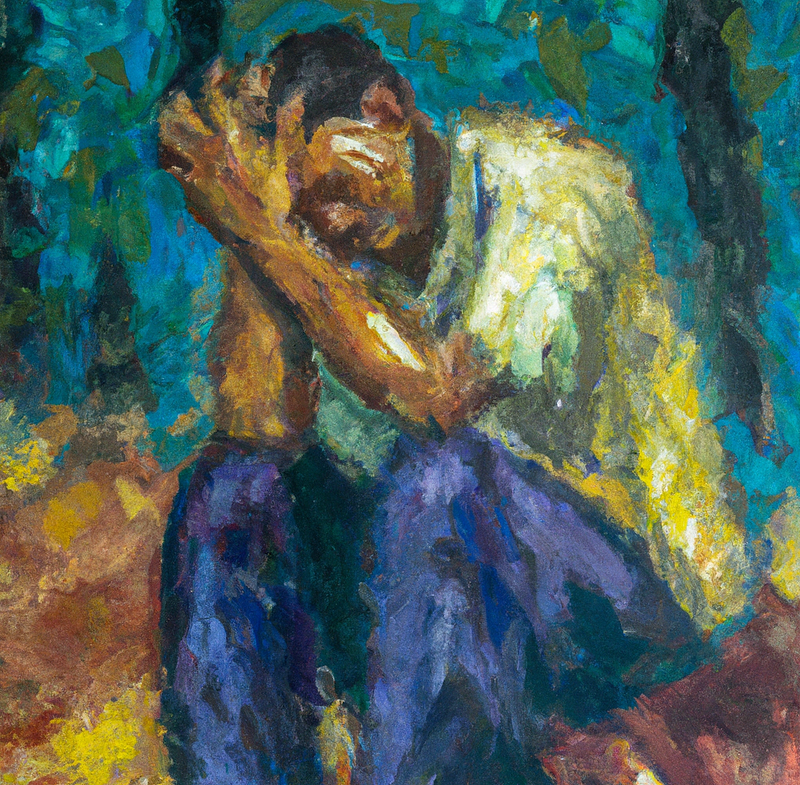
Some still in school. Some as old or older than me. Some barely literate. Some with advanced university degrees. Some unemployable. Some employed in professional roles. From all corners of our little blue planet.
Wrestling with the same wish — to die.
Sharing the same loneliness of not being able to talk about it in real life without being patronised, dismissed or worse.
Accused of seeking attention.
Like it is somehow wrong to seek attention when one is hurting. Nobody is ever dismissed as an attention seeker when in physical pain.
Regardless of its cause.
A drunk driver bleeding after a crash is assisted in the same manner as someone having a heart attack. Without the accusation of being attention seekers.
Only the suicidal are expected to help themselves, even in an acute crisis, then blamed if they fail to survive. Their deaths frighten and inconvenience the living in the manner no other deaths do.
I joined the forum(s).
Not because I needed any advice on how to swiftly and certainly end my life.
I joined because it was the first time I came across a place where people talk openly about their sufferings and their struggles. As horrific as they are. Without the softening around the edges.
The edges of abusive childhoods. Broken relationships. Failed businesses. Unhelpful mental health services. Dismissive families. Uncaring, manipulative partners. Invalidating friends. The debts. Poverty. Unemployment. The struggles. The marginalisation. The loneliness. The isolation. The emptiness. The shame of it all.
The invisible world of otherness.
The world I was becoming increasingly familiar with. On many levels.
As I was becoming familiar with silence.
However kind and well-intended some people were, there was inevitably a limit to their time and patience.
As the psychiatrist I once saw said, … there is an appropriate time for grieving. Back then, I still had the energy to ask; how long would he deem appropriate to grieve the death of his own child. The psychiatrist did not have an answer. I did not think he would.
Because no one has. No one ever thinks about it. Not really. Until it happens. By which time it is too late.
A few months later, I came across an initiative started by grieving parents to ban the forum(s) from existing.
I understood their anger. It is a natural reaction.
An instinctive reaction deployed to mask the brutal truth hidden beneath it.
That the most important question is not why a suicide forum(s) is allowed to freely exist on the internet, even if one is opposed to such a forum(s) as a matter of principle, but rather why their children frequent such a forum(s).
Nobody is born suicidal.
But everyone is born to someone.
To some parents. Placed in their care.
What have they done or allowed to have happened to those children to make them join suicide forum(s)?
This is the real question. The question people cannot bring themselves to hear. The question I could not stop asking myself.
The suicide forum(s) gave me a window into the dailiness of the suicidal. Together with the vocabulary to match.
I found myself wishing that at least one of us had come across it earlier. Much earlier.
If it was me, I might, (just might), have learned how to decipher some of the expressions my daughter sometimes dropped, seemingly casually.
Like pebbles by the roadside.
I might have learned that this is a common method devised to test whether those that have proclaimed their unconditional love and care, as I did for my daughter, are even aware of what is really going on in the lives of those they professed their unconditional love and care for.
I might have learned how to respond to those pebbles appropriately.
Ask the right questions. In the right way. At the right time.
I did not.
If it was my daughter, she would have likely struck up a conversation, even a friendship with someone.
As I have witnessed happening on the forum(s).
Many times.
Someone who might have answered the question she had asked her friend, who later claimed to not have been aware of how serious her situation was — whether having suicidal thoughts meant that one is crazy — with some genuine understanding and compassion.
Acquired through bitter personal experiences.
That struggling with suicidal thoughts does not mean that one is crazy. Only human.
Someone might have shared their experiences with her.
Experiences she might have found relatable.
Feel less alone.
Someone might have chatted with her online for long enough to give her a pause.
To reconsider. Even for one more day. Like many did. More than once.
Because there would have always been another chance.
For death. But not for life.
As I was combing through my daughter’s old medical records, the stories and the vocabulary used on the suicide forum(s) helped me understand.
Piece the puzzle together.
Recognise the pattern I had failed to notice.
The pattern none of the mental health professionals she had sought help from noticed.
Perhaps they were not funded to engage at the level required to notice, to recognise the pattern. The pattern of crises that occurred regularly. Even though she had sought their help each time. The help they provided never extended beyond the soothing of the immediate situation. That, I learned, is not uncommon. Once the immediate crisis has been averted, the sufferers are left to fend for themselves.
One night, a girl of my daughter’s age posted a message. She was tying a rope. Testing it for strength.
She was somewhere in New York City. On the other side of the world from me.
I didn’t tell her not to do it. Or any of the expected platitudes she had heard many times before. About the beauty of life and how it always gets better.
I have exchanged a few messages with her before. She was clever, eloquent, sharp. One of those kids that can spot a bullshit miles away. Like my daughter was.
Instead, I asked her what colour is the rope.
Blue, she responded. Sky blue.
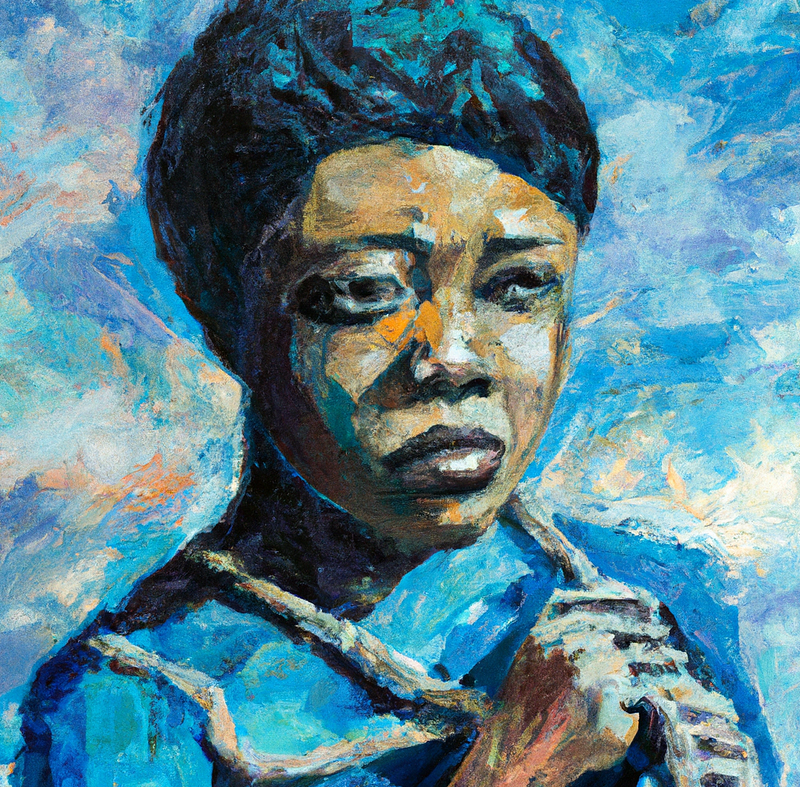
I asked whether it was the blue of summer or winter sky.
We chatted about the sky colours for a few more minutes.
Then I asked her whether she could find her middle finger.
The question surprised her.
Sure can, she responded. Why?
To raise it. As hard as you can. Just try, I typed.
WTF? came back.
Keep it in the air. Against the air. Despite the air. Keep it raised. Firmly. Definitely. It is your finger. As it is your life. The rope would be the same summer-sky blue tomorrow. And the day after. But your finger won’t. So keep it up. Jam it down the throats of the adults who have failed you. Starting with your parents. Scream the bloody place down. Make yourself heard. Make them hear you even if just this once. It was their job to hear you. Their only job since the day they decided to have you.
There was a long silence.
She came back with — you are weird as fuck but you gotta point, followed by a couple of crying/smiling emojis.
No, I didn’t save her life. I only told her what I would have told my daughter if there was a chance.
There wasn’t.
In her last text my daughter told me that everything is ok, that she loves me and added a couple of the same crying/smiling emojis.
While I was still harbouring some hope to prompt at least some, however small, change I tried to engage with suicide prevention organisations and people working there.
At various levels.
Including the relatively newly established public office for suicide prevention as the Government’s response to the ever-rising number of suicides in New Zealand. Lead by an impressively titled official and housed in beautifully appointed offices.
I soon learned that they are not interested.
Not beyond the polite exchange of ordinary platitudes.
The impressively titled official would not acknowledge the reality of the often long wait for someone to answer a crisis call.
Or that the criteria to see a psychiatrist is to have … at least one failed suicide attempt, as I discovered.
Not even when I showed her evidence on my phone. Of waiting fourteen minutes for a response.
She maintained that funding is not an issue and presented several lovely looking brochures. Issued by her office.
I remain unimpressed.
I tried to explain why the outdated fear of normalising suicide by addressing it openly produces the exact opposite result of the one proclaimed as desired.
That it is counterproductive to treat suicide as a scary taboo.
That such an approach only marginalises further those affected by it and their families.
That suicidality is the symptom, not the cause, and that attempts to treat the symptom by pulling someone from the window ledge only to place them back into the situation they are trying to flee from is not much help. Because it will only be a matter of time until they return to the same or similar ledge.
Eventually, I gave up.
It was as they said, no one wanted to hear what I have to say.
Including the obvious fact that a persistent increase in the number of young people’s suicides clearly indicates that none of the current approaches is working as intended.
That a new approach is needed.
One that starts with first and foremost trying to understand suicide as a uniquely human trait.
Neither a scary taboo nor a romanticised struggle. Rather a fact.
That some people struggle with suicidal thoughts. Sometimes for years.
Like some struggle with some other health conditions, or simply conditions of being human.
That there is neither shame, nor glory, nor revenge in it.
For one cannot experience any of those when dead.
At least as far as we know.
That practical, meaningful help must become available and accessible to all.
Not only those that can afford it.
And not only for as long enough as it takes to pull someone from the ledge.
Because the decision to die is still a decision, only the one that must not be made out of desperation. For it is irreversible.
Lastly, seeing that there is no piece of earth anywhere for either of us to lay our heads on, a virtual place became the only option.
I established a memorial site in my daughter’s memory.
A couple of months later, the learned members of the same legal fraternity I have encountered during the coronial proceedings attempted to have it closed or at least censor it. As they see fit. On account of not upsetting their clients.
If I could still remember how to laugh, I would have laughed.
Admiring the resistance of the human instinct for self-preservation. By any means. Including extinguishing the last remaining flicker of light in someone’s life. As my daughter’s site is in my life. It is all I have left, my words and my memories.
But I no longer remember how to laugh. Only how to cry. For us all.
I do not claim to either have all the truths or understand everything. Only that this is what I have witnessed. What I have lived. That is all.
Suicide does not mean there was no killer. (Anonymous)
Thank you for reading.
Editorial: If you are experiencing thoughts of suicide or self-harm, we encourage you to contact the National Suicide Prevention Lifeline 1–800–273-TALK (8255). This lifeline is free and confidential. It is open 24 hours a day and provides support, information, and local resources to anyone in suicidal crisis or emotional distress and those around them. Call for more information or visit www.suicidepreventionhotline.org.