
Suffering and the Art of Living — Buddhist Teaching
The Second Arrow and Poetry for Modern Life
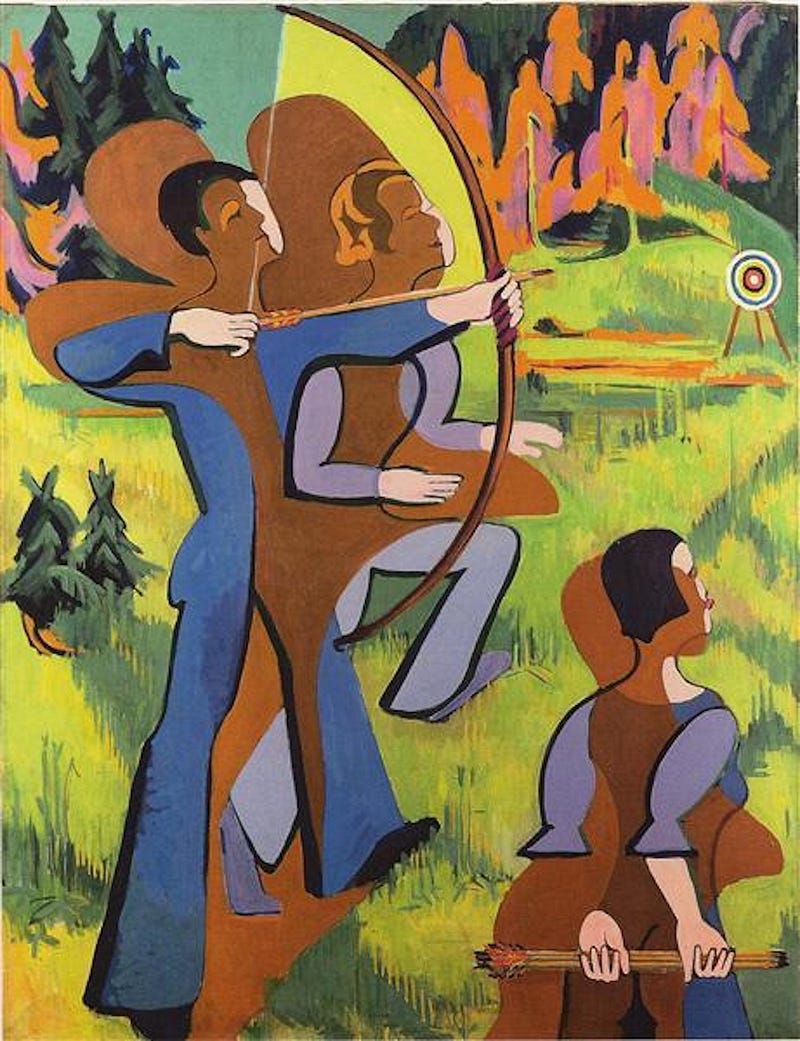
Is it even appropriate to think (or say) words like happiness and suffering in the same sentence? To start, let’s distinguish physical pain from suffering by turning to a well-known Buddhist parable (The Dart of Painful Feeling).
The Second Arrow — Buddhist Teaching
The Buddha taught his followers, “Monks, when the uninstructed worldling experiences a painful feeling, he sorrows, grieves, and laments; he weeps, beating his breast and becomes distraught. He feels two feelings — a bodily one and a mental one. Suppose they were to strike a man with a dart and then strike him immediately afterward with a second dart so that the man would feel a feeling caused by two darts. So too, when the uninstructed worldling experiences a painful feeling, he feels two feelings — a bodily one and a mental one.”
The Buddha continues,
While experiencing that same painful feeling, he harbors aversion toward it. When he harbors aversion toward painful feeling, the underlying tendency to aversion toward painful feeling lies behind this. While experiencing painful feeling, he seeks delight in sensual pleasure. For what reason? Because the uninstructed worldling does not know of any escape from painful feeling other than sensual pleasure. When he seeks delight in sensual pleasure, the underlying tendency to lust for pleasant feeling lies behind this. He does not understand as it really is the origin and the passing away, the gratification, the danger, and the escape in the case of these feelings. When he does not understand these things, the underlying tendency to ignorance in regard to neither-painful-nor-pleasant feelings lies behind this. …
On the contrary, “when the instructed noble disciple experiences a painful feeling,” explained the Buddha, “he does not sorrow, grieve, or lament; he does not weep beating his breast and become distraught. He feels one feeling — a bodily one, not a mental one. Suppose they were to strike a man with a dart, but they would not strike him immediately afterward with a second dart so that the man would feel a feeling caused by one dart only. So too, when the instructed noble disciple experiences a painful feeling, he feels one feeling — a bodily one, and not a mental one.”
The Buddhist teacher and nun Pema Chodron writes in Welcoming the Unwelcome that the Buddha’s main concern was always to help people become free of suffering.
“With the understanding that our suffering originates from confusion in our mind, his objective was to help us wake up from that confused state. He, therefore, encouraged or discouraged certain forms of behavior based on whether they promoted or hindered that process of awakening.”
The first arrows of life are not necessarily avoidable.
This is why so many people throughout history have pointed to the notion that life is hard (and painful at times). The Franciscan priest and writer Richard Rohr frequently says, “If we do not transform our pain, we will transmit it in some form.” The question, then, might be how does one accept the facts of life without making things worse for themselves? What is the wisest response for you amid life’s trials or triumphs?
Poetry & Pain
Sometimes the best we can do with these questions is to turn to the poets and artists. Someone who was no stranger to the suffering of life was the poet Charles Bukowski. He is known today for his dark style of poetry.
In his poem, The Laughing Heart, Bukowski writes,
Your life is your life. Don’t let it be clubbed into dank submission. Be on the watch. There are ways out. There is a light somewhere. It may not be much light but It beats the darkness. Be on the watch. The gods will offer you chances. Know them. Take them. You can’t beat death but You can beat death in life, sometimes. And the more often you learn to do it, The more light there will be. Your life is your life. Know it while you have it. You are marvelous The gods wait to delight In you.
Final Thoughts
Life has a way of dealing us all harsh truths. The theologian and writer Richard Rohr explains in his book Adam’s Return, a book about initiations and rites of passage,
It is finally all about one thing: What are you going to do with your pain? Are you going to blame others for it? Are you going to think that it has to be fixed? As the Buddha is supposed to have said, “Pain is part of the deal”! No one lives on this earth without it. It is the great teacher, although none of us want to admit it. If we do not transform our pain, we will transmit it in some form.
The opportunities for acceptance, surrender, or letting go are endless. The writer Joseph Campbell explained in his classic, A Hero with a Thousand Faces, that one must participate joyfully in the world's sorrows. Although one cannot cure the world of sorrows — one can choose to live in joy. The warrior's (or Hero’s) approach is to say “yes” to life.
Thank you for reading; I hope you found something useful.


