
Suddenly Blind: “I Thought My Life Was Over, But it Had Only Just Begun”
Making the best out of adversity
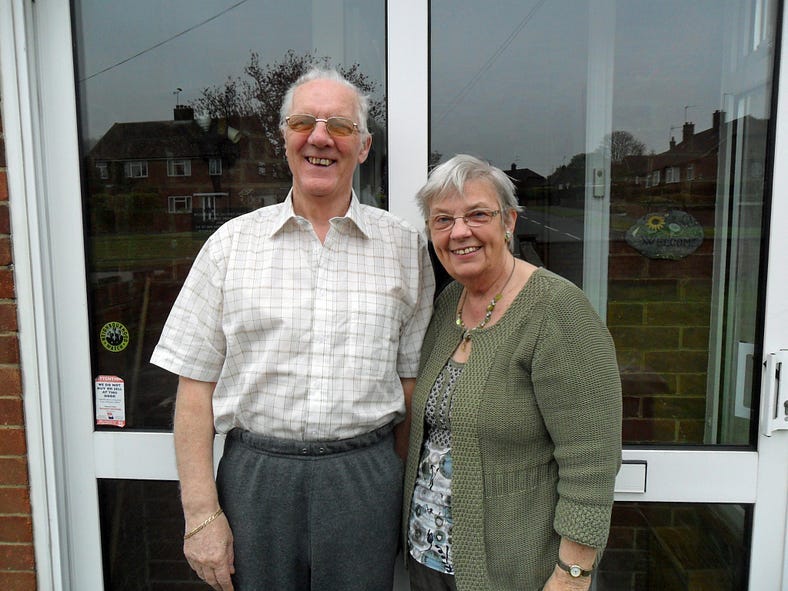
It was June 1994, and as taxi driver Jim Giffen dropped a client at the railway station, he noticed he couldn’t read the train times. Within hours, he’d been declared 75% blind, and his life was changed forever.
Ellen’s story
I gasped in horror at what Jim had just told me: “You couldn’t see properly, so you drove home anyway?” I was in a state of disbelief. He’d just travelled 44 miles with dodgy vision. The whole situation was alarming. I just hoped the optician could sort him out. Our livelihood, and possibly our happiness, depended on his sight.
“Get yourself down to the opticians right away!” I ordered and off he went with his tail between his legs. The news that came back was not what we wanted to hear. He was rushed to the hospital for an emergency appointment with an eye specialist. He had macular degeneration, a common complaint in elderly men. But Jim was just 55 years old and had lost his central vision. Only 25% sight remained, and he couldn’t possibly continue driving.
Our life changed in a whirlwind. We ran a taxi business together, sharing the paperwork and the driving equally. But the situation forced me to take on all the driving whilst Jim tried to tackle the paperwork. It didn’t go very well — he was making double bookings because he couldn’t see what he was doing!
Jim had spent his whole working life behind the wheel, and I wasn’t used to intensive driving. So when suddenly Jim was unable to drive, and we had a full schedule of bookings, it fell on me to do airport runs in the middle of the night, followed by early morning runs to railway stations. It was exhausting, my sleep was severely disturbed, and I was at the end of my tether.
Jim was depressed and confused, struggling to see what the future held for him, so I was making all the decisions, trying to keep him upbeat and positive. It was an almost impossible task. The experience was a huge shock for us both, and all he could see was what he couldn’t do. I was desperately trying to make him see what he still could do!
I was organising both our lives — trying to manage the business and sort out the double-bookings, doing all the driving, day and night, and making sure Jim had something to keep his mind occupied while I was on the road. After a month of living like this, I felt I was heading for a nervous breakdown.
“Let’s go on holiday,” I said to Jim in July. But he felt he couldn’t go on holiday because he couldn’t see. I was worn down and frustrated, so I said, “Well, I’m booking a holiday, and you can either come with me or stay at home!”
That was the turning point when we really started to look at what Jim could do, rather than dwell on what he could not do. We went on holiday and he went swimming. It gave us time to get a sense of perspective.
When we got home, we talked about how to proceed with the business. We prayed hard and decided to sell it. This was a big decision, but we sold it to someone from the church and I carried on driving for the new owners until I retired.
We received a huge amount of support from friends and family, but some of the greatest encouragement came from the church. They accepted us just the way we were, and they have been like our family. Not everyone in life is so understanding.
The other group that has been immensely helpful is the Blind Association. Whilst the church helped Jim to think beyond his disability and take on tasks which he didn’t think possible, the Blind Association organised all manner of activities to get us out enjoying ourselves and living a full and active life.
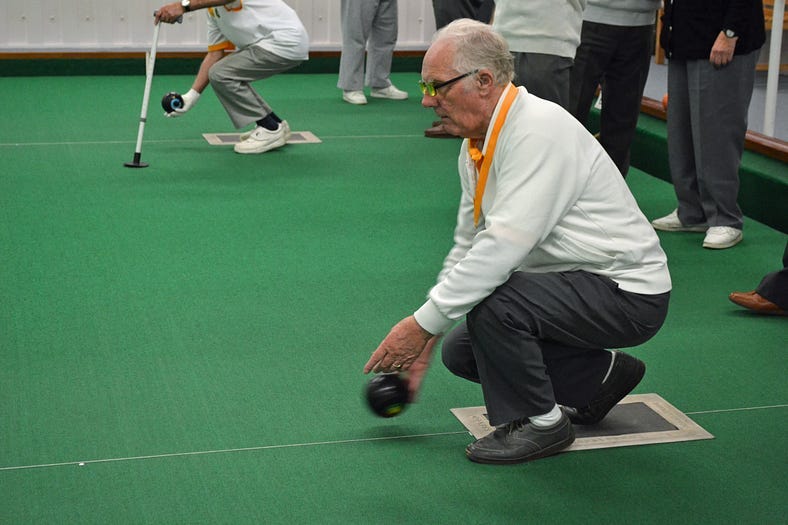
My life has changed completely and I’ve learnt new skills and gained a lighter outlook on life. I became a helper with the Blind Association, so whilst Jim was playing bowls, I was trained to mark. I also received training on how to guide blind people into seats. The blind club members have a great sense of humour and it helps enormously to laugh at yourself and laugh at the things that go wrong, rather than cry about them.
On one occasion, a man telephoned the bowls club, inviting us to play darts, and we accepted enthusiastically. I asked who wanted to be on the team, and a group of four blind people put their names forward. When the organiser realised the team was blind, he was astounded. ‘They’re all blind, and they want to play darts?’ he said in disbelief.
Apparently, the original invitation had been intended for us, the volunteers, not the blind people. But the game went ahead and our team won! It was wonderful!
Then last year, I helped Jim and the blind club get the train to Gateshead. It was quite an ordeal. At Baker Street station, we had to go upstairs and downstairs, as there were no lifts. The escalators can be difficult to use and there were 11 blind people and almost as many helpers, so we were quite a big group.
One member of our group can’t see at all, and Jim can only see slightly at the sides. Other members can see straight ahead but have no peripheral vision. It all makes travelling across London quite a challenge!
When we’re not gallivanting around the country, the church is such a huge support network for us, so it’s quite uncanny how we came to be Christians.
We moved from Scotland to Buckinghamshire in the late 1960s and we weren’t Christians then, although we did go to church occasionally. When we came to Buckinghamshire, I was made so welcome at our local Baptist Church that I accepted the Lord as my saviour there and then. If we hadn’t moved, I don’t think that would have happened. Our faith and the support from the church has been a huge help in enabling us to adjust to the situation.
The funny thing is, we’ve both done more with our lives since Jim was blinded and have a better lifestyle now — we spend more time together. Before, it was work, work, work. We were like ships passing in the night. We’d never played bowls and Jim had never read a book in his life, but now he listens to audiobooks. This new life has brought us closer to God.
Jim had given up teaching in Sunday School because his work commitments, but God put him back there. He feels it might have been God saying, ‘you need a rest!’
Jim’s story
Before losing my sight, driving was my life. My career had been in driving buses, lorries, and private taxis, and I couldn’t see myself doing anything else.
In June 1994 I was driving taxis and I drove to London to put an old man on a train to Glasgow. On arrival, I couldn’t read the train time board. But my client found his carriage and took a seat. I drove back from London and explained to Ellen what had happened.
She sent me to the opticians, and from there I was rushed to an emergency hospital appointment. When the consultant telephoned me at home later, all I wanted to know was whether I’d be able to drive.
He said, ‘You need 75% sight to hold a driving licence and you’ve only got 25%.’ I dropped the phone and collapsed in a heap. When Ellen telephoned, I was in a daze and could hardly speak.
I felt like my life was over and there was no point going on. All I could think, was how I couldn’t do anything and I had no future. But Ellen wasn’t having it. She spurred me on not to give up on life. So I went out that night and ate with friends, despite feeling awful.
I was trying to find purpose in my life and joined the Blind Association. Just three months after I lost my sight, I started playing outdoor bowls. Then I started horse riding at a special facility for disabled riders in Naphill. I still do horse riding and stable management and I’m about to take grade 5 in stable management which gets me a bronze medal.
I also took a course at Milton Keynes College specifically to help blind people use a computer. I achieved CLAIT level 1 and 2 qualifications, and a special tutor taught me touch typing.
The church was hugely supportive and I took responsibility for the community bookings of the church hall and helped put together the church magazine. It all gave me a sense of purpose.
Our church minister helped a lot, and I was invited to teach in Sunday School because I’d done it in the past. Our minister said, ‘It doesn’t matter that you can’t see. Everything you need is in your head’. So I gave it a go.
I was fine telling the children the Bible stories but I was lost afterwards when the crafts and activities took place. So I gave it up after a while.
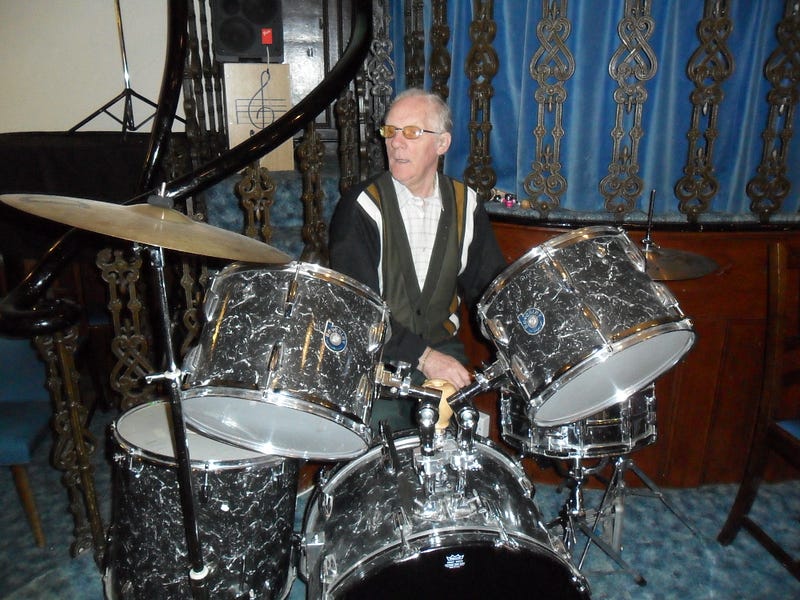
But it didn’t end there — I wanted to join the Church music group and they said they hadn’t got a drummer so I went out and bought a drum kit, then joined the group. I have an aptitude for rhythm and have been banging on pots and pans since I was a kid, so I really enjoy it.
I’ve done all sorts of activities with the local Blind Association: trout fishing at Maidenhead Lake, rock climbing with RAF Halton, and I drove a racing car around Brands Hatch. That was scary — I just had to trust the person in the car to tell me where the bends were. There were four cars doing the lap with no overtaking.
Winning a darts tournament against people who could see perfectly was a definite highlight! The losing team was very put out that a group of blind people had beaten them.
We’ve been on theatrical tours with Vocal Eyes, too. They arrange outings to shows for blind people. A couple of hours before the performance, you go backstage and feel the outfits, see how the stage revolves…
I remember going to see Les Miserables and feeling the guns, the carthorse, the barricade and barrels. Then we went to the performance and had earphones with a person explaining what’s happening on stage. It’s called audio-description and some theatres offer it for selected productions.
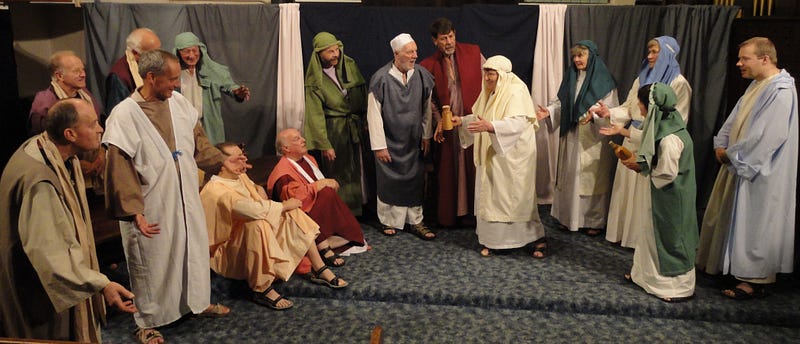
My next big event is a production by our church drama group, following the lives of Jesus’ 12 disciples. The play is called ‘Just Ordinary Men’ and I play the part of Andrew.
I’m so glad to have had our church’s encouragement — I’m not sure how we’d have adjusted to the challenges if we didn’t have our faith in God and support from the church.
I’ve never felt resentful towards God about it. Why does anything happen? We don’t ask, ‘Why me?’ I mean, what’s special about me? Why shouldn’t it be me? God could heal me if he wanted to, but it’s not the right time. We just pray for direction from God and wait for our prayers to be answered.
We couldn’t have got through it without our faith and the support from the church. Our faith has been a huge help in enabling us to adjust to the situation.
© Susie Kearley 2023. All Rights Reserved.
More from me…


