
Successfully Taking Your Classroom Online For ‘Social Distancing’ Reasons
There’s a right way to make the transition smooth and seamless
As a few of you have hopefully noticed, I’ve not been my usual productive self on the platform lately. This is because I’ve been working ‘round the clock writing lesson plans for the upcoming semester of new online courses I’ll be teaching.
I’ve already taught three online courses so far this year, but many more are needed as schools remain closed, and parents get more desperate for their kids to be more frequently educated.
Originally this was just a problem unique to China, but over the last week, I’ve been getting calls from friends all over the world who are just now entering the same situation.
The teachers most vulnerable to the current climate are the ones who teach in after-school centres that suddenly don’t have a business. Anyone teaching drama, dance, or running clubs like mathletes or debate are about to get a lot more desperate, and many of them don’t know where to turn.
Luckily for them, I’ve been teaching Chinese kids online for two months. I’ve made all the mistakes, and now I can provide guidance to the teachers around the world who are only just getting started.

Getting Started
You may already know this, but the best app for teaching online is Zoom.
Zoom is a reliable video conferencing app that you can use to teach your students from anywhere in the world.
The app has a rubbish whiteboard feature, but you can link your iPad and use that as a whiteboard for a far better teaching experience.
You can use Zoom for free for classes under 40 minutes in length, but you’ll need a subscription for longer ones.
Expectations
The key to leading a successful online class is making sure that your students know what’s expected upfront. Here are the expectations I set for all my students taking online classes with me;
- The teacher should instruct the students to signal whenever they want to speak. This is because talking over each other in a conference call is pandemonium. You may need to ask them to audibly signal you, rather than with a hand gesture, because you can’t always see every student on the screen at once.
- Students should be encouraged not to turn off their cameras except during break time.
- They should do their homework and communicate any problems with their homework over your chosen communicate app before the day the homework is due.
- Students should clearly indicate to the teacher whenever they don’t understand what’s being taught, rather than sitting in silent confusion.
- Students shouldn’t correct each other while another student is reading aloud; this is the job of the teacher.
- The best student is a note-taking student. Students should write as many things down as possible, especially everything from the whiteboard and any good advice given by the teacher.
- Students shouldn’t do homework from other classes, play games, or browse other apps while taking class. They should try their best to remain focused.
It’s important to remember that despite your best intentions, even the best students can lose focus after taking enough classes online.
It gets tough for them to stay motivated without the organic energy that usually fills the classroom, so it can take extra work from the teacher to provide enjoyment and motivation for the students.
The Activity Book Strategy
One way I like to keep the kids engaged is by making and providing them with exciting and colourful activity sheets for them to fill out during the lesson.
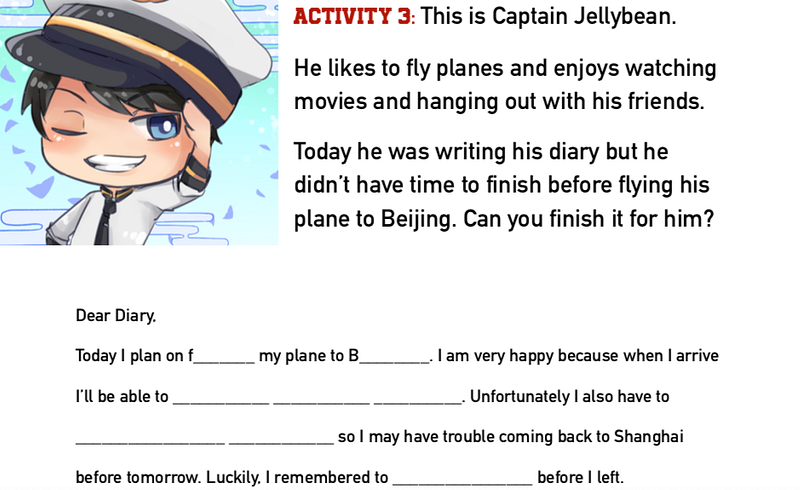
Making and distributing activity books takes away the necessity to write everything onto the virtual whiteboard.
Whenever the internet is lagging, or the students aren’t entirely sure what you’re talking about, they can always turn to their activity book. The book will always have the lesson and objectives clearly written out for them and space to write their answers.
The activity book strategy also ensures that you’re keeping good pace while you’re teaching, because you can clearly see how many activities are left until the lesson is meant to end.

It Just Feels Wrong
It can be difficult, even for the best of us, to pull off an online lesson. This is because lessons taught online feel so different from lessons taught in a conventional classroom.
Pacing can feel off, and it can feel impossible to handle your students and keep their energy up. Teachers are telling me that they don’t know what to change, because the only thing wrong is the feeling.
Don’t beat yourself up for that, there’s a good reason why the feeling is off.
It’s because there’s a vibe and an energy that lives in the classroom, and it’s really difficult to create that online.
There’s also a lot of extra time that you may not have planned for, because a normal class leaks a lot of time to general chit-chat that can’t happen in an online class. Because of that, I’d recommend planning for more activities than you’d normally think you can fit into your class-time, just in case you teach everything and there’s still 30 minutes left on the clock at the end.

In Conclusion
Motivation for students to engage in online classes tends to decrease over time, and it can be difficult to convince parents to invest the same amount of money they’d normally charge for an in-person class.
I’ve found that setting expectations, making strong plans, and providing home-made activity books can make the switch to online a lot easier.
Setting expectations ensures that students behave appropriately, even after they’ve started losing motivation.
Proper planning ensures that the quality of your lessons stay consistent, especially if you write them while also making activity books.
The books are a great resource because they provide a second focal point to keep the kid’s attention. They also provides more clarity for kids when they don’t understand the task, and can be a point of reference when either you or they are experiencing a laggy internet connection.
It takes extra effort to plan an online class, and it can feel tempting to change your standards or lower the amount you charge parents. But while we try to navigate our way through this difficult time, try to keep your resolve and remain planned and calm.
For now, online is the only way forward for many of us. The path to profitability and ensuring that you have market share is adapting to the new way and ensuring that your classes are enhanced by being online, rather than hindered.
Make the parents and students feel that being taught online is a good thing and even an advantage, and you’ll keep their confidence in your ability to deliver. But most importantly, keeping your customers happy and confident in your ability will ensure that they stay willing to keep paying your cheques until the crisis is over and schools are back open once again.


