
Submerging Myself in Abraham Verghese’s ‘The Covenant of Water’
The epic story of three generations of Kerelans blessed and cursed by water
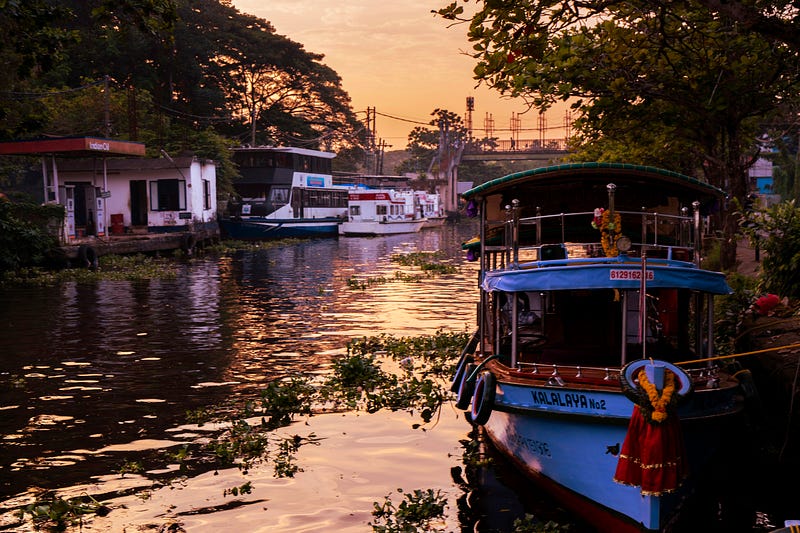
“Ammachi, when I come to the end of a book and I look up, just four days have passed. But in that time I’ve lived through three generations and learned more about the world and about myself than I do during a year in school. Ahab, Queequeg, Ophelia, and other characters die on the page so that we might live better lives.” ― Abraham Verghese, The Covenant of Water
Thus spake Philipose.
In the above passage, he addressed his young mother who did her best to infect him with her love of reading.
She succeeded.
Along with the family’s inescapable connection to water, she transmitted to her son an insatiable imagination allowing him to live inside a story as if it were happening to him.
And like Philipose, I’ve been living inside this story as if it were happening to me. Unlike Philipose’s experience, this 715-page novel took me well more than four, or even eight, days to read.
My sister and I read it together, comparing notes via text messages. And since I have more free time than she does, I slowed way down to savor the story and the eloquent way it’s written. I still finished it first and had to bite my tongue or sit on my hands when she texted me with questions. Except to say, Keep reading, you’ll get there!
‘Covenant’ is not just Philopose’s story.
Like Moby Dick, Doctor~writer, Abraham Verghese’s, latest contagious novel, The Covenant of Water, lets us live through three generations of lives blessed and cursed by the waters that sustain and maim them.
There’s Ammachi, who begins the book as a child bride of twelve, sailing to the water-bound estate of her future husband and in-laws. This is the household she grows up in and with, befriended by a mother-in-law she comes to adore. Her forty-year-old husband gives her space and time before they grow together as a couple and have a child.
That child is Philipose.
He in turn falls in love with his childhood artist friend, Elsie, only to lose her to the ravages of river currents they depend on for sustenance and transport.
But not before she gives him a child. The beautiful and talented Mariamma, who fulfills her grandmother’s vision when she becomes a doctor.
Water, literally and metaphorically, braids its way between these lives, giving here, and taking there, linking them all as Verghese writes, “inescapably by their acts of commission and omission,” such that, “no one stands alone.”
Not just a presence, not just a metaphor, water itself, in its many guises, is a full character in this book. Villainous at times, heroic at others, but one that never stops flowing through our awareness.
“The water she first stepped into minutes ago is long gone and yet it is here, past and present and future inexorably coupled, like time made incarnate. This is the covenant of water: that they’re all linked inescapably by their acts of commission and omission, and no one stands alone.” ― Abraham Verghese, The Covenant of Water
Written as a tribute to his biological mother and beloved south Indian homeland, Kerela, Dr. Veghese weaves medicine into the story as well.
The water connection, including the family’s mysterious propensity to drowning, is not just a dangerous fascination. ‘The Condition,’ as they call it in the story, is an actual diagnosis–acoustic neuroma AKA vestibular schwannomatosis–a brain stem abnormality that Mariamma makes her life work.
And like any good mystery writer, Dr. Veghese leaves clues for us to discover and detect as the story progresses. Leaning into the narrative, putting puzzle pieces together, scanning for missing links, and guessing how the circles connect make The Covenant of Water a reader-author partnership in addition to a riveting read.
The Condition is not the only disease explored in this medical novel.
The doctor characters encounter, diagnose, and treat so many diseases and injuries, that I wondered if the story was created to parallel Dr. Verghese’s knowledge and experiences. I pictured his outline going from illness to illness rather than inciting incident to midpoint to climax and resolution.
Reading the acknowledgments set me straight. Even though he’s a professor of infectious diseases at Stanford University, Dr. Veghese had a lot of help, medical as well as editorial.
The debilitating and disfiguring disease of leprosy features fully in Covenant, second only to the Condition. I’m used to thinking of leprosy the way I do polio, as a tragedy of the past. And while it certainly was that, 120,000 to 130,000 new cases of leprosy are reported every year in India, which has 58% of the world’s victims, according to Wikipedia.
I knew leprosy was bad news, but until reading Covenant, I had no idea how bad, or exactly how it disfigured its victims. Dr. Verghese paints those details with both broad and finely pinpointed brush strokes.
Stubby fingers and blunted noses characterize a disease that prevents patients from feeling physical pain while inflicting them with plenty of emotional pain and stigma. Yes, there are now medications to treat the disease if caught early, but it can incubate for up to thirty years in a person not aware they have it.
In the words of a less-skilled writer, these passages might be off-putting or even repulsive to a reader. But Dr. Verghese’s poetic prose allows us to experience his fictitious patients from the inside out and through the eyes of the ones who love them.
In last May’s interview with NPR’s Ari Shapiro, he said, “I think the medicine and the writing sort of play off each other. You know, what I find is that the writing helps me to process and digest some of the things that are most troublesome that I witness at work, so it’s a method of — as Richard Selzer, one of the original doctor writers, used to say, it’s a way of taking the world in for repairs.”
Taking the world in for repairs.
I don’t know about the world, but I found reading The Covenant of Water to be a healing experience. Could that have something to do with water itself? It’s vital, connecting, healing nature?
As if in answer to this, Dr. Verghese wrote, “Such precious, precious water, Lord, water from our own well; this water that is our covenant with You, with this soil, with the life You granted us. We are born and baptized in this water, we grow full of pride, we sin, we are broken, we suffer, but with water, we are cleansed of our transgressions, we are forgiven, and we are born again, day after day till the end of our days.” ― Abraham Verghese, The Covenant of Water
We do more than read prose like this. We drink it in.
Marilyn Flower is a sacred fool who writes fiction, poetry, and blogs, inspired by the practice of SoulCollage®. Her books: Developing Characters: Fun Ways to Cast Your Fiction, Creative Blogging, Bucket Listers. Follow her Sacred Foolishness or SoulCollage® for Writers, and Stay in touch!


