
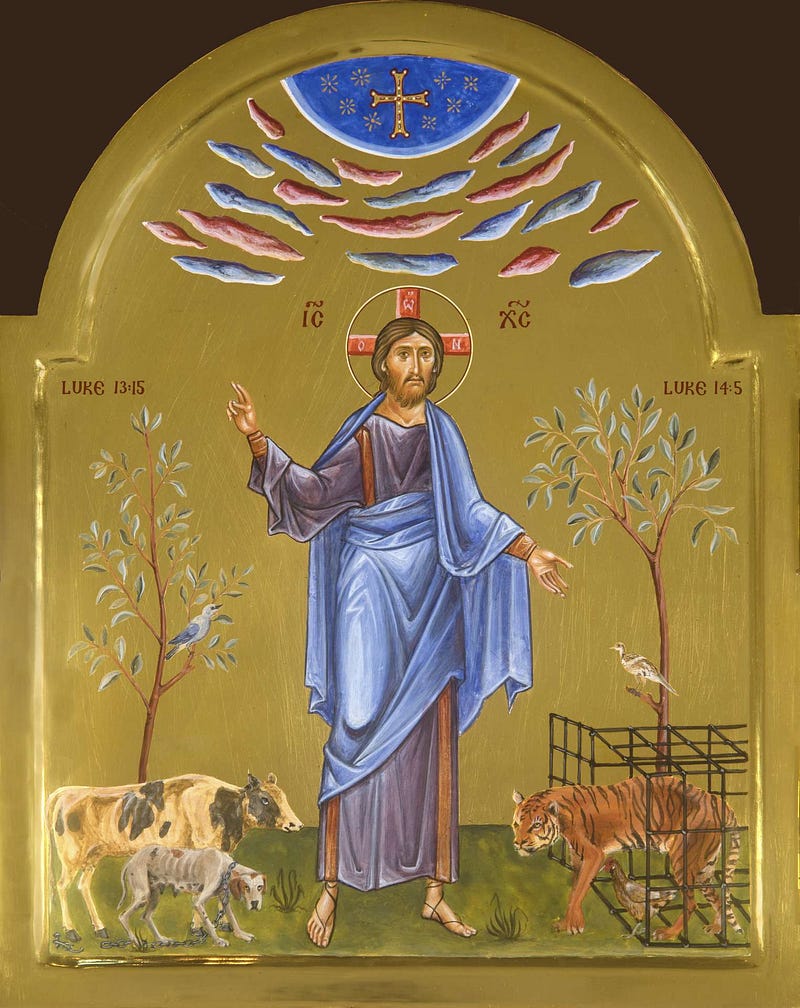
Subjectifying Nature Through Orthodox Christian Theology
Moving from Objectification Toward a Sacramental Union
Humanity’s sin at the fall was not only disobedience toward the Creator but transgression toward creation.
Instead of viewing non-human creation as something deeply treasured by God (in fact, created before humanity), the first humans took from it with haste, thinking only of their own benefit without considering the desires of creation itself.
In his Chapters on Knowledge, St Maximos the Confessor encourages us to seek union by honoring the agency of the Other. The desire to learn, to multiply oneself, and to improve oneself is not inherently bad — but when it comes at the cost of taking what is not yours to take, we assault Creation.
The Orthodox Christian tradition points us toward a sacramental union with non-human creation by moving away from the objectification of it to the subjectification of it.
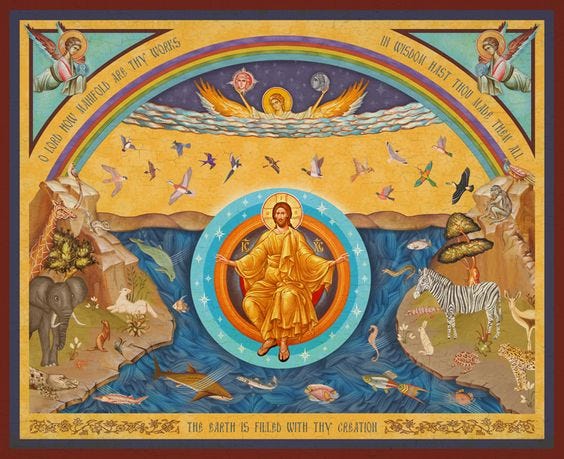
The Orthodox View of Dominion
The modern Christian tradition is often saddled with the accusation of sowing the seeds of the contemporary ecological crisis.
The basis of this claim is found in Genesis 1:26, in which God declares,
“Let [humans] have dominion over the fish of the sea, and over the fowl of the air, and over the cattle, and over all the earth, and over every creeping thing that creepeth upon the earth” (King James Version).
Many English translations use the controversial term “dominion” in this verse, which to some means an unalienable human right to take from nature what they desire, even if it results in nature’s suffering. Indeed, it is “man’s right” to take from nature that plummets them (and the rest of creation) into darkness.
This issue of man’s authority also puts those at the margins of society: women, children, people with disabilities, people experiencing poverty, and even the planet at the mercy of the passions of the one with ‘dominion.’
The Orthodox Christian tradition, however, does not entertain this totalitarian perspective on ‘dominion.’ To practitioners, creation is meant to be marveled at.
In his Hymns on Faith, St Ephram the Syrian recalls the Biblical narrative of Balaam and the talking donkey,
“When that donkey unexpectedly spoke, Balaam saw the miracle, but completely failed to marvel” (Hymn 41:7).
In the Orthodox tradition, creation is a miracle that we often fail to marvel at. The seas, the mountains, and the plants and animals are just as remarkable as a talking donkey, but we fail to stand before it in wonder. Later in his Hymns, St Ephram tells us,
“The Creator has not troubled / Himself to create something / That could not contain him.” (71:7, 71:19),
pointing to his presence in all created things.
St Basil, another patristic writer, says,
“One grass, even one blade of grass is sufficient to occupy all your intelligence.” (Hexaemeron 5, pg 71)
The complexity of the natural world and our dependency on it is beyond our grasp; only God can truly grasp it. Just as we see God in our image, we must see God’s fingerprints on the whole natural world. Therefore, to take and consume something from Creation that was not meant for us is not only to assault it but to assault God.
Orthodox thinkers, such as John Zizioulas, call us to be ‘priests of creation.’ This priestly posting goes beyond mere conservation (or, as he puts it, beyond mere “stewardship”); it improves a broken relationship.
Zizioulas also situates humans as uniquely poised to restore the relationship between God and creation, thereby redeeming creation in the process. Affirming humanity’s membership to creation, he writes,
“The priest is the one who freely, as himself an organic part of it, takes the world in his hands to refer it to God and who, in return, brings God’s blessings to what he refers to God. Through this act, creation is brought unto communion with God himself” (167).
Priesthood is a position of service and humility toward a greater other we seek reconciliation with, it is to validate the subjectivity of the Other.
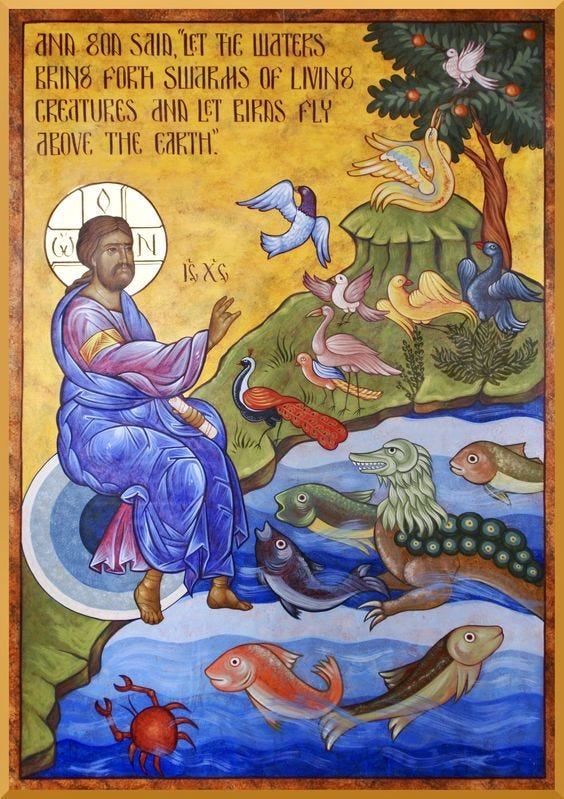
The Case of Potiphar’s Wife: The Objectification to Subjectification of Creation
Humans tend to pluck things we find beautiful from their position in the natural world. Flowers go in a vase, animals belong on a plate, and forbidden fruit is meant to be eaten. To look merely at the veneer of creation, to lustfully gaze upon it as an object to be consumed, is
“like the Egyptian women who laid hold of only the clothes of Joseph and completely missed intercourse with the lover” (Maximos, Louth, p112).
To St Maximos, the sin of Potiphar’s wife is multifold. Beyond infidelity, Potiphar’s wife’s sin was one that disregarded the agency of her slave, Joseph.
She did not see him as a lover but an object. She grabbed a hold of her slave’s clothes, his handsome veneer, to possess him.

Instead of transforming him into a subject, to seek union with a fully realized creation of God, she sexually assaulted him with utter disregard. She failed to protect and show love for the one she had power over and instead degraded him.
As too often happens, the victim (in this case, Joseph) was the one punished (through years in prison) while the perpetrator skates by. This sick, sexually exploitative relationship is not God’s vision for life between humans and the rest of creation, but it is an analogous image of what exists today.
In the Orthodox tradition, each interaction with the material world is an opportunity to intimately and consensually experience ecstatic love with the Divine Other.
When we objectify creation and only see it as a plaything to please the self, we not only punish creation, but punish ourselves. Modern Orthodox theologian Nikos Nissiotis writes that when
“Nature is denaturalized, the man is dehumanized.” (p218)
Ultimately, when we see creation as a mere object to be consumed and commodified, humans also become consumed and commodified. To ignore the agency of nature fractures the agency of humans as well.

Instead of objectifying nature as a dominator, Orthodox theology calls us to subjectify nature through our priesthood, that is, to see Creation as a subject, not an object. Something we have a responsibility to serve, not exploit.
Subjectifying nature goes beyond superficial environmentalism.
Many modern environmentalists still view creation as something to be conserved principally for human enjoyment: to gaze upon its fall foliage, to run across its sandy beaches, or to witness walking around in the wintery foothills.
Indeed, beauty is an important part of appreciating God’s handiwork. However, such appreciation can still lead to objectification. Beauty is the clothes in Potiphar’s Wife’s hands; it’s the bear-skin rug on a cabin floor or the plastic plant on your windowsill. An attempt to capture nature cannot be confused with the love of it.
Nikos Nissiotis writes,
“We do not protect the environment because it is beautiful and useful, but because it is material that belongs to creation.”
Nissiotis encourages us to take ourselves out of the equation, and to imagine a world without us in it. Creation is worth protecting because we have been entrusted with this responsibility by God, full stop, not because it has ‘beauty’ or utility.
Our priestly responsibility also extends to the ‘ugly’ and ‘unuseful’ things, and indeed, those inconvenient things we brought into the world without the consent of creation (like plastic and air pollution).
St Basil poignantly asks,
“Shall we not consider this, that not everything has been created for our stomach?” (pg 71)
“The stomach,” that is, our desires, can be insatiable. We want faster cars, greener lawns, and more steak. But, as we know, so-called “progress” in these areas often leads to animal suffering and environmental degradation.
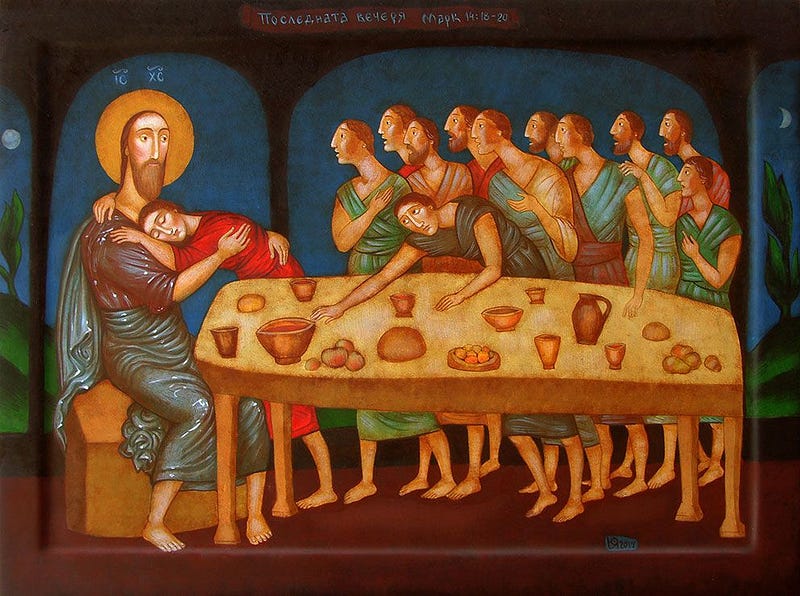
These ‘advances’ require us to prioritize human desires over those of animals and other natural forces.
To continue St Ephram’s metaphor, Potiphar’s wife must have known that her actions would cause Joseph, her slave, to be stripped naked, taken from the little new family he had known, and thrown into the squalid conditions of a cage. Yet, she decided to turn a blind eye and believe the lie that Joseph was hers to do with as she wished.
At the end of the day, animals do not desire to be eaten, and creation does not wish to be stripped of its ability to survive. The world was not created merely for human enjoyment. Speaking specifically to the agency of animals, Pietro Chiaranz writes,
“Animals are not simple decorative elements for man’s amusements” (p1).
Use without consent is assault; the only solution is to see all of creation as subject, not object.
Sacramental Union: The Heart of Coexistence with Animals
Love can only exist between two subjects; otherwise, it is coercion. We cannot serve creation through our priesthood if we believe creation is a mere ‘object,’ a shell void of any interior wants and desires. Instead, true lovingkindness can only be expressed in service to a subject.
To truly love, as God loves, requires restraint. In the Pauline Corinthian correspondence, we are told,
“Love is patient, love is kind… It does not dishonor others, it is not self-seeking… It always protects, always trusts, always hopes, always perseveres. Love never fails” (1 Corinthians 13:4–8 NIV)
Often, love requires abstinence from activities that might bring oneself personal pleasure. In the case of Christ, it means sacrifice of oneself for the betterment of all Others. Chryssavgis elaborates on this ascetic idea on pg 219 in his writings about fasting,
“To fast is to love; it is to see clearly, to move away from what I want to what the world needs…. To see all things in God and God in all things.”
When we abstain from actions we know will cause others to suffer, we can begin a relationship.
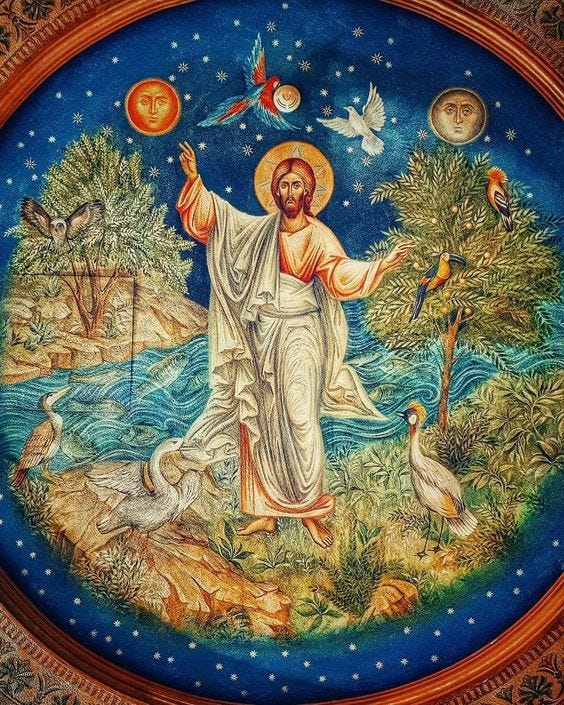
In the days before the fall, animals existed in harmony with humans, neither consuming one another nor being consumed by humans at all. Humans lived a fruitarian diet, consuming only what was ripe on the vines, trees, and bushes. But at the point of our disobedience, we turned our back on animals and plummeted them into lustful sin.
As the famous Modest Mouse song, A Never Ending Math Equation says,
“Infinity spirals out creation / We’re on the tip of its tongue, and it is saying / “Well, we ain’t sure where you stand / You ain’t machines and you ain’t land / And the plants and the animals, they are linked / And the plants and the animals eat each other.”
Disregarding our proper place in the world leads to selfish, carnal treatment of one another, including animals.
We are, of course, not able to prevent animals from eating one another. That ship has clearly already sailed. But because animals are unable to speak, they are unable to voice their protests against being raised for human consumption.
Unsustainable industrial operations have eclipsed what once were small-scale trappings of squirrels and rabbits for sustenance under challenging times, resulting in never-before-seen animal suffering and ecological damage.
What’s worse, it was not enough for us to capture the bodies of animals in the wild for our own survival; we felt the need to genetically modify them and grow them in cages by the thousands so we could enjoy the luxury of “meat” on a daily basis.
The result: the complete objectification of the bovine and poultry body resulting in a total divorce between humanity and animalkind. And we call the arrangement ‘domestication,’ a term eerily familiar to women who are expected to maintain households, grow families, and perform sexually for their assertive male spouses. Such a dance is not a sacramental union; at best, it is coercion. This arrangement is a far cry from God’s original vision in Paradise.
To empty oneself of desires, and to seek instead to fulfill the desires of Others is true love. To pursue another’s passions is to see them as a subject with agency. Sacramental union (that “intercourse with the lover” that St Maximos alludes to), therefore, cannot exist outside of the subjectification of two parties.
Why should Creation be kind to us when we have assaulted it time after time? It is because of our assault on the Tree of the Knowledge of Good and Evil that animals were tormented for our sake.
By affirming the subject of Creation, we are able to serve it as priests and find union with it the way that God already does. James Skedros writes that
“The contemplation of nature is simultaneously an act of seeing God through His creation and experiencing the created order through God.” (P264)
Love is not a mere gaze, nor is it a feeling, but instead it is an experience by which we learn to know God better directly.
Subjectification as a Solution to the Ecological Crisis
In conclusion, we are invited to reimagine our relationship with the natural world, emphasizing a shift from objectification to subjectification of nature, a move from rape to union with creation.
This perspective, deeply rooted in Orthodox Christian thought and exemplified by thinkers like St Maximos and St Ephram, is not merely a theological stance but a practical necessity for addressing the ecological crisis.
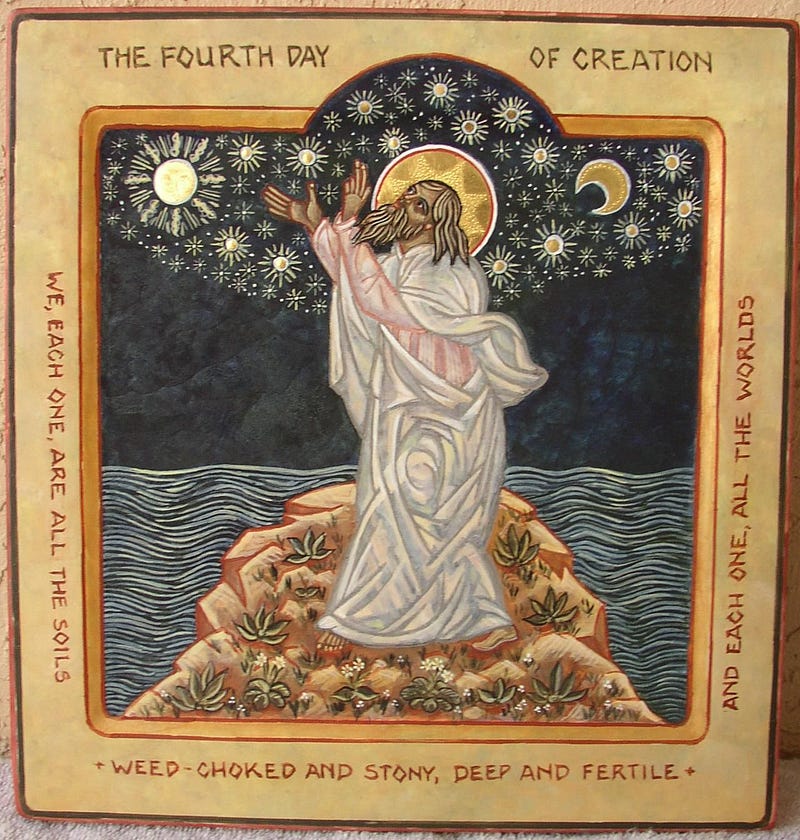
It urges us to see creation as a subject, a co-participant in the divine narrative, moving beyond exploitation to a sacramental union where the natural world partners in our shared existence. This change in perspective is pivotal for the environment’s sustainability and deepening our spiritual connection with the Creator.
The call to view nature as a subject challenges us to rediscover our role as stewards and priests of creation, guided by principles of love, respect, and mutual care. Such a transformation is crucial for the well-being of our planet and all its inhabitants.
Works Cited
Chiaranz, Pietro. “LE SALUT DES ANIMAUX DANS LA TRADITION ORTHODOXE: Le Christianisme Oriental Et Les Animaux.” Bulletin De Littérature Ecclésiastique, vol. 120, no. 4, 2019, pp. 85–95.
Chryssavgis, John, and Bruce V. Foltz, editors. Toward an Ecology of Transfiguration: Orthodox Christian Perspectives on Environment, Nature, and Creation. Fordham University Press, 2013. JSTOR, https://doi.org/10.2307/j.ctt13x0c2x. Accessed 3 Dec. 2023.
Maximus, et al. Maximus Confessor: Selected Writings. SPCK, 1985.
R. W. Thomson, The Syriac Version of the Hexaemeron by Basil of Caesarea [Text], vol. 1, 2 vol. Louvain: Secretariat du Corpus Scriptorum Christianorum Orientalium, 1995.
Skedros, James C. “Sanctity, Asceticism, and the Environment.” The Greek Orthodox Theological Review, vol. 56, no. 1/4, 2011, pp. 259–272.
Wickes, J.T.. (2015). St. Ephrem the Syrian: The hymns on faith.