
Tapping Into The Space Of Creative Discoveries
Taking advantage of the subconscious for creative sparks
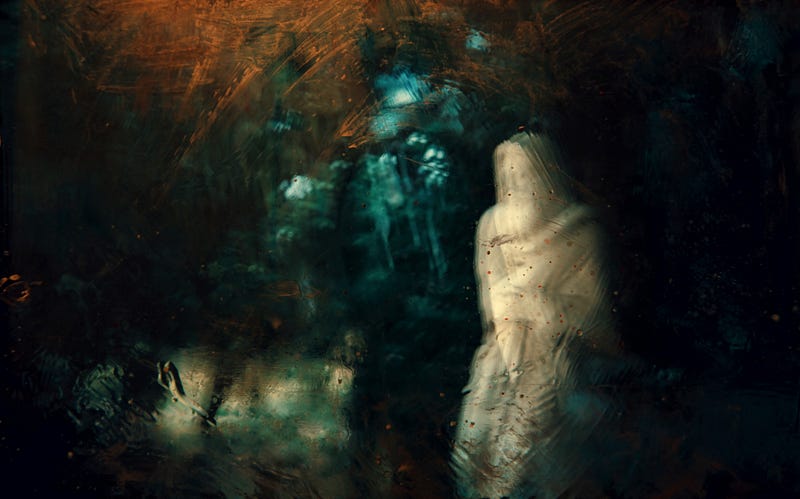
Our brain can function in two modes of thinking — the focused and diffused modes. For better understanding, we can see them as conscious and subconscious thinking processes.
We engage in focused mode when there is a need for conscious effort: learning a new programing language, learning a new language or grammar, solving a math problem, writing about a topic, remembering something, learning a dance movement, learning katas in karate, or reading an article.
When trying to learn a new thing, we do not have any pre-existing neural paths to support us; we have to deliberately and repeatedly cultivate new neural paths.
With regular practicing of the skill — a dance movement or language — it later becomes effortless for us. They would no longer need conscious effort once the associated neural paths had been thoroughly laid; they will be repeated as such by the subconscious until any new modifications have to be made.
The conscious effort or focused mode requires a lot of energy compared to the subconscious or diffused mode.
One might wonder about the tendency to slip into laziness or procrastination especially when we are required to do some focused activity or in beginning a new habit, and this could possibly be due to the energy demand.
And thanks to the subconscious or diffused mode, living would be so much limited and burdensome if we were to always be conscious of whatever we do. For example, consider walking, we aren’t required to be conscious of the walking process, the subconscious can take care of it.
When a student gives their best to learn — through conscious focusing, the initial work of laying new neural paths had begun, but it is not enough; in fact, it is during the periods of spacing out or mind-wandering, that the subconscious can take over and work on the new information, combine it with previous knowledge, make meaningful connections, work it out in a bigger picture and bring more clarity. And for this very reason, it is of importance to have leisure periods.
And so we aren’t being unproductive during leisure time if we had already done our conscious work — with a bit of sincerity, of course; it is just that we are not conscious of what is happening in the background during spaced out periods. It is also a relief to know that we can give our best and trust the restful periods. There is no shame in shutting everything down and letting yourself have a nap or even to go somewhere and sit idle especially when things become hard.
It is of interest to notice that insights, discoveries, breakthroughs, and creative sparks often popup in the subconscious mode during spaced out periods. It is not to say that conscious or focused mode is unimportant, instead the key is to strike a balance between focused and diffused periods.
Now we will look into some of the creatives and scientists who had benefited from finding the right balance between conscious and subconscious modes.
Franz Kafka
Kafka, a chronic insomniac, is said to have written much of his work in a state of lucid dreaming. Being afraid to fall asleep, he often used the time to write fiction.
In that half-asleep-half-awake state, he was able to tap into the subconscious well of creative ideas and at the same time consciously work on it.
Kafka¹ writes, “it was the power of my dreams, shining forth into wakefulness even before I fall asleep, which did not let me sleep.”
“You do not need to leave your room. Remain sitting at your table and listen. Do not even listen, simply wait, be quiet, still and solitary. The world will freely offer itself to you to be unmasked, it has no choice, it will roll in ecstasy at your feet.” ― Franz Kafka
August Kekulé
The chemist August Kekulé, like many others at that time, tried his best to figure out the chemical structure of Benzene; nevertheless, he kept failing despite his efforts. But later, while in a daydream, he discovered the chemical structure of Benzene. The image that came up in the dream, which lead to the discovery, was of a snake biting its own tail.
Let us learn to dream, gentlemen, and then perhaps we shall learn the truth . . . but let us beware of publishing our dreams before they have been put to the proof by the waking understanding. — August Kekulé
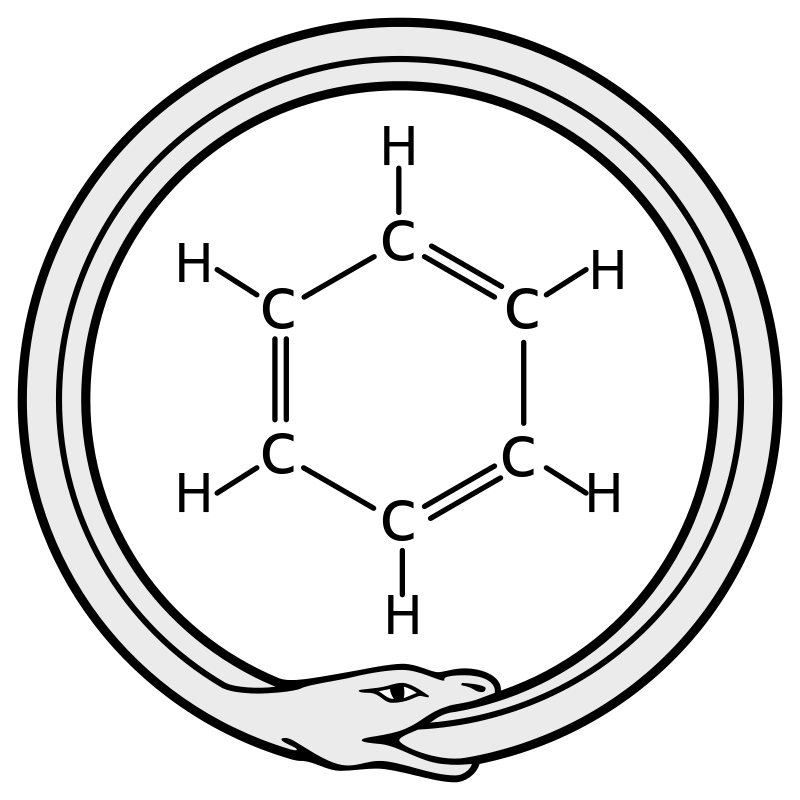
It is unimaginable that mere conscious effort can bring up such a discovery — let alone through the vision of a snake.
Salvador Dali
Salvador Dali, a Spanish surrealist painter, was famous for his explorations into subconscious imagery.
The Surrealists² believed that the creativity that came from deep within a person’s subconscious could be more powerful and authentic than any product of conscious thought. They were influenced by the theories and writings on the unconscious mind by psychologist Sigmund Freud and the groundbreaking studies of Carl Jung.
Surrealist³ artists had their own techniques to tap into the creative possibilities within the subconscious. The technique employed by Salvador Dali was:
He would place a tin plate on the floor and then he sits in a chair beside the plate. He held a spoon with his fingers above the plate. He then allows himself to relax fully and fall into sleep. As soon as he slips into the sleep, the spoon automatically slips from his fingers and fall over the plate beneath. The sound of the spoon striking the plate awakes him with fresh creative ideas to work on.
This is because, during the moments of slipping into sleep, his subconscious mind would be activated. The next task for him is to have immediate conscious access into the mysteries revealed within the subconscious, and for that, he utilized the spoon and plate — as the sound wakes him up.
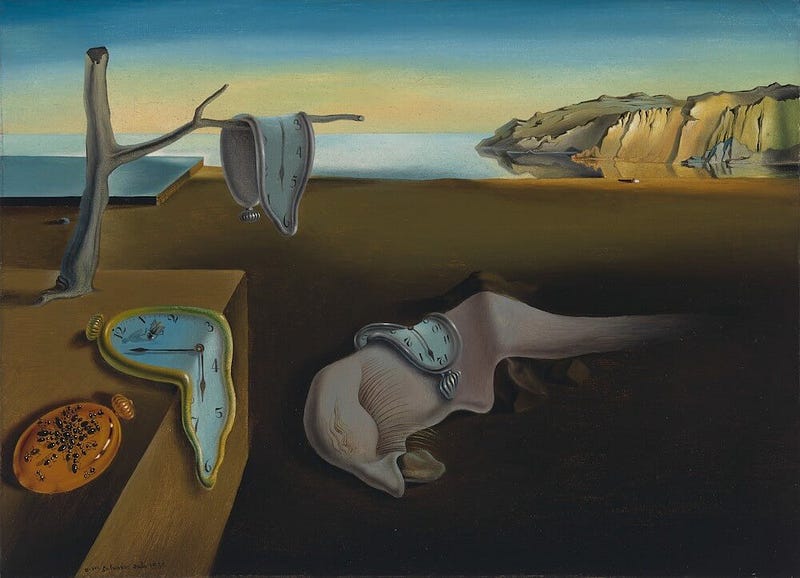

“Give me two hours a day of activity, and I’ll take the other twenty-two in dreams.” ― Salvador Dalí
Ernest Hemingway
Ernest Hemingway, who came up with the Iceberg theory or theory of omission of writing, had a unique writing routine that helped him to take full advantage of his subconscious.
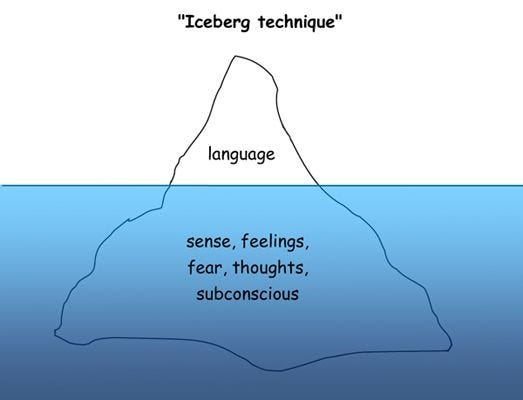
His method was to just write enough for the day and stop it when he had a vague idea of what would come next in the story. He would end with that idea in his mind, but would not write or ponder on it until the next day.
Apart from the advantage of not having to suffer the writer’s block each day, with this method, there was another reason behind adopting this routine; it was to allow his subconscious mind to work on that idea for the rest of the day while he was away from the writing desk.
But do not confuse that he would ponder on that idea for the rest of the day. No. He would not consciously think or worry about it. The reason for this being, his subconscious mind can only take over and work on the idea when he had let go of any conscious effort towards it. And then during the next day when it is time to write, he would have enough possibilities to write on.
…That way my subconscious would be working on it and at the same time I would be listening to other people and noticing everything, I hoped; learning, I hoped; and I would read so that I would not think about my work and make myself impotent to do it. Going down the stairs when I had worked well, and that needed luck as well as discipline, was a wonderful feeling and I was free then to walk anywhere in Paris. -Ernest Hemingway
Useful Referral Links ¹http://www.openculture.com/2017/07/how-insomnia-shaped-franz-kafkas-creative-process.html ²https://www.moma.org/learn/moma_learning/themes/surrealism/tapping-the-subconscious-automatism-and-dreams/ ³https://www.parkwestgallery.com/what-is-surrealism-art/