
Stripped from the land subjected to poverty
The telltale marks of a state against its ‘colored’ people
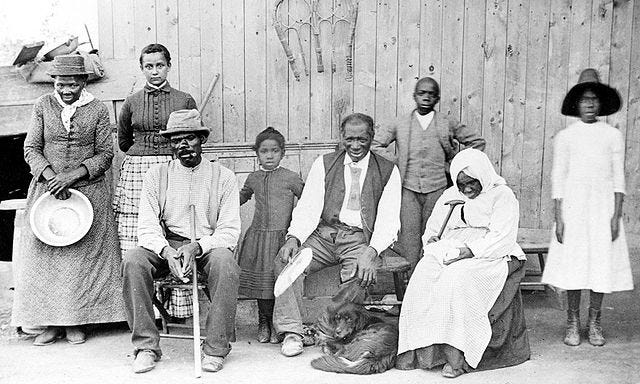

In the deep South, landownership was the ladder to respect and prosperity. It was seen as the means to build economic security and pass wealth to the next generation.
Black families lost land, they lost hope for economic mobility. The losses were devastating for people struggling to overcome the legacy of slavery.
Black families were powerless they couldn’t prevent the land takings. It was the Jim Crow era. A Black person could not drink from the same water fountain as a White person
He had no right to stand up against a White person. How could he claim to have lost land to his oppressor?
Few Black people dared to challenge scrupulous White land takers. Those who tried couldn’t find lawyers willing to take their cases to court, and if they did, all-White juries and judges ruled against them, and if for some reason they won, they were hunted down.
It was perilous, it was precarious, losing land was safer than losing your life. They let the land go.
“As the acres slipped away, so did treasured pieces of family history — cabins crafted by a grandfather’s hand, family graves in shared graves. But “the home place” meant more than just that. Many blacks have found it ”very difficult to transfer wealth from one generation to the next because they had trouble holding onto land,” observed Paula Giddings, a History professor at Duke University.
“The true extent of land takings from black families will never be known because of gaps in property and tax records in many rural Southern counties.” Associated Press investigators wrote.
They had to dig through crumbling tax records, deed books with names torn from them, file folders with documents missing, and records that had been crudely altered.
Working with these, they unearthed a devastating evil trend. A heartrending trend of theft and destruction. Black land ownership was a thorny issue.
The familiar hand of an ugly foe was at play. The tell-tale marks of Senator Bilbo’s brotherhood — The Ku Klux Klan were splattered everywhere.
The Klan made no secret Black people didn’t deserve to own land
“In Jackson Parish, La., 40 years of moldy, gnawed tax and mortgage records were piled in a cellar behind a roll of Christmas lights and a wooden reindeer. In Yazoo County, Mississippi, volumes of tax and deed records filled a classroom in an abandoned school, the papers coated with white dust from a falling ceiling.”
The documents were retrieved by AP investigators. They were destined for shredders and landfills. Forever to be obliterated from America’s living memory.
The AP also found that about a third of the county courthouses in Southern and border states suffered inexplicable fires. Some more than once.
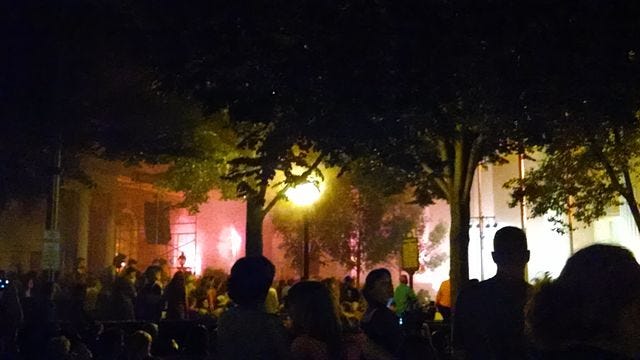

The AP recorded, “On the night of Sept. 10, 1932, 15 White people torched the courthouse in Paulding, Mississippi. Property records for the eastern half of Jasper County, predominately a black neighborhood, were stored at the courthouse.
As the courthouse blazed, records for the predominantly White western half of the county were safe miles away in a different courthouse.
The Jasper County News reported The door to the Paulding courthouse’s safe, which protected the records, had been locked the night before. It was found open the next morning. Most of the records had been reduced to ashes.
Suddenly, it was unclear who owned a big piece of Eastern Jasper County.
Even before the courthouse fire, landownership in Jasper County was contentious. According to historical accounts, the Ku Klux Klan, resentful that black people were buying and profiting from land, had been attacking black-owned farms, burning houses, lynching black farmers, and chasing them away.
In some instances, courthouses did not burn. But mistrust and fear of white authority kept Black people away from record rooms.
Documents were segregated into “white” and “colored.” Elderly black people still remember how they were snubbed by court clerks, spat on, and struck. They kept away from the record rooms.
Lemon Williams, a Black farmer lived in Sweet Water Marengo county Alabama. He was the proud owner of forty acres of fertile arable land. It wasn’t much, but it was enough for a Black person whose ancestors had no right to the land.
Williams looked forward to leaving an endearing legacy to his children.
The farm was rich. He planted and reaped a healthy harvest of cotton and beans. Williams was a third-generation owner. His grandfather had purchased the land immediately after the Civil war — Williams was proud to be his descendant.
“This land, ``is part of our family, treat it like your brother” he would tell his son, who would one day inherit the land.
An evil cloud had other ideas. It was about to descend on the Williams family.
One day in June of 1964 Williams received a letter from the State Lands Division. The letter stated– ‘the Bureau of Land Management had checked the title of the property and, as far as it could determine, the 40 acres belonged to the State.’
In a gruesome turn of events Williams’ family’s original deed which Williams’ grandfather had bought the land for $480 on Jan. 3, 1874, had become obsolete.
The letter said — ‘in 1906, the Federal government had designated the 40 acres as swampland and patented the property to the state of Alabama.’
According to the letter, the Attorney General was now suing Williams and His cousin Lawrence Hudson, who also owned an adjacent 40-acre farm. Both families had to relinquish their land.
The families gathered their children and their deeds and took them to J.C. Camp, a lawyer in Linden, the county seat. Lemon Williams’ son and daughter, Willie, and Inez, recall details of the meeting:
“Camp took our money, took our deeds, put them in his drawer, and promised he’d fix everything,” said Willie Williams. “We never saw those deeds again.”
In 1965, a fire ravaged the Marengo County courthouse. Many records survived; the file containing the Williams and Hudson court case did not. The Associated Press investigators found only the trial docket.
The State Lands Division in Montgomery, however, monitored the case. Letters and internal memos from those files are peppered with references to the Williams and Hudson families’ race.
They show how officials adamantly opposed allowing “the negro defendants” to keep the land, even though they acknowledged in writing that both families could trace their ownership back to 1874.
On April 30, 1964, memo, George T. Driver, a former state Lands Director, wrote:
“The lands are being claimed by Lemon Williams… “a colored man.” A November 30, 1964, memo by William G. O’Rear, Chief Attorney for the state conservation department, refers to “the negro defendants.”
And in 1966, Marengo’s tax assessor noted: “Land Book shows above 40 acres still owned by L.B. Hudson (Black).”
A year later, Circuit Judge Emmett F. Hildreth asked the state to reconsider the lawsuit. Taking the land, he advised “would create a severe injustice.”
Claude D. Kelley, then Alabama’s director of conservation, replied that the state had no intention of dropping the lawsuit because income from cutting timber on the land could be used for State-run hospitals.
The hospitals would close down without timber from the land.
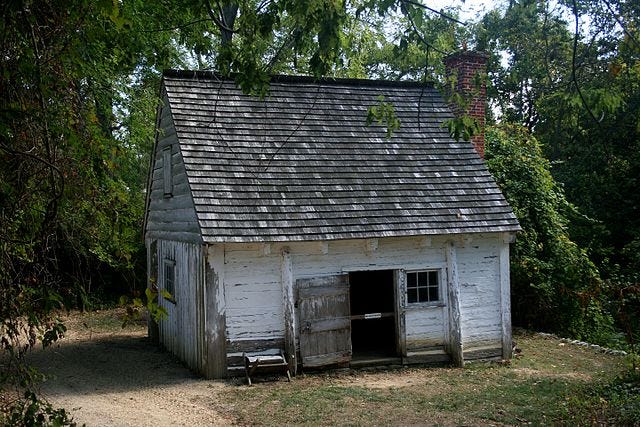
In 1967, Hildreth ruled that Williams, Hudson, and their wives could remain on the land but could not farm or log. When they died, the state would take possession of the land.
Hudson died in 1975 and his wife died shortly afterward, but family members say the state waited to ask their children to leave the farm. They moved to nearby Butler.
The Williamses moved to an acre lot several miles from their old farm after Hildreth’s ruling. For three decades, they pleaded for the land in letters to state officials and received form letters in response.
The vine-wrapped house that was once the center of their farm collapsed. Conservation officials opened some of the areas to lumbers.
James Griggs, Director of state Land, said the dispute was handled properly. “There have only been two owners of the land, the federal government, and the state,” he said.
This is a snippet from the book — YAS Lives Matter: The Narrative of Liberty — A Narrative of Black lives. A retelling of Black history to unveil the cloak of time. A Reconstruction of an altered past bringing back forgotten Black heroes.