Free AI web copilot to create summaries, insights and extended knowledge, download it at here
1499
Abstract
ject and opposite way).</p>
<figure id="36e3">
<div>
<div>
            <iframe class="gist-iframe" src="/gist/jbstevenard/f4082d26502d79893e4962214d3967b7.js" allowfullscreen="" frameborder="0" height="undefined" width="undefined">
          </div>
        </div>
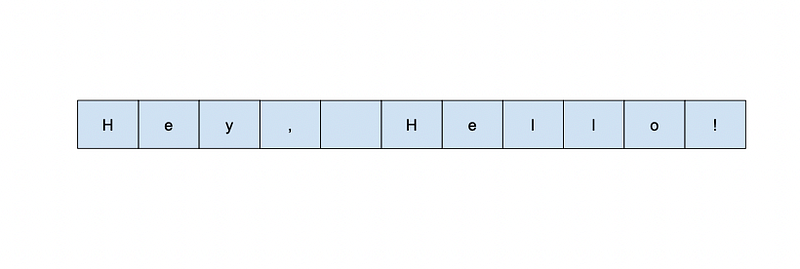
    </figure></iframe></div></div></figure><p id="ece5">Because strings can contain characters of different sizes (English alphabet, Chinese characters or Emojis uses different memory sizes), we cannot directly access each character. Still, there is a simple way to do it using the following extension.</p>
    <figure id="23d3">
        <div>
          <div>

            <iframe class="gist-iframe" src="/gist/jbstevenard/4a9ba0c202905e483950790b604ae942.js" allowfullscreen="" frameborder="0" height="undefined" width="undefined">
          </div>
        </div>
    </figure></iframe></div></div></figure><p id="4f72">You can split a string according to a substring.</p>
    <figure id="9c6f">
        <div>
          <div>

            <iframe class="gist-iframe" src="/gist/jbstevenard/05ea40beff9876f772f2fb076f14463c.js" allowfullscreen="" frameborder="0" height="undefined" width="undefined">
          </div>
        </div>
    </figure></iframe></div></div></figure><p id="ac00">You can also get the Unicode value of each character for the string using their utf8/utf16
Options
properties. To get a character from an Int, use the UnicodeScalar class.</p>
<figure id="e463">
<div>
<div>
<iframe class="gist-iframe" src="/gist/jbstevenard/cb976898a31f8be2b7c0fc59519f4ee5.js" allowfullscreen="" frameborder="0" height="undefined" width="undefined">
</div>
</div>
</figure></iframe></div></div></figure><p id="a50f"><b>Strings are famous in interview questions</b>; as input or output, we should not ignore them and get used to them.</p><p id="9d91"><a href="https://readmedium.com/dictionary-b8af7597aa5a"><< Dictionaries</a> | <a href="https://readmedium.com/learn-data-structures-and-algorithms-with-swift-5-6-d9f36a4027dd">Book</a> | <a href="https://readmedium.com/sets-b6b7a5dd04f7">Sets >></a></p><div id="8acf" class="link-block">
<a href="https://medium.com/@jbstevenard/membership">
<div>
<div>
<h2>Join Medium with my referral link - jb stevenard</h2>
<div><h3>Read every story from jb stevenard (and thousands of other writers on Medium). Your membership fee directly supports jb…</h3></div>
<div><p>medium.com</p></div>
</div>
<div>
<div style="background-image: url(https://miro.readmedium.com/v2/resize:fit:320/0*LLOFX6T9gg6rcgut)"></div>
</div>
</div>
</a>
</div></article></body>