
Stress, Uncertainty and Conspiracy in the Age of Lockdown
Why do we get stressed by things we don’t know? And how does this lead us to conspiratorial thinking?
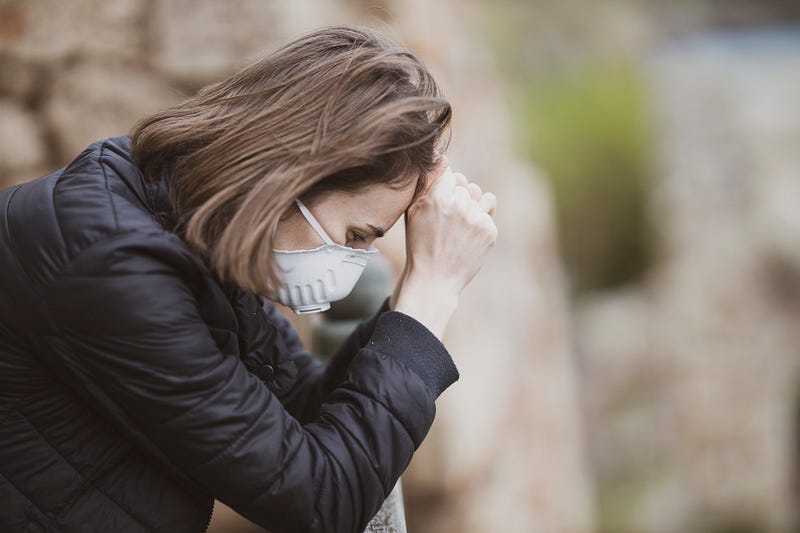
As children, we feared monsters emerging from the darkness of our closets.
As we grow, our fears gradually change. As teenagers, we feared rejection by our friends and our crushes.
In university and college, we’d stress over our grades and our futures.
Now, we stress over COVID-19.
The Brain, Fear, and Prediction
No matter how old we get, the root of many of our fears and anxieties is uncertainty. The brain predicts changes in the environment. It perceives patterns in our environment, to connect cause with effect.
Think of your retina. There is a spot that cannot sense any light whatsoever, called the blindspot. However, our brain fills in the probable details. Our brain does such a great job that we rarely, if ever, notice the blindspot.
When it comes to interpreting more complex patterns or predicting events without sufficient prior information, we feel uncertain. This uncertainty drives fear and anxiety across every stage of our lives. We don’t know what’s in our closet, or how our crush might respond to us, or what kind of career we might attain!
What is the point of uncertainty?
If uncertainty is a source of stress and anxiety, why is it important? As a child, we’d love to be certain monsters aren’t hiding in our closet. This fear kept our heart racing, our breath quick and shallow, and our feet ready to run out of the room.
The feeling of uncertainty activates different parts of our brain and body to mobilize a stress response. In case there really is a danger, we are ready to face it. Many scientists have proposed an evolutionary purpose for this physical response. It allowed our ancestors to evade predators. However, there are considerably fewer threats today than there were 100 000 years ago, turning this advantageous feature into a physiological bug. Our body cannot tell the difference between the feeling that a hungry predator is stalking us behind some bushes or the feeling that we aren’t prepared for an exam.
What does it do to our brain and our body?
In 2015, prominent neuroscientists and stress researchers Achim Peters, Bruce S. McEwan and Karl Fritson formulated a new operational definition for stress. They argued that the brain infers causes for different perceptions using prior information. This is called a Bayesian framework, where prior information is incorporated with new information to make the best prediction. Two parts of the brain are activated when there is too much uncertainty, the anterior cingulate cortex (ACC) and the amygdala. Both these regions are involved in emotion. The ACC is also involved in higher cognitive functioning. The researchers put it best in the conclusion of their paper:
In conclusion, if we feel confident that we can reach our goal states (i.e., one course of action has a particularly low risk), the ACC informs the motor system about the best action. However, if we feel uncertain about what to do next (all strategies are equally risky) then the ACC initiates an emergency program to ensure inferences about the state of the world are properly informed.
The alarm set off by the ACC activates the amygdala, initiating a comprehensive stress response, consisting of three components:
- The Hypothalamic-Pituitary-Adrenal (HPA) Axis: The hypothalamus sends a hormone signal to the pituitary gland. In turn, it releases a hormone activating the adrenal gland, releasing cortisol and other signals. Cortisol is our body’s stress hormone, which travels to the brain and prepares it for dealing with the stressor.
- The Sympathetic Nervous System: The famous fight-or-flight system is responsible for physical mobilization during stress. It releases epinephrine from the adrenal glands. Our body’s global response includes increased heart rate and blood pressure, glucose release into the blood, and pupil dilation. This system helped us physically evade predators 100 000 years ago and is intimately involved with stress and anxiety disorders.
- The Locus Coeruleus: This brain area causes the widespread release of norepinephrine in preparation for the coming stress.
All these systems feedback into the brain and alter its connectivity and our decision making.
COVID-19 and Uncertainty
There is a silent pandemic concurrent with the spread of SARS-CoV-2. In addition to the threat this respiratory virus poses to our health, we face an unprecedented mental health crisis. It is exaggerated by a lack of online options and resources for individuals to receive timely counseling or therapy. In addition to the stresses of social isolation, there is a cloud of swirling uncertainty that permeates every corner of this pandemic. From the science to the functioning of society to its politics, there’s plenty we are uncertain about.
We can’t predict how this pandemic will progress or when it will end. We can’t predict if or when we will find a vaccine or a treatment. We can’t predict what will happen to the economy or if our families will be infected. When we are uncertain, we are prone to make worse decisions.
Science, by definition, functions in uncertainty. We can’t prove an idea behind a shadow of a doubt because there is no possible way to test our idea in every plausible situation. Instead, scientists look to test a null hypothesis. If we take the SARS-CoV-2 for example, we might be interested in stopping it from entering our cells. We might have an idea to use a certain therapeutic to stop it in its tracks. Scientists will then test with a null hypothesis in mind: the virus is unaffected by this therapeutic. If this null hypothesis is contradicted by the data, then it means that our idea becomes more plausible.
In this manner, scientific progress is often incremental. We build on evidence and ideas to see if they can withstand experimental scrutiny. It can be troubling and worry to watch the news and hear about information about the virus changing week by week. Or even listening to recommendations and predictions of its severity change. This uncertainty, coupled with a misunderstanding of the scientific method can steer individuals to the comforts of conspiratorial certainty.
COVID-19 Conspiracy and Mental Health
Uncertainty drives fear and anxiety. We don’t want a constant stream of changing recommendations, we seek explanations that find a definitive cause to these events. In this way, conspiratorial thinking can reduce these feelings caused by uncertainty. It is quite unfortunate that many confident voices that promise certainty during the pandemic are littered with scientific errors, inaccuracies and fabrications. We are hypnotized by pseudo-scientific sirens steering us to false conclusions.
We all want explanations about SARS-CoV-2. It’s so much more comfortable to believe in the existence of villains and boogeymen engineering viruses than it is to trust in uncertainty. Should we blame and shame people for falling for conspiratorial thinking?
The answer is a resounding NO!
We’re all doing our best to manage our mental health, our stress, and our anxiety. But there are many individuals coping with the uncertainty that lay awake at night worried about the lock-down. We need to address them with science, kindness, and empathy. Our brain is prone to finding patterns where there are none, and we are all capable of falling prey to these mistakes. Shaming somebody is not an effective way to communicate science or change somebody’s mind.
The effects of uncertainty increased stress levels can lead to an onset of anxiety, depression, or other disorders. A lot of us are socially isolated without access to our friends or family. Now more than ever, we must understand how uncertainty impacts our body and our mood. We need to focus on taking care of ourselves and others.


