
Stress Makes My Hair Fall Out. What’s Your Tell?
Pay attention to your body’s signs of stress
You may not realize it, but your body speaks to you, too. Those stiff shoulders you’ve been hurling up to your ears for too long. The pain in the middle of your gut that you brush off as indigestion from Taco Tuesday. Maybe it’s the hives that come from out of nowhere and the allergist wants to blame your laundry detergent or your son’s hamster.
Chronic headaches, migraines, teeth clenching at night, frequent colds, irritable bowel, anxiety attacks… There is a myriad of ways our bodies communicate with us that they are stressed. Some are not so obvious. Learning to be still and curious about what your body is saying is a good start to learning its language.
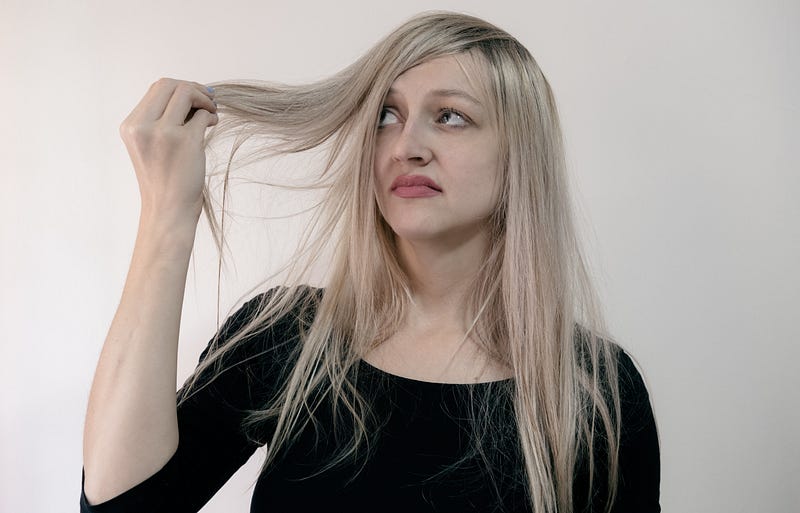
My hair has taken quite a beating over the years from stress. It’s not the only part of my body that’s suffered but it’s now become my “tell” — that one sign that lets me know my body is feeling the effects of a stressful event.
My husband has allowed chronic stress to rule his life for so long that his body finally rebelled so loudly he couldn’t ignore it. Covid 19 took its toll on an already stressed nervous system and rendered him as helpless a kitten.
He now works with a mind/body therapist who helps him tune in to his body’s communication system. Instead of being worried or afraid of what his body is telling him, he’s learned to listen and adjust. It’s a beautiful harmonizing of mind, body, and spirit.
What is stress, really?
We throw the word stress around as if it’s a normal and necessary part of daily, modern life but if you think of what stress really means, you’ll start to see how unhealthy your relationship with stress really is.
Take a look at the definition of stress from dictionary.com:
The action on a body of any system of balanced forces whereby strain or deformation results.
Stress puts pressure on our systems; mental, physical, emotional, and spiritual deformation can result.
Think about that! Stress deforms us. It takes us from what is healthy and normal and changes our lives. This can take us from God’s best design for our lives and result in a loss of beauty, disfigurement, or a misshapen life. And we’re not just talking physical beauty. When I am stressed I am not emotionally pretty either.
We are out of shape, marred, or disfigured when we allow stress to influence our lives.
But, we can choose to aim for a stress-free life; we have choices about what we allow to influence our lives.
My hair tells me when I have too much stress
I first noticed my thinning hair a few years ago when we were in the process of a cross-country move. I was also coming off a teenage crisis with my son, working full time at a high-stress job, and dealing with a lot of the moving process on my own as my husband relocated to a new state to start his job.
One day as I was brushing my hair my husband commented that he could see my scalp through my part. Panicked, I leaned into the mirror and confirmed he was right. I had never seen my pink scalp before! I had been too busy to notice that my hair was thinning.
My hairdresser assured me it was a temporary condition from the stress. As soon as you’re settled in Texas, it will come back — don’t worry.
And for the most part, he was right. My hair bounced back and I forgot about the thinning episode. Until we moved again, and Covid hit, and I really saw a difference in the thickness and structure of my hair. The shower drain and my hairbrush confirmed my worst fears: my hair was falling out and thinning rapidly. 2020 was not good for my hair!
Life soon settled down again and I saw significant regrowth over this past summer. My new hairdresser confirmed and agreed it was time for a new style to celebrate.
And then we moved again — this time making a huge lifestyle change into full-time RV life which brought its own set of unique challenges. Right now I can empty my hairbrush every other day. I feel ragged and it’s depressing to think about. But, at least my body is consistent!
Listening to your body
A couple of years back my doctor confirmed what I already knew. “Stress is your enemy,” she said. “Try doing something every day that brings you joy.”
It’s a good sentiment, but I’ve found one has to dig a lot deeper than that to eliminate and manage stress. And one of the key ways to start is to pay attention to your body.
When we’re too busy to sit still and slow our breathing we may miss the signs our body is giving us. Or we choose to ignore them because “going there” might open up some walled-off emotions or tucked away memories that we’d rather not deal with.
It’s understandable to want to push away trauma-filled memories or unnamed grief but it’s not healthy. Two books I’ve recently read underscore this truth that is now scientifically and medically accepted. The Body Keeps the Score by Bessel van der Kolk and Feelings Buried Alive Never Die by Karol K. Truman.
The Body Keeps the Score eloquently articulates how overwhelming experiences affect the development of brain, mind, and body awareness, all of which are closely intertwined. — Ruth A. Lanius, M.D., Ph.D.
Each book tackles the concept of buried feelings, trauma, or stress and how those things are displayed in our bodies in different ways. If you like a very detailed and scientific, research-based approach, The Body Keeps the Score is for you. If you enjoy a more anecdotal story-based approach with a spiritual emphasis then you might benefit from Feelings Buried Alive Never Die.
I like to balance my reading on topics of interest so both books were helpful to me in different ways. Another book that encouraged me to lean into what my body was telling me is Try Softer by Aundi Kolber.
Try Softer is the book I’ve been searching for on the bookstore shelves. As someone who has been high-strung and try-harder since childhood, I’ve always wondered “why?” Why does my body feel on high-alert even when my mind is quiet? Thankfully, Kolber’s smart, informative approach and kind voice are here to help us all understand the complicated happenings between our head, our heart, and our body. — Hayley Morgan, author of Preach to Yourself and coauthor of Wild and Free
As an official try-hard perfectionist myself, I have always pushed aside my pain (physical and emotional) to keep moving forward. It’s a coping skill and not altogether bad in the short term. But the piper always needs to be paid and chronically trying harder and pushing through will catch up with the body.
Prolonged and chronic stress wreaks havoc on our nervous system and can result in chronic pain, insomnia, anxiety attacks, or less obvious manifestations like back pain, hives, or teeth grinding.
Maybe, like me — the past me — you ignore such warning signs and push on.
Have you ever pushed through at work even though you had a crushing migraine or terrible tension headache? Do you ignore the pain in your back, neck, or shoulder and keep typing? Does taking a nap in the middle of the day make you feel lazy or unproductive? Is pain something you’ve relegated to getting older or just a burden you have to bear? Do visits to the doctor and diagnostic tests reveal nothing even though you continue to have symptoms?
Maybe it’s time to listen to what your body is trying to tell you.
Making adjustments to mitigate the stress
I wish we never had to deal with stress but it is a part of life even when it’s caused by good things like starting a new job, moving to your dream house, or adopting a baby. We can eliminate some things but what do we do when our bodies are feeling the effects of unavoidable stress?
My body’s got my attention again as I try not to stress out about hair in the drain. I have added more walks to my days, returned to yoga a couple of days a week, and increased the vitamins that support my immune system.
Journaling helps me to worry less and building systems and routines in my days keeps tension at bay. I also let a couple of things go while I get back to a balanced state — and promised myself not to feel guilty about it.
Most importantly, I believe in my body and I give it permission to talk to me. I sit still and listen to its creaks and moans and then respond accordingly. I linger in bed in the morning and think about connections between stiffness or the burning in my chest with a stressful event or unpleasant encounter.
The days of pushing through pain, ignoring my body’s needs, and being too busy to notice my hair falling out are over.
What modifications in your life have you made to deal with stress? What’s your body’s “tell” that stress is impacting your health? If you’ve never thought about these things, isn’t it time?


