
OPINION
Strength of religious faith and the Dharmic lens
Faith is expansive and widening

The world has many religions but broadly we place each into two broader groups, Abrahamic or Dharmic. Abrahamic Religions had their roots in Jerusalem, Mecca and Medina the latter being important spaces for Islam while the former for Judaism and Christianity. Dharmic religions evolved in present-day South Asia or the Indian subcontinent. So what exactly are the Dharmic religions and how do their line of tenets work? We will try to understand it but beyond that, we will also see the roles and ideas religions contribute to our public life and ask “Is it a justified way of living?”
The dilemmatic faith
Does Religions have any validity in the scientific process? In the avenues of rationality, the scientific process involves 7 stages that include Question, Research, Hypothesis, Experiment, Data Analysis, Conclusion, and Communication. Religion starts to falter when any observations start being dominant, because let us face it Religion is not a reality at least not based on observation, faith is not a reality or a process of nature, faith is belief. Beliefs are truths that we see and view as real I call this “mono empiricism” where every person has a truth that they observe, reflect, act and perceive, it's not meant for others to look at. Every individual has the right to have it. Maybe the deeper reasoning within these faiths looks empty but they are speculative beliefs where the origin of the question is logical and valid, as in we have religion but it is based on the answers that science cannot tell us. The attributes of luck, the momentary shift in things, unseen patterns that emerge out of nowhere, anything unexplainable is a territory of science can be concluded that there may be a higher power i,e. involving in things to assist us.
Crisis in faith
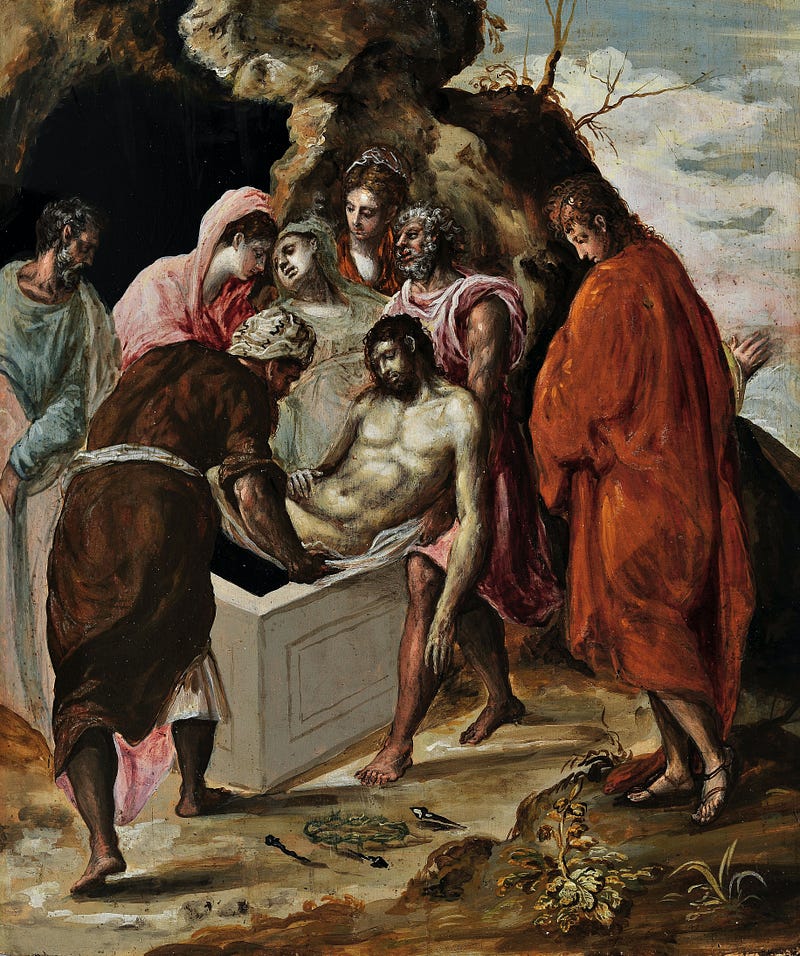
If you think when I say faith and its corruption means not following the tenets of the religion then you cannot be more wrong. Crisis of faith I feel is the over-centricity of beliefs we perceive from religion. Why does the world fight in the name of religion? As a scientific rational thinker, you would find common patterns of faith we all have, why don’t we search for similarities in our faiths, all of them that advocate compassion, empathy, forgiveness and love; we only intend to find differences, conflict and chaos of truth from our faith-based books.
We know very well that the comfort and luxury and the lives we have enjoyed until now are possible because of the sacrificial contributions of many people who had a temperament of scientific enquiry who stood by their radical thought processes often going against the belief of past biblical prophecies. Many were jailed, burnt alive, or even publicly executed. Sorry! but we cannot doubt the scientific process, the question of religion and faith-based systems is legitimate but the contents of its presumed answer are not. There is no point spotting differences between our faiths since every place has some social stimuli that led to those beliefs being introduced, rather than encouraging acceptance is the way to go and this applies to all religions.

Religion as a tool of conquest
Every society has a dominant tool for using religion for its benefit, especially by fringe politically motivated hoodlums who think they are the messengers and what they utter is some prophecy everyone has to fulfil. Taking religion at face value makes us isolationist and bitter and the worst of all it becomes a political mobility tool. Science updates itself with the scientific process and reinterpreting events with 100% accuracy from a perceived truth perspective. That’s not the case with religion anyone can change it and the importance of it is they influence people and make radical policy and political changes appear normal. Lots of people have lost their lives believing many untrue things of that sort, and greed for power, lust for control and knowing where to bang the hammer to climb the rungs of power, exploiters knew the detailed pathway to retain and climb to power.
The Dharmic lens to view the world
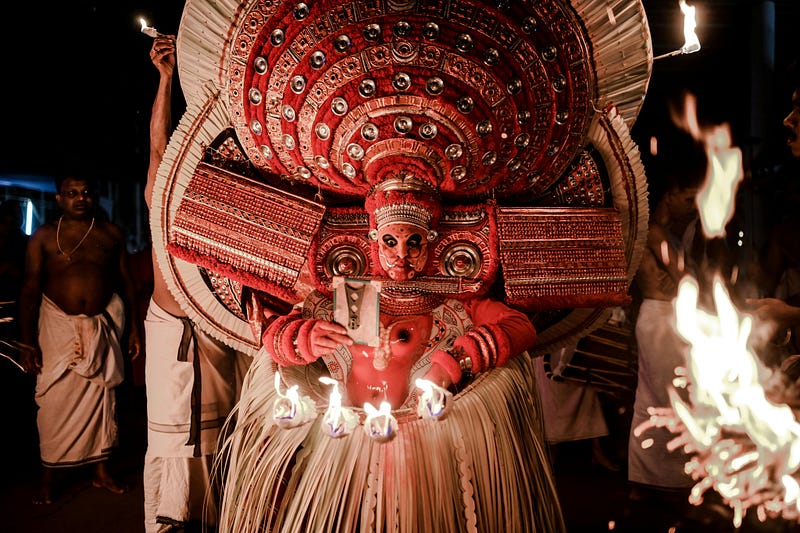
In all Dharmic religions, the term Dharma is profound and this is where the meanings, all of it lay. Dharma means different things in all major Dharmic religions whether it's Hinduism, Buddhism, Jainism or Sikhism. In Hinduism, it means a governing religion and moral law for all individuals, and their conduct in the personal sphere, it is more esoteric and laws pertaining to codified Dharmashastras. In Buddhism, it means, laws that are ordained and natural to the cosmos. In Jainism, it means manifold, teaching of the Jinas, righteous way to live, and searching for truth. In Sikhism, it means ‘righteous way to live’ where the righteous is more emphasised on piety, morality, empathy and spirituality.
The religion of South Asia ‘Hinduism’
Hinduism actually is not a definite connotative religious term, rather it's a combination term of all South Asian subcontinental beliefs and faith systems where with time some common terms/ideas and moralities evolved. ‘Hindu’ or ‘India’ as a term came from the operative word of ‘Indus’ termed by the Persians and Greeks which means ‘the land beyond Indus’ that ends in Ceylon or present-day Sri Lanka on the south. With time a common belief system emerged out of the overlapping cultural systemic believe-similarities some of them include, believing in the authority of Vedas, belief in mukti and liberation, belief in woman deities and devi, belief that God exists in all forms, and also Cow being a deified animal, believing realisation of truth is enlightenment. Earlier for historical non-complexity we call it Vedic religion, or ‘Vedic Brahmanism’ because of the nature of social structures at that time. When syncretisation of beliefs starts we mark it as ‘Puranic Hinduism’. The deities started evolving and overlapping and also Upanishads started evolving as well where the nature of non-duality came into being.
A Hindu views the world as a portal to gain mukti and he is codified to have his experiences of Purusarthas or stages of life summed as Dharma, Artha, Kama and Moksha. Dharma is to follow religious and moral duty in the initial stages of life until 25 years old. Post 25 you are allowed to earn economic pursuits i.e., Artha, and then post 30 you are expected to enjoy those economic gains i.e, Kama (that’s why the Kamasutra by Vatsyayana is not termed as a sex manual but rather a pleasure manual, sex is part of it, not all of it), Post 50 you need to leave all your worldly pleasures and initiate a journey to liberate your soul and i.e, Moksha.
Voices of Dissent, Buddhism and Jainism
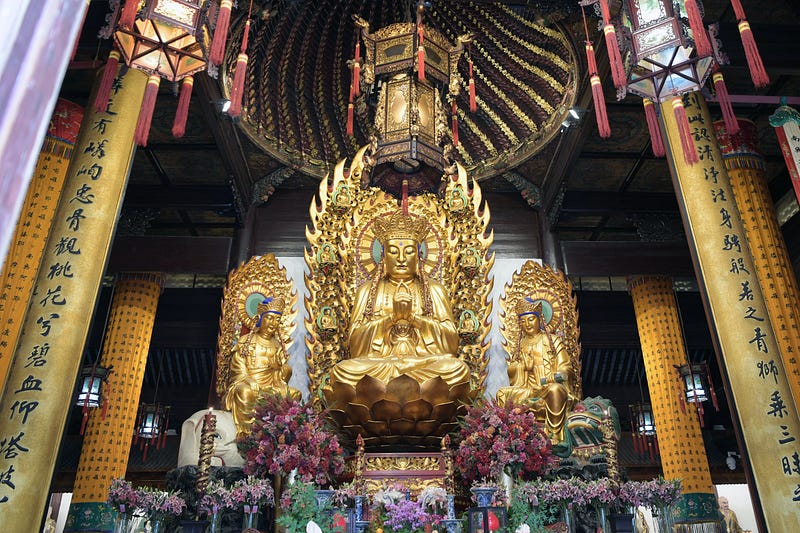
What does Buddhism and Jainism have in common? Their prominence rose during the same time in the subcontinent. Buddhism edged out a little ahead as one of the great rulers of all time King Ashoka made it his mission to send emissaries to different nations to propagate this faith through Bodhisattvas. One of the prime examples has to be Sri Lanka which is a major Buddhist country today where Ashoka’s firstborn son ‘Mahinda’ or ‘Mahendra’ went there and projected the egalitarian faith of those times, i.e., Buddhism. Buddhism also spread out vastly in India’s eastern neighbourhood and reached the Middle East. The Indo-Greeks (descendants of Alexander during his eastward expansion) were primarily Buddhists and the known empire of syncretic Indo-Greek kingdom Kushanas were entirely Buddhists. Buddhism and Jainism were also enforcing an egalitarian concept away from Vedic Brahmanism which had a stable caste system at its core, making them dissenting voices of belief systems. Jainism was believed to have originally started way ahead but during Buddha’s teachings penetrating audience, Mahavira’s or Vardhamana’s teachings also garnered recognition. Vardhamana’s love for animals and having a clean heart are time and time mentioned in the religious books. Vardhaman was the 23rd Tirthankara, of which Rishabh was the first. So the Indian reformation and philosophical renaissance had always existed in bits and pieces, but these movements were not potent enough to topple social structures.
But the challenge also was the expansive domain of the Vedic Brahmanism belief system. It took in components of Saktism and tribal Gods to make it a pantheon of secular representative religion. In the early medieval period of South Asian History during the reign of the Gupta Empire an economic transformation found a space wherein forest lands were utilized for farming to create a commercialized form of agriculture. These lands belonged to the Brahmins given by the kings, in many places, the clearing of forests and plantation systems was done by locals later on they were embedded within the social structure of the Vedic religion.
South Asian religion that advocates violence
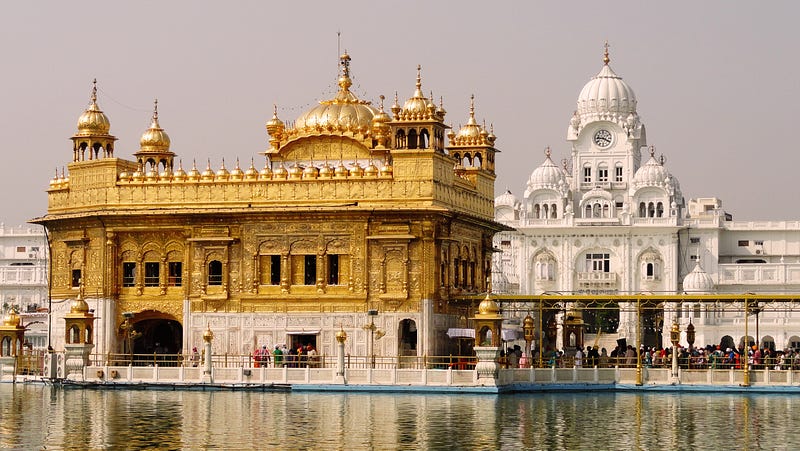
Sikhism is the newest of all religions that we have in the subcontinent, it is only 500 years old. Parallel to Sikhism many such belief systems came about and this period is known as Bhakti and Sufi traditions where God and the devotee’s connection was established removing the middle man. The other religions or the Bhakti and Sufi faith systems were extensions of culture, art forms, and Bhajans (divine songs) and belief in God being one, became a trait. Vaishnavites and Shavites, who created their own relations with God became ideas of equilibrium and formed many interpretations of Hindu thought.
Sikhism has gurus of which the 10th Guru, Guru Gobind Singh discontinued the authority of the Guruship with a human and endowed immortality to the teachings in the Guru Granth Sahib (Holy Book of the Sikhs). Sikhism is a militarized religion since of the 10 gurus, 4 had good relations with the Mughals. But from Guru Hargobind’s time, tensions started escalating between him and Mughal ruler Jahangir. The 9th Guru, Guru Teg Bahadur defied the orders and fought the imperial army leading him to getting executed in public space. Tensions started escalating which led to Guru Gobind Singh’s ‘Khalsa’ formation where people had 5 articles of faith and were strenuously trained in warfare. Guru Gobind Singh died fighting Aurangzeb’s son. But during the Sikh empire’s expansion, they reached frontier regions of today’s Afghanistan through Maharaja Ranjit Singh’s valour. Britishers signed 3 treaties with the Sikhs but with Maharaja gone due to internal rebellions British could cease successfully in the northwest region.
Sikhs are very communitarian as they serve free food in their Gurudwaras. Everyone is welcome with a half-folded fabric to tie to your head and enjoy free delicious food in Langar. Sikhism definitely is egalitarian as there are no laws that are unequivocally discriminatory towards any class, creed or gender. It is a perfect balance between righteous actions and determinism-driven retaliation with brute force. Sikhs later contributed to the British Indian Army, they form a very big chunk of the Canadian army as we speak.
They fought in the world war and gave victories to the allies on a plate.
Conclusion
This piece talks about many things starting from the nature of faith we adopt, and how the idea of faith is real. Here I also try to deconstruct the Dharmic religions and what they mean in a larger context. Hope you guys liked it!
Hello everyone! Hope you all are doing alright. The Medium Partner Programme will take some time to be launched in my demography. If you can and are willing to, do consider sending me a tip; any amount is appreciated; it just helps me keep my motivation intact to write better and think better, form ideas better. You can also support me by buying me a book out here. Irrespective of the assistance, Thanks regardless for reading my piece!

Thanks a lot for taking some precious time out of your schedule to read my work. If you like it, you can read some of the other writeups I have linked below. You can also subscribe to my newsletter in case you want updates on my new posts. I hope you have a great day! Thanks for stopping by!!!