Street Photography?
There’s an expression I receive in response to telling people I do street photography. Their heads nod and while they try to say with their faces, “oh, I see”, what their expressions really betray is “eh, what?”.
I’m used to the involuntary expressions of bewilderment. When I tell someone I’m a photographer, they most naturally assume I shoot weddings. I don’t blame them. Outside of the more informed photography circles the genre of street photography doesn’t get much attention or appreciation. I can almost sense that people are sometimes spooked by someone who goes around taking pictures of absolute strangers on the street. So what exactly is it, and more importantly, why would anyone enjoy it?
Wikipedia to the Rescue
Street photography, also sometimes called candid photography, is photography conducted for art or enquiry that features unmediated chance encounters and random incidents within public places.
Dissecting this definition delivers some insights into what street photography is, what it isn’t and why it has value.
What it is/isn’t:
Street photography is a wholly candid brand of photography practiced within public places. The word candid is something of a lynch-pin in the definition. Whereas with event photography, portraiture, fashion and illustrative genres choreographing is both acceptable and expected, with street photography it is neither.
A street photographer records moments as they unfurl and works through a scene as a moment evolves. The photographer is there merely to observe and record and makes no attempt to shape or influence the scene in any way. He has just two tools at his command; with his feet he positions himself for the composition he wants and with his camera he records the moment he determines to be the most pivotal out of an infinitude of possible moments.
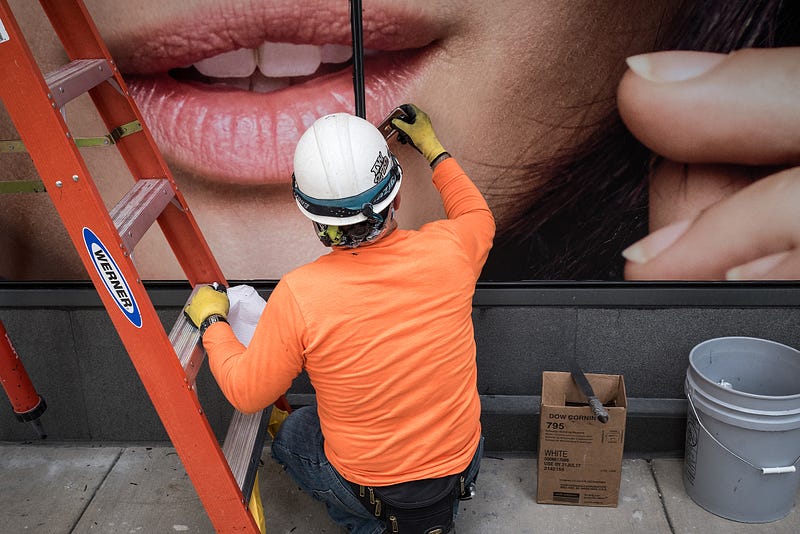
Our definition also tells us what the street photographer records; unmediated chance encounters and random incidents. Although these are generally assumed to involve people, the definition was careful to avoid the limitations of specificity. Street photography often curates incidents and encounters involving animals and the inanimate — infrastructure, graffiti, advertising messages, even street litter are all worthy candidates depending on the photographer’s perspective.
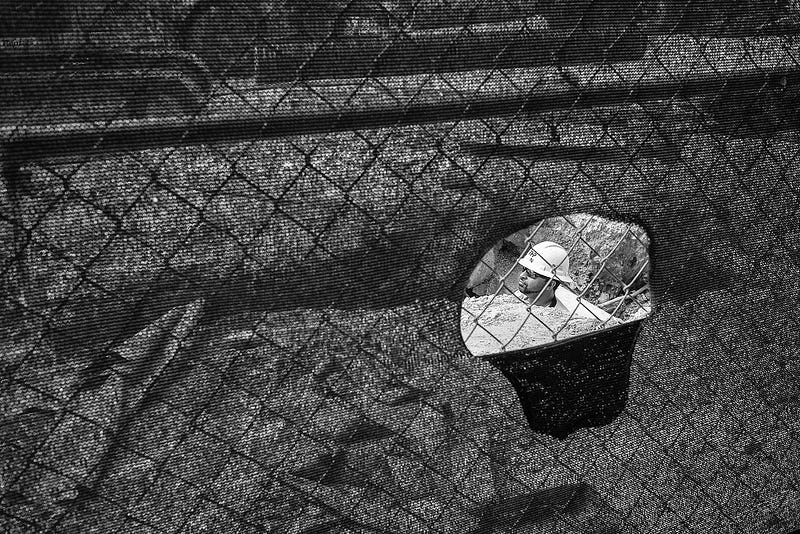
This phrase— the photographer’s perspective — is often what gives definition to the many different styles and sub-genres of street photography. Some photographers gravitate towards or seek out the quirky and comical. Some are drawn to geometry and form while some pace the streets in search of emotions. And for even many more, myself included, pure exploration and discovery of the nature of the human spirit existent within a locale are what define our perspective.
Why?
Street photography, for me, is the answer which stubbornly evades anyone who pauses to ponder, what makes a great image? Each individual is allowed their own answer to this question and each genre of photography has standards by which great images are judged.
But, I consider it the answer because while in some other types of photography the technical aspects of the image weigh-in significantly toward their final acceptance, in street photography it is the content of the image which bears most upon its validity.
“There is nothing worse than a sharp image of a fuzzy concept” — Ansel Adams
Adams’ quote above speaks just as rightly to street photography as it did to the breathtaking landscapes he captured. This is by no means a free-pass to shoddiness in composing and exposing street photos. It is instead a reminder that we ought not to get caught up in technicalities while we fail to capture what really speaks to us universally as humans; fleeting and rare moments, coincidences and juxtapositions worthy of being frozen to immortality.
Street photography thus, in its insistence upon candid, unmediated and random moments is about as honest and raw a form of photography as can be practiced. It therefore converges naturally with other genres like documentary and some forms of travel photography.
Each of these genres represent, to me, one of the greatest propensities of this beautiful pursuit; photography as an implement of truth. And while our definition described street photography as having value both as art and as enquiry, it is its value as a tool for honest enquiry which most fervently compels me.
One of the great and unofficial godfathers of street photography was a French photographer by the name Henri Cartier Bresson (1908–2004). It is apparent to me that prior to this genre being formally defined as it is now Bresson practiced a simple form of enquiry in keeping with his own style and perspective. He would not be described exclusively as a street photographer. As a working photographer he performed photographic reportage in many places around the globe. Street and documentary in his case were perhaps tributaries of the same stream.
Bresson’s writings are thus gold to the modern day street photographer. Unlike street photographers today though, he was fortunate that he never had to describe himself as a street photographer to anyone and face the same expressions we receive today. He described his photography as eloquently as he performed it when he said:
“Manufactured” or staged photography does not concern me. There are those who take photographs arranged beforehand and those who go out to discover the image and seize it”.