
NETWORKING
Street Networking: How to Turn an Angry Stranger Into a Life-Changing Ally
The power of talking to strangers
Four weeks ago, on a sunny Saturday afternoon, I was walking back home after a day spent running errands in Rose-Hill, Mauritius, where I live. I was in a good mood but a bit distracted by my ideas. I checked the time briefly on my phone, then put it in my pocket. But that was a terrible mistake…
A guy jumped at me from nowhere and told me angrily: “What? You think I’m a robber?” I was watching him, perplexed. He said: “I saw you putting back your phone in your pocket. You think I’m a robber, right?”.
It couldn’t be further from the truth. But he didn’t believe me when I said “no”. He walked away and this made me sad.
I turned around and said: “I didn’t even see you before you talked to me!” I wasn’t annoyed, just perplexed by the situation. Apparently, he read that confusion on my face and calmed down. We ended up talking for a while.
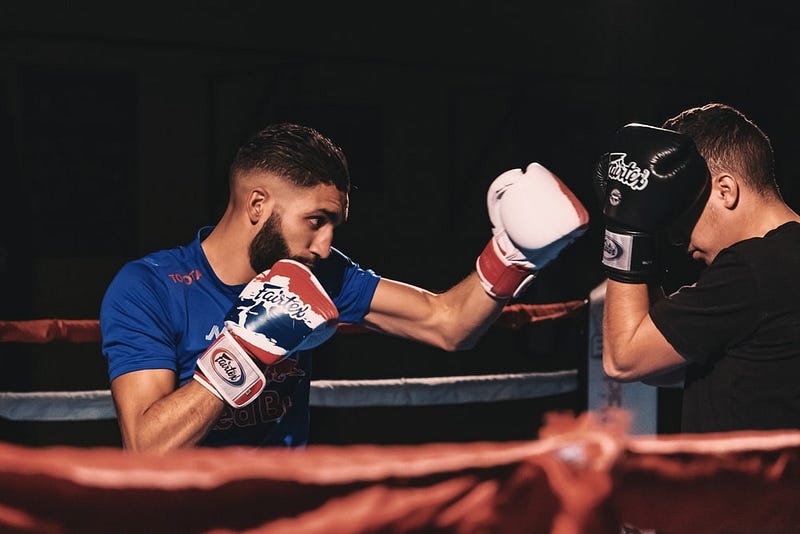
I listened to him intently. He told me he used to be a boxing champion. But after breaking some of his ribs, he retired and became a construction worker.
We talked about boxing a bit more. I told him I had been looking for a boxing trainer for years, which was actually true. We decided to meet again the following day, at 10 am. I took his number, and the deal was sealed.
I guess he didn’t expect much from my word. Maybe I was just trying to be nice. But I called him, and the following day, we met at 10 am. His 8-year-old niece was there too. We practiced and the session went great.
At first, he did not want any money. But I told him I wanted to hire him. Since then we completed 3 training sessions. And I’ve learned a lot since I was a complete beginner in the sport.
Street networking
Why I’m telling you that story? Well, since I started working remotely, I’ve made a habit of talking to strangers. It’s my way of compensating for the fact that I work alone most of the time. I would get talkative on the bus, on the subway, or even interrupt someone walking.
I would find any kind of excuse. Something related to the situation or the person themselves. And I would try to make them laugh. I could talk to a mother about her children or a shop owner about their business. And yes, I would talk to pretty women too, if you want to know everything.
This practice has been life-changing in multiple ways. As I told you, I found my boxing trainer that way. I also hired someone who comes 2 times per week to cook me delightful Mauritian meals. He’s a natural extrovert and likes to listen to upbeat retro music while cooking which I enjoy. I also ask a worker from my building to run errands for me from time to time. And yes, I’ve met a couple of girlfriends in the streets. How could you call that? Well, street networking would be a proper name, right?
Gangs of Manila
Now, I know what you’re thinking. What if the person you meet is a predator? Yes, there’s always a risk. But is it worth living your life staying constantly on guard and suspicious of each new person you meet? Of course not!
Yes, I wouldn’t speak to anyone in a dangerous suburb. This weekend, I saw a documentary on the Quirino suburb of Manila. It is home to the most brutal and merciless gangsters.
Compared to this, the island where I live, Mauritius, is the land of lambs. It does not mean there are no problems here. There are some inequalities and drug abuse. People steal when they are desperate. But I’ve never had any problem here.
The cooperation bias
In evolutionary psychology, there’s a phenomenon called neoteny, also called juvenilization. As they evolved, humans have developed more and more juvenile traits. This resulted in features like a large head, big eyes, a flat face, and relatively short arms compared with primates.
This also allowed us to inherit juvenile behaviors, which allowed the development of pro-social behaviors. This means that we are much more willing to cooperate with others than harm them. Most often, this is our default mode. We literally have a cooperation bias.
This becomes evident when you start to talk to strangers. Usually, they make the best they can to be helpful as they know the value of cooperation. That’s how you start to notice how easy it is to meet someone new.
The power of listening
Coming back to my tense encounter with the boxing coach. Technically, I wasn’t the one starting the conversation. And it wasn’t going well initially. But I did one game-changing thing: I listened.
Many times, we talk much more than we listen. We like to talk about the most important person in the world: ourselves. That’s our ego taking over the conversation. So when someone listens to you intently, it is irresistible.
Paradoxically, authentic listening is not the easiest skill to get. A couple of years ago, I was bad at listening. I would try to listen intently, then get back to my usual default behavior: speaking about myself. After getting used to speaking to strangers, both in-person and online, I am now much more experienced.
I think this played a role in my encounter with this guy. It seems listening has the power to disarm people. And that’s my weapon of choice to turn strangers into allies.
—
“Do not talk to strangers”, says the common advice. But is it worth it to stay constantly on guard and suspicious of each new person we meet? It’s true, the street can be a dangerous place in some cases. But most of the time, strangers are just longing for cooperation and connection, like you and me.
That’s why I prefer to give some level of trust right away to the strangers I meet on the street. You never know how the conversation might end up. The stranger next to you who is waiting for their bus might be a potential life-changing ally.
It’s also a great feeling to be able to talk to anyone. That’s how you get to develop your local network of interesting and supporting allies.
On February 1st, 2022, I embarked on a 100 days writing challenge. This is post number 94.