
Stranded in Malta’s Grand Harbor
An unexpected adventure with two kids in tow
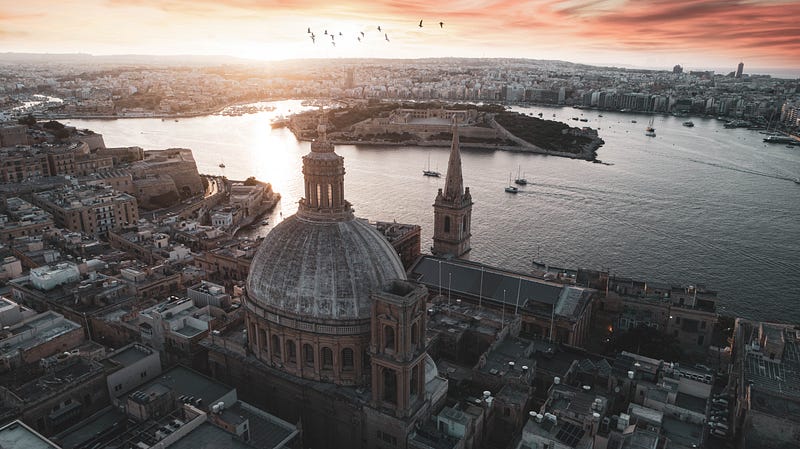
Our boat’s motor stopped running right in the middle of Malta’s Grand Harbor. Me, my husband, and our two kids were returning from Valetta, Malta’s capital, to Birgu, the town where we were staying. Despite the wind, we took a traditional Maltese wooden taxi boat, as it was faster and more fun than the ferry. The moment we took off, the boat, propelled by an outboard engine, began jumping and splashing water in our faces. Thankfully, the captain, a large and tan Maltese man in his thirties, steered it confidently around the biggest waves.
“Do you know how to swim, just in case?” a senior British woman, who was crossing the harbor with us, asked our six-year-old son, smiling. We laughed; it seemed impossible that anything could happen during a ten-minute ride in this land-encircled harbor with dozens of vessels roaming around.
Yet, five minutes into the trip, the boat’s motor made a few grumpy noises and went quiet. The captain repeatedly pulled on the motor cord, but to no avail. Since we were just thirty feet from the shore, he tried paddling with wooden oars, but couldn’t overcome the wind.
“Do you know how to swim?” the British woman asked again, looking tense now. We sat quietly, watching the captain fumble with his motor. Despite the circumstances, I was enjoying this — the proximity of the water, the salty smell of the sea, and the warm air caressing my bare arms and legs. It helped that the kids were being quiet for once, enthralled by the unusual circumstances.
I hugged our two-year-old son and looked at the shore, which was lined by a motley of old limestone buildings. These buildings, with their diverse textures, various shades of yellow, and mismatched balconies, looked like childish drawings rather than real structures that housed people. In fact, the entire country looked like an imaginary land to me. Malta is a Mediterranean island nation of half a million people that you can cross by car in forty minutes. It is nevertheless an entire nation — complete with its language, culture, and cuisine. It looks equal parts medieval kingdom and 21st-century city, where never-ending limestone buildings, high-rising forts, and charming cobblestone streets are mixed with skyscrapers, well-built highways, modern cars, and state-of-the-art boats.
The boats in Malta are so numerous and diverse that they seem to be residents of the country in their own right: majestic white yachts with names such as Daniella and Odyseé, determined-looking speedboats, tall sailboats, gigantic cruise ships, and wonderfully preserved traditional wooden boats line Malta’s docks and roam around its harbors in hundreds. Being in the Grand Harbor aboard one of these boats, even without a functioning motor, seemed like the best way to take part in Malta’s rich maritime tradition.
“Petrol tube got worn from me turning because of waves and clogged up,” our captain finally explained to us in bad English. English is Malta’s second official language, but its population prefers Maltese. The captain used a pocket knife to cut off the clogged part of his petrol tube, reassembled it, and the motor began running again. Soon, we were in Birgu, happily getting off the boat. To my surprise, the captain still charged us the usual two euros per person. I guess, people need to make money even in imaginary lands.


