
5 Storytelling Lessons From 'Squid Game'
This show is not just about people dying in the stupidest, cruelest possible ways
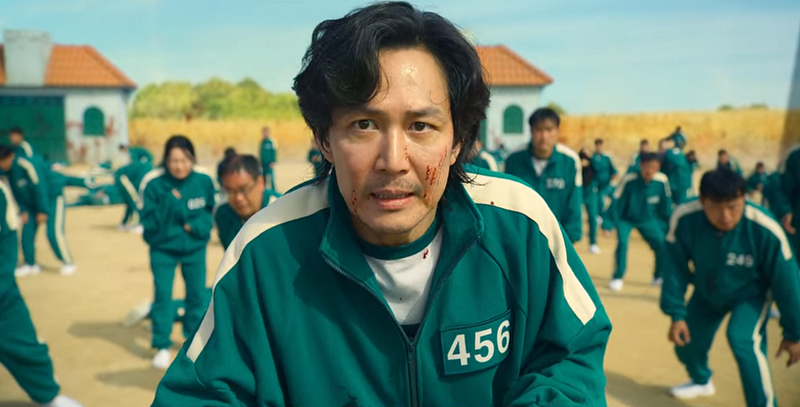
*contains spoilers for Squid Game*
Maybe you haven't seen it, but I'm sure you have at least heard something about it. Turns out, in the most unexpected of ways, a Korean show called Squid Game has taken Netflix by storm and is poised to become the most successful show ever on the platform.
Some people have argued the show isn't that original; after all, it has some The Hunger Games and Alice in Borderland vibes. However, above all, it uses a few essential storytelling techniques that have contributed to its wild success by keeping people hooked.
If you haven't watched and are planning to, this would be a good moment to stop reading, for it would be impossible to discuss these strategies without revealing some essential plot points.
1. Use the oldest trick in the book.
It is said that Scheherazade, from One Thousand and One Nights fame, managed to stay alive by telling fascinating stories that kept her vindictive husband enthralled. Not only that but — and this was the critical factor — she would stop in the middle of a story to ensure the interest would remain there.
Squid Game makes excellent use of this technique.
Sure, other shows and movies had done so before, but not as masterfully as it was done here. Let's take a look at the ending of episode 1.
Episode 1 ends in a bloodbath. We quickly learned that, in these games, getting eliminated means getting eliminated. Yes, all along, we felt the tension rising, and we knew something serious was about to happen, but I think it's fair to say it was even more brutal than expected.
And then, as the characters are still coming to terms with the situation, the episode suddenly ends. We have seen this sort of cliffhanger in other series, but this goes beyond that. We haven't even been given a chance to breathe when the credits start rolling. It almost feels like the allotted time had runoff, and the network had no choice but to end the episode abruptly.
Of course, we know this was not the case. Instead, the whole point is to get us to the next episode because our brain cannot stand leaving a story unfinished. Unlike that vengeful king from the One Thousand and One Nights, we can keep "enjoying" the story.
2. Make sure to explain why.
Yes, we are told these people have money problems, but that's a very abstract concept. To make the show compelling and help us understand why on Earth these people would agree to play this horrible game, we need to go deeper.
In the end, the show reminds us that, in reality, money problems mean people problems.
The main characters need this money, but it's not just about paying debt or managing to buy a house. For some, it's about the people they have let down. For others, it's about regaining self-respect.
This is so important that the show takes a slight detour from the game's horrors to drive this point home. After all, it would be easy to think money isn't worth staying in that bloody playground.
But money isn't the reason why. It's just the excuse these characters give themselves, for their real problems come from their shortcomings as human beings.
3. The characters are everything.
The most exciting aspects of any story come from the characters. We need to care about them; otherwise, this show would just be about people dying in the stupidest, cruelest possible ways. And we have already seen that in many other shows and movies.
What gets the story going is the traits and quirks of the human beings at the heart of it all.
There's, of course, Gi-hun, who does his best to try to pass for an idiot because being courageous demands too much of him, but, in the end, his heart gives him no choice other than to become who he really is. Or Sae-byeok, who has never been given a fair chance and yet, has survived by fighting tooth and nail. And Sang-woo, who, from the very beginning, let us know he would give us a reason to hate him, but we weren't prepared to the extent of his betrayal. After all, like any good villain, he is convinced he is doing what needs to be done.
So, by developing these characters, the show comes alive. As much as people have developed a thirst for blood and murder, it is just much more appealing when it involves fictional people we somehow care about. This brings me to the next point.
4. Give us something to love and then take it away.
Game of Thrones did it, and so has Stranger Things. It is a cruel strategy, but it works like a charm.
Essentially, the story gives us a kind, loving character—someone who seems too good for this world…because they are.
Then, once we have come to care for them, they are taken away from us. But that's not enough. For their deaths to destroy us, they have to happen in a cruel manner.
In this case, we saw how Ali, a desperate man who has been taken advantage of way too many times — seriously, he just can't catch a break — is betrayed. He thinks he has finally found a tribe he can rely on and then is proven to be utterly wrong.
And we? Well, we have no choice but to watch in disbelief how he gives his trust to the last person he should, someone who chose him just to use his strength and then had no problem discarding him. Even worse, the show extends our agony for several minutes as he still believes his "friend" had his back. That was what the game demanded.
We also have the case of Ji-yeong, whose story breaks our heart, mainly because we can tell she will not make it. Still, the show manages to make her death extra cruel by making her sacrifice herself since life has lost all meaning to her. She doesn't have a reason worth fighting for.
At this point, we kind of hate this show. But no, that's not going to stop us from watching to the end.
5. Find your thing and keep at it.
This show is wicked. Really. And it's not just about the blood. Above all, it's about how it places the characters in situations where they have no choice but to betray one another. The alternative is to die.
At some point, you might be thinking, "There's no way they can amp up the cruelty."
Surprise! They totally can.
From having some of the players pair up with the person they trust the most, only to have them play against each other, to giving Sae-byeok and Ali such brutal endings, the show knows the audience loves/hates the harsh way these characters are discarded.
That's Squid Game's strength, and they make sure to exploit it to the end.
Lots have been said about how this show thrives in unnecessary cruelty to sell its premise. It could be. But, in the end, the only reason we care is that these characters speak to us. They are deeply flawed, and we can relate to that.
All in all, in the show's universe, the best and the worst of humanity come out to play. We could, of course, rationalize the situation and argue that we wouldn't stoop so low just to get some money.
Luckily, this show is just fiction…but, if we stop for a moment to look around, don't we find this mentally all around us? The whole, "I crush you because I have no choice. Because this is the only way I can move forward." People keep saying this show is the perfect metaphor for nowadays' capitalistic society, but, frankly, it just feels too literal.