
Storyteller Tactics Review: Introduction
How to grow your audience
…and make them listen
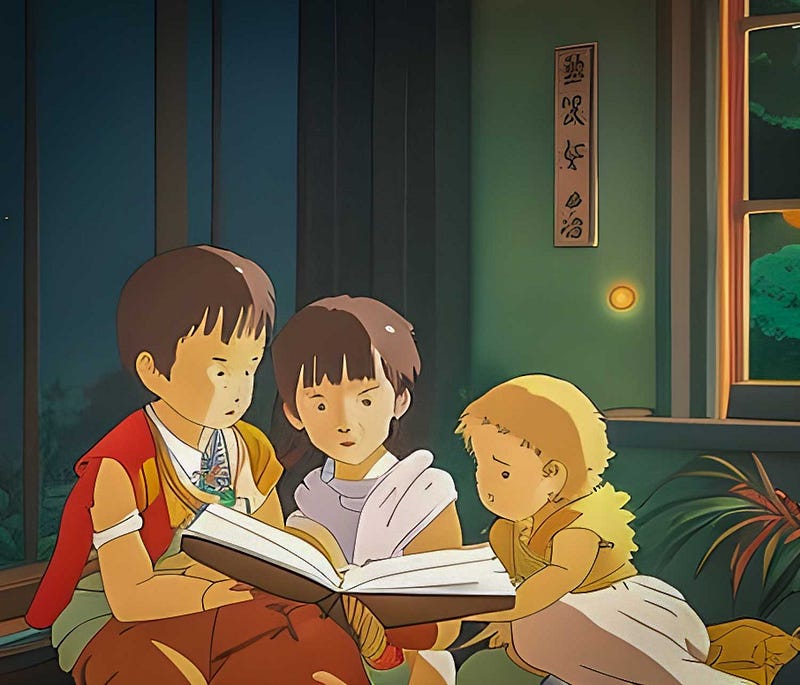
“A book is a dream you can hold in your hand,” Neil Gaiman once said. A few minutes walk from my house is a warehouse of dreams: the council library.
I’m often there — dreaming — enjoying the old building, the high ceilings, the wood panelling, the long shelves of books, the newspaper racks, the cosy corners where I can curl up in a printed fantasy. It’s my idea of heaven.
There’s a morning routine I sometimes enjoy: children's storytime. The youngsters — preschoolers because their siblings are in class — and their mothers gather around a librarian as he or she reads a picture book.
Here is bliss. The kiddies sit in rapt attention listening to some silly tale about a talking dog, a friendly pirate, or a superhero rabbit.
And so do I. One of the librarians is a hunky young chap with a lantern jaw and a deep husky voice that just turns me to mush. I’m as rapt as the toddlers.
Funny thing, there are always more young mothers listening to the stories than there are children.
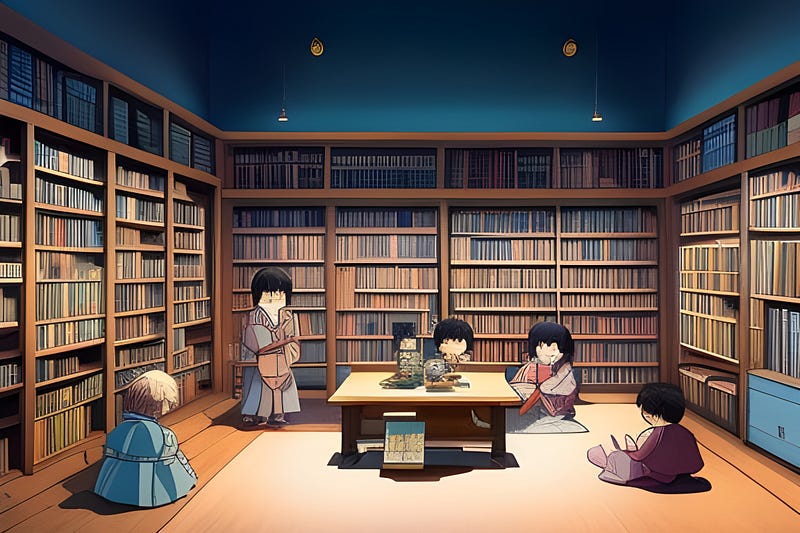
We all love stories
We enjoy listening to stories. It’s in our genes. Ever since we human beings gained the power of speech, we loved to sit around the campfire to listen to someone tell a really good story, one that has us on the edge of our seats as the hero battles villains, braves the perils of a hostile world, fights off wild animals and finally wins home to the embrace of their family with the treasures of the adventure.
“Let me tell you a story,” someone says and we are instantly engaged, ready to relax, listen to an exciting tale, wonder what comes next, and gasp with delight when we find out.
Make yourself the hero
As a writer, you must make use of this inbuilt love of stories.
This is critical.
It is the difference between a page full of words that nobody reads and a story that readers love and share and then go hunting up more by the same writer: you.
As a writer, you want readers to enjoy your stories and to tell you how much they loved them and why aren't you writing more right now?
This is money in your pocket and joy in your life.
You become the rags-to-riches hero, basking in glory and rolling in wealth.
What comes next
Simple. Make storytelling your first priority.
Find a way to turn whatever you have to say into stories.
There are a million ways to do this.
You’ll leverage the natural human love of stories into eyes on your articles and money in the bank.
Think about the best ways to put what you want to say into a narrative that engages your readers and keeps them reading on and on.
Help is here
As it happens — and here’s my story beginning — I tripped over a nugget of gold last week.
Somehow the social media algorithm gods worked out that I was a writer and I wanted to do better.
My Facebook feed began including pictures of an interesting little package: a deck of cards labelled “Storyteller Tactics”.
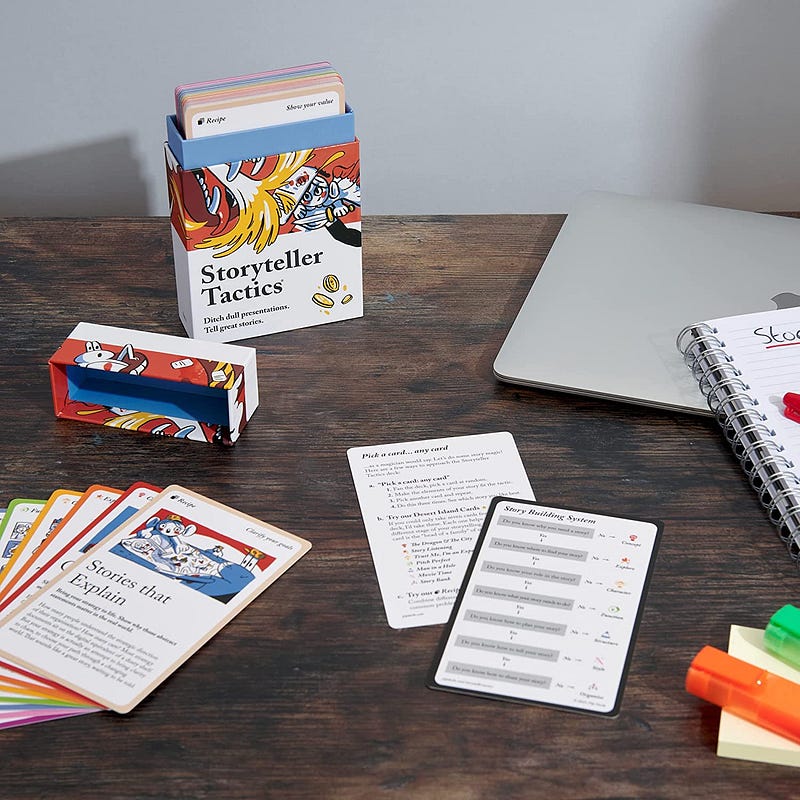
Friends, as I looked into what these cards had to offer, I became excited in a way that surpassed whatever innocent interest in a hunky, husky, square-jawed storytelling librarian I might have had.
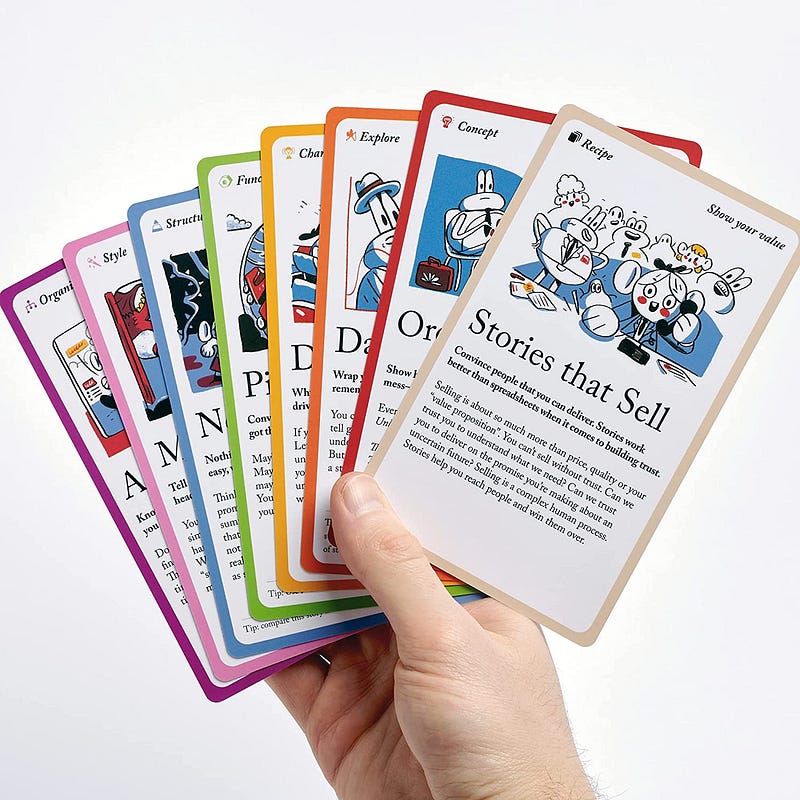
These cards — and they are beautiful resources in their own right — amount to a recipe book for storytelling. Pick up any one and you’ll get a concept, a structure, a function that links to other cards in a useful way that you may craft to suit your exact purpose.
Here are characters, styles, step by step instructions on how to build a story that sells, that draws your readers in, that keeps them engaged.
There are 54 cards in the deck but they can be combined in a million intriguing ways to create a story where you and the reader are engaged; walking down the same narrative path together to reach a shared objective.
More than the cards
Buy the card deck and you get resources to help you use them. Storyboard templates, drag-and-drop images, video presentations, discussion boards, customer support, blog stories.
These cards are just the tip of the iceberg. There are years of expertise behind them and a growing — and enthusiastic! — community. With every step I take I get more and more excited about how I can use the ideas, the recipes, the tactics in my own writing projects.
I’m undertaking my own Hero’s Journey and these cards are the key to a new and better world.
I’d like you to come with me as I explore this world over the next few weeks.
I want to look closer at specific cards, examine how the ideas and tools can be used, try out concepts and models, and well, just have fun playing with the cards.
A warning and a guarantee
These cards are a treasure, and they come with an appropriate price tag. Remember it’s not just the cards themselves but also the resources behind them that add terrific value.
Here’s the solid gold guarantee:
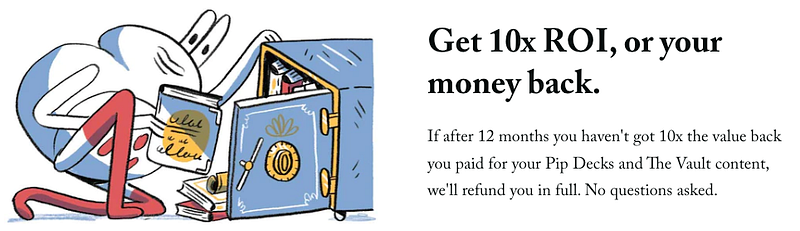
You can’t say fairer than that.
I doubt that they have to pay out too often. I looked for reviews and found nothing but satisfied customers busy incorporating the cards into their creative and everyday work.
Help me explore
This is my first article on the topic. Whether you buy the cards or not we’ll explore them in detail. I can’t share the video links and the community chat boards and the storyboard templates but I can show what’s on the cards and talk about how to use them.
My adventure will become your adventure.
Your storytelling skills — and mine! — will improve and we’ll reap the benefits in our own writing.
Or your money back.
Britni
Use my discount code BRITNIPEPPER to get 15% off. I get a few dollars in return. The bold links above are affiliates, same deal. Or just go to the website, no strings attached, look around, discover the system for yourself.
My review series is free. I explore the cards, the systems, the tactics, link to independent reviews, and even show you how to get every word, every diagram, every dot point on every card for free, without paying a cent, with the blessing of the firm.
I believe in these cards. They are the wisdom of storytellers, passed on from ages past. The tactics work. They are a secret guide in the palm of your hand, and while they are expensive, they come with a money back guarantee.
Britni

If you enjoyed this post, please consider subscribing. You’ll get access to all of my content (including member-only stories) plus every other article on Medium from thousands of creators.