
Prose Poetry | Family History
Story Bones & Rhetorical Questions — the Lost Stories
GiaB prompt #2–5: the elderly
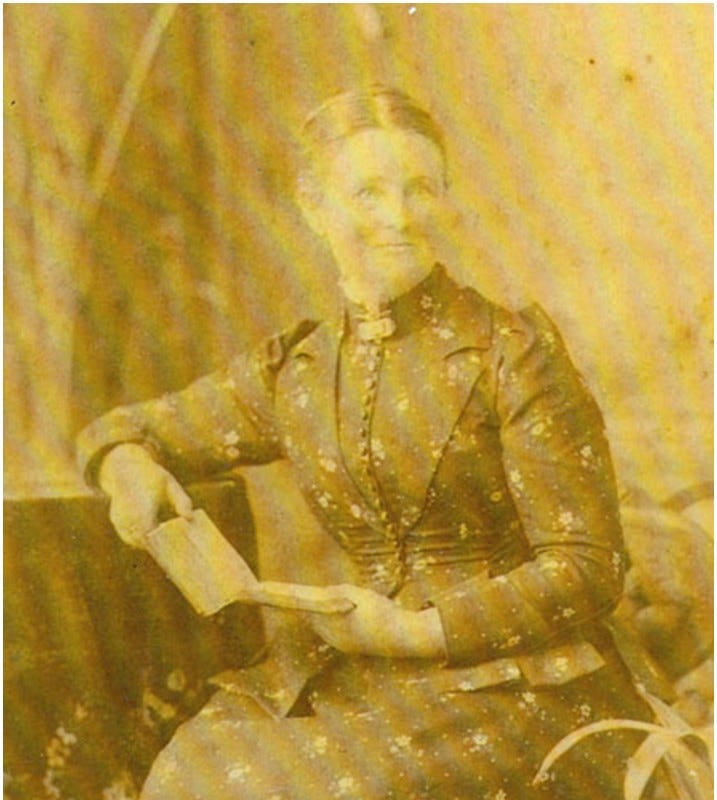
When I think of the long-lived, long-gone, I think of lost stories. The untolds they took to their graves. Like disjointed skeletons, facts rattle through history, unhinged from their lived-in-the-flesh, life-before-death tales.
I think of my great-great grandmother, her story brittle bones of fact, flesh stripped away. To synthesize, fantasize, make her life fiction, surely dishonors her soul. Find here her story bones pieced together, questions are of my own.
A five-year-old wrenched from famine-fouled Kilkenny, on board a convict ship bound for antipodean no man’s land. What horrors assailed her in the dank, dark depths of the Blackfriar, her child eyes oozing virulent infection? Foreign dry land, fresh air once again wrenched, losing the firm hand of her birth mother. A life lived an orphan as Mammy hard-labored their ticket to freedom. And think of her Da. A victim of blighted political potatoes. Did she miss him? Did she cry? Did she pine for her home in evergreen Ireland?
The facts do us tell she hitched up with a bloke. In Hobart Town, or maybe ‘twas Melbourne. A baker by trade, double her age, running from life, a wife, maybe two, back in not-so-bonny England. What, dear Lord, was she thinking?
A mother at 19 and then nine times repeated, short three of a baker’s dozen. How did she feel, a wee one budding inside her as another passed away in her arms? And let’s not forget the black sheep. There’s always one and hers was her mottled flock’s youngest. Did a runner like dad. Faked his ID, told them mum knew, jumped on a ship, joined the war. For his country. Was she angry?
Spanish flu didn’t get her. The universe had other ways to be cruel. Her black sheep, a drunken deserter drying out in a jail she knew not where. Just round the corner, her older son, named after his father, died leaving leavened dough in the bakery. Six weeks on, her daughter murdered most random in the shade of public lush shrubbery. So it went on, if not one then the other. How does a woman, a widow by then, deal with loss after loss after loss?
By the time she died, Hitler on the rise, she’d outlived eight of her 10 children. If she’d waited a week, it would have been nine, the black sheep the last one left standing. God rest her soul, was that the universe’s backhander?
© Carolyn Hastings 2021
Oh my oh my! I’ve just surfaced from one of ancestry.com’s myriad mazes. I discovered a document, an affidavit actually, made out by the black sheep’s long-suffering, abandoned wife who was, in January 1927, filing for divorce. There unfolds another story.
As I dig down into my family’s genealogy, time and again I am astounded by the complexities and intricacies of lives lived back then. The hardships and travails, the fortitude and resilience, the tragedies and triumphs. And the deaths. So much death. A constant state of bereavement. An accepted part of everyday life.
I’ve written previously about my maternal great-great grandmother, Annie Podbury (née Kelly). In fact, the photo I’ve used here as the header image was part of a three panel image I used in the earlier story, The Brooch that Pins My Family Together.
Annie lived much of her adult life in Geelong, Victoria, Australia, where she and her husband established a bakery business that remained in the family for several generations. The extended Podbury family still has an active presence in Geelong.
The shooting death, in January 1924, of Annie’s daughter, Miriam, rocked the nation. She was one of four people murdered by a gunman roaming Melbourne’s Royal Botanical Gardens. It was the first-ever of what we have come to associate more as an American-style lone-wolf mass murder except this one happened in Australia, and it happened to my family. For those of you with a penchant for true crime (I’m thinking of you, Sam H Arnold), the story makes interesting reading. You can read more about it here.
The more I learn about my family’s history, the more I wish I could sit beside those, like Annie, who lived truly incredible lives. How I wish I could tap into and soak up her life story as told by her, the one who lived it every second of every day for 93 years. How I wish there was some way we could preserve these authentic stories forevermore. That way we would not fall into the trap of rewriting history, recasting events, projecting our own interpretations, prejudices and beliefs in our efforts to make sense of why people behaved the way they did in times and circumstances that were not our own. Fictionalizing history makes big bucks for Netflix and the like, but at what cost to preserving the truth?
To avoid that conundrum, I chose to pose questions — rhetorical questions — rather than paint Annie’s life with brushstrokes and colors that were more mine than hers. Even then, and for the sake of poetic expression, it was well nigh impossible not to make assumptions and lead the reader’s thoughts in the direction I wanted them to go. Was she angry?
This is my response to Genius in a Bottle’s latest writing prompt: the elderly . Thank you, Victor Sarkin and the GiaB editorial team, for a topic that in some way affects all of us. 🙏 💕
This is an open invitation to anyone interested in contributing to the prompt. I would especially like to invite — Steve Williams | Karen Schwartz | Art Bram | Kim McKinney | Caroline de Braganza 🙏 ✨
The prompt details are here –
Thank you all for reading. 🙏 💕
✨ Here’s your invitation to join Medium where you’ll have unlimited access to every article, including mine. 👉 Click here to use my referral link. 👈 As this is part of an affiliate program, I will receive a percentage of your membership fee. Thank you. 🙏