
Riding a Bus With No Windshield
A travel tale featuring Mali
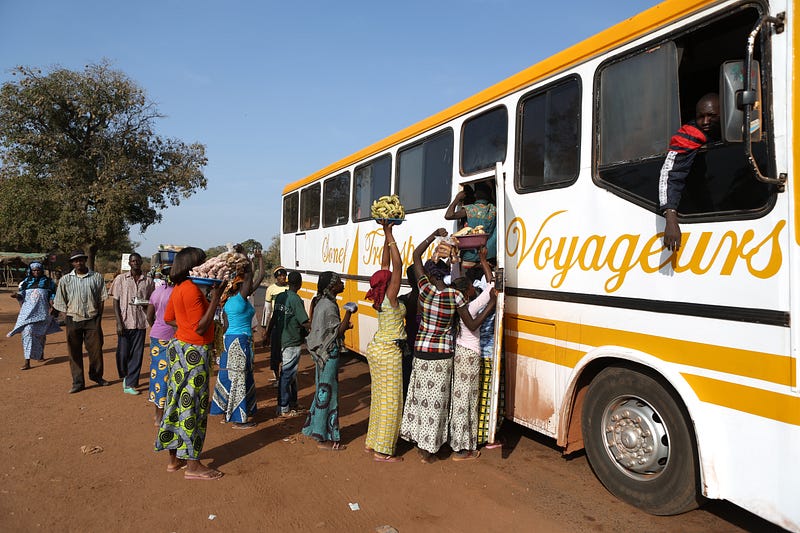
We knew the bus had no windshield when we boarded it, but we felt unconcerned. Maybe we’d been in Africa too long at that point to be surprised. Perhaps we couldn’t envision what the ride might be like without glass. Maybe we didn’t care.
Jimmie and I knew enough to walk far down the aisle, though, and we settled into the back row of the bus. We’d chosen to travel at night hoping sleep would help the 12-hour journey pass more quickly.
As the vehicle made its way south, Mopti, the dusty city on the Niger River, had already begun quieting down for the night. Street food sellers lit the sides of the road like fireflies, their lanterns illuminating the last of their fried bean cakes or hibiscus drinks. Shopkeepers, sitting outside of their closed-up stores, laughed quietly and sipped sweet, green tea with friends before going home for the night.
And then Mopti ended, and night engulfed the bus. When our eyes adjusted, we’d see the Milky Way spread out like a blanket above us, but at first, there was only blackness.
That’s when the bugs came out.
Twenty years later, I sit in an Airbnb on the Oregon Coast, about an hour from my home in Portland. After digging stuffed penguins from luggage and pulling down additional blankets from closet shelves, I finally tucked my daughters in for the night moments ago. They’re as cozy as they’d be in their beds at home.
The pandemic rages, so we plan to hunker down here for digital school and work, taking walks on the beach during pauses. I packed the kitchen sink for a four-night stay: sacks of favorite foods, piles of books and games, our own pillows.
This is what a mother should provide, no? Comfort, safety, familiarity.
When the insects appeared inside the bus with no windshield, riders in front of Jimmie and I started to fidget. Women drew their wraps over their mouths; men dropped their foreheads on the seatback in front of them. Jimmie and I pulled the lengths of fabric we had planned to ball into pillows over our heads and positioned our backpacks before us like shields.
The bugs pelted all of us. Big insects, small insects, stick-like figures, and meaty, juicy bugs. They crawled on our chests, scrambled up our cheeks, and became entangled in our hair, as surprised as the rest of us at the situation in which we found ourselves. The unlucky ones appeared on our bodies dead on arrival.
Jimmie and I huddled under our armor of fabric unperturbed. We’d grown hardy after two years in Mali, cycling with our groceries, avoiding snakes in rice fields and communal dinner bowls, and carrying drinking water in buckets on our heads from wells to our homes.
Concerned more about the bus driver’s ability to maneuver the vehicle, Jimmie made his way up the aisle, stepping carefully around the sacks and the people positioned there. He reported back that the driver wore black sunglasses as he transported us down the unlit road. Sitting nearby, a friend who had brought burning coals onto the bus, boiled fresh glasses of tea for the driver.
At least he’d be caffeinated.
Looking back, I wonder what happened to my 23-year-old self who walked boldly onto a bus with no windshield to speed through pitch blackness? The unflappable person who lugged mattresses into the African sunshine to scorch bedbugs and peered into the faces of deadly vipers? Is my 46-year-old self capable of such courage?
In our 20s, we notice older people and think, “I’ll always/never (fill in the blank.)” Always enjoy being at bars until the wee hours. Never be tied to one place through homeownership. Always like long road trips and driving through the night. Never stay at chain hotels or all-inclusive resorts.
And then, slowly, we change. Perhaps our neuroplasticity becomes rigid. Maybe our early risk-taking tendencies fade, or our mortality becomes palpable. Perhaps we stop caring if others consider us tough, cool, hard, and strong. Maybe we’re more self-confident and self-assured.
Now we appreciate hotel rooms with king-sized beds and can’t imagine sharing a bathroom in a youth hostel. We enjoy seeing our retirement accounts expand. We’re not shy about going to sleep by 10 pm.
Yet, what about those stories of adventure and calamity? They define us.
Our stories form layers of sediment that make up our lives. We tell tales to friends over dinner. Family members relay them in wedding toasts. And at the end of it all, at our memorial service, friends don’t speak of the time we rented an Airbnb on the Oregon Coast that looked like our home; they tell how we lived without running water and electricity, spent a night listening to a snuffling bear outside of our tent, or were robbed in Italy.
Yet, what about those stories of adventure and calamity? They define us.
These powerful moments are the pigments that make up the messy, colorful, complicated, textured canvas of our lives.
I want my daughters to have moments like this, moments awash in adventure, uncertainty, risk, and boldness. Though motherhood, ever the ultimate damper, wires me to keep them secure, protected, comfortable. Tucked into warm beds, snuggled in with penguins.
Do I want my daughters to coexist with vipers, live six hours from a hospital, and take dangerous bus rides? While my heart screams, “No!” my brain, which values calculated risk, transformative experiences, and the power of international travel, yells back, “Yes! (Just tell me about it afterward.)”
These powerful moments are the pigments that make up the messy, colorful, complicated, textured canvas of our lives.
Jimmie, and I didn’t sleep that night. At daybreak, we made it to the capital city of Bamako to enjoy its treasures: air conditioning, chocolate, cold beer, and (painfully slow, dial-up) internet. We barely found the story of our journey from Mopti interesting enough to share with our Peace Corps friends. They were in their 20s, too; they had sensational tales of their own.


