
Stop Trying To Memorize — A Good Book Will Change You
Last year, I started to take notes on every book I read.
I was reading a lot and hated the thought of forgetting all these insights and quotes I was coming upon.
I read The Alchemist and wanted to download the whole book into my brain.
Tell your heart that the fear of suffering is worse than the suffering itself. And that no heart has ever suffered when it goes in search of its dreams, because every second of the search is a second’s encounter with God and with eternity. — The Alchemist
I read Tuesdays with Morrie and didn’t want to forget a single lesson I learned from Morrie.
Well, for one thing, the culture we have does not make people feel good about themselves. We’re teaching the wrong things. And you have to be strong enough to say if the culture doesn’t work, don’t buy it. Create your own. Most people can’t do it. — Morrie Schwartz in Tuesdays with Morrie
The idea to take notes on the books I was reading came from a post (The Key For Remembering, Organizing And Using Everything You Read) by Ryan Holiday.
Ryan has written 8 books, all best sellers. When he gives advice on books or writing, I shut up and listen.
His advice made perfect sense.
What was the point of reading if I couldn’t remember anything a week (or a day) after finishing the book?
What was the point of reading if I wasn’t actively using what I learned?
Here’s what happened when I started taking notes
Following Ryan’s advice, I started copying paragraphs and quotes I found insightful when I finished each book.
It went well for a while. The guilt of “wasted” reading went away and I felt I was building this incredible personal database of knowledge.
Then something curious happened.
Reading started to feel like a chore.
Finishing a book now meant having to take notes so I started to read less.
I could hear Ryan’s voice in my head. (Note: I’ve never spoken to Ryan, this is just what he sounds like in my head.)
You weak idiot! I don’t take notes on the books because I love doing it, I do it because it improves my life! Are you going to stop working out because it hurts a little?!
Recently, I stopped taking notes. I dreaded doing it and wasn’t noticing much benefit.
Reading stopped feeling like a chore and became something to look forward to again.
Yet, I felt a bit queasy, like if I didn’t take notes then everything would go in one ear and out the other.
I’ve since done a 180 on my thoughts on reading and remembering.
Here’s where I stand now:
There’s no need to memorize. Good books will change you.
How I came to stop worrying about remembering exactly what I read
Reading and experience train your model of the world. And even if you forget the experience or what you read, its effect on your model of the world persists. Your mind is like a compiled program you’ve lost the source of. It works, but you don’t know why. — Paul Graham, in his essay, How You Know
I am better off for having read The Alchemist, Tuesdays with Morrie, Man’s Search for Meaning, The Little Prince, Catch-22, The Great Gatsby, Zero to One, David Foster Wallace’s essays, …
I don’t know about you, but I have very poor attention. I skim. I speed read. I jump around. I could not tell you specific passages or quotes from books. At some deep level, you do absorb them and they become part of the threads of the tapestry of your psyche. They do kind of weave in there. — Naval Ravikant (from the Farnam Street podcast)
I’ve found that what starts to happen is that in those split seconds before negative emotions take over, something I read will come to mind and try to pull me back.
Books I’ve read have combined and morphed to give me my own personal Jiminy Cricket. Every book I read adds to his knowledge and makes him a better conscience.
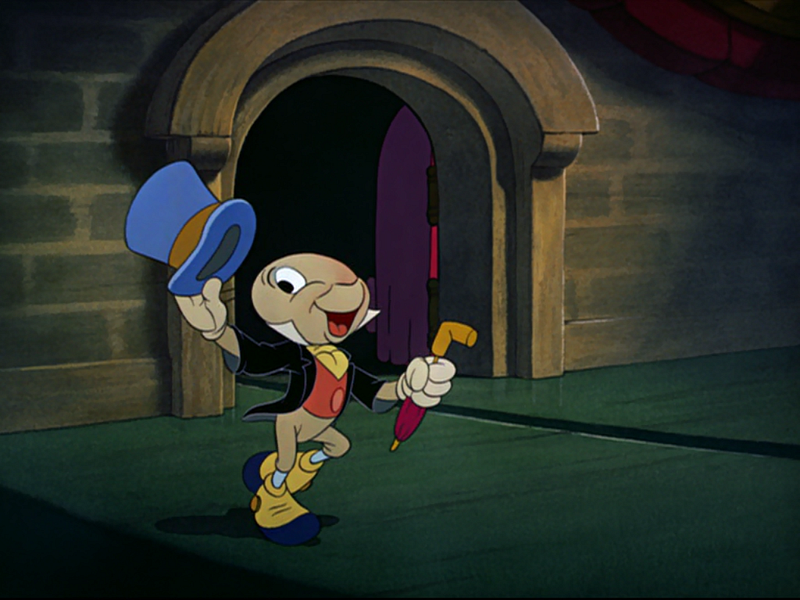
Like Pinocchio, I don’t always listen. But that never stops Jiminy from trying.
Twenty years ago, I read a book that changed my life. It was called The Magic of Thinking Big. I actually don’t remember anything about the book at all. What I do remember is that in one quick moment, it changed the way I thought about success. — Seth Godin in his book, The Dip
Conclusion
- Beware of what you incentivize. I thought that by making myself take notes I’d remember more of the book. Instead, it made reading feel like a chore, causing me to read less.
- Try out the advice from smart people, but don’t continue to blindly follow it if you realize it doesn’t work for you. There’s more than one way to skin a cat.
- Don’t throw the baby out with the bath water. Logically, I agree with Ryan’s advice. I just have to experiment with my note-taking and find a way to take notes that doesn’t make it feel like yet another chore.
Notes
Seth Godin’s The Dip, Paul Graham’s essay, How You Know, and Naval Ravikant’s appearance on the Farnam Street podcast are all well worth reading/listening to in their entirety.
Did you enjoy this?
Every Saturday morning I send out a letter exploring how we can be the best version of ourselves. I talk about financial independence, life, happiness, minimalism, personal growth, and more. I think you’ll like it. Join here.

This story is published in The Startup, Medium’s largest entrepreneurship publication followed by 318,983+ people.
Subscribe to receive our top stories here.


